20 Predictions That Didn’t Come True in 2018
Shutterstock
The North Korea/South Korea meeting. The Facebook-Cambridge Analytic scandal. Pete Davidson and Ariana Grande . Yes, no matter how you cut it, 2018 has been an absolute doozy of a year.
However, despite the seismic events of 2018, scientists and philosophers from bygone eras predicted an even more seismic year. From the outbreak of World War III to the prevalence of flying cars to seeing the very first humans step foot on the Red Planet, these are the predictions for 2018 that never saw the light of day. What a year it could’ve been! And for more far-fetched hypotheses, here are 20 Long-Predicted Technologies That Are Never Going to Happen.

Shutterstock
In the September 4, 1998, edition of the Amarillo Daily News in Texas, writer Amy Tao made a few predictions about what life may look like in 20 years—most importantly stating that human cloning will be commonplace. “Cloning will be a big thing. Despite moral activist protests, clones of animals and human beings walk the earth. Don’t feel like going to school? Send your clone! What if your dog dies suddenly? Just take out the clone of him!” she writes .
Along with that false prediction, Tao also stated that the cure for cancer will be found, but soon covered up due to a mysterious conspiracy theory in the works. And for more unbelievable predictions about the future, check out these 30 Craziest Predictions About the Future Experts Say Are Going to Happen.
Shutterstock
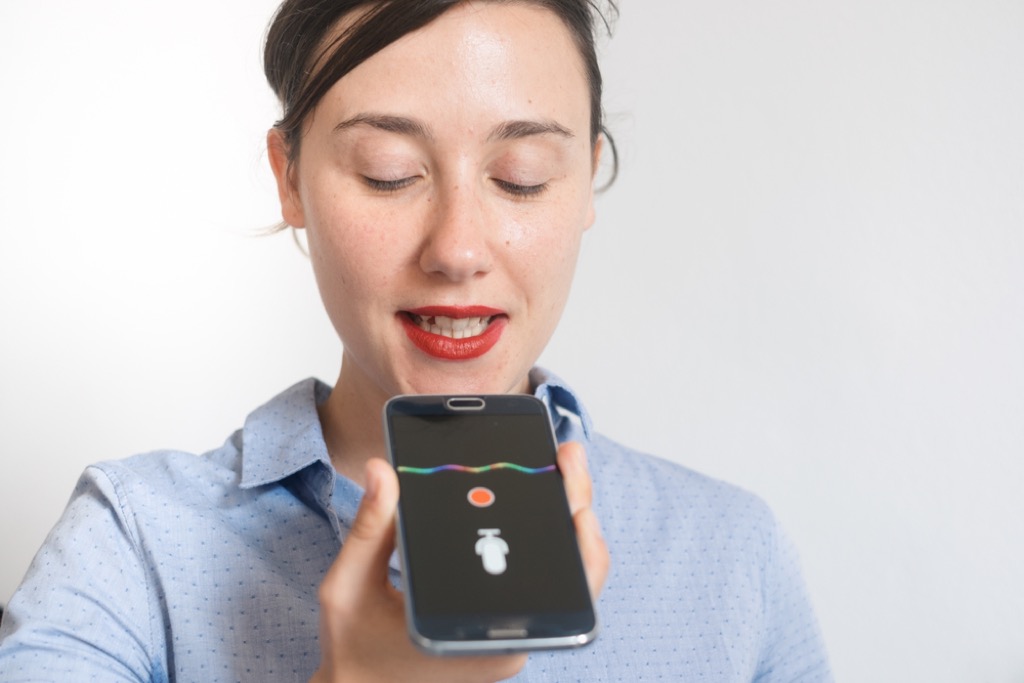
While it is true that you might have spent as much of 2018 talking to Alexa or Siri as you would, well, an actual person, a prediction made in St. Johns Daily Star in Newfoundland in 1918 asserted that “automated dictation” will be so effective and commonplace that humans will no longer need to write or type anything at all. Despite any technological advancements , it’s safe to say that you still have a few more years before you can ditch those keyboards for good.
Shutterstock
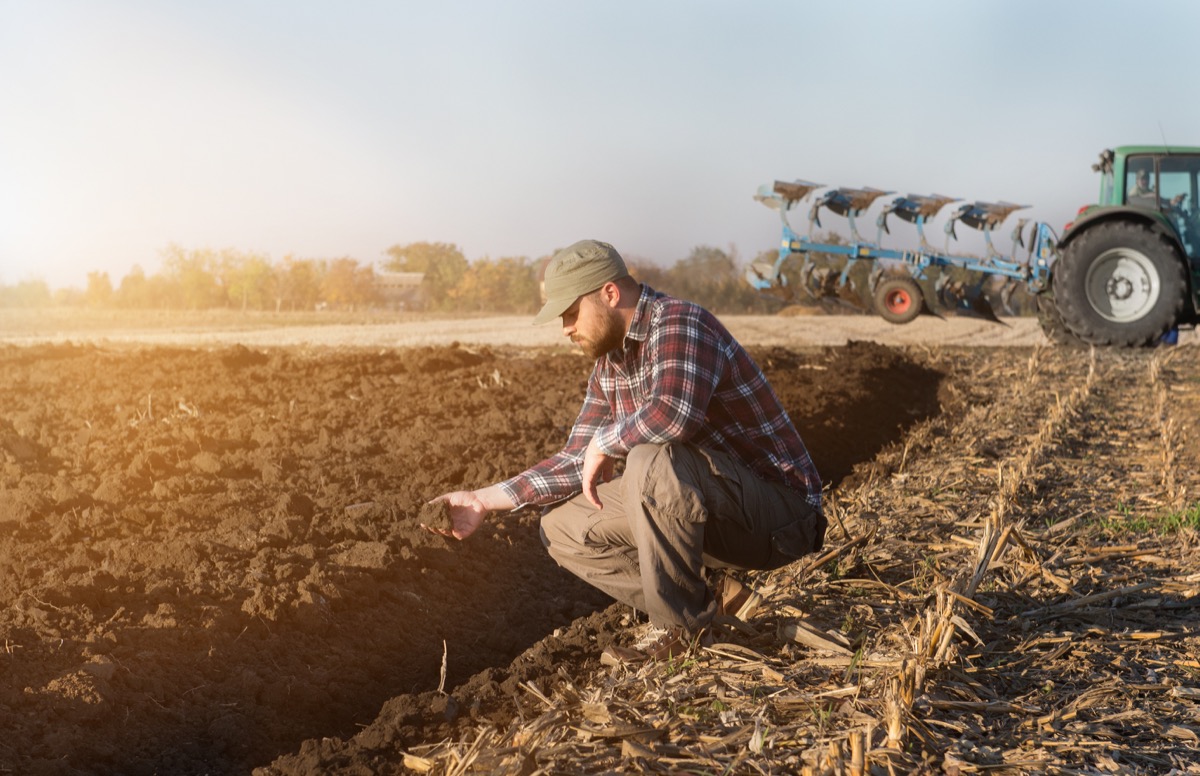
Though farmers have always had to rely on science (of one sort or another) to estimate crop yields, in 1959, the Lubbock Morning Avalanche in Texas estimated that farmers in 2018 would no longer need to spend hours under the sun to achieve a successful growing season.
According to the newspaper, farmers would now work only as scientists, simply pushing buttons to grow whatever they desired. If only things were that easy. And for more strange predictions about the future, check out these 20 Hilarious Predictions About the Year 2020 Made Long Ago.

Shutterstock
A writer for the Middletown Times Press in New York was hopeful that Americans 100 years in the future would watch movies about World War I on a consistent basis, in order to learn from the nation’s past mistakes. Unfortunately, unbeknownst to the writer, World War II would come along in a just few decades and claim the spotlight , as far as films about world wars go.
Shutterstock
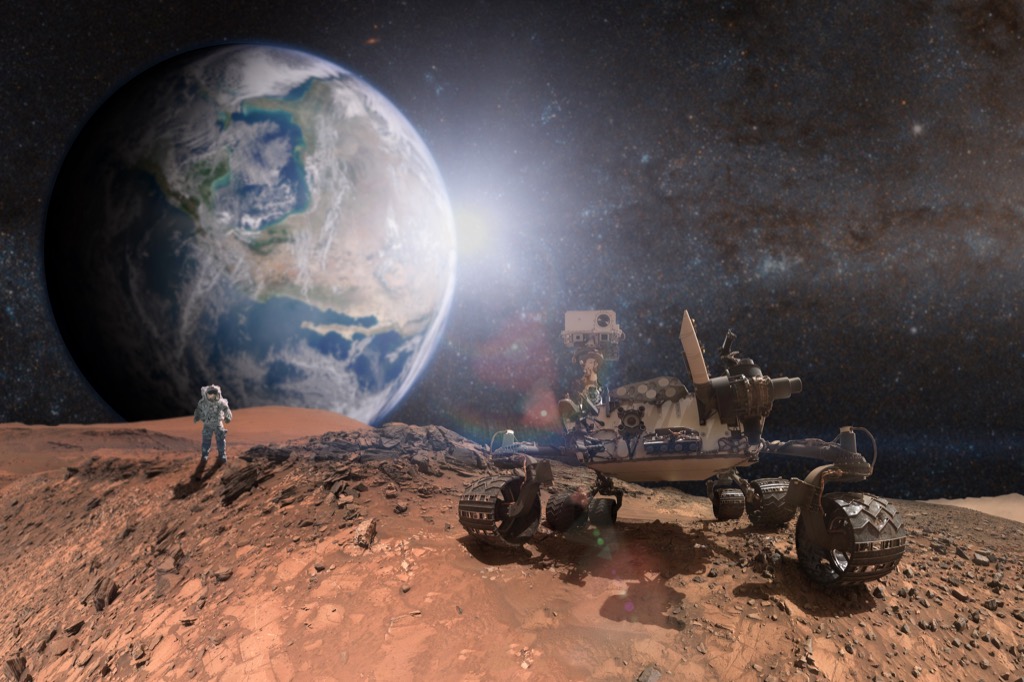
In a 1996 Space Studies Board Annual Report , NASA officials said with some certainty that a piloted mission to Mars would be entirely possible in the year 2018. And, while there have been a number of steps completed towards that goal—in fact, just last month, the agency landed InSight, only their eighth lander in history, on the planet’s surface—NASA still has yet to launch a piloted mission to Mars. And for more facts about the final frontier, check out these 21 Mysteries about Space No One Can Explain.
Shutterstock
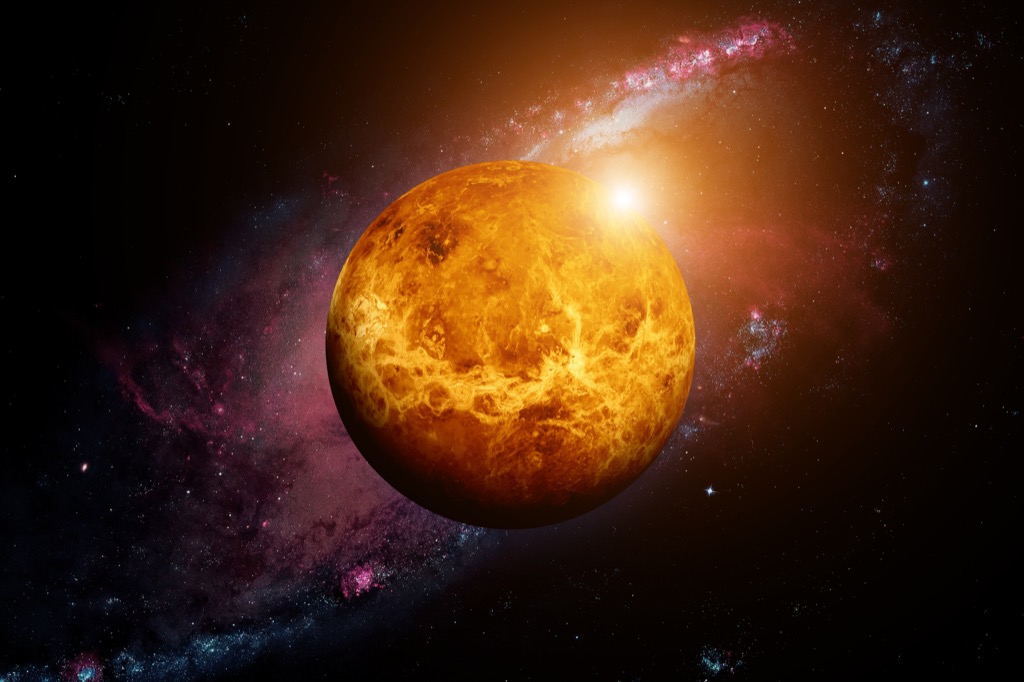
Blind mystic Baba Vanga, who many claim accurately predicted the events on 9/11, also hypothesized that 2018 would be the planet Venus’ shining year of achievement. According to Vanga, a new form of energy would be discovered on Venus in 2018, spurring an entire revolution of the way humans use everyday products, like cars. However, as of today, no plans have been made to send any sort of mission to Venus. Could it be that Venus bears the next big scientific discovery? For now, you’ll have to wait and see.

Shutterstock
According to a rather startling prediction from Nostradamus’ book Les Propheties , World War III was set to begin in 2018—a cruel battle that would be waged between “the two great world powers.” And, even worse, according to the philosopher, the war would last for 27 years before any country saw any relief. So, if there’s one good thing that can be taken from the year 2018, it’s that we didn’t kick off a 27-year war.

Shutterstock
The famous “seer” also predicted that Mount Vesuvius, the same supervolcano that took out the city of Pompeii in 79 C.E., would once again claim many victims (6,000, to be precise) in 2018. While the prediction hasn’t turned out to be accurate, residents of Naples were told in 2016 that the volcano could now erupt at any point—a fear that nearly two million people have to live with every day in the city.
Shutterstock
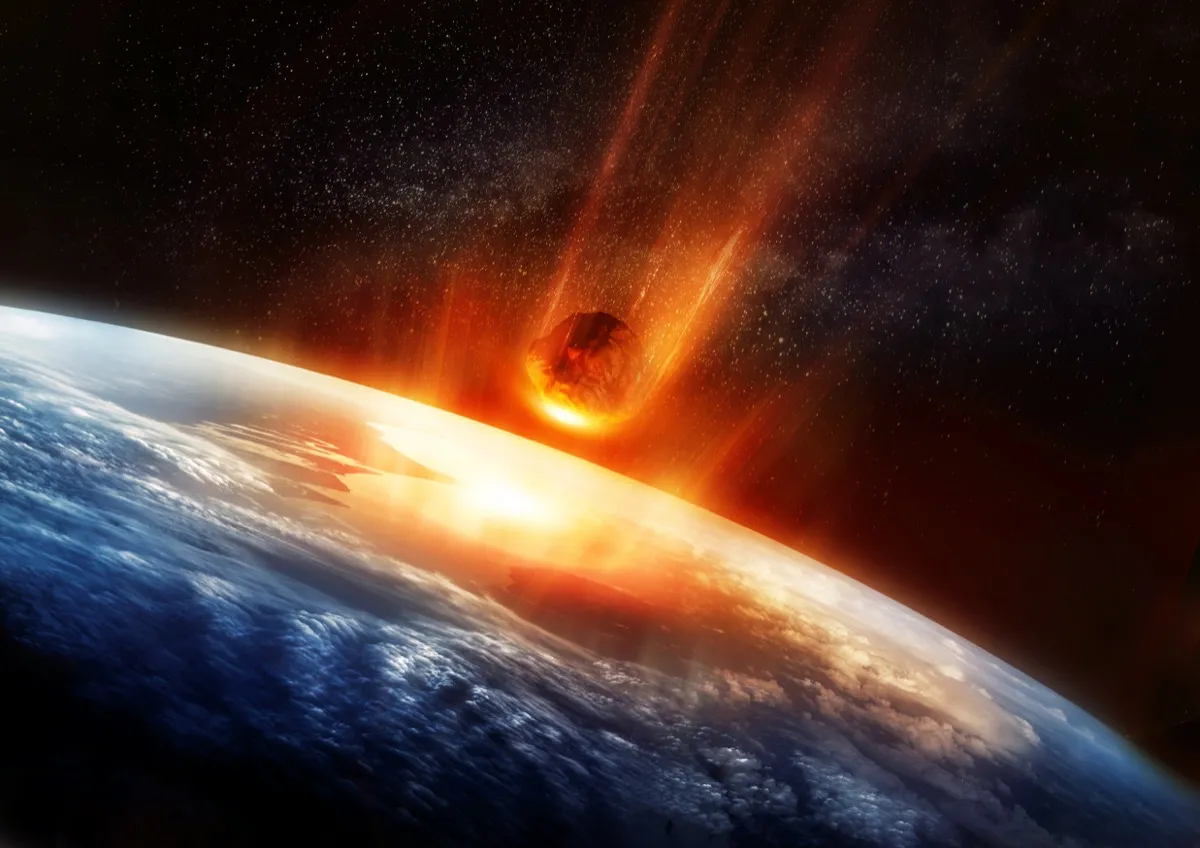
Not only did Nostradamus predict the occurrence of a world war and crippling natural disaster, but he also warned of the probability of a major asteroid or comet striking the earth , resulting in a devastating amount of loss on the planet. Not only that, but he predicted that the asteroid or comet would strike the earth just as world leaders began engaging in nuclear warfare—a culmination of events that would likely end the human race, according to Nostradamus.

Shutterstock
The final prediction that Nostradamus made for 2018 was a bit more hopeful. Even though he believed that the world would surely end in 2018, he estimated that, because of advancements in medicine, humans would likely live to be around 200 years old. And, while it is true that advancements have allowed for longer lifespans in the previous decades, humans can still only look forward to an average lifespan of around 80 years in 2018. For a more scientific look at what the human physiology will be, here are 20 Ways Our Bodies Will Be Different in 100 Years.
Shutterstock
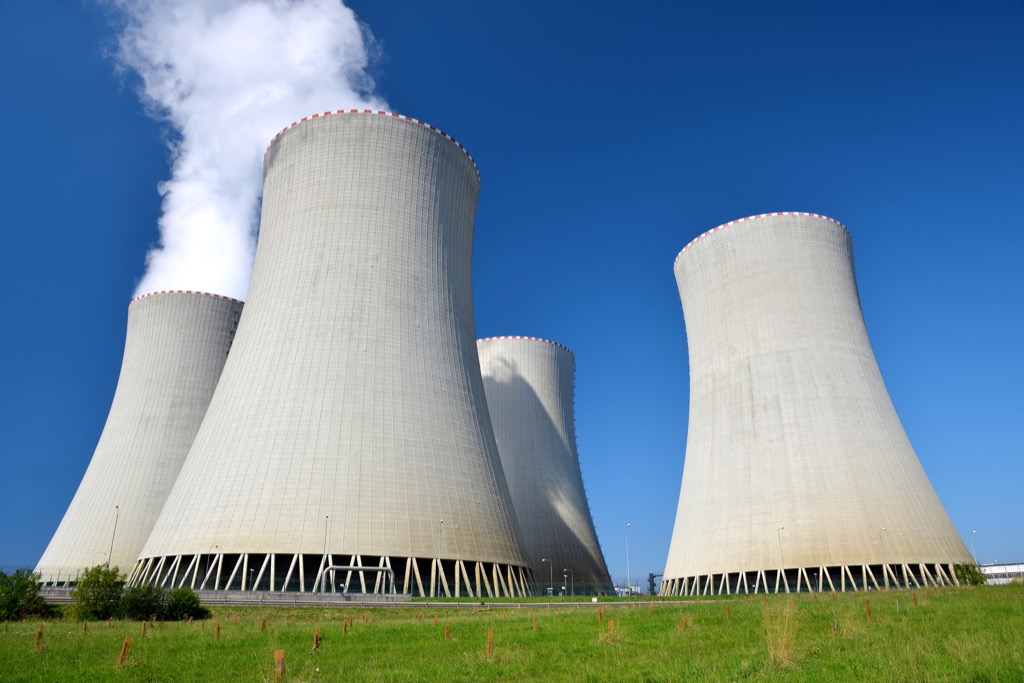
In May 1968, the Foreign Policy Association held a conference in New York City to celebrate the leaders of that time—a three-day gathering that eventually led to the conference’s accompanying book Toward the Year 2018 . In this book, experts ranging from economists to activists were asked to predict what the year 2018 may have in store for the future population. Out of the many misses that resulted from these predictions, Stanford University professor Charles Scarlott inaccurately foretold of an existence where natural gas would be replaced by nuclear breeder reactors, which, of course, is far from the truth in a world with a strong dependence on natural gas.

Shutterstock
Additionally, Toward the Year 2018 contributor and M.I.T. professor Ithiel de Sola Pool predicted a future in which the federal government had complete control over the economy. “They will select their levels of employment, of industrialization, of increase in GNP,” he says of people alive and participating in the economy in 2018. However, 50 years after his prediction, there’s this thing called capitalism that outright prevents such control.

Shutterstock
Just five years ago, the former CEO of Blackberry, Thorsten Heins, made a stunning prediction about modern technology, stating that “tablets themselves are not a good business model,” and that, in 2018, no one will be buying a tablet of any kind. However, years after this prediction, upon seeing how much money consumers were still shelling out for this most-beloved tech accessory , Heins took back his comment about tablets.
Shutterstock
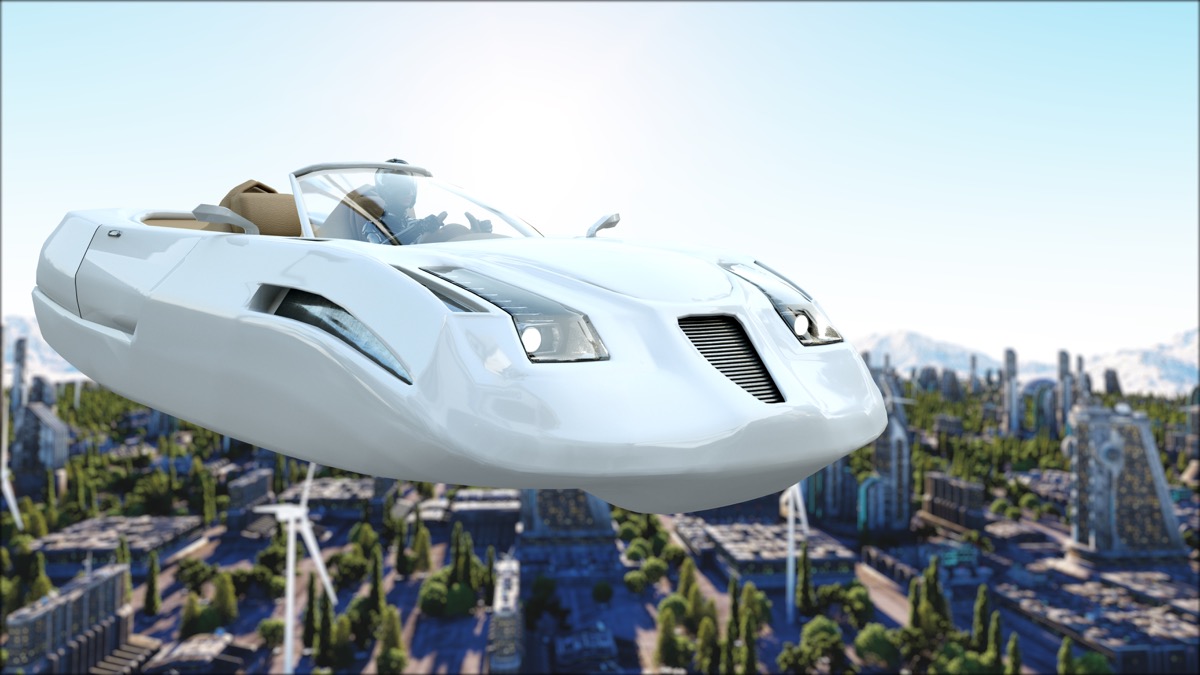
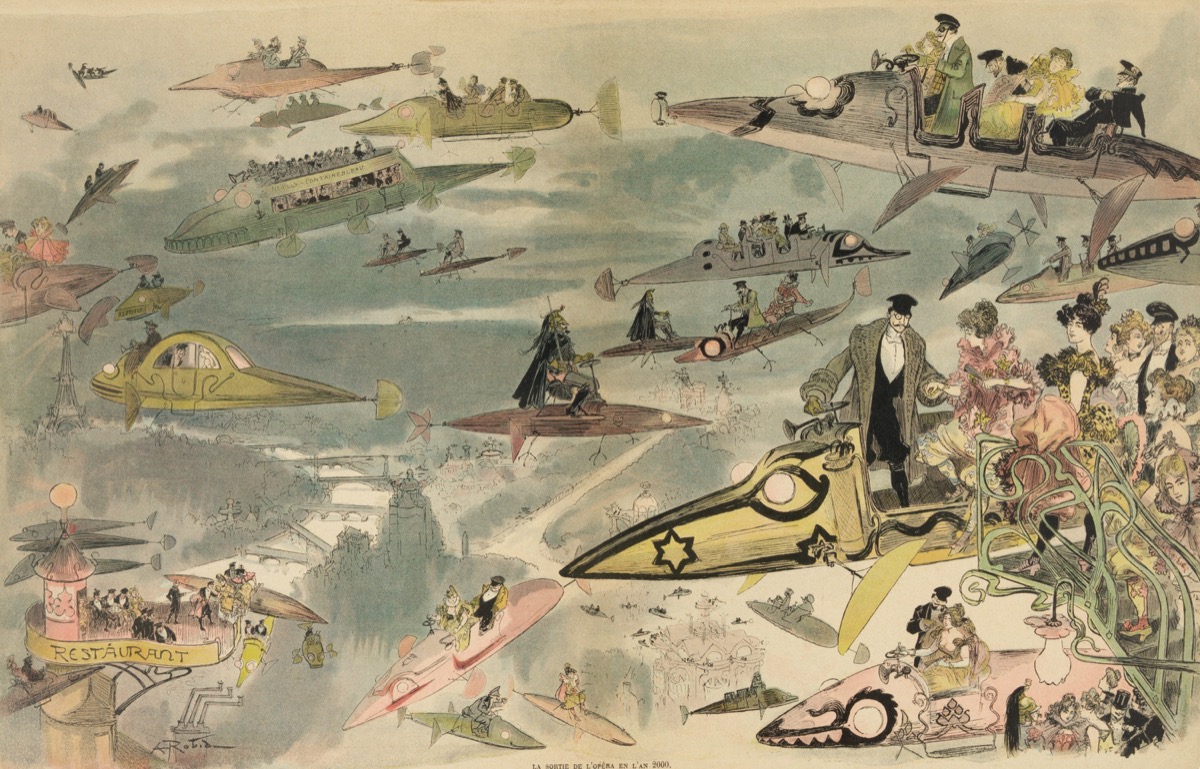
In 1882, artist Albert Robida assumed that flying cars would not only be manufactured, but that they would actually become the primary form of transportation in 2018. And, while the world’s first flying car was technically produced this year by Terrafugia, it still may be another 100 years before this novel mode of transportation becomes the new normal. And for more uplifting predictions about the future of the world, check out these 25 Expert Predictions About the Future That Will Excite You.
Shutterstock
Toward the Year 2018 contributor, mathematician and national security expert D.G. Brennan predicted that anti-gravity cars would be the prevalent form of transportation in 2018. “There is a chance I may be able to see the year 2018 myself, and if so, I shall not be surprised if on my 92nd birthday I am able to go for a ride in an antigravity car,” he says. Yeah. Sure .

Shutterstock
Despite numerous publications remaining steady in their faith that Germany would secure the trophy at the 2018 FIFA World Cup, it was actually the French team that won, beating Croatia 4–2 in a truly nail-biting finale.

Shutterstock
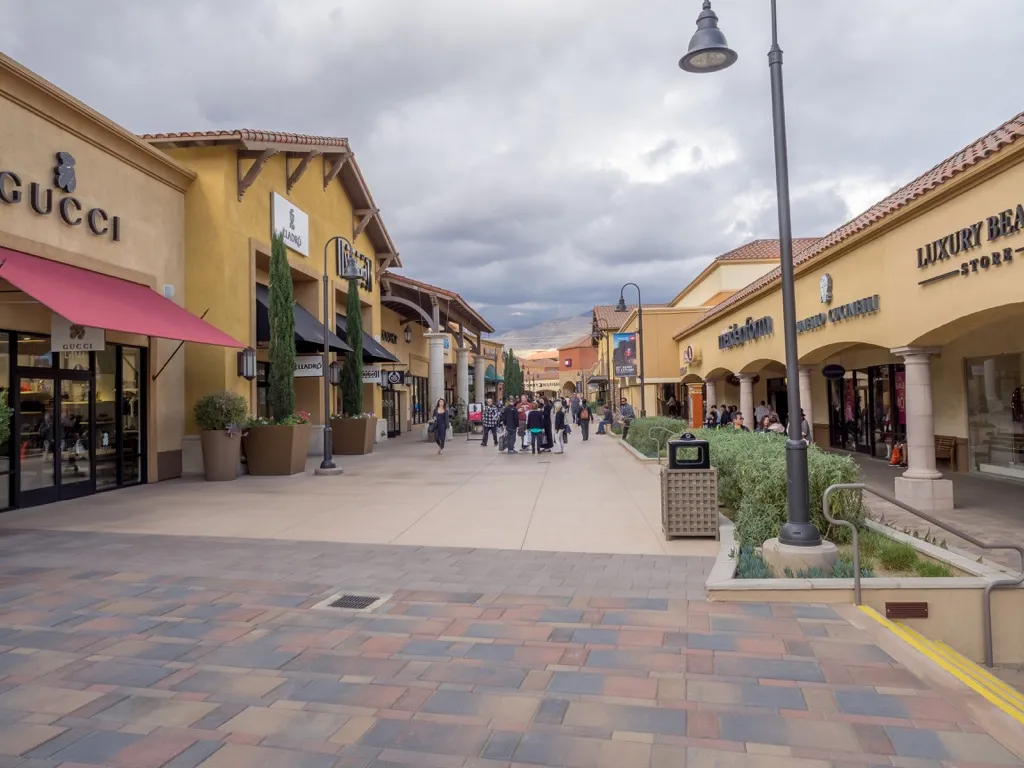
At the tail-end of 2017, Lizzy Freier, managing editor of food consultancy Technomic, told the New York Post that she predicted that restaurants, in a move to please finicky customers, would begin to list all of the ways in which each separate dish would affect a person’s body. Obviously, since this would require a major change in the world of food service, most restaurants have yet to make this prediction come true.

Shutterstock
As it turns out, the New York Post also predicted that 2018 would bear witness to the decline of signatures on formal documents, as the publication stated that hashtags would soon replace this formality. Unless you’re a guest at the Marriott—the company revealed a plan this year where you could Tweet your way to Marriott points— it’s unlikely that you’ll be signing legal contracts with a hashtag, so don’t throw away your writing utensils just yet.
Shutterstock

Shutterstock
Christian conspiracy theorist David Meade, after first predicting that the world would end in 2017, when the mysterious planet “Nibiru” would appear in the sky only to take out the Earth, once again warned of an attack by the planet to take place in 2018. Fortunately for all of humankind, this threat of extinction has yet to take shape. And for more more frightening looks at what may or may not come to be, check out these 25 Expert Predictions About the Future That Will Terrify You.
25 Crazy Predictions About the Next 25 Years
Shutterstock
A lot can happen in 25 years. A quarter-century ago, “mobile phones” meant cordless landlines and Nirvana topped the charts. Anyone anticipating in 1993 what life might be like 2018 would likely miss the mark in some ways, but those watching trends closely could be surprisingly close to how things actually shook out.
To help predict what the future might bring, we reached out to futurists, tech experts, and others whose job it is to keep an eye on where things are heading and how things might look over the long term. Some of their predictions might surprise you. Take a few more steps into the future with the 30 Craziest Predictions About the Future Experts Say Are Going to Happen .

Shutterstock
As the Internet of Things (IoT) lead to a wider range of our appliances, electronics, and other aspects of our lives being connected to the online world, it will also open us up to security breaches. Just as we have to watch out for viruses and hacks to our computers, soon we will have to do the same for our homes.
“While consumers may not be physically locked out of their house, since manual locks have yet to be replaced and can be a backup, they will experience a ‘home invasion’ of a digital sort,” says Jason Hart, vice president and CTO of data protection of security firm Gemalto . “Specific appliances will be held for ransom, internet-connected devices will provide a path to personal data for blackmail purposes. Even assets stored in the cloud won’t be safe: with homeowner data, coupled with lax security controls, hackers have an open door for stealing everything from music and videos to Bitcoins.” Think this is crazy? Check out This Is What Life Could Look Like 100 Years From Now .
Shutterstock
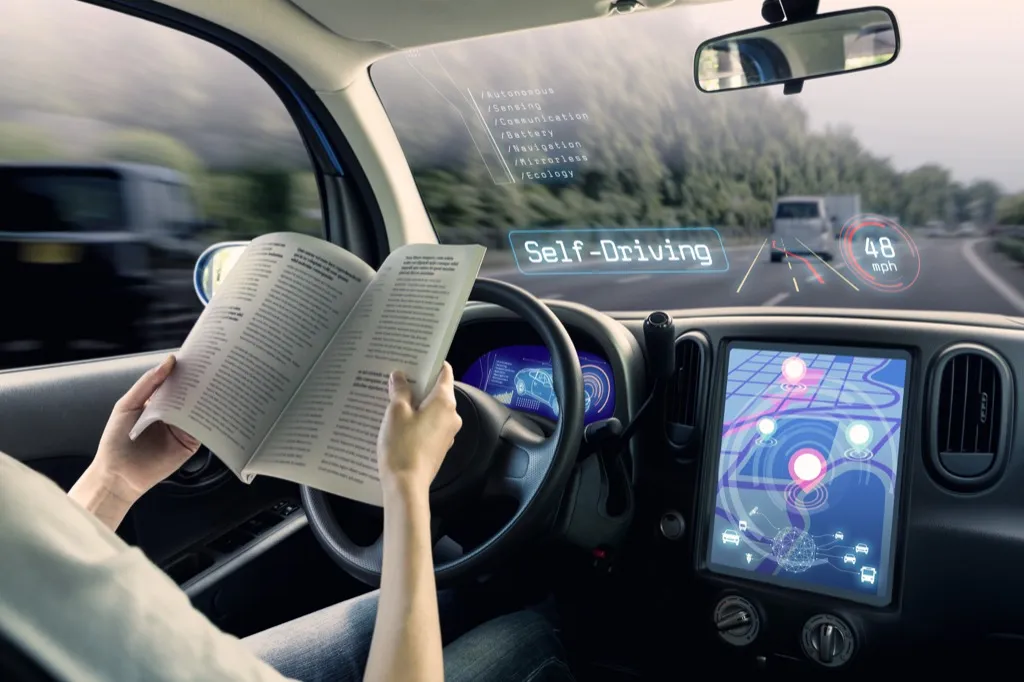
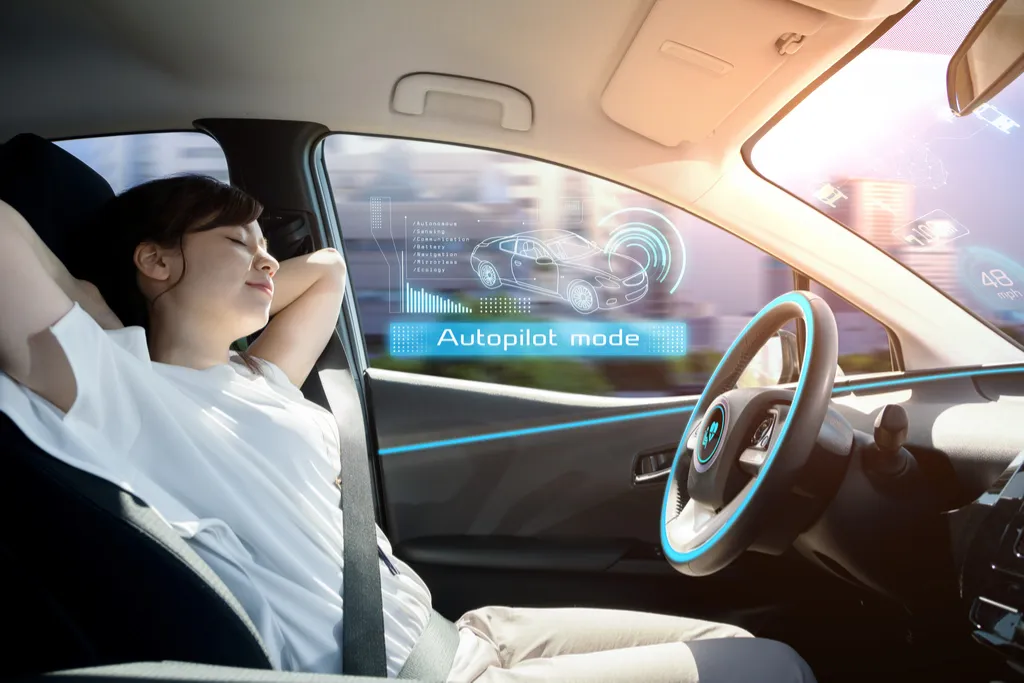
Despite the growing pains that self-driving cars have gone through in these early stages, the technology does not look likely to go anywhere and will likely become the norm in the next few years, according to Chris Nielsen, founder and EVP experience design for technology company Levatas , as well as a futurist.
“Most all major auto manufacturers such as Ford, Nissan Renault, Daimler and more have committed to shipping driverless car options within the next 2-4 years, most of them by 2020,” he points out. “This means that in 25 years, the driverless car experience will have matured into a safe, ubiquitous and ultimately convenient option.”
For those reasons, he expects that driverless cars will saturate the marketplace within a quarter century, and will have built a track record of safety and effective operation that laws may even be passed to remove (relatively unsafe) human-driven cars from public roads.
“We’re still quite a ways off from this here in 2018, but a lot tends to happen in 25 years,” he says. While you’re still stuck driving your own car (sigh), be sure to Rule the Road with These Smart Driving Strategies .

Shutterstock
Nikolas Badminton , a futurist, author, and researcher who speaks on topics relating to the impact of exponential technology expects that not only will self-driving vehicles become commonplace, but “it will almost be a stigma to own and drive your own vehicle.”
He adds that it will also have some positive effects, such as reducing the stress of commutes, a growth in carpooling, and even “shared vehicles used as meeting rooms by companies.”
Shutterstock
Another side benefit that may grow from self-driving vehicles is that they will be less expensive, even free—but you will likely have to listen to a corporate message to enjoy them.

Shutterstock
“By combining the power of AI and blockchain, the concept of money could evolve into electronic tokens with far more types of assets tradeable within the one ‘currency,’” predicts Rohit Talwar, CEO of futurist research company Fast Future .
He gives the example that we might earn tokens from our employers that can be redeemed at retailers and airlines, and as micro-credits for completing workplace training or school learning tasks.
“Instead of simply liking a track from a musician, we could now make a micro-payment to them with a fraction of a token,” says Talwar. “This evolution from cash and cryptocurrencies towards a universal means of exchange could mean the end of cash and foreign exchange markets.” To survive with your cash flow now, follow these 52 Easy Ways to Be Smarter with Money in 2018 .

Shutterstock
While cryptocurrencies like bitcoin have taken off in the last couple years, Badminton expects to see additional, brand-oriented currencies on the rise, particularly from major tech companies.
“Some people will only use those currencies in their daily lives—think Facebook Dollars, Google Dollars, Wal-Mart Dollars, Disney Cash,” says Badminton. And for more on forward-thinking technology, don’t miss these 20 Facts You Never Knew About Your Smartphone.

Shutterstock
A quarter-century ago, the most paranoid ideas about surveillance and privacy invasion probably would not have predicted how eagerly we would be to hand over personal data to faceless corporations and data-miners. But Reg Harnish, a fellow at the National Cybersecurity Institute and CEO of GreyCastle Security , predicts we have much further to fall when it comes to handing over the keys to our data.
“We are already seeing the erosion of privacy today, with Facebook and other organizations selling all our most private data to the highest bidder,” he says. “But, in the next quarter-century, perhaps even sooner, I believe privacy as we know it will be gone. We will talk about privacy like we talk about rotary phones today—we don’t. Is that a good thing? I don’t know. But, short of opting out of the internet, we will all have to face the reality that nothing will be secret anymore.”

Shutterstock
But this loss of privacy won’t be taken lying down. With technology becoming a bigger part of our lives, security concerns will grow too.
“What changed in 2017, and will escalate in the coming year, is a heightened awareness of security and data privacy issues amongst general consumers and business leaders, too,” says Sandor Palfy, CTO of identity and access management at LogMeIn , makers of password manager LastPass . “There is no doubt for consumers and businesses that data breaches and security issues are no longer an anomaly, but will continue to be the new normal.”
For that reason, Palfy expects that businesses will be required to invest an even greater amount in tools and training that strengthen their organizations’ and employees’ security.
Shutterstock
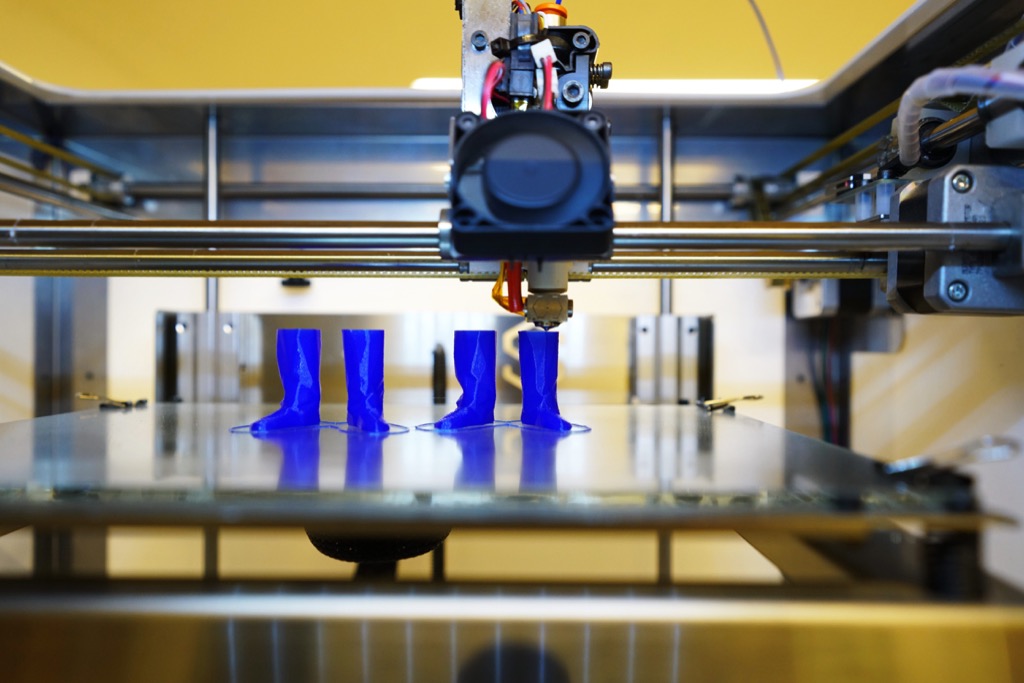
Expect to see further development in 3D printing, particularly as the technology gets more affordable and manageable.
“There are few modern technologies more exciting than 3D printing,” says Nichole Elizabeth DeMeré , a customer service and SaaS expert and author of Playbook to Grow Your SaaS . “You can turn filament into a functional beer stein, goo into a remote control car, or build a to-scale model of your living room to figure out where to put your couch. Or, you can build a 3D printable prosthetic hand that can grip for less than ten dollars, like the e-NABLE Project does for kids in need.” And for more amazing knowledge, here are 30 Facts You Always Believed That Aren’t True.
Shutterstock
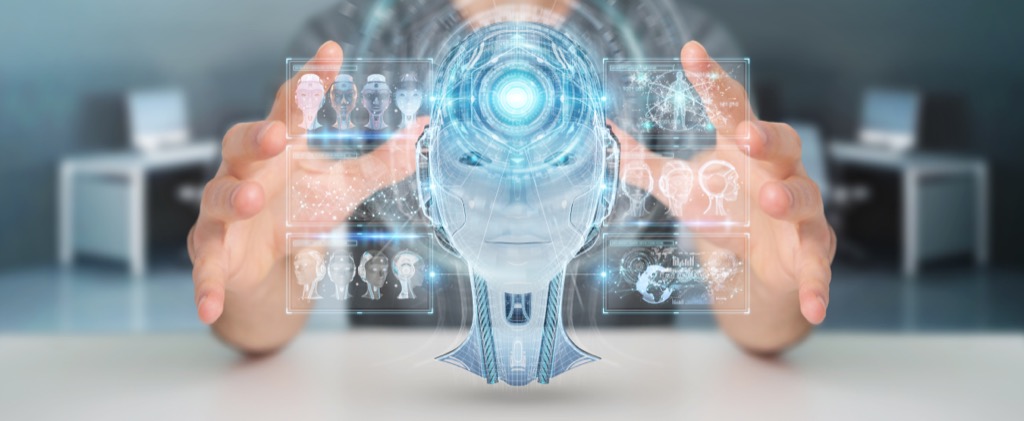
Artificial intelligence will only become more prevalent, impacting virtually every area of our lives—healthcare, education, entertainment, financial services, and more—according to Talwar.
“Smart systems could manage our social lives, help us select the ideal partners for dating, marriage, and reproduction, monitor our health in liaison with our doctors, and personalize our education so content is delivered in the way we learn best,” he says. “The technology will be making legal decisions in court, determining our benefit payments, fact-checking politicians, and powering the transport sector.”

Shutterstock
DeMeré also expects to see a further growth in chatbots in the realm of customer service and marketing.
“Chatbots are poised to become the next big thing,” she says. “If you like being in the lead of cresting trends in marketing, you’re going to need one. The greatest adoption of bots is with consumers between the ages of 18 and 35. But that doesn’t mean older consumers aren’t willing to engage with bots—not by a long shot.”

Shutterstock
Andy Wood, chairman of computer vision and facial animation company Cubic Motion , expects that everyone will have their own online avatar.
“Within the next 25 years, everybody can have an online persona ‘digital double’—it doesn’t need to be creature, age or gender specific—just like the Ready Player One movie,” he says. “Every walk of life, profession, and social lifestyle will have access to an online digital double.”

Shutterstock
Just as we’ve gotten more used to chatbots and speaking to Alexa and Siri, soon we will get comfortable interacting with fully digital characters.
“By 2024, we may all be interacting with digital humans in some way or other, whether its via headsets, films, TV, games, live performances and broadcasts, or by directing digital assistants in our homes in real-time,” says Wood.

Shutterstock
As VR evolves further as a form of entertainment, the pursuit of an immersive experience that draws so many to theaters may instead lead them to pick up VR headsets.
“Movie theaters will disappear quicker than Blockbuster,” expects Andrew Selepak, a professor of telecommunications at the University of Florida.
Though VR is still in its infancy in many ways, he expects that in 25 years, we will all be enjoying movies and television in a virtual environment.
“We will all have virtual reality devices to enjoy the latest release taking away any need to go to an actual theater and sit in a chair to watch the film in a flat 3D environment,” he adds. “Just like how streaming services did away with the video rental business, Virtual Reality and streaming video will do the same to theaters.”

Shutterstock
With more virtual experiences available online, particularly in the realm of education where online classrooms will evolve, young people will be more likely to stay close to home rather than go away to college.
“The need for students to physically attend a university will become unnecessary,” says Selepak. “Universities will instead resemble TV studios where professors will lecture on material in front of a green screen for students to watch at home. This will lead to more young people living with their parents after the age of 18, but for universities, just like with the advent of MTV, video will replace the professor star with those who are the most personable and telegenic.”
Shutterstock
With AR and VR becoming commonplace and our world approaching a Ready Player One kind of world, expect to see plenty of people push back against these invented realities.
“There will be a young, ‘anti-immersion’ movement that totally shuns these technological developments, in favor of 1990/2000’s connectivity,” predicts Zach Suchinm digital technology and marketing expert and CEO of Brand Knew .
This won’t necessarily mean revolution, but a turn toward tech that’s grounded in lived experience, such as live streaming.
“They spark conversation and action as you watch along with others,” says Suchinm. “They are timely, so they require a viewers dedicated attention in the moment or they’ll miss it. Conferences, events, red carpets, sports, cultural events are all ripe for live streaming. Amplified with a call to action, they tend to drive click-throughs 10x than VOD.”
Shutterstock
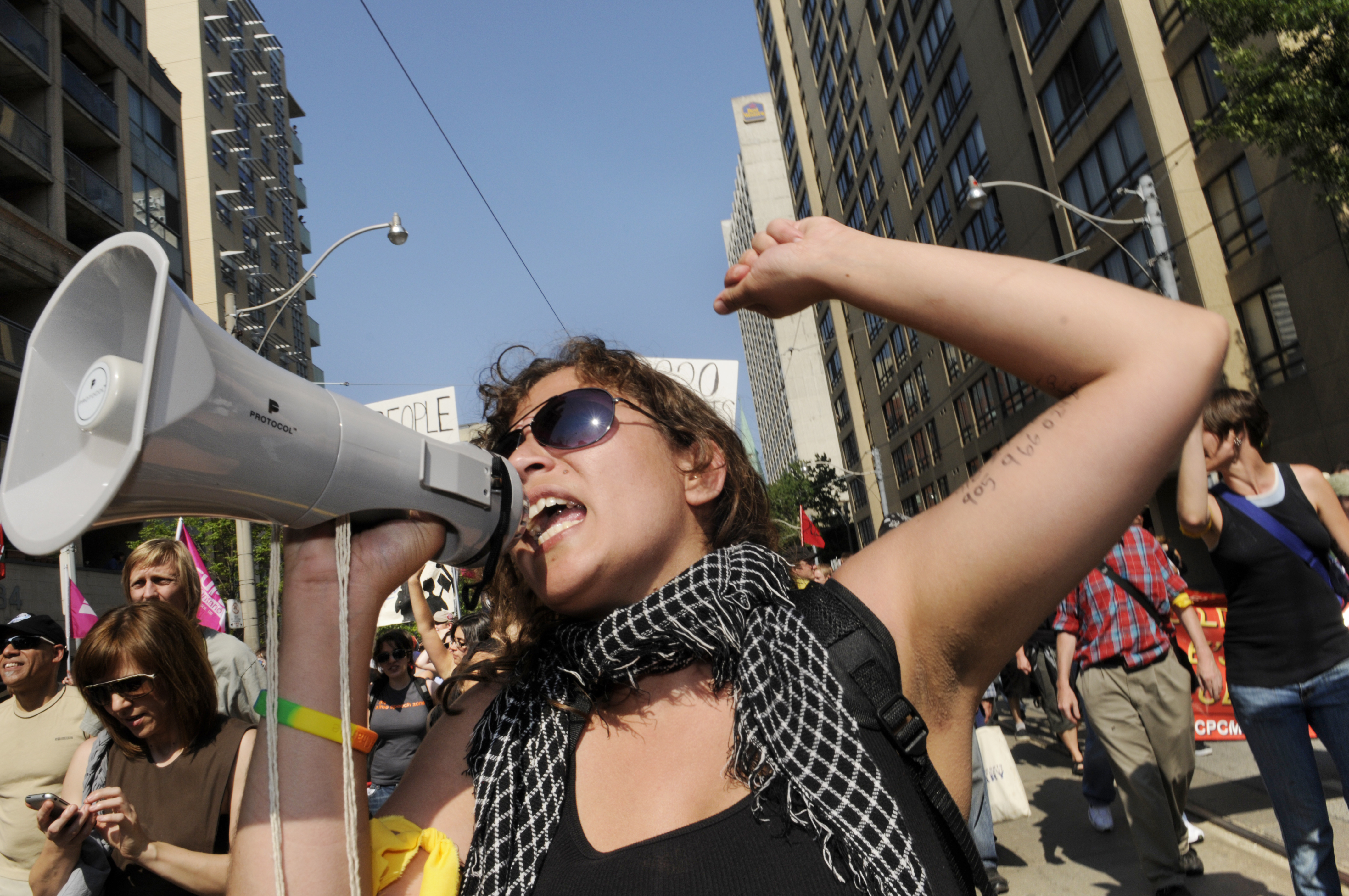
Just as the rapid expansion of technology is going to lead many to push back, so too will the growth of media and tech companies inspire government intervention and scrutiny.

Shutterstock
Extreme weather is likely to become the norm, with hurricanes, tsunamis, wildfires, and all variety of other major events hitting with more frequency. Wes O’Donnell, a professor of predictive analytics at Baker College, warns that in the next 25 years we are going to see a “statistical increase in dramatic weather events due to human-induced climate change.” So pick up some sandbags and make sure you’ve paid your flood insurance.
Shutterstock
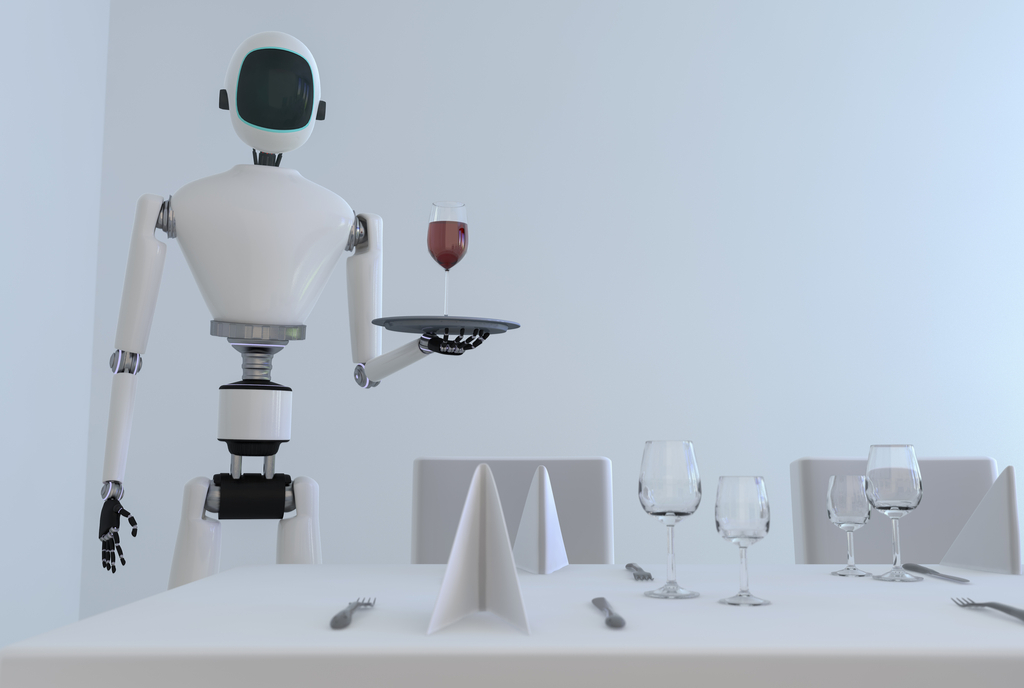
Beyond being addicted to checking our phones, more and more of our daily lives will be handled by automation and AI, with chores and activities we never previously thought of as burdens getting outsourced to tech tools.

Shutterstock
As AI and IoT become the norm and retail continues to collapse, the employment landscape will be reshaped in major ways—not all of them good.
“Unemployment will skyrocket,” says Selepak. “Machines are already replacing cashiers at grocery stores, Walmart, and Lowes, and smart cars will replace Uber drivers. Many blue collar jobs will be replaced with machines that cost less, never skip work, and never get sick. This will leave millions out of work and create a tremendous tax burden on the government.”

Shutterstock
Anyone who has lost a loved one in recent years can appreciate that memorializing someone has changed in the social media era, with Facebook pages becoming memorials and places to share memories of the person, and their posts and shares serving as a scrapbook of their lives. Journalist Danielle Radin, who provides social-media management services free of charge for those that are deceased as part of Kind Years Grief Association , expects to see the demand for this grow.
“As social media continues over the next 25 years, there will be more of a need for digital memorialism,” she says. “It will become a field just like any other. When we pass away, our digital footprint lives on forever. There will need to be people to manage this.”
Shutterstock
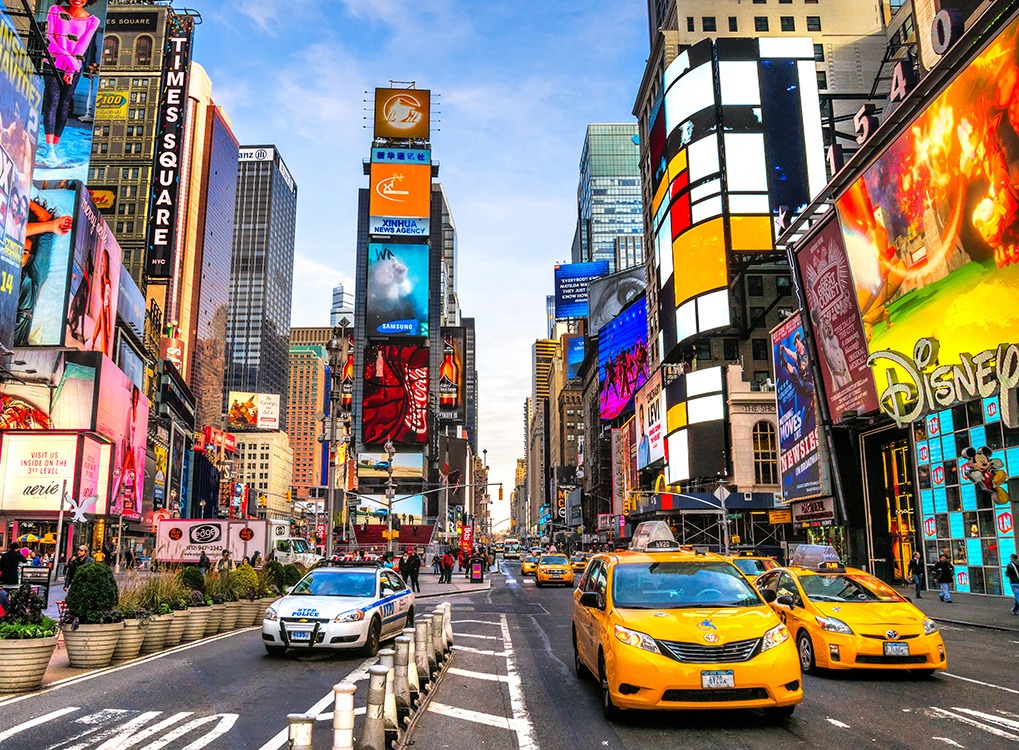
“An era marked by exponential change has seen changing ideas of asset ownership, radical leaps forward in AI, increasingly efficient electric propulsion units for vehicles, and the emergence of smart city infrastructures,” predicts Steve Wells, COO of Fast Future. “These relatively smooth transitions led to other changes in cities, including the removal of redundant traffic signals and the remodeling of some street intersections.”

Shutterstock
While the concept of artificial meat might seem unsettling today, it will likely become more widely accepted in the next 25 years as its benefits become more apparent.
“In-vitro cloned meat could be another future solution to our food supply problems,” says Fast Future researcher Helena Calle. “While lab-grown meat may still face many challenges, such as flavor control, it also has many advantages such as less waste, less risk of viruses, reduced space requirements, and lower emissions and environmental impacts among others. These benefits seem to outweigh the disadvantages and drawback of traditionally reared livestock.”

Shutterstock
Speaking of lab-grown meat, Calle predicts that such innovations, along with AI and vertical farming, will lead to a transformation of the food chain as we know it.
“Hydroponics plants, fruits, and vegetable might change agriculture as we know it, and help revolutionize the food industry,” she says. “Overpopulation is having major consequences, driving a lack of growing space and food in many parts of the world. The growing global population will force us to find creative solutions. Having AI-controlled hydroponic vertical farms on the sides of buildings might be one of the solutions.”

Shutterstock
As pathogens become ever-more immune to the current antibiotics available on the market, the pharmaceutical industry will have to get more creative and innovative in their solutions.
“In the next 25 years, is it possible that we will experience ‘the end of antibiotics’ (as the World Health Organization put it in 2016)?” asks Fast Future’s foresight director, Alexandra Whittington. “Fortunately, the microbial threat is being met with advanced drug development, allowing medical researchers to explore new approaches to fight superbugs. New strategies on the horizon range from genetic modification of germs and implantable semiconductors through to the discovery of new antibacterial agents in soil.”
To avoid sickness and live a long life, follow these 100 Ways to Live to 100 .
