23 Hilarious Predictions About the Year 2020 That Are Way Off
Shutterstock
It’s hard to imagine that we’re almost living in the year 2020. Though we’ve seen plenty of impressive technological advances , like artificial intelligence and phones that unlock by scanning our faces, it’s not quite the world of flying cars and robot butlers people once imagined we’d be living in by now. In fact, decades ago, predictions about the futuristic and revolutionary changes we’d see in this far-off sounding year were quite lofty. Want a good laugh? Here are 23 predictions about the year 2020 that at some point in time, people really expected to happen. Unfortunately, they haven’t… at least not yet!

Shutterstock
So, what’s going to happen to our feet—or, more specifically, our toes—in 2020? In a lecture at the Royal College of Surgeons of England in 1911, a surgeon by the name of Richard Clement Lucas made a curious prediction: that the “useless outer toes” will become used less and less, so that “man might become a one-toed race.” “This Little Piggy” would get a whole lot shorter!
Shutterstock/Onyx9
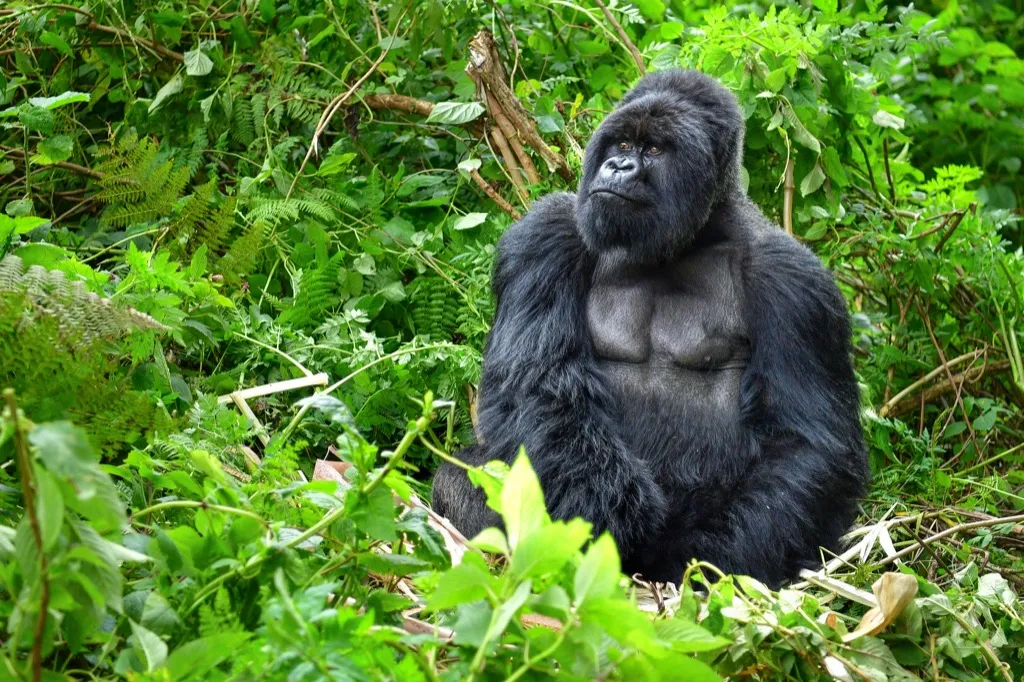
In 1994, the RAND Corporation, a global think tank that’s contributed to the space program and the development of the internet, said they expected us to have animal employees by the year 2020.
“The RAND panel mentioned that by the year 2020 it may be possible to breed intelligent species of animals, such as apes, that will be capable of performing manual labor,” Glenn T. Seaborg wrote of the corporation’s prediction in his book Scientist Speaks Out . “During the 21st century, those houses that don’t have a robot in the broom closet could have a live-in ape to do the cleaning and gardening chores. Also, the use of well-trained apes as family chauffeurs might decrease the number of automobile accidents.” Yikes, who’s gonna tell them?

Shutterstock
Inventor, science writer, and futurist Arthur C. Clarke —who co-wrote the screenplay for 2001: A Space Odyssey —believed that the boring houses of 1966 would be radically different by the time we reached the 21st century, according to Inverse . Evidently, the houses of the future would have nothing keeping them on the ground and they would be able to move to anywhere on earth on a whim.
Oh, and it wouldn’t just be one home that would be able to relocate without the owner even needing to get out of bed and put on pants. “Whole communities may migrate south in the winter, or move to new lands whenever they feel the need for a change of scenery,” Clarke promised . Up 2 , anyone?
Shutterstock
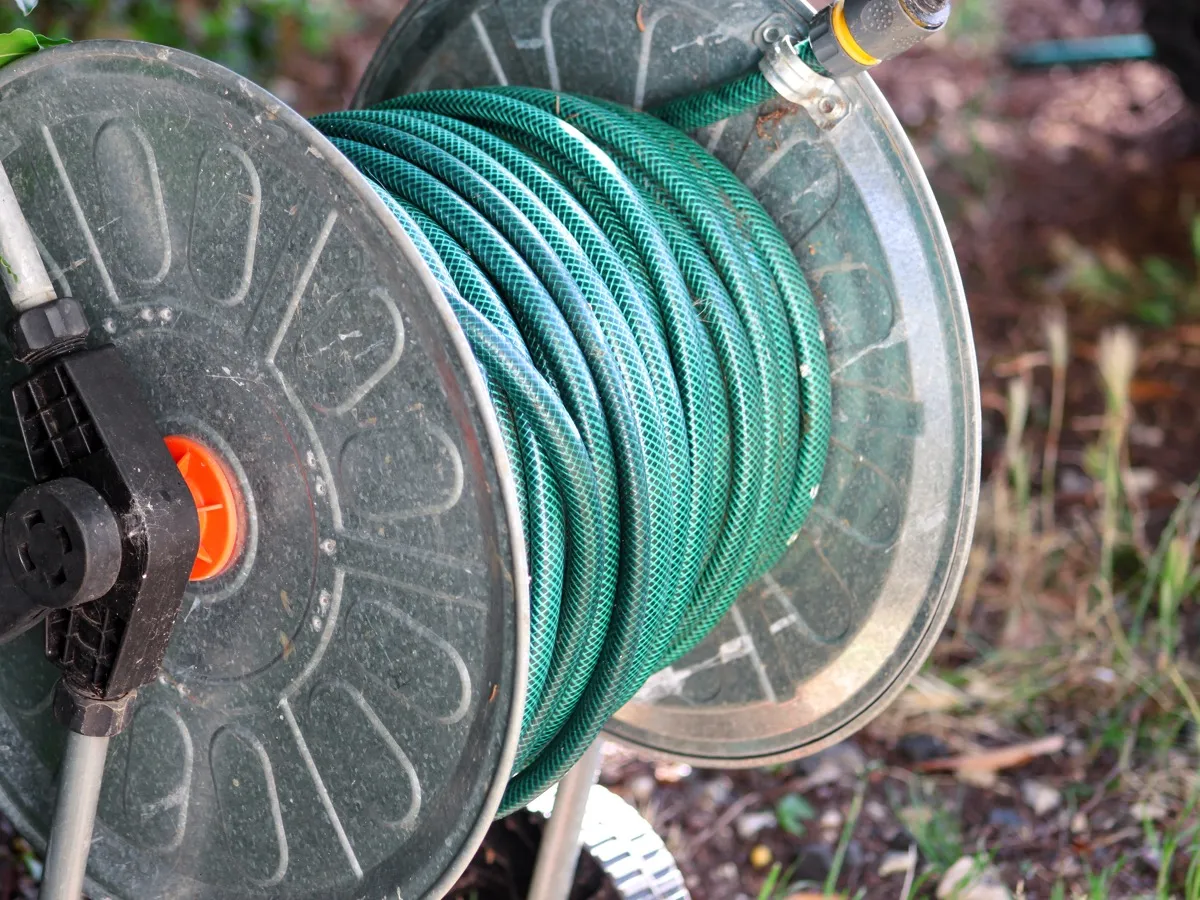
The New York Times’ longtime science editor Waldemar Kaempffert , who worked for the paper from the 1920s through the 1950s, had lots of opinions about how different the world would be by the 21st century. In a 1950 Popular Mechanics article, titled “ Miracles You’ll See in the Next 50 Years ,” he predicted that by the 21st century, all you’ll have to do to get your house clean is “simply turn the hose on everything.”
That’s because Kaempffert imagined furniture would be made of synthetic fabric or waterproof plastic. “After the water has run down a drain in the middle of the floor (later concealed by a rug of synthetic fiber),” all you’d have to do is “turn on a blast of hot air” to dry everything. What about not-so-resilient material, you ask? Just “throw soiled ‘linen’ into the incarcerator!”

Shutterstock
In the same Popular Mechanics article, Kaempffert predicted that all food would be delivered to our homes in the form of frozen bricks by the 21st century. “Cooking as an art is only a memory in the minds of old people,” he wrote. “A few die-hards still broil a chicken or roast a leg of lamb, but the experts have developed ways of deep-freezing partially baked cuts of meat.” And, thanks to advances in culinary technology, Kaempffert predicted it would even be possible to take ordinary objects like old table linens and “rayon underwear” and bring them to “chemical factories to be converted into candy.” No thanks!

Shutterstock
Forget jetpacks and flying cars. Popular Mechanics was pretty sure back in 1951 that every family in 21st century would have at least one helicopter in their garage.
“This simple, practical, foolproof personal helicopter coupe is big enough to carry two people and small enough to land on your lawn,” they explained. “It has no carburetor to ice up, no ignition system to fall apart or misfire: instead, quiet, efficient ramjets keep the rotors moving, burning any kind of fuel from dime-a-gallon stove oil or kerosene up to aviation gasoline.” Yes, but then, we’d imagine, your teenage son would ask to borrow the chopper, and you’d wake up the next day to discover your helicopter stuck in a tree. It’s always something!

Shutterstock
When you’re curious about the future of language , you probably should ask someone other than an engineer about it. And yet, that’s what Ladies’ Home Journal did in 1900, asking John Elfreth Watkins Jr. , the curator of mechanical technology at the Smithsonian Institution, for his educated guesses about the 21st century.
The man of science had no love for what he considered extraneous letters, and he boldly predicted that by the 2000s, “there will be no C, X, or Q in our everyday alphabet. They will be abandoned because unnecessary.” Instead, Watkins wrote, we’d be spelling mostly by sound and would only communicate with “condensed words expressing condensed ideas.” So, in 2020, we may say to our friends, “Me happy good, hi!”

Shutterstock
Michael J. O’Farrell , founder of The Mobile Institute , has been an expert in the technology industry since 1985. But even the experts can make mistakes. In the 2014 book Shift 2020 , O’Farrell predicted that 2020 would be the dawn of the “nanomobility era.”
“In the pending nanomobility era, I predict telepathy and teleportation will become possible by the year 2020—with both commonplace by 2040,” he said. Well, we’ll believe it when we see it.
Shutterstock
If you’re sick of asphalt roads and all the potholes that come with them, then you’ll wish Popular Mechanics was right about this prediction for the 21st century. In a 1957 article, the magazine predicted that every road and street in America will be “replaced by a network of pneumatic tubes,” and your car would only need enough power to get from your home to the nearest tube. Then, by the calculations of a Honeywell engineer, “they will be pneumatically powered to any desired destination.”
Shutterstock
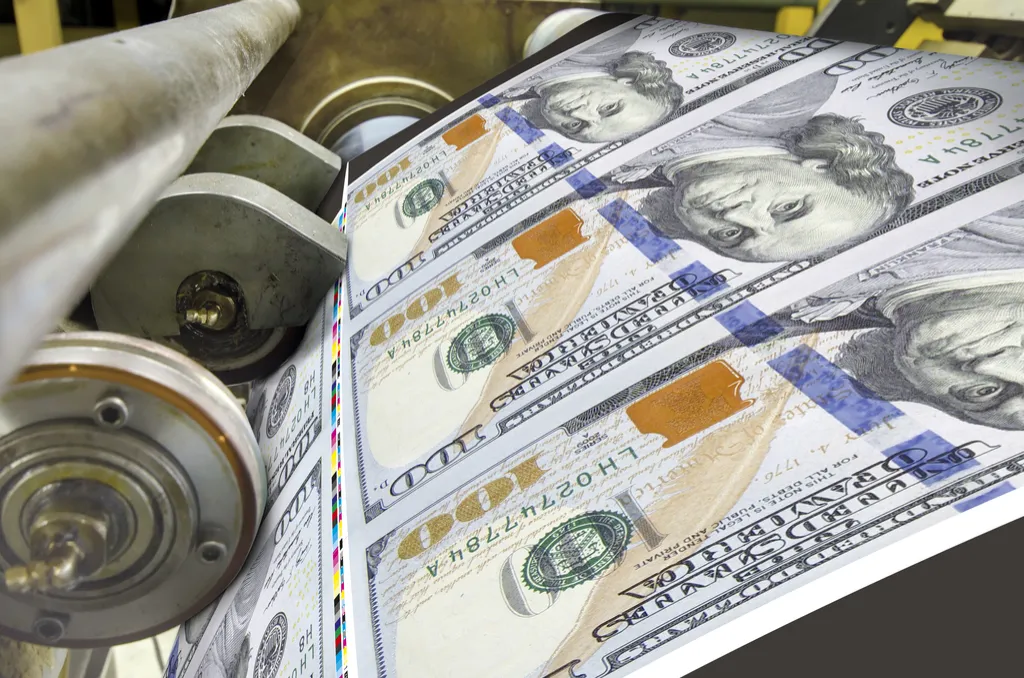
In 1966, Time magazine reported that the 21st century would be a pretty awesome economic era for just about everybody. In an essay called “The Futurists,” they predicted that “machines will be producing so much that everyone in the U.S. will, in effect, be independently wealthy.” Without even lifting a finger, the average non-working family could expect to earn an average salary of between $30,000 and $40,000, according to Time . That’s in 1966 dollars, mind you; in 2020, that’d be about $300,000—for doing nothing. We wish!
Shutterstock
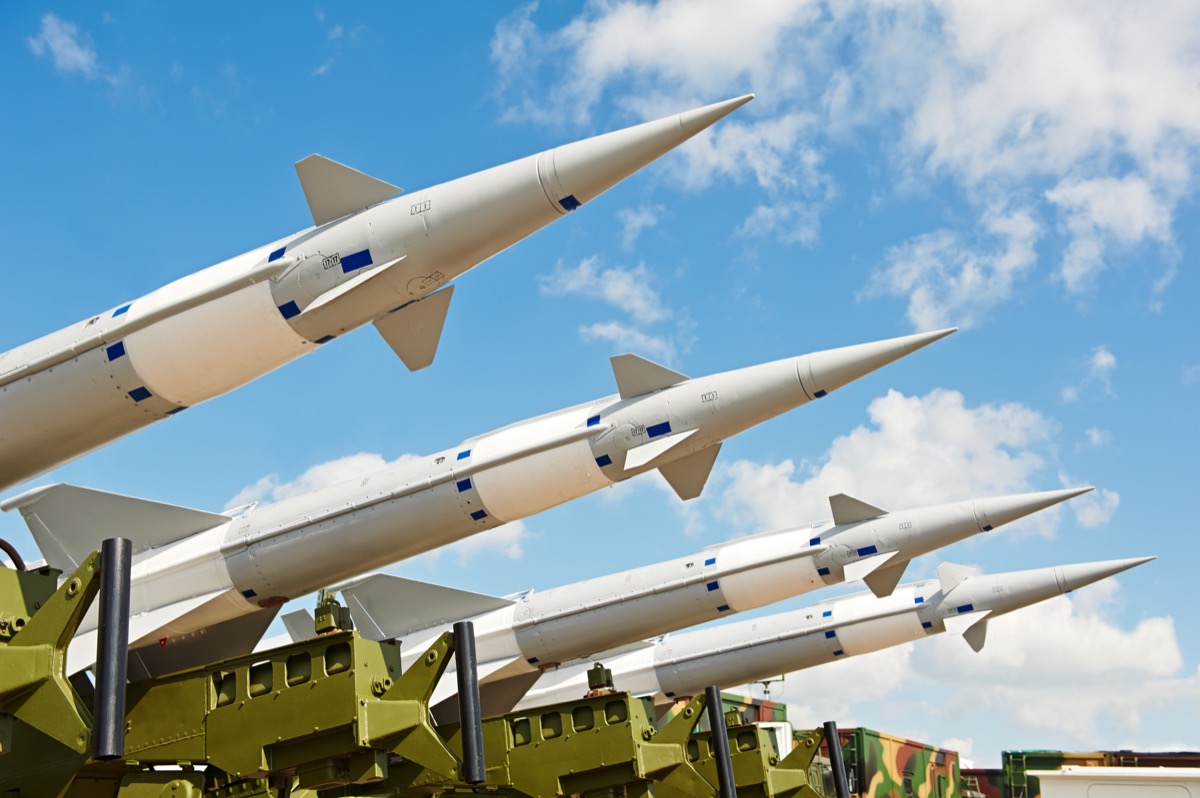
As out there as it sounds, mail delivery via missile was successfully attempted in 1959. That year, a Navy submarine—the U.S.S. Barbero —sent 3,000 letters, all addressed to political figures like President Dwight D. Eisenhower , using only a rocket. The nuclear warhead was taken out and replaced with mail containers, and the missile was launched towards the Naval Auxiliary Air Station.
The mail was successfully delivered, and Postmaster General Arthur E. Summerfield was so excited by the “historic significance” of mail delivery via instruments of war that he predicted it would become commonplace by the next century. “Mail will be delivered within hours from New York to California, to Britain, to India, or Australia by guided missiles,” he said . “We stand on the threshold of rocket mail.” Though we never got rocket mail, we did get something better: email .
Shutterstock
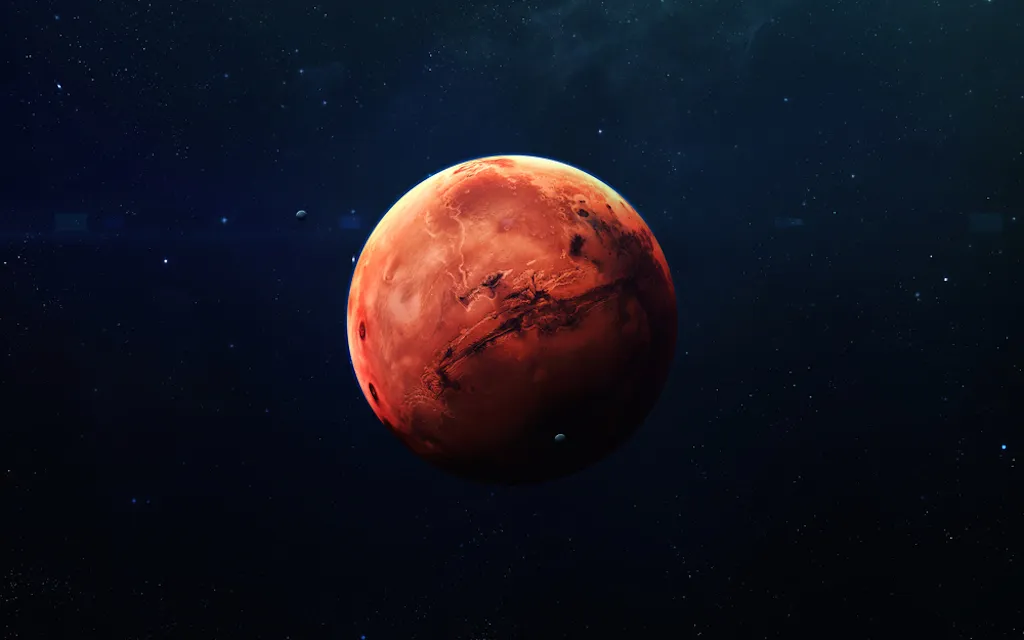
We’ve been dreaming of putting humans on Mars for as long as we’ve known the red planet existed. However, it’s only recently that the venture has started to feel even remotely realistic. And yet, in 1997, Wired magazine’s Peter Schwartz and Peter Leyden picked the year 2020 as the time when “ humans arrive on Mars .”
They also had some specific ideas about how it would go down exactly: “The four astronauts touch down and beam their images back to the 11 billion people sharing in the moment. The expedition is a joint effort supported by virtually all nations on the planet, the culmination of a decade and a half of intense focus on a common goal.” Ah, sounds nice, doesn’t it?
In the go-go ’90s, we had every reason to believe them. But we’re not so optimistic now that Mars tourism is in our immediate future. Even NASA projects that the earliest we could get a human on the surface of Mars is 2030, and that’s only if we’re really, really lucky.

Shutterstock

Shutterstock
For a 1939 issue of British Vogue , product designer Gilbert Rhode was asked what he believed people in the 21st century would be wearing—and he had lots of thoughts. He imagined that, by 2020, we would have banished buttons, pockets, collars, and ties, and that men would revolt against shaving. “His hat will be an antenna, snatching radio out of the ether. His socks—disposable. His suit minus tie, collar, and buttons,” Rhode declared . He almost described a modern-day hipster living in Brooklyn, but we suspect even the antenna hat might be pushing it a little too far.
Shutterstock
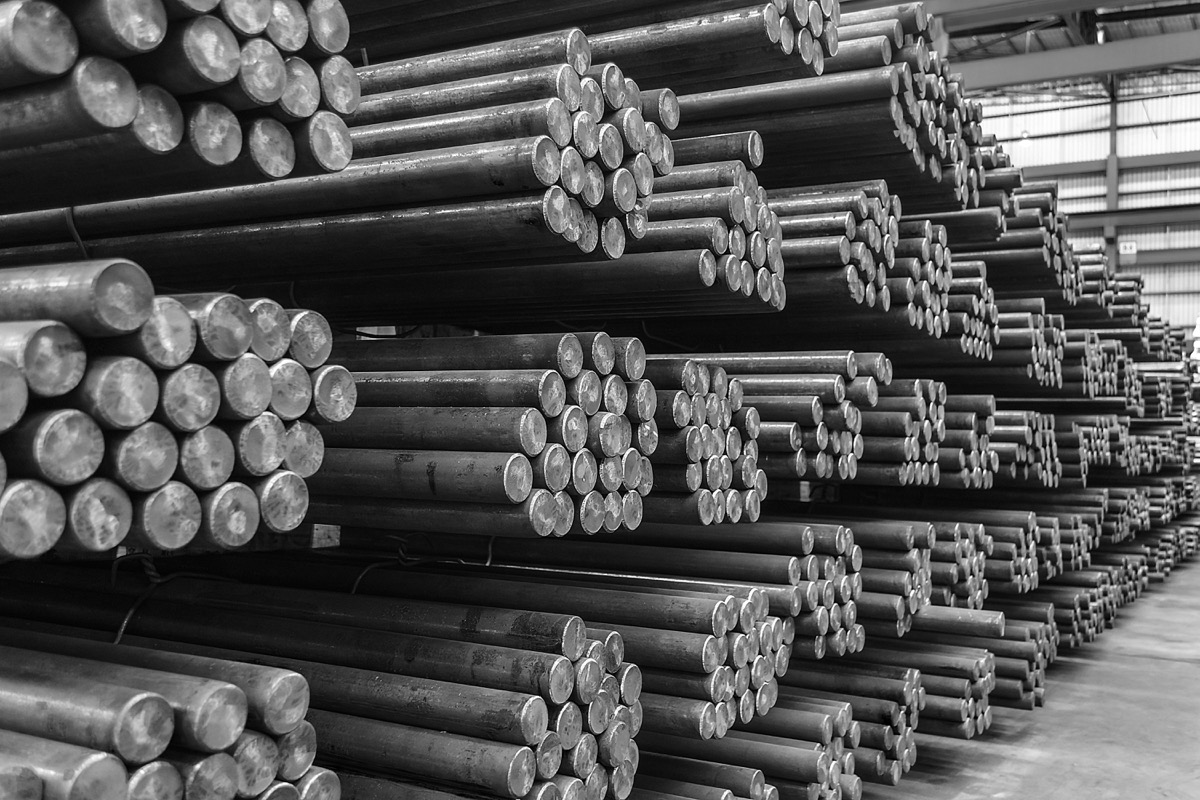
Thomas Edison played a role in some of the greatest inventions of all time , from light bulbs to movie cameras. But that doesn’t mean he only had good ideas. Take his vision of the future of steel, for instance: During a 1911 interview with Miami Metropolis , he predicted that “the house of the next century will be furnished from basement to attic with steel.”
And according to Edison, the steel obsession wouldn’t end there. “The baby of the 21st century will be rocked in a steel cradle,” he said. “His father will sit in a steel chair at a steel dining table, and his mother’s boudoir will be sumptuously equipped with steel furnishings.” Sounds like the opposite of comfy.
Shutterstock
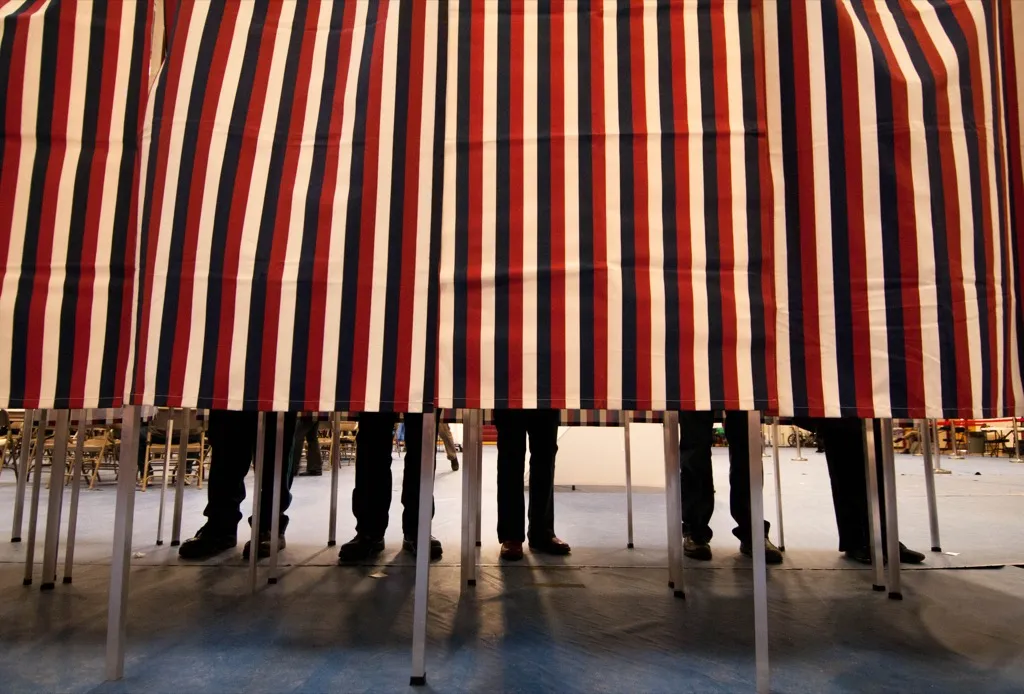
In the aforementioned 1997 Wired article, Schwartz and Leyden predicted that Americans would be able to partake in “e-voting,” voting in the presidential election from the comfort of their own home. They actually predicated we’d be able to e-vote as early as 2008, but at this point, even the possibility of e-voting in the 2020 election seems a little far-fetched.

Shutterstock
In 1937, Nikola Tesla predicted that “within a century, coffee, tea, and tobacco will be no longer in vogue.” “The abolition of stimulants will not come about forcibly,” he wrote. “It will simply be no longer fashionable to poison the system with harmful ingredients.” He’s hopefully right about tobacco , but the coffee and tea? Not just yet.
Shutterstock
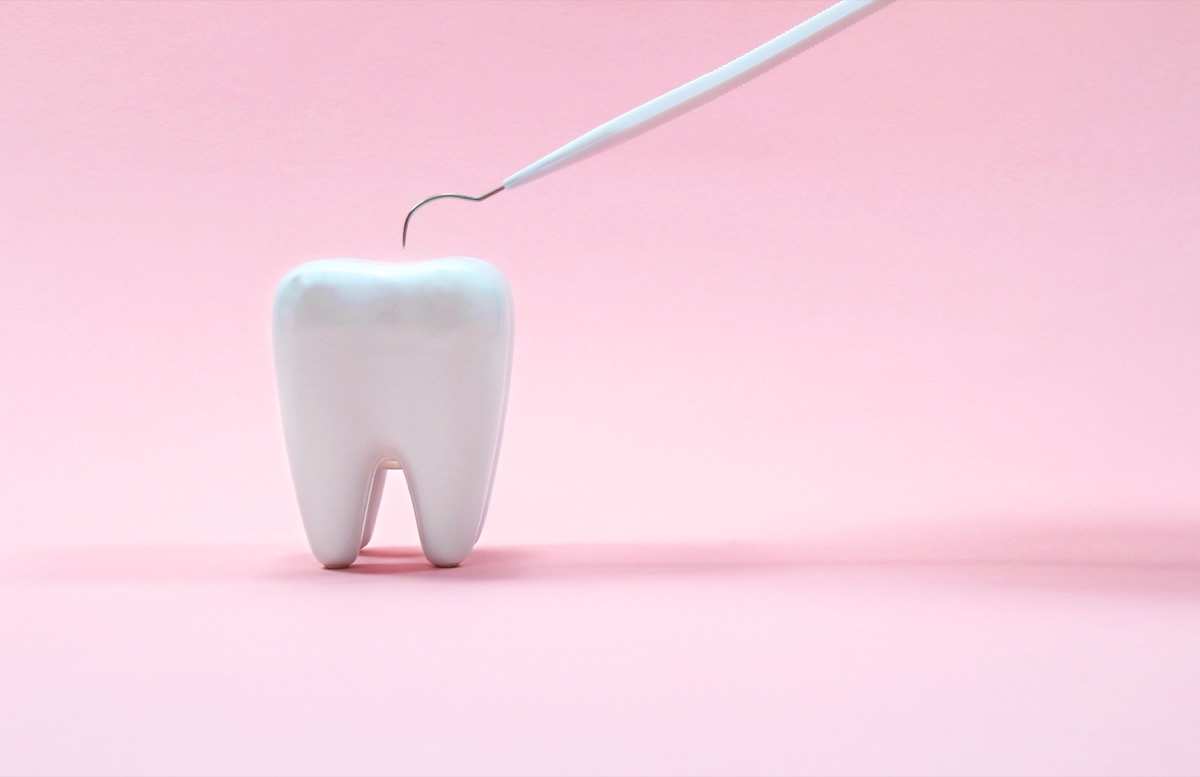
We already have blood blanks, where life-saving plasma can be donated and used to help patients who need emergency blood. So, what’s next, you might be wondering? Well, in a 1947 issue of Mechanix Illustrated magazine, journalist Lester David promised that in the future, we’d have “tooth banks,” too.
“Picture the possibilities,” David wrote in the story, aptly titled, “How About Tooth Banks?” “Into the junk pile will go all artificial dentures, all bridges, plates, partial plates. All men and women of whatever age will be able to have human teeth imbedded inside their gums until the day they die.”

Shutterstock
In 1913, Gustav Bischoff , former president of the American Meat Packers Association, predicted that humans’ diets would consist of mostly vegetables as the years went on. Because of a shortage of meat, he told The New York Times , even the wealthiest people in the future would be vegetarians .

Shutterstock
This prediction comes from just 15 years ago and it was made by futurist and computer scientist Ray Kurzweil . He wrote in his 2005 book The Singularity Is Near: When Humans Transcend Biology that by the 2020s, there will be “nanobots” capable of entering the bloodstream to “feed” cells and extract waste. As a result, they’ll render the mode of food consumption as we know it obsolete. A bold prediction for just 15 years into the future, don’t you think?

Shuttestock/Andrey_Popov
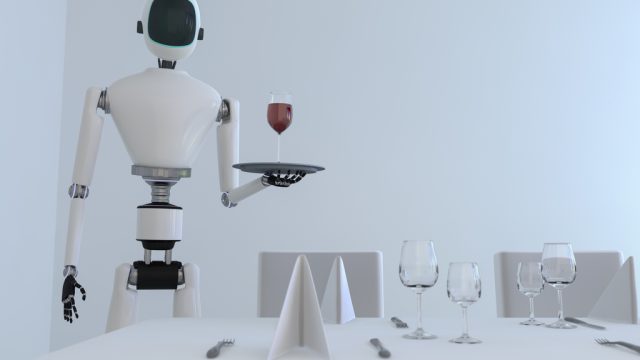
Robots are the typical prediction for the future—and technically, we do sort of have robots now. But global trends expert Ariane Van de Ven had some bigger ideas for 2020. She explained in the aforementioned book Shift 2020 that she believed “there will be more robots used as therapists , companions, assistants, and even friends to help people in their everyday,” according to The Next Web . Yeah… not quite.
Shutterstock
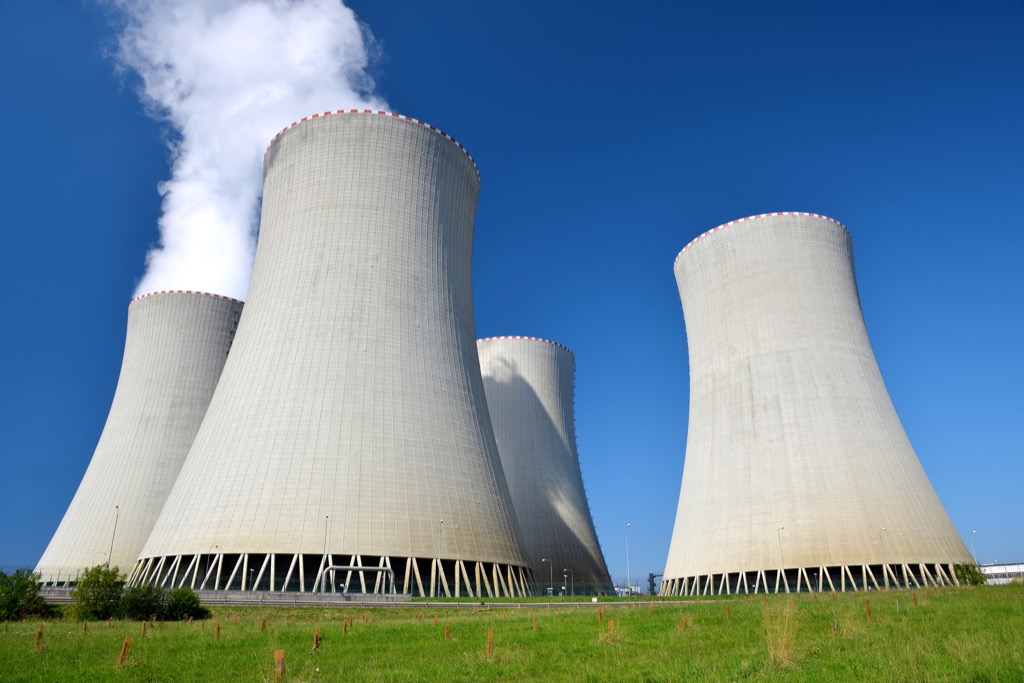
Alex Lewyt , former president of Lewyt Vacuum Company, obviously wanted the world to be excited about vacuum cleaners . But when he predicted in 1955 that “nuclear-powered vacuum cleaners” would become a reality in the future, he maybe wasn’t making the most convincing sales pitch. If the choice were between having dirty floors or plugging in a mini-Chernobyl-waiting-to-happen, we’d probably stick with the crumbs and dust bunnies.

Shutterstock
In the 1900s and earlier in the 2000s, many futurists made their predictions as to how 2020 would look. But Dave Evans , the chief futurist for Cisco Visual Networking, actually predicted that he’d be out of a job by this time because, he forecasted, everyone would be able to predict the future themselves.
“By 2020, predicting the future will be commonplace for the average person,” he told Mashable in 2012. “We are amassing unprecedented amounts of data… New image and video analysis algorithms and tools will unlock this rich source of data, creating unprecedented insight. Cloud-based tools will allow anyone to mine this data and perform what-if analysis, even using it to predict the future.”
25 Crazy Predictions About the Next 25 Years
Shutterstock
A lot can happen in 25 years. A quarter-century ago, “mobile phones” meant cordless landlines and Nirvana topped the charts. Anyone anticipating in 1993 what life might be like 2018 would likely miss the mark in some ways, but those watching trends closely could be surprisingly close to how things actually shook out.
To help predict what the future might bring, we reached out to futurists, tech experts, and others whose job it is to keep an eye on where things are heading and how things might look over the long term. Some of their predictions might surprise you. Take a few more steps into the future with the 30 Craziest Predictions About the Future Experts Say Are Going to Happen .
Shutterstock
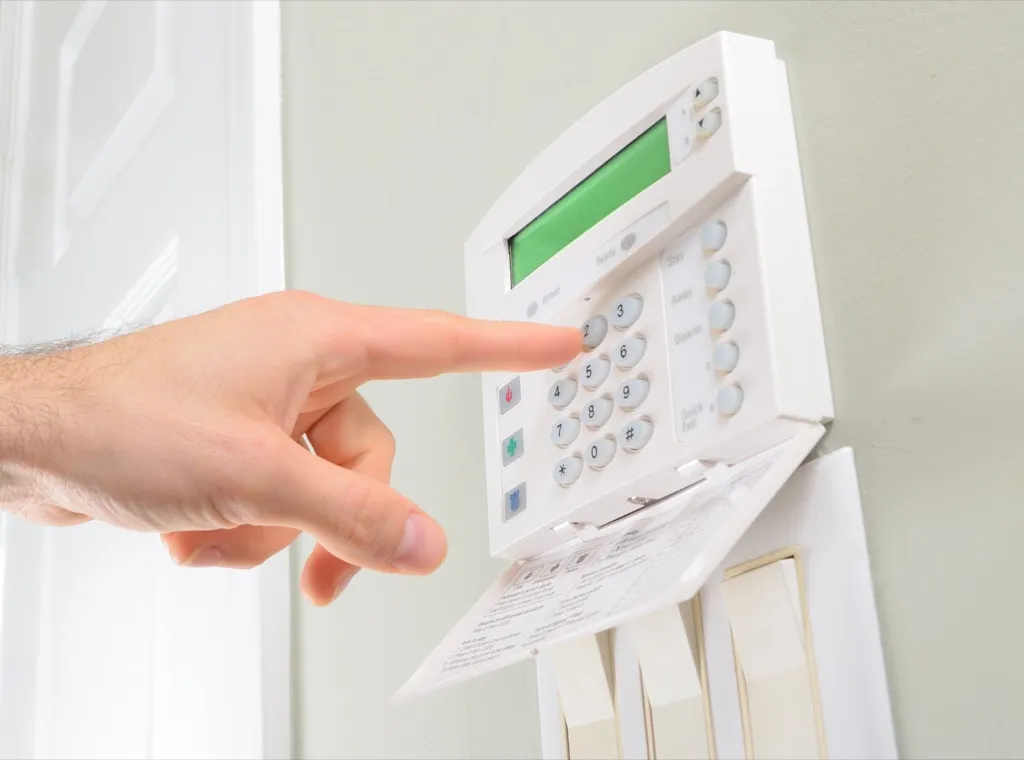
As the Internet of Things (IoT) lead to a wider range of our appliances, electronics, and other aspects of our lives being connected to the online world, it will also open us up to security breaches. Just as we have to watch out for viruses and hacks to our computers, soon we will have to do the same for our homes.
“While consumers may not be physically locked out of their house, since manual locks have yet to be replaced and can be a backup, they will experience a ‘home invasion’ of a digital sort,” says Jason Hart, vice president and CTO of data protection of security firm Gemalto . “Specific appliances will be held for ransom, internet-connected devices will provide a path to personal data for blackmail purposes. Even assets stored in the cloud won’t be safe: with homeowner data, coupled with lax security controls, hackers have an open door for stealing everything from music and videos to Bitcoins.” Think this is crazy? Check out This Is What Life Could Look Like 100 Years From Now .
Shutterstock
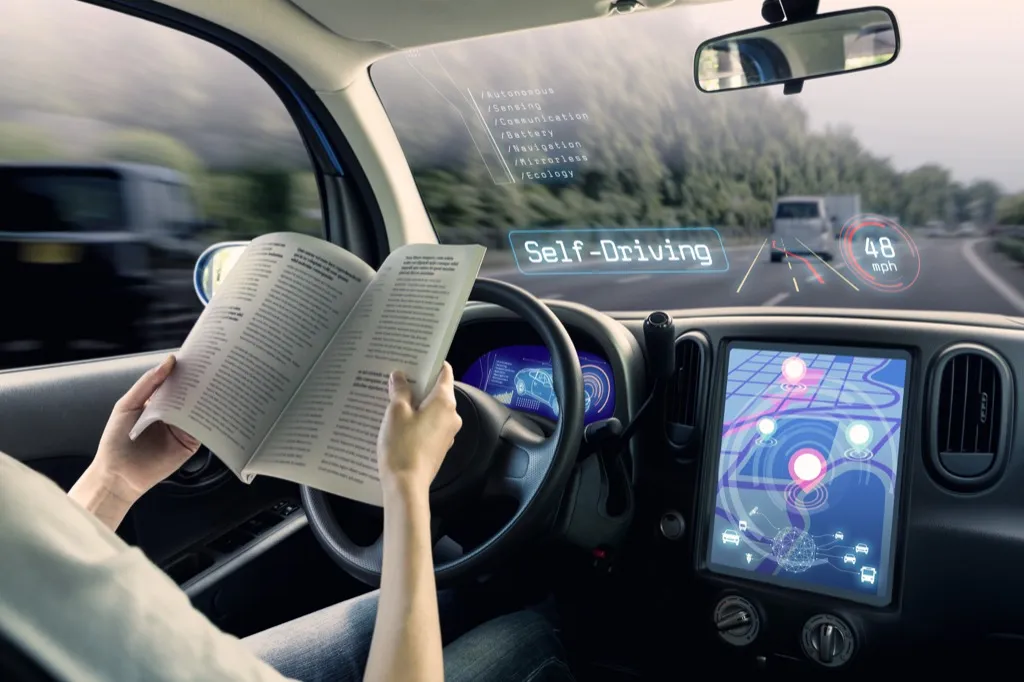
Despite the growing pains that self-driving cars have gone through in these early stages, the technology does not look likely to go anywhere and will likely become the norm in the next few years, according to Chris Nielsen, founder and EVP experience design for technology company Levatas , as well as a futurist.
“Most all major auto manufacturers such as Ford, Nissan Renault, Daimler and more have committed to shipping driverless car options within the next 2-4 years, most of them by 2020,” he points out. “This means that in 25 years, the driverless car experience will have matured into a safe, ubiquitous and ultimately convenient option.”
For those reasons, he expects that driverless cars will saturate the marketplace within a quarter century, and will have built a track record of safety and effective operation that laws may even be passed to remove (relatively unsafe) human-driven cars from public roads.
“We’re still quite a ways off from this here in 2018, but a lot tends to happen in 25 years,” he says. While you’re still stuck driving your own car (sigh), be sure to Rule the Road with These Smart Driving Strategies .

Shutterstock
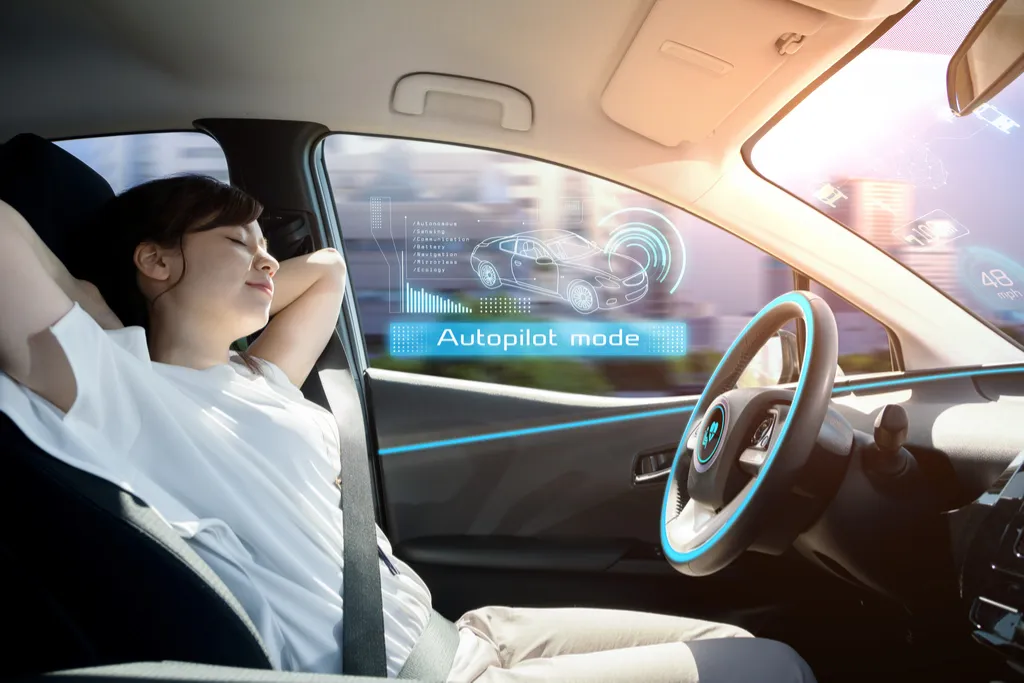
Nikolas Badminton , a futurist, author, and researcher who speaks on topics relating to the impact of exponential technology expects that not only will self-driving vehicles become commonplace, but “it will almost be a stigma to own and drive your own vehicle.”
He adds that it will also have some positive effects, such as reducing the stress of commutes, a growth in carpooling, and even “shared vehicles used as meeting rooms by companies.”
Shutterstock
Another side benefit that may grow from self-driving vehicles is that they will be less expensive, even free—but you will likely have to listen to a corporate message to enjoy them.

Shutterstock
“By combining the power of AI and blockchain, the concept of money could evolve into electronic tokens with far more types of assets tradeable within the one ‘currency,’” predicts Rohit Talwar, CEO of futurist research company Fast Future .
He gives the example that we might earn tokens from our employers that can be redeemed at retailers and airlines, and as micro-credits for completing workplace training or school learning tasks.
“Instead of simply liking a track from a musician, we could now make a micro-payment to them with a fraction of a token,” says Talwar. “This evolution from cash and cryptocurrencies towards a universal means of exchange could mean the end of cash and foreign exchange markets.” To survive with your cash flow now, follow these 52 Easy Ways to Be Smarter with Money in 2018 .

Shutterstock
While cryptocurrencies like bitcoin have taken off in the last couple years, Badminton expects to see additional, brand-oriented currencies on the rise, particularly from major tech companies.
“Some people will only use those currencies in their daily lives—think Facebook Dollars, Google Dollars, Wal-Mart Dollars, Disney Cash,” says Badminton. And for more on forward-thinking technology, don’t miss these 20 Facts You Never Knew About Your Smartphone.

Shutterstock
A quarter-century ago, the most paranoid ideas about surveillance and privacy invasion probably would not have predicted how eagerly we would be to hand over personal data to faceless corporations and data-miners. But Reg Harnish, a fellow at the National Cybersecurity Institute and CEO of GreyCastle Security , predicts we have much further to fall when it comes to handing over the keys to our data.
“We are already seeing the erosion of privacy today, with Facebook and other organizations selling all our most private data to the highest bidder,” he says. “But, in the next quarter-century, perhaps even sooner, I believe privacy as we know it will be gone. We will talk about privacy like we talk about rotary phones today—we don’t. Is that a good thing? I don’t know. But, short of opting out of the internet, we will all have to face the reality that nothing will be secret anymore.”

Shutterstock
But this loss of privacy won’t be taken lying down. With technology becoming a bigger part of our lives, security concerns will grow too.
“What changed in 2017, and will escalate in the coming year, is a heightened awareness of security and data privacy issues amongst general consumers and business leaders, too,” says Sandor Palfy, CTO of identity and access management at LogMeIn , makers of password manager LastPass . “There is no doubt for consumers and businesses that data breaches and security issues are no longer an anomaly, but will continue to be the new normal.”
For that reason, Palfy expects that businesses will be required to invest an even greater amount in tools and training that strengthen their organizations’ and employees’ security.
Shutterstock
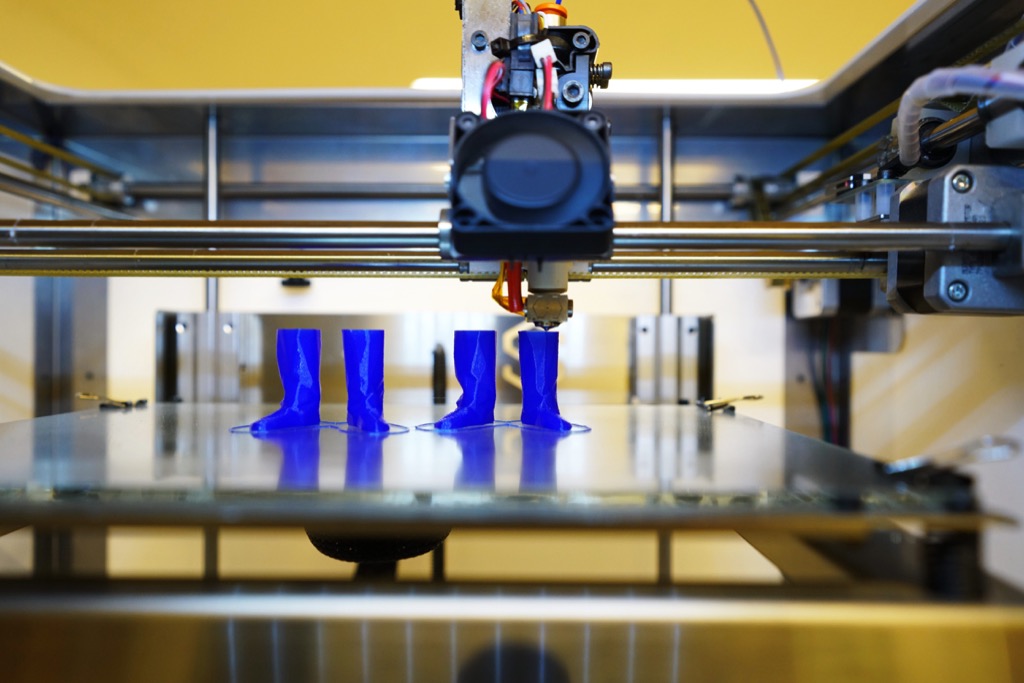
Expect to see further development in 3D printing, particularly as the technology gets more affordable and manageable.
“There are few modern technologies more exciting than 3D printing,” says Nichole Elizabeth DeMeré , a customer service and SaaS expert and author of Playbook to Grow Your SaaS . “You can turn filament into a functional beer stein, goo into a remote control car, or build a to-scale model of your living room to figure out where to put your couch. Or, you can build a 3D printable prosthetic hand that can grip for less than ten dollars, like the e-NABLE Project does for kids in need.” And for more amazing knowledge, here are 30 Facts You Always Believed That Aren’t True.
Shutterstock
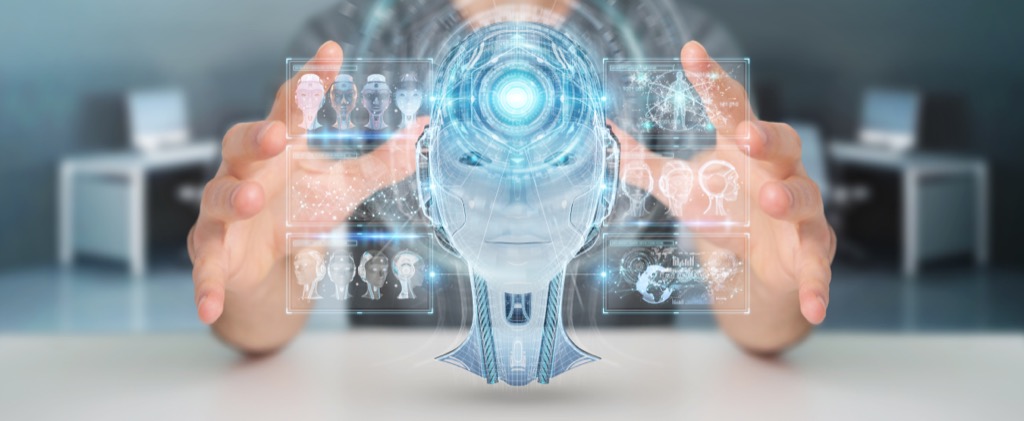
Artificial intelligence will only become more prevalent, impacting virtually every area of our lives—healthcare, education, entertainment, financial services, and more—according to Talwar.
“Smart systems could manage our social lives, help us select the ideal partners for dating, marriage, and reproduction, monitor our health in liaison with our doctors, and personalize our education so content is delivered in the way we learn best,” he says. “The technology will be making legal decisions in court, determining our benefit payments, fact-checking politicians, and powering the transport sector.”

Shutterstock
DeMeré also expects to see a further growth in chatbots in the realm of customer service and marketing.
“Chatbots are poised to become the next big thing,” she says. “If you like being in the lead of cresting trends in marketing, you’re going to need one. The greatest adoption of bots is with consumers between the ages of 18 and 35. But that doesn’t mean older consumers aren’t willing to engage with bots—not by a long shot.”

Shutterstock
Andy Wood, chairman of computer vision and facial animation company Cubic Motion , expects that everyone will have their own online avatar.
“Within the next 25 years, everybody can have an online persona ‘digital double’—it doesn’t need to be creature, age or gender specific—just like the Ready Player One movie,” he says. “Every walk of life, profession, and social lifestyle will have access to an online digital double.”

Shutterstock
Just as we’ve gotten more used to chatbots and speaking to Alexa and Siri, soon we will get comfortable interacting with fully digital characters.
“By 2024, we may all be interacting with digital humans in some way or other, whether its via headsets, films, TV, games, live performances and broadcasts, or by directing digital assistants in our homes in real-time,” says Wood.
Shutterstock
As VR evolves further as a form of entertainment, the pursuit of an immersive experience that draws so many to theaters may instead lead them to pick up VR headsets.
“Movie theaters will disappear quicker than Blockbuster,” expects Andrew Selepak, a professor of telecommunications at the University of Florida.
Though VR is still in its infancy in many ways, he expects that in 25 years, we will all be enjoying movies and television in a virtual environment.
“We will all have virtual reality devices to enjoy the latest release taking away any need to go to an actual theater and sit in a chair to watch the film in a flat 3D environment,” he adds. “Just like how streaming services did away with the video rental business, Virtual Reality and streaming video will do the same to theaters.”

Shutterstock
With more virtual experiences available online, particularly in the realm of education where online classrooms will evolve, young people will be more likely to stay close to home rather than go away to college.
“The need for students to physically attend a university will become unnecessary,” says Selepak. “Universities will instead resemble TV studios where professors will lecture on material in front of a green screen for students to watch at home. This will lead to more young people living with their parents after the age of 18, but for universities, just like with the advent of MTV, video will replace the professor star with those who are the most personable and telegenic.”
Shutterstock
With AR and VR becoming commonplace and our world approaching a Ready Player One kind of world, expect to see plenty of people push back against these invented realities.
“There will be a young, ‘anti-immersion’ movement that totally shuns these technological developments, in favor of 1990/2000’s connectivity,” predicts Zach Suchinm digital technology and marketing expert and CEO of Brand Knew .
This won’t necessarily mean revolution, but a turn toward tech that’s grounded in lived experience, such as live streaming.
“They spark conversation and action as you watch along with others,” says Suchinm. “They are timely, so they require a viewers dedicated attention in the moment or they’ll miss it. Conferences, events, red carpets, sports, cultural events are all ripe for live streaming. Amplified with a call to action, they tend to drive click-throughs 10x than VOD.”

Shutterstock
Just as the rapid expansion of technology is going to lead many to push back, so too will the growth of media and tech companies inspire government intervention and scrutiny.

Shutterstock
Extreme weather is likely to become the norm, with hurricanes, tsunamis, wildfires, and all variety of other major events hitting with more frequency. Wes O’Donnell, a professor of predictive analytics at Baker College, warns that in the next 25 years we are going to see a “statistical increase in dramatic weather events due to human-induced climate change.” So pick up some sandbags and make sure you’ve paid your flood insurance.
Shutterstock
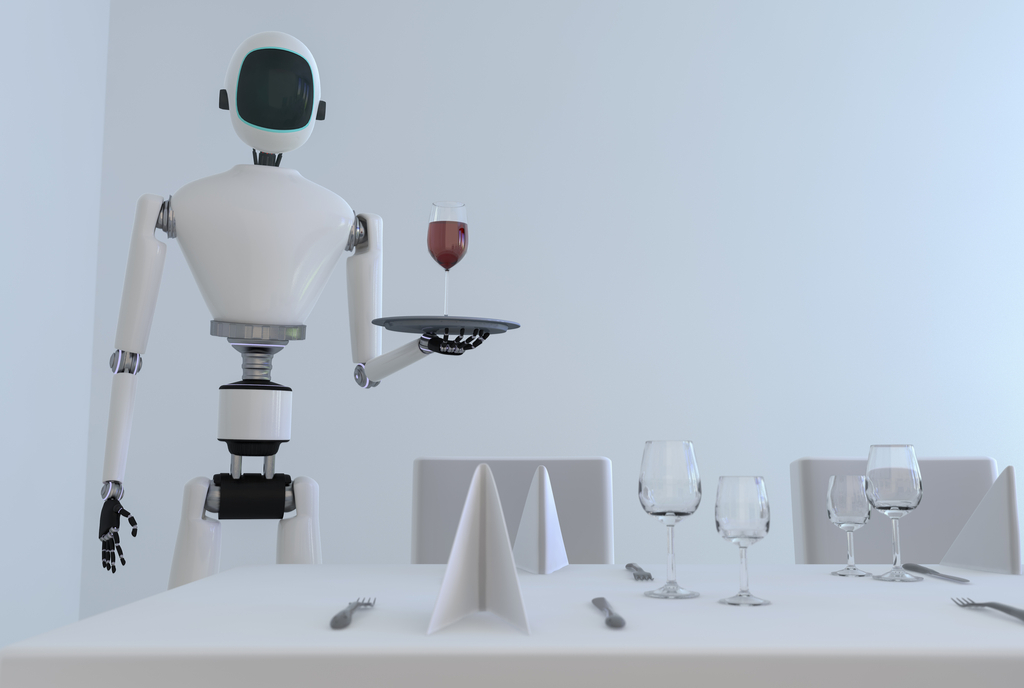
Beyond being addicted to checking our phones, more and more of our daily lives will be handled by automation and AI, with chores and activities we never previously thought of as burdens getting outsourced to tech tools.

Shutterstock
As AI and IoT become the norm and retail continues to collapse, the employment landscape will be reshaped in major ways—not all of them good.
“Unemployment will skyrocket,” says Selepak. “Machines are already replacing cashiers at grocery stores, Walmart, and Lowes, and smart cars will replace Uber drivers. Many blue collar jobs will be replaced with machines that cost less, never skip work, and never get sick. This will leave millions out of work and create a tremendous tax burden on the government.”

Shutterstock
Anyone who has lost a loved one in recent years can appreciate that memorializing someone has changed in the social media era, with Facebook pages becoming memorials and places to share memories of the person, and their posts and shares serving as a scrapbook of their lives. Journalist Danielle Radin, who provides social-media management services free of charge for those that are deceased as part of Kind Years Grief Association , expects to see the demand for this grow.
“As social media continues over the next 25 years, there will be more of a need for digital memorialism,” she says. “It will become a field just like any other. When we pass away, our digital footprint lives on forever. There will need to be people to manage this.”
Shutterstock
“An era marked by exponential change has seen changing ideas of asset ownership, radical leaps forward in AI, increasingly efficient electric propulsion units for vehicles, and the emergence of smart city infrastructures,” predicts Steve Wells, COO of Fast Future. “These relatively smooth transitions led to other changes in cities, including the removal of redundant traffic signals and the remodeling of some street intersections.”

Shutterstock
While the concept of artificial meat might seem unsettling today, it will likely become more widely accepted in the next 25 years as its benefits become more apparent.
“In-vitro cloned meat could be another future solution to our food supply problems,” says Fast Future researcher Helena Calle. “While lab-grown meat may still face many challenges, such as flavor control, it also has many advantages such as less waste, less risk of viruses, reduced space requirements, and lower emissions and environmental impacts among others. These benefits seem to outweigh the disadvantages and drawback of traditionally reared livestock.”

Shutterstock
Speaking of lab-grown meat, Calle predicts that such innovations, along with AI and vertical farming, will lead to a transformation of the food chain as we know it.
“Hydroponics plants, fruits, and vegetable might change agriculture as we know it, and help revolutionize the food industry,” she says. “Overpopulation is having major consequences, driving a lack of growing space and food in many parts of the world. The growing global population will force us to find creative solutions. Having AI-controlled hydroponic vertical farms on the sides of buildings might be one of the solutions.”

Shutterstock
As pathogens become ever-more immune to the current antibiotics available on the market, the pharmaceutical industry will have to get more creative and innovative in their solutions.
“In the next 25 years, is it possible that we will experience ‘the end of antibiotics’ (as the World Health Organization put it in 2016)?” asks Fast Future’s foresight director, Alexandra Whittington. “Fortunately, the microbial threat is being met with advanced drug development, allowing medical researchers to explore new approaches to fight superbugs. New strategies on the horizon range from genetic modification of germs and implantable semiconductors through to the discovery of new antibacterial agents in soil.”
To avoid sickness and live a long life, follow these 100 Ways to Live to 100 .
