25 Unique New Year’s Eve Traditions From Around the World

Todor Tsvetkov/iStock
You may be used to the toasting and the singing that comes with every New Year’s Eve, but some celebrations that usher in the new year in different corners of the globe couldn’t be more different than ours. Take Ecuador, for instance: There, citizens parade around the city with scarecrows built to look like popular politicians and cultural icons—and at the stroke of midnight, said scarecrows are burnt to a crisp to cleanse the new year of everything evil. And in Brazil, it’s customary to light candles and throw white flowers into the water as an offering for Yemoja, the Queen of the Ocean. Below, we’ve traveled the world—virtually, at least—to round up some of the most creative and culturally unique New Year’s Eve traditions from around the world. Keep reading to find out how other countries will be celebrating!
RELATED: 53 Heartwarming Facts That Will Instantly Make You Smile .
The Best (Global) New Year’s Eve Traditions
1. Spain: Eating Grapes For Good Luck

martin-dm/iStock
In Spain, locals will eat exactly 12 grapes at the stroke of midnight to honor a tradition that started in the late 19th century. Back in the 1800s, vine growers in the Alicante area came up with this practice as a means of selling more grapes toward the end of the year, but the sweet celebration quickly caught on. Today, Spaniards enjoy eating one grape for each of the first 12 bell strikes after midnight in the hopes that this will ward off bad luck and bring about a year of good fortune and prosperity.
2. Scotland: First Footing

AJ_Watt/iStock
In Scotland, the day before Jan. 1 is so important that there’s even an official name for it: Hogmanay. On this day, the Scottish observe many traditions, but easily one of their most famous is first footing . According to Scottish beliefs, the first person who crosses through the threshold of your house after midnight on New Year’s Day should be a dark-haired male if you wish to have good luck in the coming year. Traditionally, these men come bearing gifts of coal, salt, shortbread, and whiskey, all of which further contribute to the idea of having good fortune.
But why dark-haired men? Well, back when Scotland was being invaded by the Vikings, the last thing you wanted to see at your doorstep was a light-haired man bearing a giant ax. So today, the opposite—a dark-haired man—symbolizes opulence and success.
3. The Netherlands: Chowing Down On
Nancy Beijersbergen/Shutterstock
The reasoning behind this Dutch New Year’s Eve celebration is odd, to say the least. Ancient Germanic tribes would eat pieces of deep-fried dough during the Yule so that when Germanic goddess Perchta, better known as Perchta the Belly Slitter, tried to cut their stomachs open and fill them with trash (a punishment for those who hadn’t sufficiently partaken in yuletide cheer), the fat from the dough would cause her sword to slide right off. Today, oliebollen are enjoyed on New Year’s Eve, and you’d be hard-pressed to find a Dutch food vendor in the winter months who isn’t selling these doughnut-like balls.
4. Russia: Planting Underwater Trees

Katvic/Shutterstock
For the past 25 years or so, it has been a Russian holiday tradition for two divers, aptly named Father Frost and the Ice Maiden, to venture into a frozen Lake Baikal , the world’s largest freshwater lake, and take a New Year Tree—typically a decorated spruce—more than 100 feet below the surface. Though the temperature is normally well below freezing in Russia on New Year’s Eve, people travel from all over the world to partake in this frozen fête.
RELATED: 21 “American” Christmas Traditions We Borrowed From Other Countries .
5. Brazil: Throwing White Flowers Into the Ocean

wagnerokasaki/iStock
If you happen to be in Brazil for New Year’s Eve, don’t be surprised to find the oceans littered with white flowers and candles. In the South American country, it is commonplace for citizens to take to the shores on New Year’s Eve to make offerings to Yemoja , a major water deity who is said to control the seas, to elicit her blessings for the year to come.
And it’s not just white flowers you might see lining the shores, either. It’s also tradition for Brazilians to dress in white and dive into the ocean shortly after midnight. Once in the water, celebrants will jump over seven waves while making seven wishes thought to come true in the new year.
6. Italy: Wearing Red Underwear

stuar/Shutterstock
Italians have a New Year’s tradition of wearing red underwear each Dec. 31. In Italian culture, the color red is associated with fertility, so people wear it under their clothes in the hopes that it will help them conceive in the coming year.
7. Greece: Hanging Onions

george green/Shutterstock
No, this New Year’s Eve tradition has nothing to do with vampires. Rather, the Greeks believe that onions are a symbol of rebirth , so they hang the pungent vegetable on their doors to promote growth throughout the new year. Greek culture has long associated this food with development, seeing as all the odorous onion ever seemingly wants is to plant its roots and keep growing.
8. Chile: Chilling in Cemeteries

Sergey Strelkov/iStock
In Chile, New Year’s Eve masses are held not at church, but in cemeteries. This change of scenery allows for people to sit with their deceased family members and include them in the New Year’s Eve festivities.
9. Japan: Slurping Some Soba Noodles

GMVozd/iStock
In Japanese culture, it is customary to welcome the new year with a bowl of soba noodles in a ritual known as toshikoshi soba , or year-crossing noodles. Though nobody is entirely sure where toshikoshi soba first came from, it is believed that the soba’s thin shape and long length are meant to signify a long and healthy life. Since many folks also believe that because the buckwheat plant used to make soba noodles is so resilient, people eat the pasta on New Year’s Eve to signify their strength. If you want to make a bowl of New Year’s Eve Noodles for yourself this December 31st, then be sure check out blogger Namiko Chen’s recipe .
10. Denmark: Smashing Plates
aswphotos134/Shutterstock
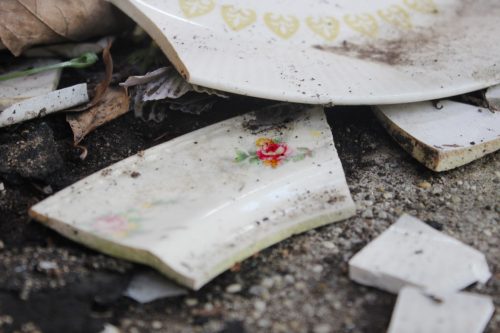
In Denmark, people take pride in the number of broken dishes outside their door by the end of New Year’s Eve. It’s a Danish tradition to throw china at your friends’ and neighbors’ front doors on New Year’s Eve—some say it’s a means of leaving any aggression and ill-will behind before the New Year begins—and it is said that the bigger your pile of broken dishes, the more luck you will have in the upcoming year.
RELATED: 54 Hilarious and Random Facts You’ll Want to Tell Your Friends .
11. Ecuador: Burning Scarecrows
In Green/Shutterstock
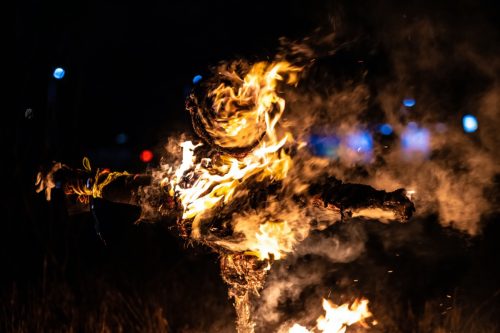
In Ecuador, New Year’s Eve celebrations are lit up (quite literally) by bonfires. At the center of each of these bonfires are effigies , most often representing politicians, pop culture icons, and other figures from the year prior. These burnings of the “año viejo,” or “old year,” as they’re called, are held at the end of every year to cleanse the world of all the bad from the past 12 months and make room for the good to come.
12. Greece: Pummeling Pomegranates

guenterguni/iStock
In ancient Greek mythology, the pomegranate symbolizes fertility, life, and abundance, and so the fruit has come to be associated with good fortune in modern Greece. Just after midnight on New Year’s Eve, it is customary for Greeks to smash a pomegranate against the door of their house—and it is said that the number of pomegranate seeds that end up scattered is directly correlated with the amount of good luck to come.
13. Germany: Pouring Lead

Simone Andress/Shutterstock
In Germany, all New Year’s Eve festivities center around a rather unique activity known as Bleigießen, or lead pouring . Using the flames from a candle, each person melts a small piece of lead or tin and pours it into a container of cold water. The shape that the lead or tin forms is said to reveal a person’s fate for the year ahead, not unlike tasseography.
14. Japan: Ringing Bells
Maxim Tupikov/Shutterstock
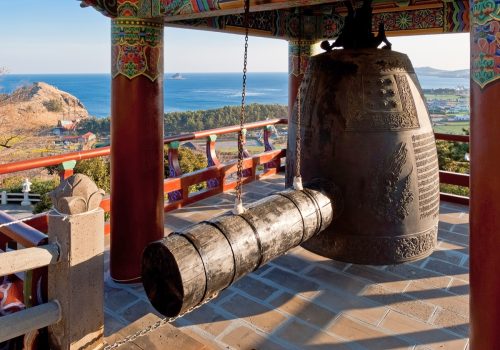
One-hundred-and-eight. That’s how many times Buddhist temples in Japan ring their bells on New Year’s Eve when the clock strikes midnight. This tradition, known as joyanokane, is meant to both dispel the 108 evil desires in each and every person and cleanse the past year of past sins.
15. Russia: Drinking Ashes

G-stock studio/Shutterstock
Before you get grossed out, rest assured that Russians are not consuming human ashes or anything of the sort. Rather, in Russian culture, it is New Year’s Eve tradition for folks to write their wishes down on a piece of paper, burn them with a candle, and drink the subsequent ashes in a glass of champagne.
RELATED: 46 Airplane Facts You Should Know Before Booking Your Next Trip .
16. Czech Republic: Cutting Apples

rotofrank/iStock
The Czechs prefer to predict their future fortunes on New Year’s Eve with the assistance of an apple. The night before the new year begins, the fruit is cut in half , and the shape of the apple’s core is said to determine the fate of everyone surrounding it. If the apple’s core resembles a star, then everyone will soon meet again in happiness and health—but if it looks like a cross, then someone at the New Year’s Eve party should expect to fall ill.
17. Estonia: Eating Many Meals

Rawpixel.com/Shutterstock
If breakfast, lunch, and dinner are hardly enough to satiate you, then you’ll want to celebrate New Year’s Eve in Estonia. There, people believe that eating seven, nine, or 12 meals will bring about good things in the year to come, seeing as those numbers are considered lucky throughout the country. And if you can’t finish your food, worry not: People often purposefully leave food on their plates to feed their visiting family members—the ones in spirit form, that is.
18. Armenia: Baking “Good Luck” Bread

YesPhotographers/Shutterstock
When people in Armenia bake bread on New Year’s Eve, they add a special ingredient to their dough: luck. Of course, they don’t literally add an ingredient called luck into their batter, but it is tradition for metaphorical good wishes to be kneaded into every batch of bread baked on the last day of the year.
19. Turkey: Sprinkling Salt

Greenseas/iStock
In Turkey, it’s considered good luck to sprinkle salt on your doorstep as soon as the clock strikes midnight on New Year’s Eve. Like many other New Year’s traditions around the globe, this one is said to promote both peace and prosperity throughout the new year.
20. Ireland: Banging Bread Against the Wall

Alexander Labut/iStock
Every New Year’s, Irish families will cook a Christmas bread and bang it against the doors and walls of their family homes to ward off evil spirits. In addition to chasing off bad luck, the act is thought to help invite good spirits in to help bring about a new start
RELATED: 30 Scary Ocean Facts More Terrifying Than Anything in Outer Space .
21. United States: Watch the Ball Drop

Ryan Rahman/iStock
Each year, an estimated one million people gather in New York City’s Times Square to watch the New Year’s Eve ball drop. Satellite technology helps millions more U.S. Americans experience the tradition from the comfort of home, with upwards of a billion people watching worldwide. If those tuning in live from home are located in the American South, chances are they’ll be doing so with a bowl of collard greens and black-eyed peas in hand. These foods are thought to help secure good luck and financial gains in the new year.
22. Colombia: Put Three Potatoes Under the Bed

Val_R /Shutterstock
On the last night of the year, Colombians place three potatoes under their beds —one peeled, one unpeeled, and one half-peeled. At midnight, they’ll reach under the bed and grab the first potatoes they touch. Peeled means you’re going to experience financial problems in the year ahead, unpeeled means you’ll have a year filled with prosperity and financial success, and half-peeled puts you somewhere in between.
23. Philippines: Serving 12 Round Fruits

October22/iStock
In the Philippines, it is customary to serve 12 round fruits on New Year’s Eve—one for each month of the year. The tradition is thought to help bring about prosperity, happiness, good health, and money. The round shape represents coins that will help attract good fortune to each household. Different colored fruits also symbolize different forms of luck. Green and purple, for instance, represent prosperity while yellow is associated with happiness and unity.
24. Canada: Go Ice Fishing
ImagineGolf/iStock
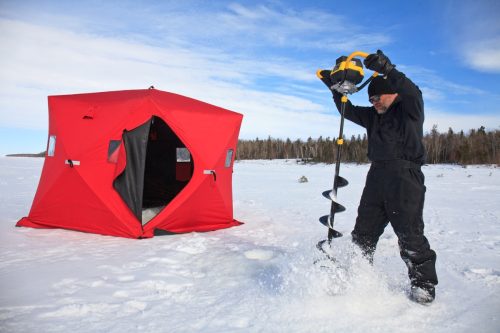
These days, it’s not uncommon to find Canadians celebrating New Year’s Day by participating in the popular cold-weather activity of ice fishing. Many companies you can pay for the experience provide heated huts to keep everyone comfortable while on the ice. Some even provide equipment and cooking instructions to help groups enjoy their catch.
25. Universal: Making New Year’s Resolutions
<img loading=“lazy” src=“https://bestlifeonline.com/wp-content/uploads/sites/3/2020/12/new-years-resolution-list.jpg?quality=82&strip=all&w=500" onerror=“this.onerror=null;this.src=‘https://blogger.googleusercontent.com/img/a/AVvXsEhe7F7TRXHtjiKvHb5vS7DmnxvpHiDyoYyYvm1nHB3Qp2_w3BnM6A2eq4v7FYxCC9bfZt3a9vIMtAYEKUiaDQbHMg-ViyGmRIj39MLp0bGFfgfYw1Dc9q_H-T0wiTm3l0Uq42dETrN9eC8aGJ9_IORZsxST1AcLR7np1koOfcc7tnHa4S8Mwz_xD9d0=s16000';" alt=“red journal open to whit lined page with “new years goals” written in top left corner and pen sitting atop paper - 25”>
Shutterstock/Lemau Studio
To wrap up our list of New Year’s Eve traditions, here’s something that isn’t specific to any one country. The practice of making a New Year’s resolution is, instead, something people around the world do. The tradition actually dates back about 4,000 years, when the ancient Babylonians would make promises to their gods and reaffirm their loyalties to the king during a massive 12-day religious festival known as Akitu .
Wrapping Up
- Source: Perchta the belly‐slitter and her kin: a view of some traditional threatening figures, threats and punishments
46 Airplane Facts You Should Know Before Booking Your Next Trip
Have a nice day Photo / Shutterstock
You may be a seasoned flyer with foolproof strategies for scoring overhead compartment space, getting upgrades, or taking a snooze when you hit cruising altitude, but even the most intrepid airplane travelers can be in the dark when it comes to what actually goes on in and around the cabin. Below, we’ve put together 46 fascinating airplane facts to answer all your questions about flying the friendly skies.
READ THIS NEXT: 38 Ocean Facts That Will Blow You Out of the Water .
Facts About Airplanes That’ll Make Your Mind Soar
Why don’t aircraft tires burst on impact? How dangerous is it when a plane loses an engine? Is that airplane water really safe to drink? Read on to find out!
1. Some planes can fly for more than five hours after one of their engines goes out.
muratart / Shutterstock
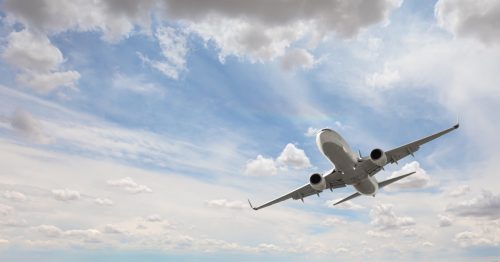
ETOPS—or extended twin operations—is a designation that indicates the length of time a twin-engine plane can safely cruise with one inoperative engine. In 2014, the Boeing 787 Dreamliner earned 330-minute ETOPS certifications, meaning it can stay safely operational on just one engine for more than five hours before needing to land.
2. If someone dies on your flight, their body might stay in the airplane cabin with you.
24Novembers / Shutterstock
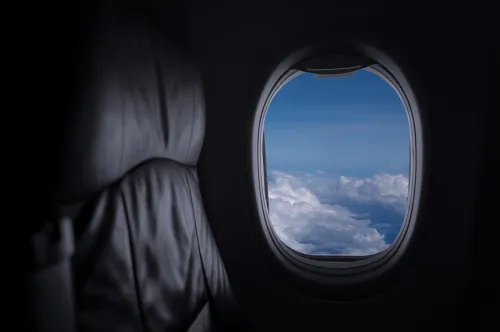
Though you might assume there’s a standard procedure to follow if a passenger passes away mid-flight, what actually happens to your dearly departed cabin-mate varies greatly by airline and type of plane. While certain planes, like Singapore Airlines’ Airbus A340-500 aircraft, were built with a special place to store bodies , according to one flight attendant , on many flights, the body will simply be moved to a back row and covered—except the head—until medical professionals on the ground can attend to the deceased.
3. In-flight oxygen masks aren’t intended to last the whole flight.
litabit / Shutterstock
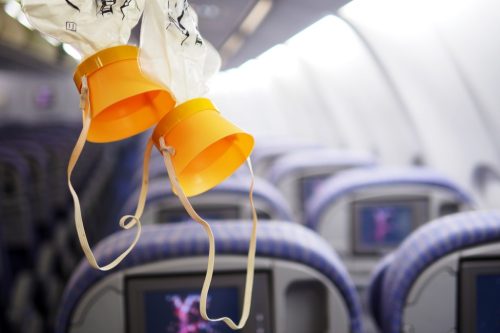
In fact, according to a report from the Air Accident Investigation & Aviation Safety Board , those masks only provide 12 minutes of continuous airflow on a 737. Luckily, that’s typically just the amount of time needed for your flight to find a safe landing spot.
4. Pilots frequently fall asleep on the job.

Krakenimages.com / Shutterstock
So, who’s flying your plane, exactly? Maybe no one—at least for portions of the flight. According to a 2013 report by the British Airline Pilots Association (BALPA), among a group of 500 pilots polled, 43 percent admitted to accidentally falling asleep while manning the plane, while 31 percent admitted to waking up from a nap to find their co-pilot sleeping, as well.
5. Black boxes aren’t actually black.
David MG / Shutterstock
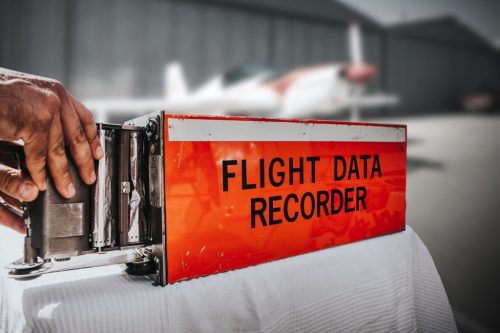
The black box, also known as the Flight Data Recorder, is actually painted bright orange. The heat-resistant paint used to coat the boxes’ exteriors comes in a highlighter-orange hue, which also happens to make them easier to find in case of an accident .
6. Airplane air is significantly drier than any you experience on Earth.
Andrey_Popov / Shutterstock
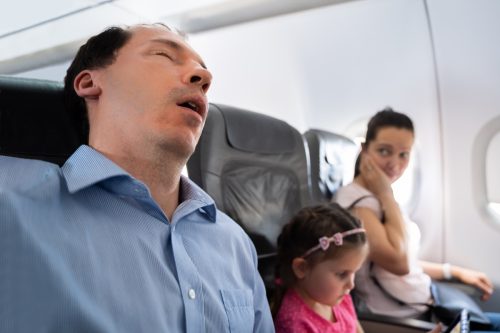
While the Mojave Desert in the Western United States often has humidity levels up to 50 percent, you’ll get just a fraction of that moisture aboard a plane. In fact, according to the World Health Organization, the humidity aboard your average aircraft hovers under 20 percent.
7. A Boeing 747 is more fuel-efficient than your car.
Skycolors / Shutterstock
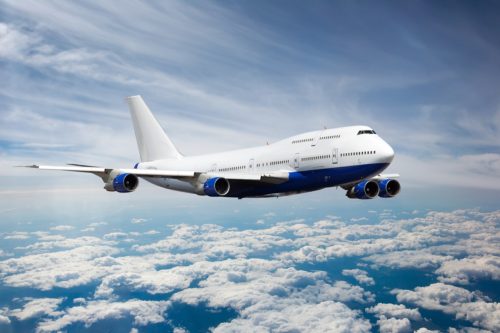
The Boeing 747 burns about one gallon of fuel every second, or five gallons per mile. Reversing this gives us the figure of 0.2 miles per gallon of fuel. This is much lower than the average car’s fuel efficiency at about 25 miles per gallon. But, considering the number of passengers the 747 carries, it is far more efficient. This breakdown explains that, because the plane can carry about 500 people, it’s actually getting 100 miles per gallon per person.
8. A hijacker once relinquished control of a flight for beer.
Bychykhin Olexandr / Shutterstock
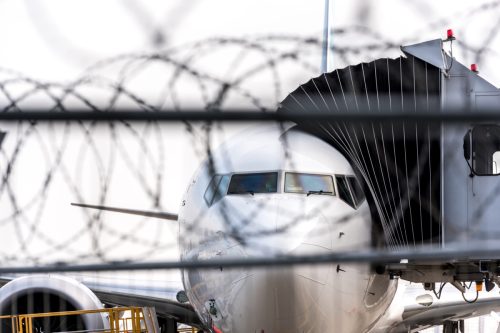
In 1985, an ex-con who hijacked a Norwegian Boeing 737 armed with a pistol decided to abandon his plan so long as the police were willing to give him one thing: beer. The plane landed safely at Fornebu Airport in Oslo, none of the 115 passengers on board were harmed, and the hijacker was arrested.
9. An engineer designed a plane with a detachable cabin to save passengers.

pattang / Shutterstock
In 2016, a Ukrainian aero-engineer unveiled a system that would allow pilots to eject a plane’s cabin in the event of an engine failure. After ejection, the cabin would deploy parachutes to safely lower passengers to the ground. But as it turns out, most crashes don’t happen due to engine failure. Because issues tend to take place during takeoff and landing, this would leave very little time for the pilots to successfully eject the cabin and save passengers. A for effort, though!
10. The dirtiest place on the plane isn’t the bathroom.
Vietnam Stock Images / Shutterstock
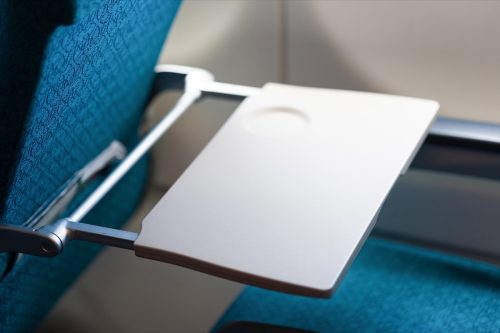
As it happens, the filthiest place on a plane is that tray table you’re eating your meal off of. According to a study conducted by TravelMath, tray tables hosted 2,155 colony-forming bacterial units (CFU) per square inch. In comparison, the button to flush the toilet had just 265 CFU in the same amount of space.
READ THIS NEXT: 55 Fascinating World Facts You Need to Know .
11. Dead chickens are thrown into plane jets during safety tests.
Jaromir Chalabala / Shutterstock
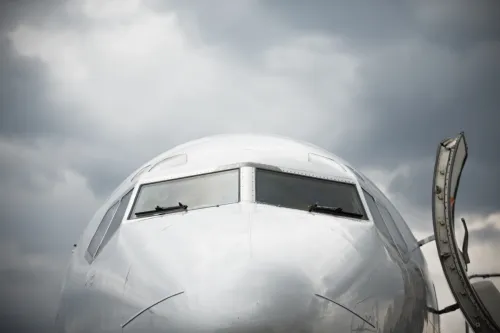
Yes, this incredibly real test is done with a “chicken gun,” and if you’ve seen the 2010 movie Captain Phillips, you know why. But before you report aviation experts to PETA, know that the chickens they receive are dead already. Airlines need to make sure that their windshields can protect pilots and passengers in the very likely event they collide with a bird. If you dare, you can watch the test in action (NSFW) .
12. There are thousands of planes over the United States at any moment.
FotoHelin/Shutterstock
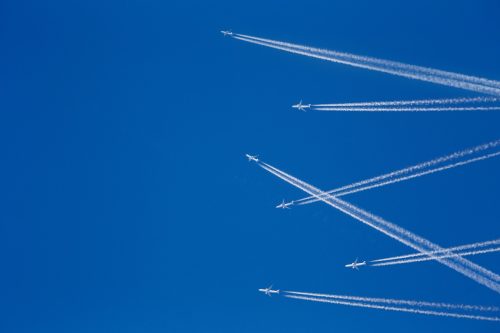
While you may only see the occasional plane pass by overhead, that doesn’t mean the sky isn’t full of them. In fact, according to the Federal Aviation Administration (FAA), there are over 5,000 planes in the air over the United States at any moment in time, and more than 8,000 flying across the globe.
13. Takeoff and landing are the most dangerous times during a flight.
Jetlinerimages / iStock
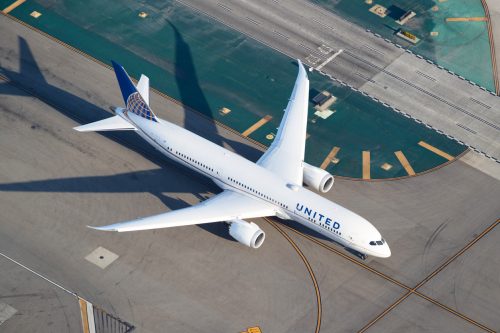
According to a report from Boeing, 13 percent of fatal accidents occur during a flight’s takeoff and initial climb , or the first three minutes of a flight. However, the descent and landing, or the final eight minutes of the flight, are far deadlier, accounting for 48 percent of all fatal accidents.
14. The world’s largest airplane weighed nearly 600 tons.
Jose Luis Stephens/Shutterstock
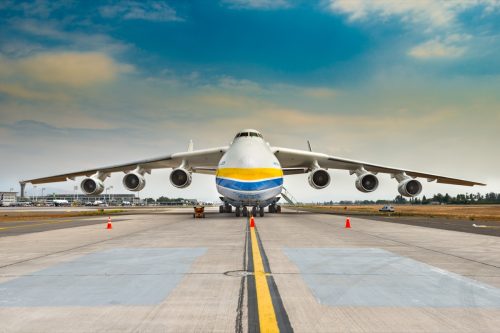
The Antonov An-225 had an impressive maximum takeoff weight of 598 tons. In comparison, the most weight the Boeing 747-8F can take off with maxes out at around 493 tons. Sadly, the aircraft was destroyed during the Russian invasion of Ukraine, according to Ukrainian officials.
15. The safest seats on a commercial aircraft are those at the back of the plane.
Lorna Roberts / Shutterstock
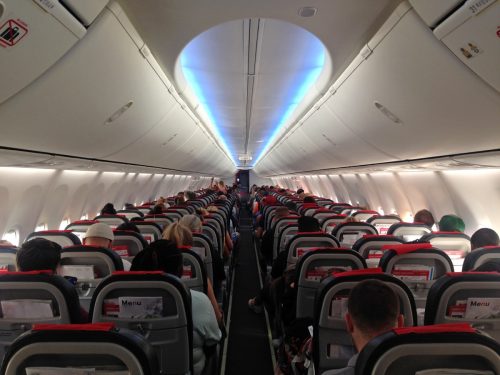
According to crash data compiled by Time , the fatality rate for seats in the rear third of a plane during a crash was 32 percent. The middle of the plane was found to be the least safe, with a 39 percent fatality rate, while the front was marginally safer with a 38 percent fatality rate.
16. You are about seven percent of the distance to space during flights.
FotoHelin / Shutterstock
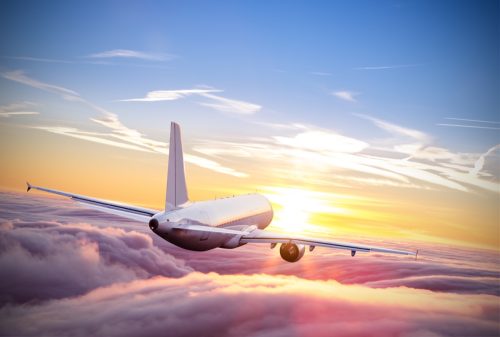
You might be surprised to discover that you’re actually only seven percent of the distance it would take for you to get into space when you’re on a plane. Planes can fly much higher than their average altitude of 30,000, but they don’t, because doing so would present health risks to those inside.
17. Airplanes can trigger lightning.
pinkfloyd yilmaz uslu/Shutterstock
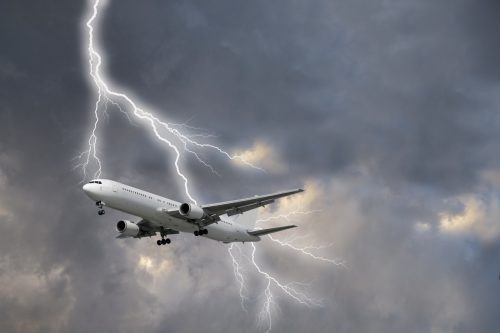
When a plane passes through clouds, the static created can actually spur the development of lightning. Fortunately, even if your plane is struck, you’re likely pretty safe. There hasn’t been a lightning-related plane crash in the United States since 1967, and increased safety measures have made lightning strikes less dangerous to passengers than ever before. When lightning strikes a plane, the electrical current is evenly distributed throughout the aircraft’s conductive aluminum interior, while grounding the plane’s interior electrical systems prevents surges that could interfere with its functionality.
18. Airplane blankets aren’t always washed between passengers.
litabit / Shutterstock
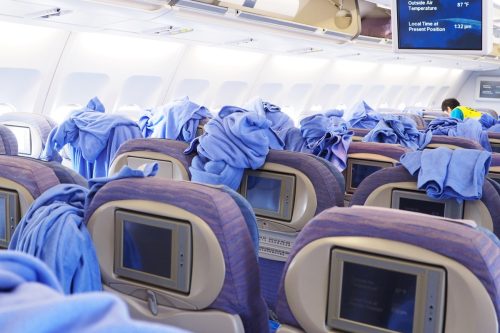
If you’re thinking of cozying up under one of those airline-provided blankets, think again. According to one report published in the Wall Street Journal , some airlines clean their blankets as infrequently as once every 30 days.
19. A Boeing 747 tank can hold 48,400 gallons of fuel.
Jaromir Chalabala / Shutterstock
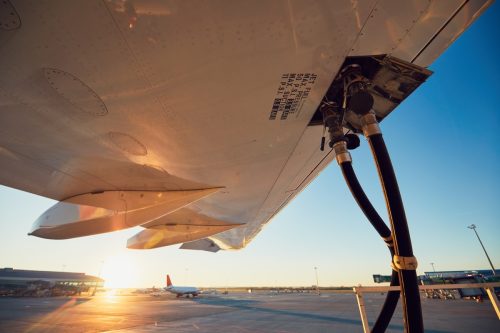
That’s 2,100 times the amount of fuel held in the gas tank of a Dodge Ram pickup truck . However, not all of that fuel is being used during a single flight—in fact, the plane only uses an average of five gallons of fuel per mile , meaning a 3,450-mile trip from New York to London only requires about a third of the plane’s total fuel capacity.
20. Dimming the aircraft’s lights serves a purpose beyond sleep.
Eric Glenn / Shutterstock
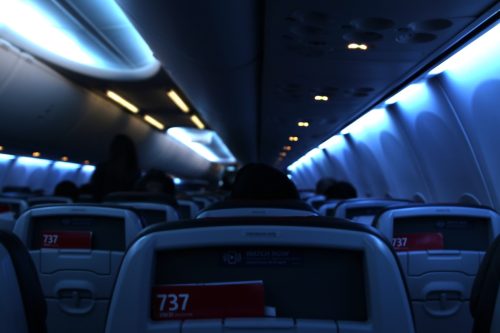
While it’s nice to imagine that airlines are hoping you’ll get in some restful sleep, that’s not the only reason why cabin lights are dimmed. The real reason why cabin crews dim the lights aboard a plane is to help passengers’ eyes adjust to the dark, an essential component in helping them survive should there be a sudden nighttime evacuation.
READ THIS NEXT: 63 National Park Facts About America’s Most Beautiful Destinations .
21. Plane exhaust kills more people than plane crashes.
Travel_Master / Shutterstock
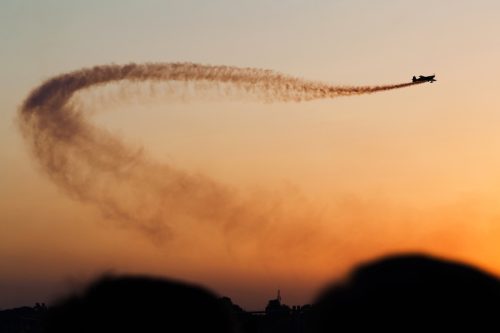
According to a study conducted at the Massachusetts Institute of Technology, airplane emissions are linked to 8,000 deaths each year. The number of people killed in plane crashes? Less than 1,000.
22. Plane doors can’t actually open in mid-flight.
Jaromir Chalabala / Shutterstock
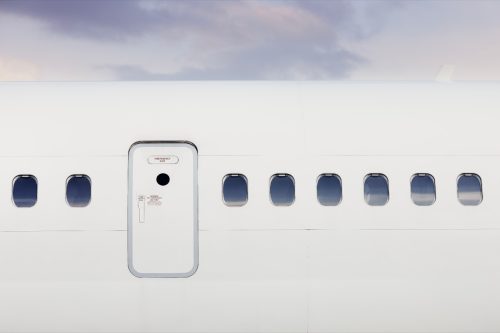
While numerous people have tried to open the exterior doors to airplanes mid-flight (only to find themselves later arrested for doing so), actually doing so would be next to impossible. The interior air pressure within the plane ranges from 4 to 14 PSI , meaning that, unless The Hulk or Thanos boarded your plane, it’s unlikely that the door could be opened.
23. All pilots who fly internationally must know at least a bit of English.
Olena Yakobchuk / Shutterstock
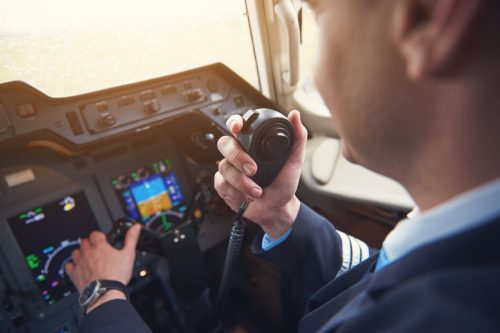
English may not be the official language of the United States, but it is the language of air travel. In 2003, the International Civil Aviation Association introduced new requirements to the Chicago Convention stipulating that all pilots flying internationally must be proficient in so-called “aviation English” to prevent potentially-fatal communication errors.
24. Pointing a laser pointer at a plane is a serious crime.

Alex Varyvoda / Shutterstock
Drive your pets crazy with a laser pointer all you want, but never aim that annoying red dot at a plane. According to 18 U.S. Code Section 39A , if you point a laser pointer at a plane or its flight path, you can enjoy up to five years in prison to think about what you’ve done.
25. The world’s oldest airline is over 100 years old.
NYC Russ / Shutterstock
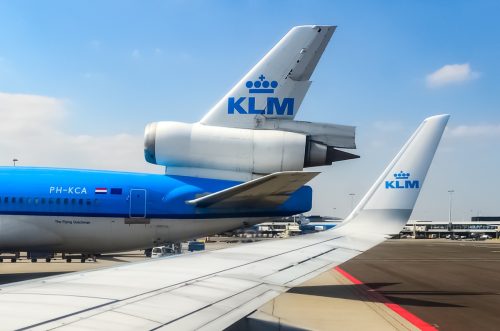
Dutch airline KLM has the longest continuous operating record of any airline in the world. The Amsterdam-based airline’s planes have been lifting off and touching down since 1919.
26. Airplane bathrooms can be opened from the outside.
<img loading=“lazy” src=“https://bestlifeonline.com/wp-content/uploads/sites/3/2022/03/lavatory-plane-bathroom-sign-flush-button.jpg?quality=82&strip=all&w=500" onerror=“this.onerror=null;this.src=‘https://blogger.googleusercontent.com/img/a/AVvXsEhe7F7TRXHtjiKvHb5vS7DmnxvpHiDyoYyYvm1nHB3Qp2_w3BnM6A2eq4v7FYxCC9bfZt3a9vIMtAYEKUiaDQbHMg-ViyGmRIj39MLp0bGFfgfYw1Dc9q_H-T0wiTm3l0Uq42dETrN9eC8aGJ9_IORZsxST1AcLR7np1koOfcc7tnHa4S8Mwz_xD9d0=s16000';" alt=“A lavatory sign on a plane bathroom door that says “occupied” - 52”>
litabit / Shutterstock
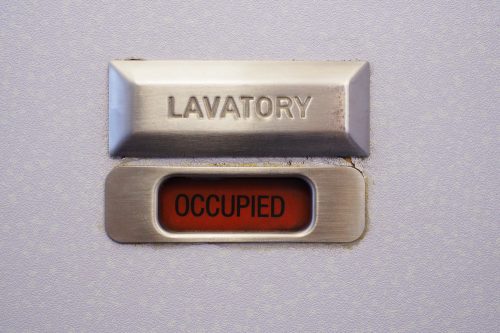
While flipping that latch inside the bathroom that turns the door sign to “occupied” may give you some semblance of privacy, there’s an easy way for flight crew personnel to get in if they need to. Underneath that lavatory sign, there’s a switch that allows the flight crew to open the door if they’re concerned about your safety or the safety of other passengers.
27. One airline has had no fatal accidents.
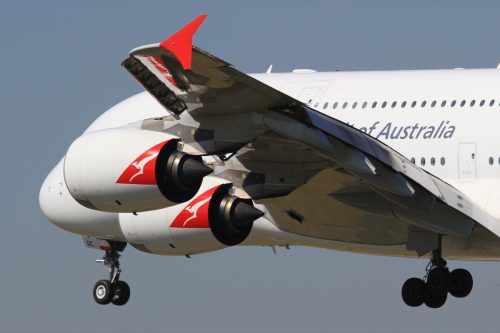
Mike Fuchslocher / Shutterstock
Despite being in business for nearly a century, Australian airline Qantas has never had a fatal accident involving one of its commercial aircraft.
28. There are 140 miles of wiring inside a Boeing 747.

Policas / Shutterstock
According to a report from technology company Tyco Electronics, which manufactures wire connectors for the aviation industry, a 747 can pack 750,000 feet, or 140 miles, of wire inside it, weighing approximately 3,500 pounds in total.
29. American Airlines saved $40,000 by cutting one ingredient from meals.
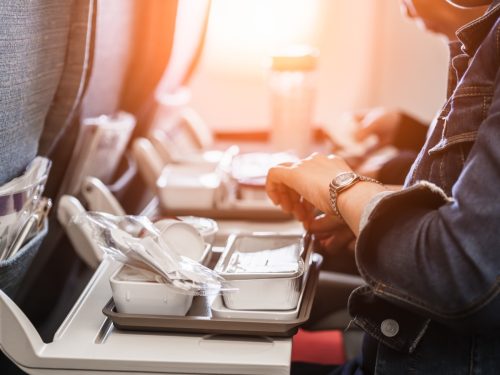
shutter_o / Shutterstock
When attempting to cut costs in the 1980s, American Airlines discovered that removing just one item from passengers’ meals would do the trick. By simply nixing just one olive from the salads served in-flight, the airline saved a staggering $40,000 in the course of a single year.
30. Airplane water is riddled with bacteria.

Eivaisla / Shutterstock
You might want to shell out the extra cash for a ridiculously overpriced bottle of water at the airport. A report from the Wall Street Journal reveals that bacteria including salmonella and staphylococcus were found in airplane water , in addition to insect eggs. Another study conducted at the University of Limerick found 37 distinct bacterial species in airplane water, with long-haul flights having worse water quality than their short-haul counterparts.
READ THIS NEXT: 37 Weird Facts About the Human Body That Will Blow Your Mind .
31. Some of the deadliest crashes happen when planes are securely on the ground.
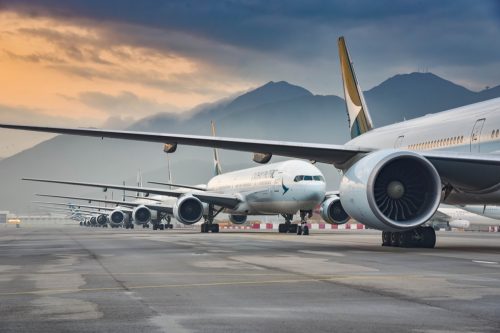
heychli / Shutterstock
In 1977, the deadliest crash in the history of aviation happened on the ground. Pan Am Flight 1736 and KLM Flight 4805, both Boeing 747s, crashed into one another in Tenerife. However, as CBS News reports, it wasn’t an error on either pilot’s part, per se—low fog made visibility poor, and the airport’s runways were overly congested , leading to the two planes colliding, killing 583 passengers and flight crew members in the resulting fire.
32. Pilots and co-pilots eat different meals on a flight.
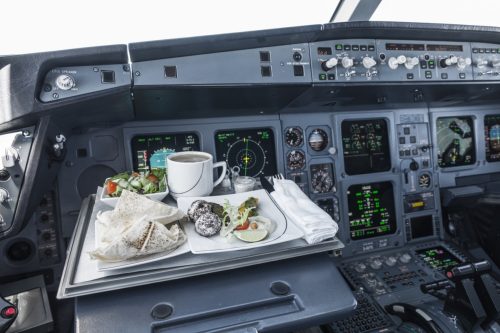
Mario Hagen / Shutterstock
While it’s only a hard-and-fast rule on certain airlines, Business Insider reports that most pilots and co-pilots won’t eat the same thing for dinner . This way, if the food is contaminated and one pilot gets sick, the other should still be able to operate the aircraft.
33. The most expensive first class seat costs more than $30,000.
New Africa / Shutterstock
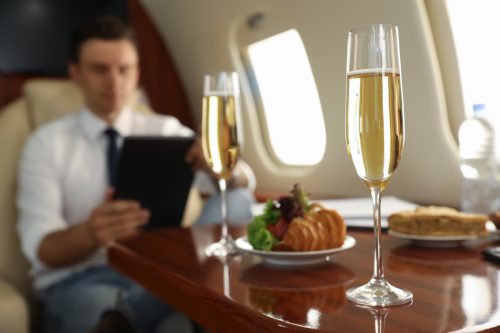
The Etihad Airways First Apartment —a private room with a bed, armchair, vanity and makeup mirror, and onboard shower—can easily run you more than $30,000 for a round-trip ticket from New York to Dubai.
34. Your taste buds change in flight.
Aureliy / Shutterstock
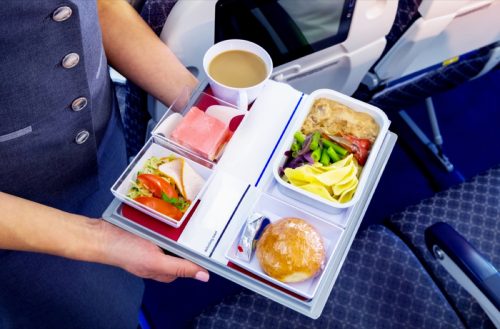
Good news for those who don’t find airplane meals particularly palatable: You’re not actually tasting as much of them as you would think. According to the BBC, the difference in air pressure and the low humidity in a plane’s cabin makes it more difficult for your taste buds to register sweet and salty flavors.
35. Traveling by plane is the safest way to get around.
ShutterStockStudio / Shutterstock
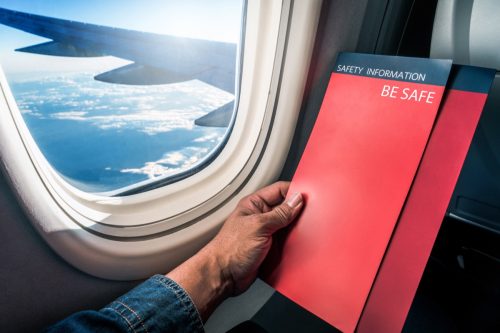
Traveling by airplane is extremely safe—and getting safer every year. In 2019, there were just 257 deaths related to aircraft accidents . By comparison, during the same year, 39,107 people died in car accidents in the United States alone.
36. The sound barrier was broken in 1947.
Kletr / Shutterstock
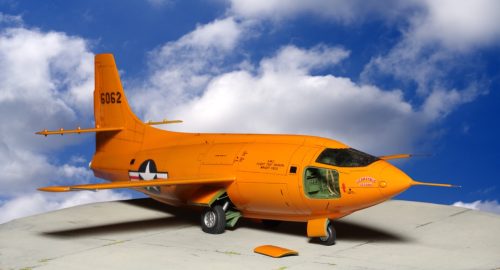
Pilot Chuck Yeager astonished the world with his record-breaking flying skills. This U.S. Air Force veteran learned to fly as a fighter pilot during World War II. Using the Bell X-1 rocket jet, he flew faster than the speed of sound —662 miles per hour at 40,000 feet. Later on in his life, he added yet another incredible accomplishment to his wildly-impressive CV: training U.S. Air Force veterans to become astronauts.
37. Sandra Bullock and about two million other Americans have aviophobia.
<img loading=“lazy” src=“https://bestlifeonline.com/wp-content/uploads/sites/3/2023/06/sandra.jpg?quality=82&strip=all&w=500" onerror=“this.onerror=null;this.src=‘https://blogger.googleusercontent.com/img/a/AVvXsEhe7F7TRXHtjiKvHb5vS7DmnxvpHiDyoYyYvm1nHB3Qp2_w3BnM6A2eq4v7FYxCC9bfZt3a9vIMtAYEKUiaDQbHMg-ViyGmRIj39MLp0bGFfgfYw1Dc9q_H-T0wiTm3l0Uq42dETrN9eC8aGJ9_IORZsxST1AcLR7np1koOfcc7tnHa4S8Mwz_xD9d0=s16000';" alt=“Sandra Bullock at a UK screening of “The Lost City” in 2022 - 63”>
Fred Duval / Shutterstock
Despite crashes being very rare, 6.5 percent of Americans suffer from aviophobia, or a fear of flying. If you are scared to set foot on a plane, you’re in good company—even celebrities like Sandra Bullock are gripped by this common fear. The Gravity star once said she’s “deathly afraid of flying.” The Anxiety and Depression Association of America says that most of this stress originates from the total loss of control or possibly the feeling of being trapped.
38. Long-haul flights have secret bedrooms and a bathroom for flight attendants.

Sunshine Seeds / Shutterstock
If flight attendants work on long-haul flights—which can last upwards of 12 hours—they need time to properly rest. So airlines have installed secret sleeping quarters above the main cabin with seven or eight beds, and occasionally a separate bathroom, as well. The crew can also enjoy in-flight entertainment while inside these secret chambers. That must be how they keep up their cheery demeanor on those long flights.
39. The world’s smallest plane weighs only 358.8 pounds.
<img loading=“lazy” src=“https://bestlifeonline.com/wp-content/uploads/sites/3/2023/07/Bede-BD-5-microjet.jpg?quality=82&strip=all&w=500" onerror=“this.onerror=null;this.src=‘https://blogger.googleusercontent.com/img/a/AVvXsEhe7F7TRXHtjiKvHb5vS7DmnxvpHiDyoYyYvm1nHB3Qp2_w3BnM6A2eq4v7FYxCC9bfZt3a9vIMtAYEKUiaDQbHMg-ViyGmRIj39MLp0bGFfgfYw1Dc9q_H-T0wiTm3l0Uq42dETrN9eC8aGJ9_IORZsxST1AcLR7np1koOfcc7tnHa4S8Mwz_xD9d0=s16000';" alt=“Bede BD-5J “Microjet” - 65”>
Jon Kraft / Shutterstock
The Bede BD-5 microjet weighs nearly 360 pounds (unloaded) and has a wingspan of only 14.5 feet. Though minuscule, this jet can reach speeds of over 300 miles per hour, which is a little under half of the speed of sound.
40. The longest military plane is six stories tall.
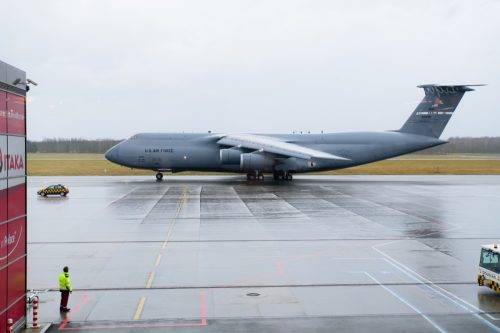
Copenhagen Stock / Shutterstock
The U.S. military’s gargantuan C-5 has a wingspan of 222.8 feet, with each wing measuring the length of a basketball court. According to Popular Mechanics , “the aircraft stands 65 feet tall, the equivalent of a six-and-a-half story building.” It can also carry more than 250 million pounds and 350 passengers, even with equipment on board. It is so big that many Air Force bases have had to cut large holes in hangar doors to keep it indoors… well, most of it that is—the tail end still protrudes.
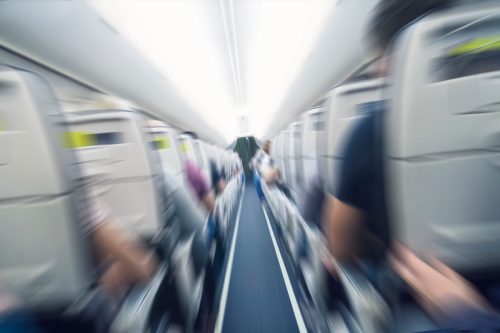
41. Turbulence is the top cause of non-fatal plane injuries.
Melnikov Dmitriy / Shutterstock
There’s a serious reason why you should always respect the seat belt sign. According to the FAA, U.S. air carriers experienced 163 turbulence accidents resulting in serious injuries between 2009 and 2023. Many of these incidents have been confirmed to involve passengers not wearing seat belts when the seat belt sign had been turned on. Buckling up might not be “the law” in the air, but it’s certainly worth it to preserve your safety.
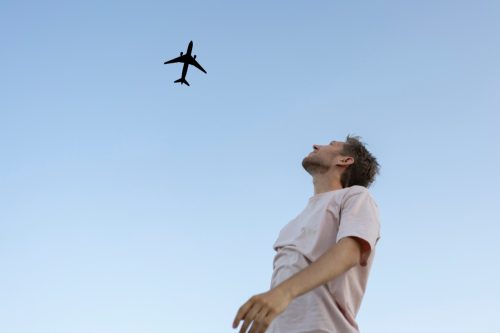
42. Living in an airplane flight path could harm your heart.
Mike_shots / Shutterstock
While regular air travelers might imagine they’d enjoy living close to the airport they frequent, actually living underneath a flight path could shorten your life. According to a 2010 study published in Epidemiology , individuals exposed to noise above 60 decibels on a regular basis—like the sound of an airplane overhead —had a 30 percent greater risk of dying from a heart attack than those typically exposed to noise levels under 45 decibels. Over a 15-year period living under a flight path, that risk was up 50 percent.
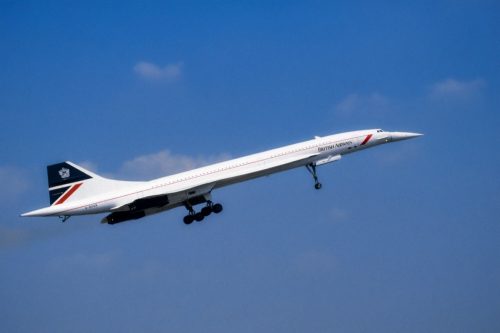
43. The fastest commercial plane flew at twice the speed of sound.
John Selway / Shutterstock
The Concorde , which offered flights continuously from 1976 to 2003, traveled at twice the speed of sound. In fact, the supersonic jet, which could achieve speeds up to 1,354 miles per hour, also broke a number of world records for its speed, in one case earning the record for the fastest transatlantic flight when it transported passengers from JFK in New York to Heathrow Airport in London in just 2 hours, 52 minutes, and 59 seconds.
44. Airplane tires are inflated to about six times the PSI of car tires.
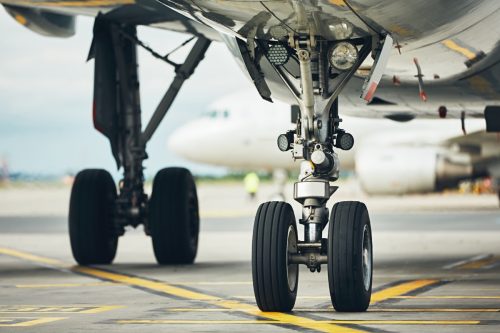
Jaromir Chalabala / Shutterstock
The real reason airplane tires rarely pop, even though they’re carrying a huge amount of weight? It’s not just their thickness that contributes to their strength under pressure. According to a Wired report, airplane tires are pumped to roughly 200 psi—about six times the psi of an average car tire. In fact, according to an experiment recorded by National Geographic , a Boeing 737’s tires can withstand over 900 psi before bursting.
45. There are temperatures too cold to fly in.
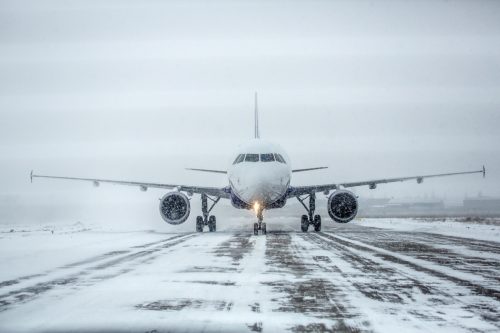
Alexey Lesik / Shutterstock
While the outside of an aircraft can reach -60 degrees Fahrenheit when it’s cruising at 35,000 feet, similar ground temperatures can stop a plane in its tracks. In 2014, when temperatures hit about -47 degrees Fahrenheit at Igarka Airport in Russia, a Tupolev-134 jet’s landing gear braking system actually froze , leading passengers to do their best to help. They actually got out to try to push the 61,640-pound plane.
46. A lot more people survive plane crashes than you think.
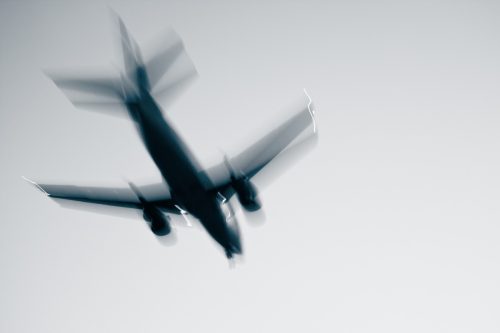
Jaromir Chalabala / Shutterstock
It’s true. According to the National Transportation Safety Board , approximately 95 percent of those involved in plane crashes survive them. Much of this has to do with things like improved impact protection, fire safety measures, and evacuation methods.
Wrapping Up
- Source: http://aaiu.ie/sites/default/files/Hellenic%20Republic%20Accident%20Helios%20Airways%20B737-31S%20HCY522%20Grammatiko%20Hellas%202005-085-14.pdf
- Source: https://www.who.int/news-room/questions-and-answers/item/air-travel-advice
- Source: https://www.faa.gov/air_traffic/by_the_numbers
- Source: https://www.boeing.com/resources/boeingdotcom/company/about_bca/pdf/statsum.pdf
- Source: https://icao.int/safety/lpr/Documents/323_en.pdf
- Source: https://law.cornell.edu/uscode/text/18/39A
- Source: https://www.scribd.com/document/165157922/Aircraft-Electrical-Wire
- Source: https://ncbi.nlm.nih.gov/pmc/articles/PMC4661625/
- Source: https://www.faa.gov/newsroom/turbulence
- Source: https://oce.ovid.com/article/00001648-201011000-00013/HTML
- Source: https://flightsafety.org/fsd/fsd_oct01.pdf