39 Facts About Storms That Will Make You Run for Cover
John D Sirlin/Shutterstock
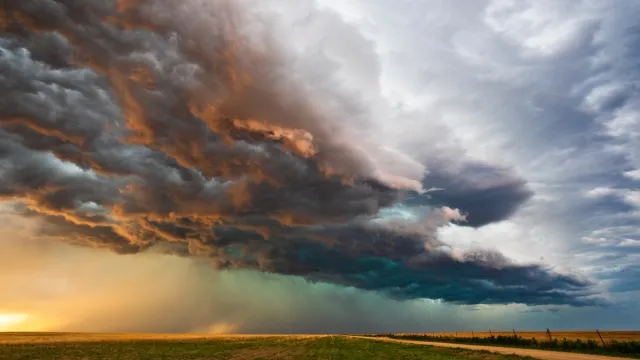
As countless inaccurate weather reports have shown, storms are mysterious, unpredictable things. Most of us would probably have trouble identifying what exactly causes them, and even those whose full-time job is to predict them seem to have a tough time doing so. In addition, storms can be perplexing, awe-inspiring, and even deadly—and there’s so much to discover about the weather phenomenon that it’s hard to even know where to start. To that end, we’ve collected 39 interesting facts about storms, from downpours, cloudbursts, and blizzards to deluges, tornadoes, and hurricanes. Read on to learn everything you’ve ever wanted to know about what happens when the sky opens up.
RELATED: 40 Ocean Facts That Will Blow You Out of the Water .
Fascinating Storm Facts Everyone Should Know
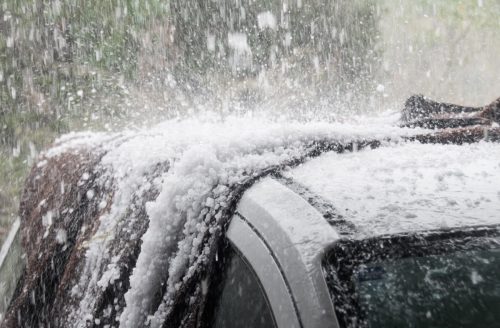
1. A 1995 storm in Texas had hailstones as big as softballs.
Ben Romalis/Shutterstock
In 1995, a storm hit northern Texas with 70 mph winds and hail as big as softballs , killing at least 15 people and injuring more than 100. It also caused extensive flooding, knocked out power to 16,800 customers, and broke the windows of many buildings and cars. Within one hour, some roads in Fort Worth were buried under two feet of hailstones. Eleven people drowned while trying to escape flooded vehicles, including five members of one family.
2. One blizzard in Iran buried entire villages with no survivors.

Martin Bergsma/Shutterstock
The Iran Blizzard of 1972 is known as the deadliest blizzard in history. The storm lasted a full week, from Feb. 3 to Feb. 9, and resulted in the deaths of approximately 4,000 people. Southern Iran received as much as 26 feet of snow in some places, and about 200 villages were completely buried and wiped off the map, which resulted in no survivors in the outlying areas of the country that were hit the hardest.
3. Blood red rain poured down on India for a summer.

component/Shutterstock
From July 25 through Sept. 23, 2001, red-colored rain fell down on Kerala, India, baffling the entire world. A few days before the blood rain started, people reported a sudden flash of light and booming sound in the sky. People also said that trees shedded shrunken and wrinkled burnt leaves. Scientists found that it was red spores from lichen-forming algae that gave the rain its unusual—and frightening—color.
4. A heat wave in California once turned grapes into raisins.

Stephen Farhall/Shutterstock
A heat wave that hit northern California’s wine country Labor Day weekend in 2017 straight-up turned grapes into raisins . As temperatures hit up to 109 degrees Fahrenheit, the scorching heat evaporated water from the berries and shut down the vines’ entire metabolic process. It was estimated that vineyards lost up to 50 percent of their crop due to the unprecedented temperatures.
Though September heat waves are not uncommon in California wine regions, for one to come that early in the month is highly unusual.
5. Once, Earth got as cold as Mars.

Lubo Ivanko/Shutterstock
The coldest temperature ever reported was in Antarctica on Aug. 10, 2010. The temperature fell to -135.8 degrees Farenheit, or -94.7 degrees Celsius. That’s almost 10 degrees colder than the previous record. As the temperature was captured by satellite, not thermostat, it wasn’t able to be included in the Guinness Book of World Records . According to an ice scientist who reported on the incident, the temperature was actually more fitting for Mars than for one of Earth’s poles.
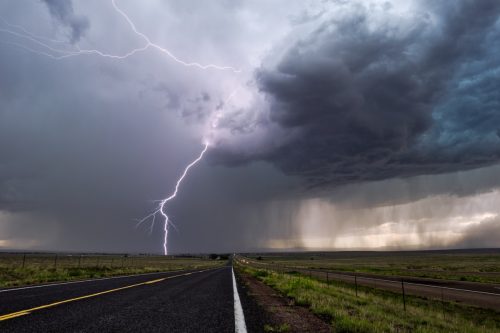
6. Approximately 16 million thunderstorms occur each year.
John D Sirlin/Shutterstock
According to the National Weather Service, roughly 16 million thunderstorms hit each year, with upwards of 1,800 storms occurring at any one time. While 100,000 of those storms take place in the United States, only 10 percent are considered severe. These storms are defined as any occurrence that produces winds of 58 miles per hour or more, hailstones that measure 3/4 of an inch or greater, as well as tornadoes. Other threats include dangerous straight-line winds, heavy rain, downed power lines, and deadly lightning.
7. Lightning also occurs on other planets.

Jurik Peter/Shutterstock
Lightning strikes aren’t just reserved for Earth. Other planets, including Jupiter and Saturn , experience this kind of weather, too. Scientists have also observed bright flashes in dust storms on Mars, which some interpret as evidence of lightning there as well.
8. A mudslide can move entire buildings.

Salty View/Shutterstock
Landslides occur when masses of rock, earth, or debris move down a slope, and mudslides are a common type of landslide that move at a very rapid pace. Mudslides usually start on steep slopes and can be activated by natural disasters, including wildfires or after heavy rains. In the United States, landslides, and mudslides result in 25 to 50 deaths each year and can carry rocks, trees, vehicles, and even entire buildings.
RELATED: 55 Fascinating World Facts You Need to Know .
9. America is the world’s tornado capital.
LeStudio/Shutterstock
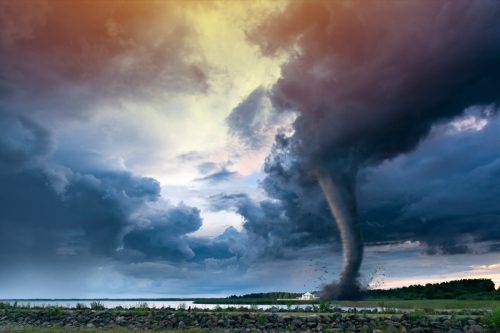
The United States experiences more tornadoes than any other country. Oh, and they’re also stronger and more violent than they are anywhere else. The majority form in an area known as Tornado Alley , which includes Texas, Oklahoma, Kansas, South Dakota, Iowa, Missouri, Nebraska, Colorado, North Dakota, and Minnesota. The United States averaged 1,274 tornadoes per year in the last decade, most of which take place in spring . (Tornadoes are least common in winter.) Worldwide, most tornadoes occur in the late afternoon, between 3:00 p.m. and 7:00 p.m., and peak around 5:00 p.m.
10. Greenland is the windiest place on Earth.

muratart/Shutterstock
To be more specific, Cape Farewell, Greenland, has been called the windiest place on the planet . According to a researcher who led an expedition there in 2007, the winds are so strong that flying over the region is “stomach-churning.” Satellite data shows that winds reach 44.7 mph 16 percent of the year and 29 percent of the winter. It is believed that these strong winds carried Viking explorers from Iceland and Greenland to North America, making them the first Europeans to discover the continent.
11. Mild autumn weather leads to bigger spiders indoors.

E.J.Johnson Photography/Shutterstock
Whenever you have warm fall weather, you can expect to see more spiders around your home. Male spiders mature in mid-to-late summer, leave their webs or holes, and go looking for a mate. It’s during this search that you’re likely to see them crawling along our walls, windows, furniture, or floors. However, the warmer the fall season, the bigger the spiders get, because there is more prey available than usual. Insects thrive in warm conditions, and that’s what spiders feed on.
12. You can calculate how far away you are from lightning.
Jaromir Chalabala/Shutterstock
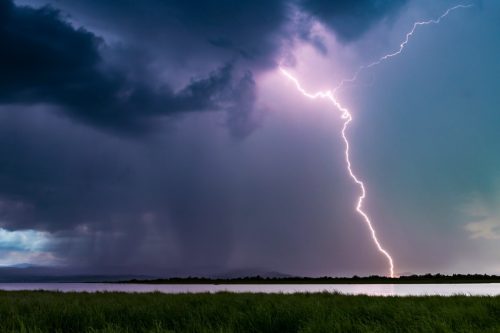
There’s a, well, lightning-quick way to figure out how far away you are from a lightning strike. Just count the number of seconds that pass between a flash of lightning and the thunder that follows, then divide that number by five. The result equals how many miles away you are from where lightning just struck. This is called the “flash-to-bang” method . The National Weather Service recommends taking cover if the time between lightning and thunder is 30 seconds or less, which indicates that the lightning is six miles away or closer.
13. There’s such a thing as water tornadoes.
Rob Atherton/Shutterstock
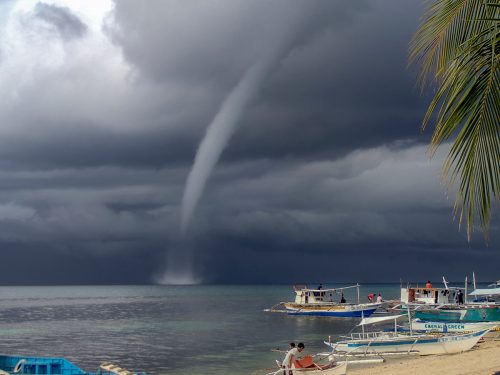
Tornadic waterspouts are what they sound like: A tornado over a body of water. They generally begin over land in connection with a thunderstorm, then move out over the water. Just like tornadoes, they can be very destructive. Waterspouts occur most often in northern Michigan in August, September, and October when the waters of the Great Lakes are at their warmest. They tend to last for two to 20 minutes and move at speeds of 10 to 15 knots.
14. A sandstorm once buried a force of 50,000.
Omer koclar/Shutterstock
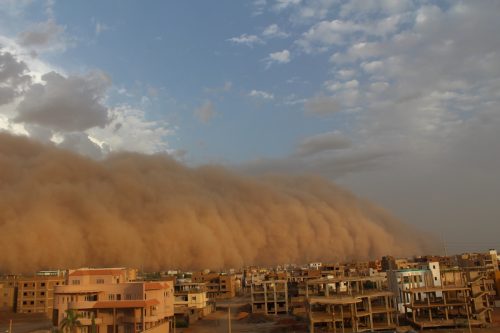
In 525 B.C.E., Cambyses , the son of Cyrus the Great , sent 50,000 soldiers from Thebes to attack the Oasis of Siwa and destroy the Oracle at the Temple of Amun after local priests refused to legitimize his claim to Egypt. After walking for seven days in the desert, the soldiers drowned in a sandstorm . In 2009, bronze weapons, a silver bracelet, an earring, and hundreds of human bones were found by archeologists in the vast desolate wilderness of the Sahara Desert, believed to have belonged to the missing Persian army.
15. Hurricane Andrew led to a python invasion in Florida.

Utopia_88/iStock
Hurricane Andrew, a Category 5 hurricane, hit Southern Florida on Aug. 23, 1992. Its fierce winds reached 150 miles per hour and demolished many buildings, including a breeding facility for Burmese pythons , and many of them escaped. As a result, today the Everglades are overrun with these giant snakes. Female pythons can lay up to 100 eggs a year, and reproduce rapidly. To help control the burgeoning python population, Florida residents are authorized to catch and kill them by almost any means necessary, with no permit required, especially on private lands.
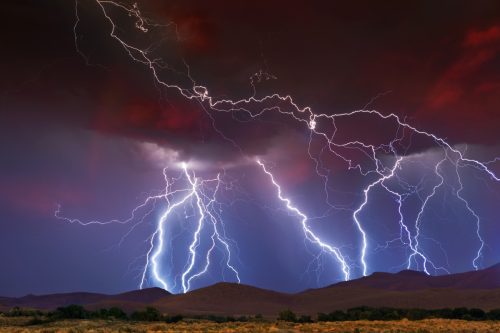
16. Lightning is insanely hot.
Neil Lockhart/Shutterstock
The odds of being struck by lightning are incredibly slim, but people are more likely to die from lightning than other types of storms, not including hurricanes. Lightning strikes kill hundreds of people in the United States each year, and 10 percent of lightning deaths happen in Florida alone. A direct strike is deadly. At 50,000 degrees Fahrenheit, a lightning bolt is five times hotter than the sun’s surface. And there are about 55,000 lightning strikes a day in the States. So watch out!
RELATED: 37 Weird Facts About the Human Body That Will Blow Your Mind .
17. The eye of a storm is actually calm and sunny.

LeManna/Shutterstock
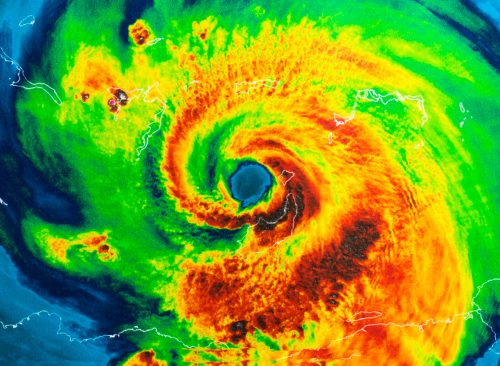
The very center of a hurricane is called the “eye.” In the eye of a storm , the winds are calm, and it can feel like a peaceful, sunny day. The storm’s eye is roughly 20 to 40 miles in diameter. It is surrounded by the eyewall, a ring of towering thunderstorms where the most severe weather and highest winds occur. The hurricane’s lowest barometric pressure occurs in the eye and can be as much as 15 percent lower than the pressure outside the storm.
18. Aristotle believed thunder was caused by clouds colliding.

Evgeniyqw/Shutterstock
Legendary philosopher Aristotle believed that thunder and lightning are part of a “dry exhalation” from clouds. “If any of the dry exhalations are caught in the process as the air cools, it is squeezed out as the clouds contract, and collides in its rapid course with the neighboring clouds, and the sound of this collision is what we call thunder ,” he said. He also believed that lightning is the burning of this same exhalation.
19. There’s a phobia of lightning and thunder.

Irina Kozorog/Shutterstock
Astraphobia is the extreme fear of thunder and lightning. It’s not just children and adults who can suffer from this irrational fear—it’s a phobia that commonly affects animals and why dogs often howl and hide when they hear thunder.
A person who has astraphobia will frequently check weather forecasts and change their plans if a storm is coming. Like pets, people with astraphobia may even hide in a closet to deal with their fear. Astraphobia can be treated through cognitive behavioral therapy.
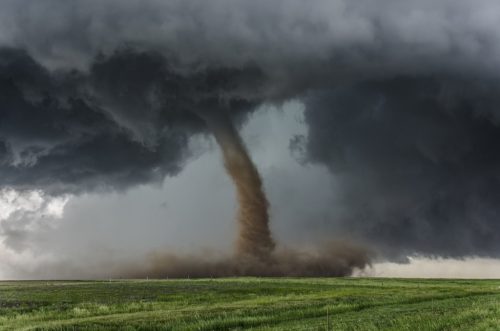
20. One tornado has a death toll of nearly 700.
Minerva Studio/Shutterstock
The Tri-State Tornado on March 18, 1925 was the deadliest in U.S. history . It caused 695 deaths, more than twice the amount of fatalities of the second deadliest tornado, which took place in Mississippi in 1840. The 151- to 235-mile track left by the tornado was the longest ever recorded in the world; it crossed from southeastern Missouri, through southern Illinois, and then into southwestern Indiana. Though it was not officially rated at the time, it’s recognized today as an F5 tornado, the maximum damage rating issued on the Fujita scale.
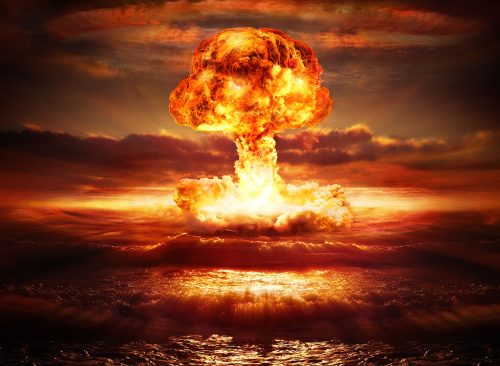
21. Some storms are more powerful than atomic bombs.
Romolo Tavani/Shutterstock
Hurricanes are extremely powerful and pack as much energy as a 10-megaton nuclear bomb .
Hurricanes get their power from the condensation of warm ocean water. Condensing moisture in a low-pressure region releases energy, which heats the air. Then, the moist air rises and pulls in more air from outside toward the center, creating a devastatingly powerful cycle. A hurricane can continue for many days over open water, building up power. Then, when it hits land, the lack of moisture and increased friction will slow it down a bit—but not before it can cause mass destruction and loss of life.
22. Bigger cities create more severe thunderstorms.

Miguel MMV/Shutterstock
Research has found that the extra heat generated around cities makes thunderstorms more intense. This is known as the Urban Heat Island effect . Heat from common activities such as driving cars and the vast amount of heat-absorbing concrete in big cities leads to warmer air. This extra heat causes hot and humid air rising to form clouds and thunderstorms. In fact, one study found that rainfall in Phoenix increased by 12 to 14 percent as the city’s population grew.
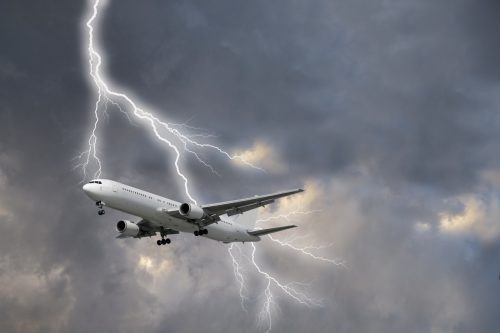
23. Yes, lightning can strike the same place twice.
pinkfloyd yilmaz uslu/Shutterstock
The phrase “lightning never strikes the same place twice” is a total myth. The reality is that lightning can and will strike the same place twice , whether during the same storm or centuries later. There is a significant attraction between the lightning bolt and the place it previously hit, so it’s actually more likely that it would be struck again. Skyscrapers like the Empire State Building are almost guaranteed to be struck by lightning each time a thunderstorm passes overhead. Luckily, such structures generally have built-in lightning rods to make sure no damage is done to the building.
24. The majority of Americans believe global warming is real.

Steve Heap/Shutterstock
According to a 2021 survey conducted by the Yale Program on Climate Change Communication, 72 percent of Americans now accept that climate change is happening, which is a seven percent increase from 2015. More than half the respondents (57 percent) said they understand that global warming is caused mostly by human activities. The survey also showed that more Americans are connecting global warming with extreme weather events, with 64 percent reporting that they believe climate change is affecting the weather. And 46 percent said that they have personally experienced the effects of climate change.
25. It can rain animals.

Eric Isselee/Shutterstock
“Raining animals” is a rare but real meteorological phenomenon when animals fall from the sky . But, before you let your imagination run wild, “raining cats and dogs” isn’t what happens. Instead, you’ll just get pummeled with fish and frogs.
Such occurrences have been reported in many countries throughout history. One hypothesis is that tornadic waterspouts can pick up small animals, such as fish or frogs, and carry them for several miles. Sometimes the animals survive, as witnesses have described them as startled but healthy and showing normal behavior shortly after. In some incidences, the animals have been frozen or even completely encased in ice. There have also been cases where the rain consisted of shredded animal body parts.
RELATED: 54 Hilarious and Random Facts You’ll Want to Tell Your Friends .
26. Pine cones can be used to forecast rain.

Boris Riauzov/Shutterstock
Pine cones open and close depending on the humidity to help their seeds disperse. Light seeds are contained inside the pine cone. When the weather is dry the pine cone opens up, so wind can catch the seeds and allow them to be dispersed in the air far away from the original tree. When humidity rises and rain is coming , the pine cone closes up to prevent the seeds from escaping and becoming waterlogged.
27. And balloons can help predict other kinds of weather.

jakkapan/Shutterstock
The National Weather Service uses balloons to track the weather from 900 different locations around the world. These devices, made of latex or neoprene, are released every day, twice a day. The flights typically last around two hours, though the balloons get almost 125 miles away during this time, and drift up to over 100,000 feet in the atmosphere. They are engineered to monitor weather patterns surrounding air pressure, temperature, humidity, wind speed, and more.
28. Lightning struck and killed an entire soccer team but left the opposing team untouched.

Gelner Tivadar/Shutterstock
On Oct. 28, 1998, a freak blast of lightning struck an entire soccer team in the African state of Congo during a match, while their opponents were left completely unharmed. All 11 team members, aged from 20 to 35 years old, lost their lives, while members of the home team were untouched. Many soccer fans blamed witchcraft for the bizarre incident because, incidentally, the score was tied at the time of the deadly lightning strike.
29. Most U.S. tornado warnings are false alarms.

Casimiro PT/Shutterstock
On average, 70 percent of tornado warnings issued in the U.S. are false alarms. This means that only three in 10 tornado warnings predicted a verified tornado within the warned area during the time of the notice. In an attempt to lessen this false alarm problem , lead times for tornado warnings have decreased from 13 to 14 minutes, at the beginning of the decade, to around eight to nine minutes in 2017. National Weather Service forecasters now tend to wait until a tornado has begun before issuing a warning.
30. One hurricane lasted an entire month.

Alan Budman/Shutterstock
Hurricane John , also known as Typhoon John, was both the longest-lasting and the farthest-traveling cyclone ever recorded (though Hurricane Freddy isn’t far behind). John formed in 1994 and peaked as a Category 5 hurricane. John traveled 7,165 miles from the eastern Pacific to the western Pacific and back to the central Pacific, lasting 31 days in total. Despite enduring for a full month, John barely hit any land and only minimally affected the Hawaiian Islands and the U.S. military base on Johnston Atoll.
31. Tropical storm names are determined before hurricane season even begins.
Trong Nguyen/Shutterstock
Tropical storms are given names from a pre-determined and pre-approved list by the World Meteorological Organization (WMO). There is a naming system in place, where names can only be repeated after six years. However, if a storm causes large amounts of destruction, that name is retired permanently and a new name starting with that letter is added to the list. This system was invented to easily distinguish different storms happening at the same time in different parts of the world.
32. Once, wind bent the goalposts during an NFL game.

HP Productions/Shutterstock
On Dec. 28, 2008, a windstorm caused a lot of damage during a New England Patriots vs. Buffalo Bills game . Winds at 75 mph tore a strip off the Buffalo Bills’ practice field house across the parking lot from the stadium and tilted both goalposts inside the stadium. Work crews had to use ropes and a forklift to re-secure and re-center the goalposts, which shook heavily in the wind. The winds also tore off part of a goal post on the Bills’ outdoor practice field next to the field house.
33. It’s only snowed in Florida once.

lunamarina/Shutterstock
Jan. 19, 1977 goes down in history as the only time that Florida has ever received snow . The moment the stuff hit the ground, it quickly dissipated. Yet many residents of the Sunshine State remember it as a blizzard.
When the snow started to fall, as far south as Homestead, thousands of residents ran outside to see and feel it. Some motorists pulled to the side of the road in wonder, and teachers allowed schoolchildren to go out and feel snowflakes on their faces.
RELATED: 46 Airplane Facts You Should Know Before Booking Your Next Trip .
34. Yes, there’s such a thing as “thundersnow.”
Anthony Blake/Shutterstock
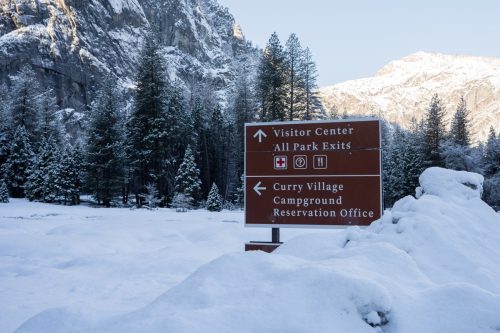
Thundersnow isn’t a spell from a fantasy novel. No, it’s a rare winter weather phenomenon that’s most common near large lakes. When relatively warm columns of air rise from the ground and form turbulent storm clouds in the sky in the winter, there’s potential for thundersnow . A few other factors are necessary for it to occur, including air that’s warmer than the cloud cover above it, and wind that pushes the warm air upwards. However, you may not even know thundersnow is happening, because lightning is harder to see in the winter and the snow can dampen the sound of thunder.
35. Cities can get really creative with snow disposal.

Gorloff-KV/Shutterstock
After snowstorms and blizzards, where does the snow go? Different cities employ various snow disposal methods . Many haul it away to parking lots or other open spaces where it can sit until the weather warms up and it melts. During particularly snowy seasons, some cities are forced to dump snow in the ocean. Others use snow melter machines, which melt 30 to 50 tons of snow an hour with hot water. This method is quick but costly—a single machine can be priced at $200,000.
36. Most people struck by lightning will survive.
Jeff Gammons StormVisuals/Shutterstock
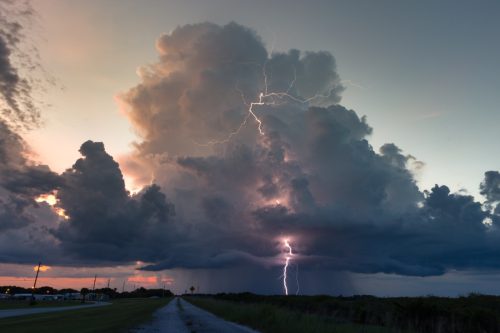
About 2,000 people are killed around the world by lightning each year. However, hundreds more survive strikes but suffer from a variety of lasting complications, including memory loss, dizziness, weakness, numbness, and other life-altering ailments. Lightning strikes can cause cardiac arrest and severe burns, but the fact is that 90 percent of people survive . That’s good news, since the average American has about a one in 5,000 chance of being struck by lightning during their lifetime.
37. There’s no such thing as heat lightning.
KAR Photo/Shutterstock
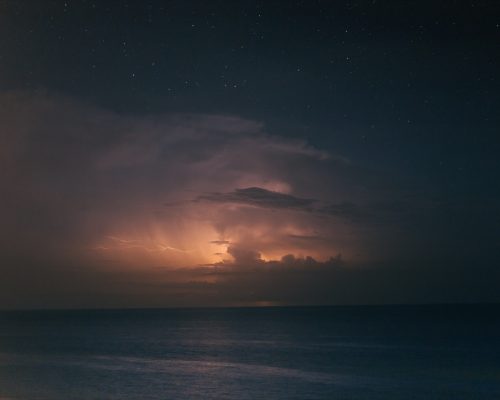
While many of us grew up believing that heat lightning referred to a specific type of lightning, the term actually refers to lightning that is too far away for us to see the ground strike. In other words, it’s lighting caused by a distant thunderstorm. Mountains, hills, trees, and even the curvature of the earth can also prevent observers from witnessing a lightning flash.
38. Hurricanes are known by different names in different parts of the world.
Felix Mizioznikov/Shutterstock
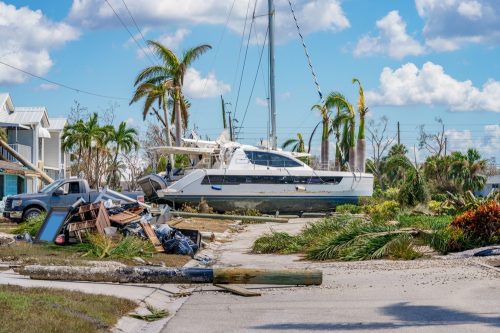
We’ve all heard of hurricanes, but what about typhoons? Or cyclones? Well, what if we told you these were all different terms for the same kind of storm ? We call them hurricanes here in the United States, but people in the Northern Pacific and the Philippines call them typhoons. In India and the South Pacific, they’re known as cyclones.
39. The most dangerous thing about hurricanes is the flash floods they create.
Kirsty Nadine/Shutterstock
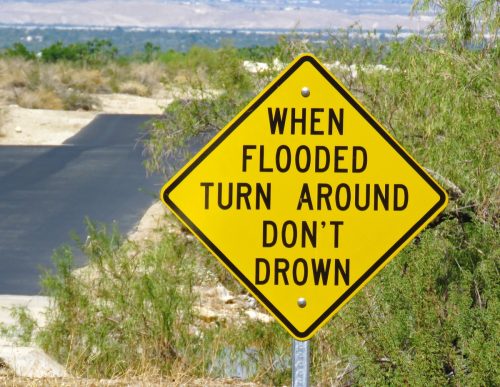
There are lots of different dangers to anticipate when a storm hits, from damaging winds to broken glass and much more, but nothing poses as big of a threat as the flash floods they create. Many people attempt to flee the area by car, but this is actually how most flash flood deaths occur. The National Weather Service has even launched a campaign called “Turn Around, Don’t Drown” to discourage people from driving through flooded roadways.
Wrapping Up
- Source: https://www.nasa.gov/content/goddard/nasa-usgs-landsat-8-satellite-pinpoints-coldest-spots-on-earth
- Source: https://www.weather.gov/key/tstmhazards
- Source: https://science.nasa.gov/science-news/news-articles/lightning-across-the-solar-system
- Source: https://science.nasa.gov/science-news/news-articles/lightning-across-the-solar-system
- Source: https://cdc.gov/disasters/landslides.html
- Source: https://www.weather.gov/apx/waterspout
- Source: https://www.loc.gov/everyday-mysteries/meteorology-climatology/item/can-it-rain-frogs-fish-and-other-objects/
- Source: https://www.weather.gov/bmx/kidscorner_weatherballoons
- Source: https://www.weather.gov/safety/lightning-heat
- Source: https://oceanservice.noaa.gov/facts/cyclone.html
- Source: https://www.weather.gov/pbz/floods
46 Airplane Facts You Should Know Before Booking Your Next Trip
Have a nice day Photo / Shutterstock
You may be a seasoned flyer with foolproof strategies for scoring overhead compartment space, getting upgrades, or taking a snooze when you hit cruising altitude, but even the most intrepid airplane travelers can be in the dark when it comes to what actually goes on in and around the cabin. Below, we’ve put together 46 fascinating airplane facts to answer all your questions about flying the friendly skies.
READ THIS NEXT: 38 Ocean Facts That Will Blow You Out of the Water .
Facts About Airplanes That’ll Make Your Mind Soar
Why don’t aircraft tires burst on impact? How dangerous is it when a plane loses an engine? Is that airplane water really safe to drink? Read on to find out!
1. Some planes can fly for more than five hours after one of their engines goes out.
muratart / Shutterstock
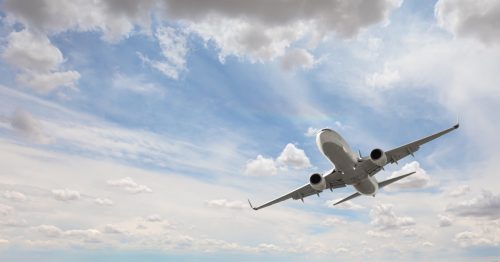
ETOPS—or extended twin operations—is a designation that indicates the length of time a twin-engine plane can safely cruise with one inoperative engine. In 2014, the Boeing 787 Dreamliner earned 330-minute ETOPS certifications, meaning it can stay safely operational on just one engine for more than five hours before needing to land.
2. If someone dies on your flight, their body might stay in the airplane cabin with you.
24Novembers / Shutterstock
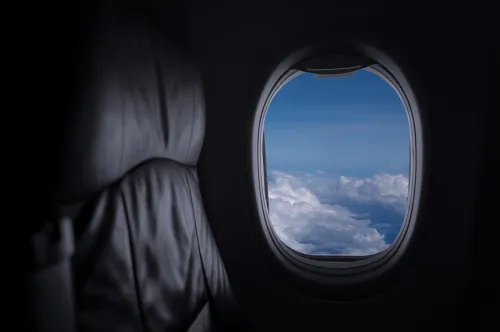
Though you might assume there’s a standard procedure to follow if a passenger passes away mid-flight, what actually happens to your dearly departed cabin-mate varies greatly by airline and type of plane. While certain planes, like Singapore Airlines’ Airbus A340-500 aircraft, were built with a special place to store bodies , according to one flight attendant , on many flights, the body will simply be moved to a back row and covered—except the head—until medical professionals on the ground can attend to the deceased.
3. In-flight oxygen masks aren’t intended to last the whole flight.
litabit / Shutterstock
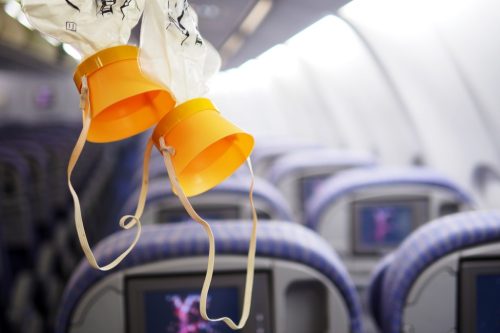
In fact, according to a report from the Air Accident Investigation & Aviation Safety Board , those masks only provide 12 minutes of continuous airflow on a 737. Luckily, that’s typically just the amount of time needed for your flight to find a safe landing spot.
4. Pilots frequently fall asleep on the job.

Krakenimages.com / Shutterstock
So, who’s flying your plane, exactly? Maybe no one—at least for portions of the flight. According to a 2013 report by the British Airline Pilots Association (BALPA), among a group of 500 pilots polled, 43 percent admitted to accidentally falling asleep while manning the plane, while 31 percent admitted to waking up from a nap to find their co-pilot sleeping, as well.
5. Black boxes aren’t actually black.
David MG / Shutterstock
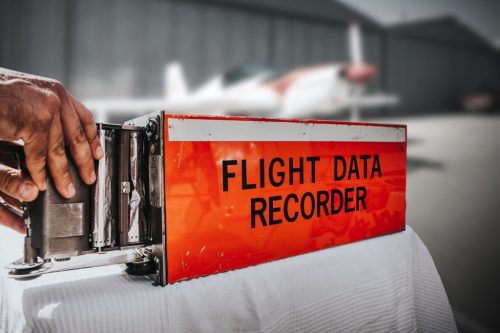
The black box, also known as the Flight Data Recorder, is actually painted bright orange. The heat-resistant paint used to coat the boxes’ exteriors comes in a highlighter-orange hue, which also happens to make them easier to find in case of an accident .
6. Airplane air is significantly drier than any you experience on Earth.

Andrey_Popov / Shutterstock
While the Mojave Desert in the Western United States often has humidity levels up to 50 percent, you’ll get just a fraction of that moisture aboard a plane. In fact, according to the World Health Organization, the humidity aboard your average aircraft hovers under 20 percent.
7. A Boeing 747 is more fuel-efficient than your car.
Skycolors / Shutterstock
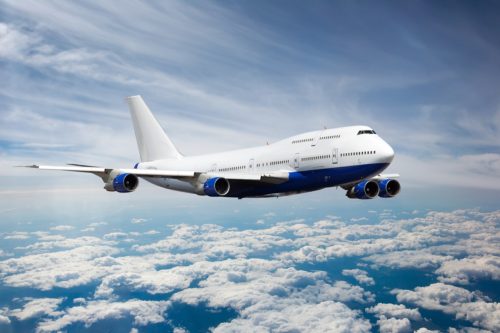
The Boeing 747 burns about one gallon of fuel every second, or five gallons per mile. Reversing this gives us the figure of 0.2 miles per gallon of fuel. This is much lower than the average car’s fuel efficiency at about 25 miles per gallon. But, considering the number of passengers the 747 carries, it is far more efficient. This breakdown explains that, because the plane can carry about 500 people, it’s actually getting 100 miles per gallon per person.
8. A hijacker once relinquished control of a flight for beer.
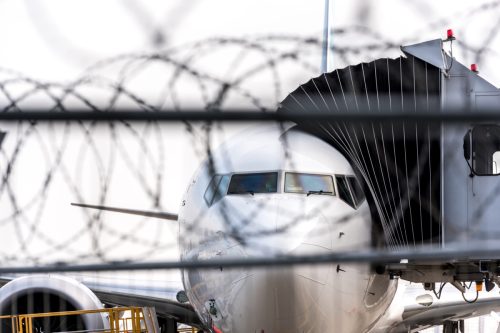
Bychykhin Olexandr / Shutterstock
In 1985, an ex-con who hijacked a Norwegian Boeing 737 armed with a pistol decided to abandon his plan so long as the police were willing to give him one thing: beer. The plane landed safely at Fornebu Airport in Oslo, none of the 115 passengers on board were harmed, and the hijacker was arrested.
9. An engineer designed a plane with a detachable cabin to save passengers.

pattang / Shutterstock
In 2016, a Ukrainian aero-engineer unveiled a system that would allow pilots to eject a plane’s cabin in the event of an engine failure. After ejection, the cabin would deploy parachutes to safely lower passengers to the ground. But as it turns out, most crashes don’t happen due to engine failure. Because issues tend to take place during takeoff and landing, this would leave very little time for the pilots to successfully eject the cabin and save passengers. A for effort, though!
10. The dirtiest place on the plane isn’t the bathroom.

Vietnam Stock Images / Shutterstock
As it happens, the filthiest place on a plane is that tray table you’re eating your meal off of. According to a study conducted by TravelMath, tray tables hosted 2,155 colony-forming bacterial units (CFU) per square inch. In comparison, the button to flush the toilet had just 265 CFU in the same amount of space.
READ THIS NEXT: 55 Fascinating World Facts You Need to Know .
11. Dead chickens are thrown into plane jets during safety tests.
Jaromir Chalabala / Shutterstock
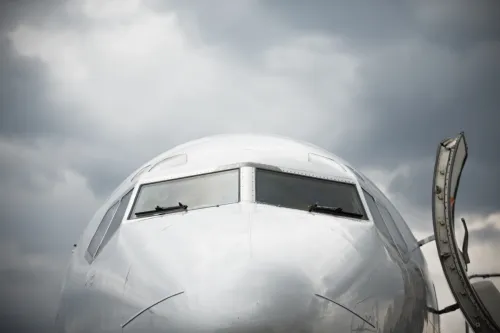
Yes, this incredibly real test is done with a “chicken gun,” and if you’ve seen the 2010 movie Captain Phillips, you know why. But before you report aviation experts to PETA, know that the chickens they receive are dead already. Airlines need to make sure that their windshields can protect pilots and passengers in the very likely event they collide with a bird. If you dare, you can watch the test in action (NSFW) .
12. There are thousands of planes over the United States at any moment.
FotoHelin/Shutterstock
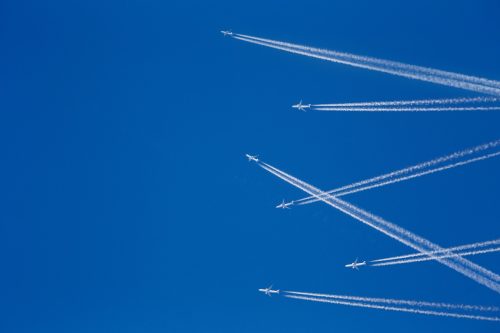
While you may only see the occasional plane pass by overhead, that doesn’t mean the sky isn’t full of them. In fact, according to the Federal Aviation Administration (FAA), there are over 5,000 planes in the air over the United States at any moment in time, and more than 8,000 flying across the globe.
13. Takeoff and landing are the most dangerous times during a flight.
Jetlinerimages / iStock
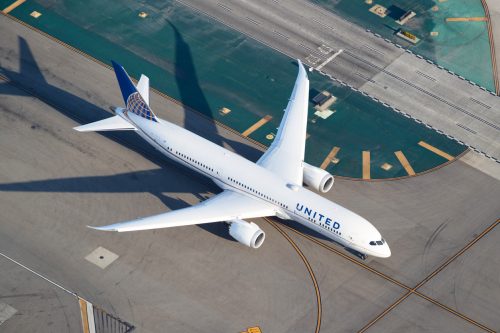
According to a report from Boeing, 13 percent of fatal accidents occur during a flight’s takeoff and initial climb , or the first three minutes of a flight. However, the descent and landing, or the final eight minutes of the flight, are far deadlier, accounting for 48 percent of all fatal accidents.
14. The world’s largest airplane weighed nearly 600 tons.
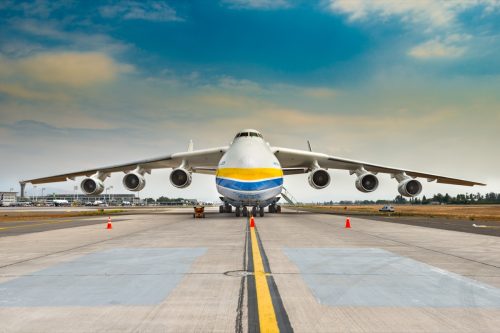
Jose Luis Stephens/Shutterstock
The Antonov An-225 had an impressive maximum takeoff weight of 598 tons. In comparison, the most weight the Boeing 747-8F can take off with maxes out at around 493 tons. Sadly, the aircraft was destroyed during the Russian invasion of Ukraine, according to Ukrainian officials.
15. The safest seats on a commercial aircraft are those at the back of the plane.
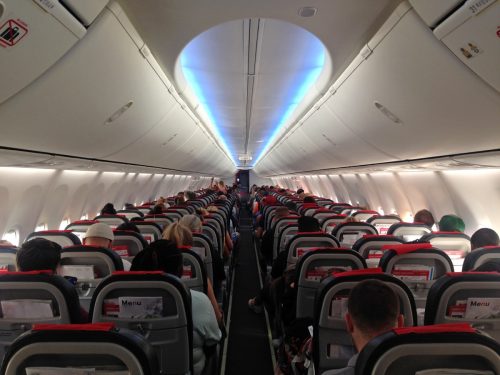
Lorna Roberts / Shutterstock
According to crash data compiled by Time , the fatality rate for seats in the rear third of a plane during a crash was 32 percent. The middle of the plane was found to be the least safe, with a 39 percent fatality rate, while the front was marginally safer with a 38 percent fatality rate.
16. You are about seven percent of the distance to space during flights.
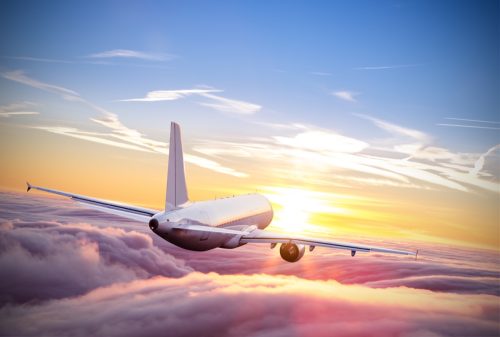
FotoHelin / Shutterstock
You might be surprised to discover that you’re actually only seven percent of the distance it would take for you to get into space when you’re on a plane. Planes can fly much higher than their average altitude of 30,000, but they don’t, because doing so would present health risks to those inside.
17. Airplanes can trigger lightning.
pinkfloyd yilmaz uslu/Shutterstock
When a plane passes through clouds, the static created can actually spur the development of lightning. Fortunately, even if your plane is struck, you’re likely pretty safe. There hasn’t been a lightning-related plane crash in the United States since 1967, and increased safety measures have made lightning strikes less dangerous to passengers than ever before. When lightning strikes a plane, the electrical current is evenly distributed throughout the aircraft’s conductive aluminum interior, while grounding the plane’s interior electrical systems prevents surges that could interfere with its functionality.
18. Airplane blankets aren’t always washed between passengers.
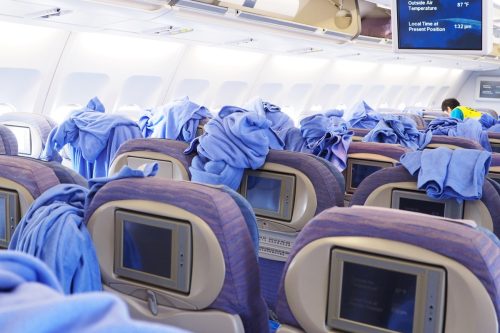
litabit / Shutterstock
If you’re thinking of cozying up under one of those airline-provided blankets, think again. According to one report published in the Wall Street Journal , some airlines clean their blankets as infrequently as once every 30 days.
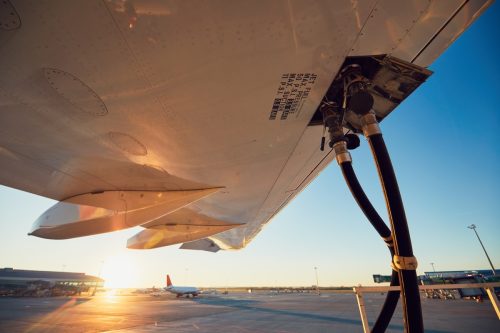
19. A Boeing 747 tank can hold 48,400 gallons of fuel.
Jaromir Chalabala / Shutterstock
That’s 2,100 times the amount of fuel held in the gas tank of a Dodge Ram pickup truck . However, not all of that fuel is being used during a single flight—in fact, the plane only uses an average of five gallons of fuel per mile , meaning a 3,450-mile trip from New York to London only requires about a third of the plane’s total fuel capacity.
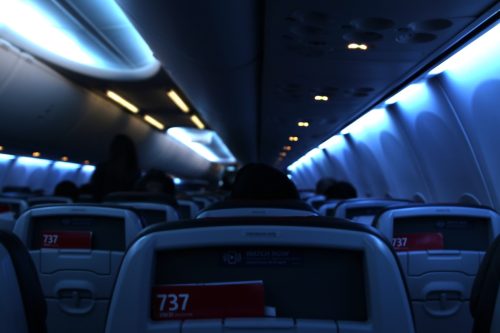
20. Dimming the aircraft’s lights serves a purpose beyond sleep.
Eric Glenn / Shutterstock
While it’s nice to imagine that airlines are hoping you’ll get in some restful sleep, that’s not the only reason why cabin lights are dimmed. The real reason why cabin crews dim the lights aboard a plane is to help passengers’ eyes adjust to the dark, an essential component in helping them survive should there be a sudden nighttime evacuation.
READ THIS NEXT: 63 National Park Facts About America’s Most Beautiful Destinations .
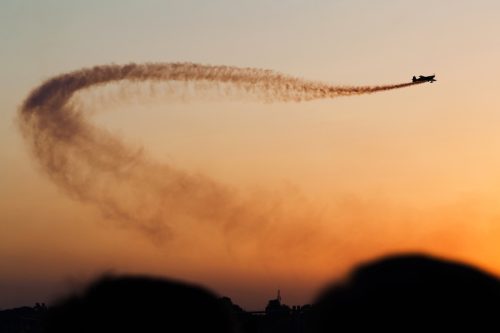
21. Plane exhaust kills more people than plane crashes.
Travel_Master / Shutterstock
According to a study conducted at the Massachusetts Institute of Technology, airplane emissions are linked to 8,000 deaths each year. The number of people killed in plane crashes? Less than 1,000.
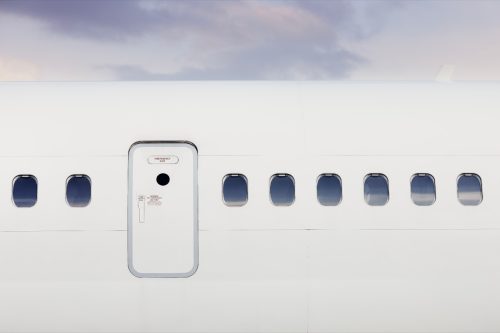
22. Plane doors can’t actually open in mid-flight.
Jaromir Chalabala / Shutterstock
While numerous people have tried to open the exterior doors to airplanes mid-flight (only to find themselves later arrested for doing so), actually doing so would be next to impossible. The interior air pressure within the plane ranges from 4 to 14 PSI , meaning that, unless The Hulk or Thanos boarded your plane, it’s unlikely that the door could be opened.
23. All pilots who fly internationally must know at least a bit of English.
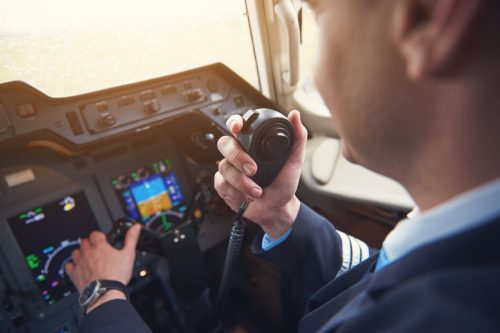
Olena Yakobchuk / Shutterstock
English may not be the official language of the United States, but it is the language of air travel. In 2003, the International Civil Aviation Association introduced new requirements to the Chicago Convention stipulating that all pilots flying internationally must be proficient in so-called “aviation English” to prevent potentially-fatal communication errors.
24. Pointing a laser pointer at a plane is a serious crime.

Alex Varyvoda / Shutterstock
Drive your pets crazy with a laser pointer all you want, but never aim that annoying red dot at a plane. According to 18 U.S. Code Section 39A , if you point a laser pointer at a plane or its flight path, you can enjoy up to five years in prison to think about what you’ve done.
25. The world’s oldest airline is over 100 years old.

NYC Russ / Shutterstock
Dutch airline KLM has the longest continuous operating record of any airline in the world. The Amsterdam-based airline’s planes have been lifting off and touching down since 1919.
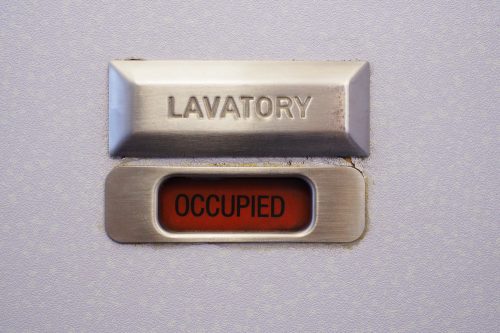
26. Airplane bathrooms can be opened from the outside.
<img loading=“lazy” src=“https://bestlifeonline.com/wp-content/uploads/sites/3/2022/03/lavatory-plane-bathroom-sign-flush-button.jpg?quality=82&strip=all&w=500" onerror=“this.onerror=null;this.src=‘https://blogger.googleusercontent.com/img/a/AVvXsEhe7F7TRXHtjiKvHb5vS7DmnxvpHiDyoYyYvm1nHB3Qp2_w3BnM6A2eq4v7FYxCC9bfZt3a9vIMtAYEKUiaDQbHMg-ViyGmRIj39MLp0bGFfgfYw1Dc9q_H-T0wiTm3l0Uq42dETrN9eC8aGJ9_IORZsxST1AcLR7np1koOfcc7tnHa4S8Mwz_xD9d0=s16000';" alt=“A lavatory sign on a plane bathroom door that says “occupied” - 67”>
litabit / Shutterstock
While flipping that latch inside the bathroom that turns the door sign to “occupied” may give you some semblance of privacy, there’s an easy way for flight crew personnel to get in if they need to. Underneath that lavatory sign, there’s a switch that allows the flight crew to open the door if they’re concerned about your safety or the safety of other passengers.
27. One airline has had no fatal accidents.
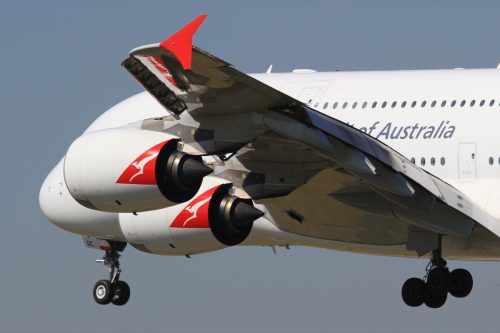
Mike Fuchslocher / Shutterstock
Despite being in business for nearly a century, Australian airline Qantas has never had a fatal accident involving one of its commercial aircraft.
28. There are 140 miles of wiring inside a Boeing 747.

Policas / Shutterstock
According to a report from technology company Tyco Electronics, which manufactures wire connectors for the aviation industry, a 747 can pack 750,000 feet, or 140 miles, of wire inside it, weighing approximately 3,500 pounds in total.
29. American Airlines saved $40,000 by cutting one ingredient from meals.
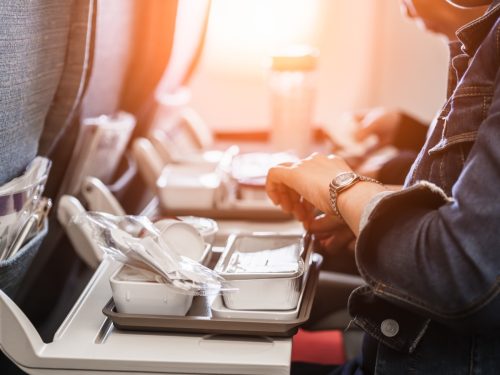
shutter_o / Shutterstock
When attempting to cut costs in the 1980s, American Airlines discovered that removing just one item from passengers’ meals would do the trick. By simply nixing just one olive from the salads served in-flight, the airline saved a staggering $40,000 in the course of a single year.
30. Airplane water is riddled with bacteria.

Eivaisla / Shutterstock
You might want to shell out the extra cash for a ridiculously overpriced bottle of water at the airport. A report from the Wall Street Journal reveals that bacteria including salmonella and staphylococcus were found in airplane water , in addition to insect eggs. Another study conducted at the University of Limerick found 37 distinct bacterial species in airplane water, with long-haul flights having worse water quality than their short-haul counterparts.
READ THIS NEXT: 37 Weird Facts About the Human Body That Will Blow Your Mind .
31. Some of the deadliest crashes happen when planes are securely on the ground.
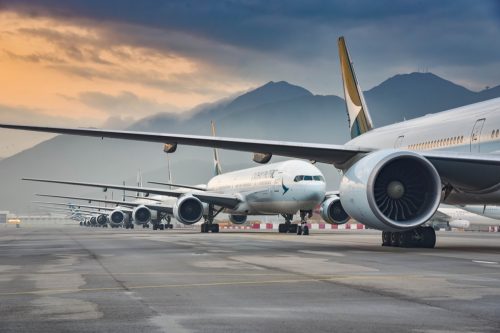
heychli / Shutterstock
In 1977, the deadliest crash in the history of aviation happened on the ground. Pan Am Flight 1736 and KLM Flight 4805, both Boeing 747s, crashed into one another in Tenerife. However, as CBS News reports, it wasn’t an error on either pilot’s part, per se—low fog made visibility poor, and the airport’s runways were overly congested , leading to the two planes colliding, killing 583 passengers and flight crew members in the resulting fire.
32. Pilots and co-pilots eat different meals on a flight.

Mario Hagen / Shutterstock
While it’s only a hard-and-fast rule on certain airlines, Business Insider reports that most pilots and co-pilots won’t eat the same thing for dinner . This way, if the food is contaminated and one pilot gets sick, the other should still be able to operate the aircraft.
33. The most expensive first class seat costs more than $30,000.

New Africa / Shutterstock
The Etihad Airways First Apartment —a private room with a bed, armchair, vanity and makeup mirror, and onboard shower—can easily run you more than $30,000 for a round-trip ticket from New York to Dubai.
34. Your taste buds change in flight.

Aureliy / Shutterstock
Good news for those who don’t find airplane meals particularly palatable: You’re not actually tasting as much of them as you would think. According to the BBC, the difference in air pressure and the low humidity in a plane’s cabin makes it more difficult for your taste buds to register sweet and salty flavors.
35. Traveling by plane is the safest way to get around.
ShutterStockStudio / Shutterstock
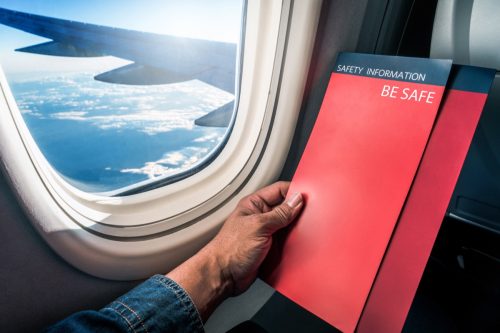
Traveling by airplane is extremely safe—and getting safer every year. In 2019, there were just 257 deaths related to aircraft accidents . By comparison, during the same year, 39,107 people died in car accidents in the United States alone.
36. The sound barrier was broken in 1947.
Kletr / Shutterstock
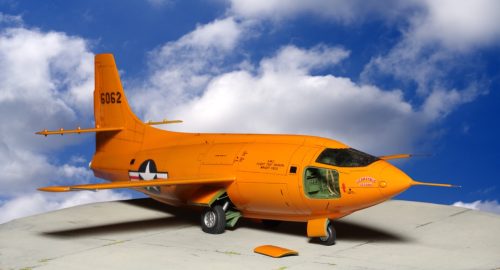
Pilot Chuck Yeager astonished the world with his record-breaking flying skills. This U.S. Air Force veteran learned to fly as a fighter pilot during World War II. Using the Bell X-1 rocket jet, he flew faster than the speed of sound —662 miles per hour at 40,000 feet. Later on in his life, he added yet another incredible accomplishment to his wildly-impressive CV: training U.S. Air Force veterans to become astronauts.
37. Sandra Bullock and about two million other Americans have aviophobia.
<img loading=“lazy” src=“https://bestlifeonline.com/wp-content/uploads/sites/3/2023/06/sandra.jpg?quality=82&strip=all&w=500" onerror=“this.onerror=null;this.src=‘https://blogger.googleusercontent.com/img/a/AVvXsEhe7F7TRXHtjiKvHb5vS7DmnxvpHiDyoYyYvm1nHB3Qp2_w3BnM6A2eq4v7FYxCC9bfZt3a9vIMtAYEKUiaDQbHMg-ViyGmRIj39MLp0bGFfgfYw1Dc9q_H-T0wiTm3l0Uq42dETrN9eC8aGJ9_IORZsxST1AcLR7np1koOfcc7tnHa4S8Mwz_xD9d0=s16000';" alt=“Sandra Bullock at a UK screening of “The Lost City” in 2022 - 78”>
Fred Duval / Shutterstock
Despite crashes being very rare, 6.5 percent of Americans suffer from aviophobia, or a fear of flying. If you are scared to set foot on a plane, you’re in good company—even celebrities like Sandra Bullock are gripped by this common fear. The Gravity star once said she’s “deathly afraid of flying.” The Anxiety and Depression Association of America says that most of this stress originates from the total loss of control or possibly the feeling of being trapped.
38. Long-haul flights have secret bedrooms and a bathroom for flight attendants.

Sunshine Seeds / Shutterstock
If flight attendants work on long-haul flights—which can last upwards of 12 hours—they need time to properly rest. So airlines have installed secret sleeping quarters above the main cabin with seven or eight beds, and occasionally a separate bathroom, as well. The crew can also enjoy in-flight entertainment while inside these secret chambers. That must be how they keep up their cheery demeanor on those long flights.
39. The world’s smallest plane weighs only 358.8 pounds.
<img loading=“lazy” src=“https://bestlifeonline.com/wp-content/uploads/sites/3/2023/07/Bede-BD-5-microjet.jpg?quality=82&strip=all&w=500" onerror=“this.onerror=null;this.src=‘https://blogger.googleusercontent.com/img/a/AVvXsEhe7F7TRXHtjiKvHb5vS7DmnxvpHiDyoYyYvm1nHB3Qp2_w3BnM6A2eq4v7FYxCC9bfZt3a9vIMtAYEKUiaDQbHMg-ViyGmRIj39MLp0bGFfgfYw1Dc9q_H-T0wiTm3l0Uq42dETrN9eC8aGJ9_IORZsxST1AcLR7np1koOfcc7tnHa4S8Mwz_xD9d0=s16000';" alt=“Bede BD-5J “Microjet” - 80”>
Jon Kraft / Shutterstock
The Bede BD-5 microjet weighs nearly 360 pounds (unloaded) and has a wingspan of only 14.5 feet. Though minuscule, this jet can reach speeds of over 300 miles per hour, which is a little under half of the speed of sound.
40. The longest military plane is six stories tall.
Copenhagen Stock / Shutterstock
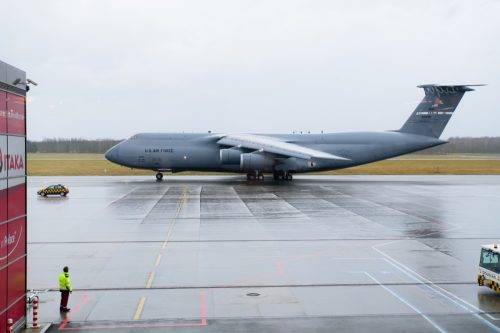
The U.S. military’s gargantuan C-5 has a wingspan of 222.8 feet, with each wing measuring the length of a basketball court. According to Popular Mechanics , “the aircraft stands 65 feet tall, the equivalent of a six-and-a-half story building.” It can also carry more than 250 million pounds and 350 passengers, even with equipment on board. It is so big that many Air Force bases have had to cut large holes in hangar doors to keep it indoors… well, most of it that is—the tail end still protrudes.
41. Turbulence is the top cause of non-fatal plane injuries.
Melnikov Dmitriy / Shutterstock
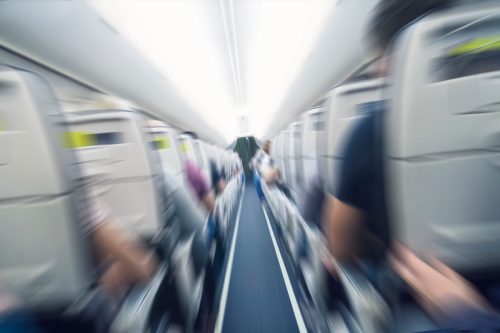
There’s a serious reason why you should always respect the seat belt sign. According to the FAA, U.S. air carriers experienced 163 turbulence accidents resulting in serious injuries between 2009 and 2023. Many of these incidents have been confirmed to involve passengers not wearing seat belts when the seat belt sign had been turned on. Buckling up might not be “the law” in the air, but it’s certainly worth it to preserve your safety.
42. Living in an airplane flight path could harm your heart.
Mike_shots / Shutterstock
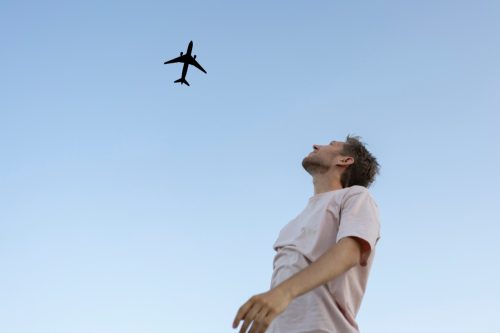
While regular air travelers might imagine they’d enjoy living close to the airport they frequent, actually living underneath a flight path could shorten your life. According to a 2010 study published in Epidemiology , individuals exposed to noise above 60 decibels on a regular basis—like the sound of an airplane overhead —had a 30 percent greater risk of dying from a heart attack than those typically exposed to noise levels under 45 decibels. Over a 15-year period living under a flight path, that risk was up 50 percent.
43. The fastest commercial plane flew at twice the speed of sound.
John Selway / Shutterstock
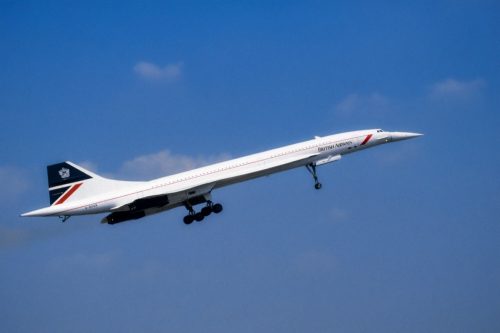
The Concorde , which offered flights continuously from 1976 to 2003, traveled at twice the speed of sound. In fact, the supersonic jet, which could achieve speeds up to 1,354 miles per hour, also broke a number of world records for its speed, in one case earning the record for the fastest transatlantic flight when it transported passengers from JFK in New York to Heathrow Airport in London in just 2 hours, 52 minutes, and 59 seconds.
44. Airplane tires are inflated to about six times the PSI of car tires.
Jaromir Chalabala / Shutterstock
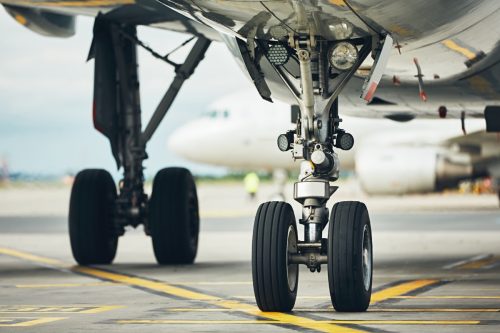
The real reason airplane tires rarely pop, even though they’re carrying a huge amount of weight? It’s not just their thickness that contributes to their strength under pressure. According to a Wired report, airplane tires are pumped to roughly 200 psi—about six times the psi of an average car tire. In fact, according to an experiment recorded by National Geographic , a Boeing 737’s tires can withstand over 900 psi before bursting.
45. There are temperatures too cold to fly in.
Alexey Lesik / Shutterstock
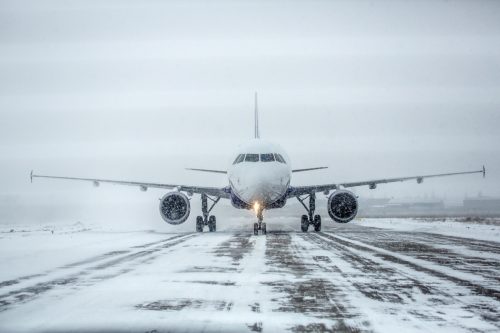
While the outside of an aircraft can reach -60 degrees Fahrenheit when it’s cruising at 35,000 feet, similar ground temperatures can stop a plane in its tracks. In 2014, when temperatures hit about -47 degrees Fahrenheit at Igarka Airport in Russia, a Tupolev-134 jet’s landing gear braking system actually froze , leading passengers to do their best to help. They actually got out to try to push the 61,640-pound plane.
46. A lot more people survive plane crashes than you think.
Jaromir Chalabala / Shutterstock
It’s true. According to the National Transportation Safety Board , approximately 95 percent of those involved in plane crashes survive them. Much of this has to do with things like improved impact protection, fire safety measures, and evacuation methods.
Wrapping Up
- Source: http://aaiu.ie/sites/default/files/Hellenic%20Republic%20Accident%20Helios%20Airways%20B737-31S%20HCY522%20Grammatiko%20Hellas%202005-085-14.pdf
- Source: https://www.who.int/news-room/questions-and-answers/item/air-travel-advice
- Source: https://www.faa.gov/air_traffic/by_the_numbers
- Source: https://www.boeing.com/resources/boeingdotcom/company/about_bca/pdf/statsum.pdf
- Source: https://icao.int/safety/lpr/Documents/323_en.pdf
- Source: https://law.cornell.edu/uscode/text/18/39A
- Source: https://www.scribd.com/document/165157922/Aircraft-Electrical-Wire
- Source: https://ncbi.nlm.nih.gov/pmc/articles/PMC4661625/
- Source: https://www.faa.gov/newsroom/turbulence
- Source: https://oce.ovid.com/article/00001648-201011000-00013/HTML
- Source: https://flightsafety.org/fsd/fsd_oct01.pdf