Bright and Colorful Meteors Will “Fall Like Rain” This Weekend—How to See Them
bjdlzx/iStock
Staring up at the night sky can be one of the easiest ways to appreciate nature and unwind, even if you’re not an astronomy expert. There may be plenty to see on any certain nights, whether it’s an exceptionally bright planet lighting up the heavens or an even rarer event like a lunar eclipse that you can see without using a telescope . And this weekend, the Leonids will bring bright, colorful meteors that could “fall like rain” across the sky. Read on for more on how you can see them and why this annual event is so special.
RELATED: Intense Solar Storms May Peak Faster Than Expected—What That Means for Earth .

mixetto/iStock
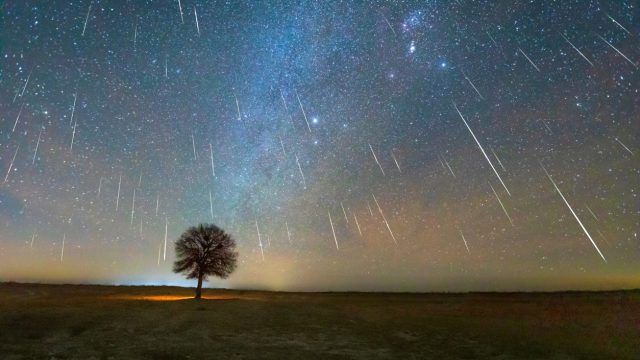
Casual stargazers and amateur astronomers alike could be in for a treat over the coming days. The Leonids are beginning to ramp up in activity as the meteor shower reaches its peak over the weekend, according to NASA.
The annual event occurs in mid-November as Earth passes through the debris trail of the comet 55P/Tempel-Tuttle, a relatively small object just over two miles wide that orbits the sun every 33 years. The shower gets its name from its radiant point in the constellation Leo, which describes the quadrant of the sky the “shooting stars” seem to originate from.
The Leonids stand out as “bright meteors” that “can also be colorful” and some of the fastest seen in the night sky, per NASA. The larger particles that make up the comet’s trail also create “fireballs,” bringing “larger explosions of light and color that can persist longer than an average meteor streak.”
RELATED: 6 Stargazing Secrets, According to Astronomy Experts .
bjdlzx/iStock
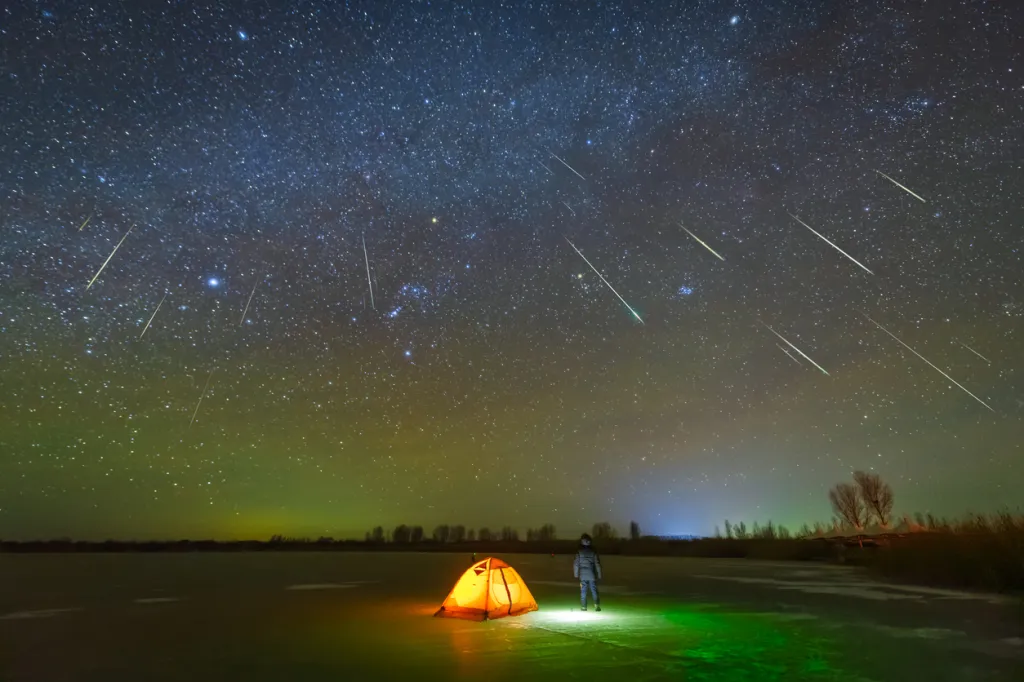
Like other meteor showers, the Leonids can produce distinctly different shows from year to year. On average, stargazers can expect to catch about 10 to 15 meteors darting across the sky per hour during peak activity, according to NASA.
But the annual celestial event also stands out for occasionally creating some of the most stunning nighttime events ever recorded. Roughly every 33 to 34 years, the Leonids can cause what’s known as a “meteor storm,” in which 1,000 or more meteors will fall per hour, according to astronomy website EarthSky. Historically, the storm has even gone well beyond that, with a shower in 1833 reportedly bringing 100,000 “shooting stars” every 60 minutes.
It’s also responsible for one of the most dazzling celestial displays in living memory, thanks to an especially strong showing that took place in 1966, according to Earth Sky. Viewers reported seeing 40 to 50 meteors falling per second—which translates to 2,400 to 3,000 per minute—during a 15-minute period. This made “shooting stars” appear to “fall like rain” across the night sky, according to NASA.
RELATED: 8 Best Destinations for the Next (and Rare) Total Solar Eclipse .
anatoliy_gleb/iStock
Even though the last reported meteor storm generated by the Leonids was in 2002, astronomers still expect the shower to create some beautiful visuals in the night sky. On top of the brilliant fireballs, stargazers can also expect to see “Earth-grazers” that pass low along the horizon with “long and colorful tails.”
Those hoping to catch the most activity should block off their calendars for the meteor shower’s peak late on the night of Nov. 17 through the early morning hours of the following day, according to EarthSky. This year’s storm also benefits from taking place days before a first quarter moon, meaning there will be less light interfering with visibility. But even with ideal conditions, experts say you’ll still want to set yourself up for success .
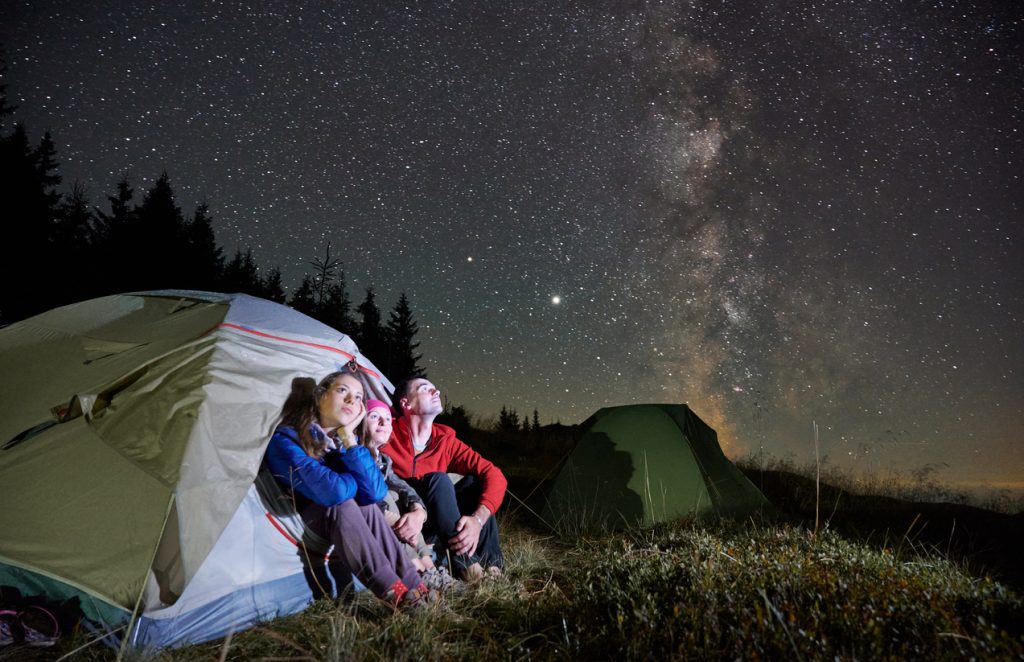
“People should look towards the east from a dark sky location. Think national forests, state parks, and other places far from big cities,” Theodore Kareta , PhD, a postdoctoral researcher at Lowell Observatory in Arizona, told USA Today .
He added that giving your eyes time to adjust after getting set up outdoors is also essential. “Some meteors can be faint, so in addition to finding a dark place to stare at the night sky from, you should also give yourself 20 to 30 minutes to let your eyes get used to the low-light conditions,” he suggests.
RELATED: 25 Space Mysteries No One Can Explain .
AstroStar/Shutterstock
While the Leonids will be taking center stage for a few nights, they’re not the only major celestial event of the week worth spotting. There are even other meteor showers to look out for. The North Taurid meteor shower will peak on Nov. 13, bringing an overlapping chance to catch “fireballs” in the night sky over the next few weeks.
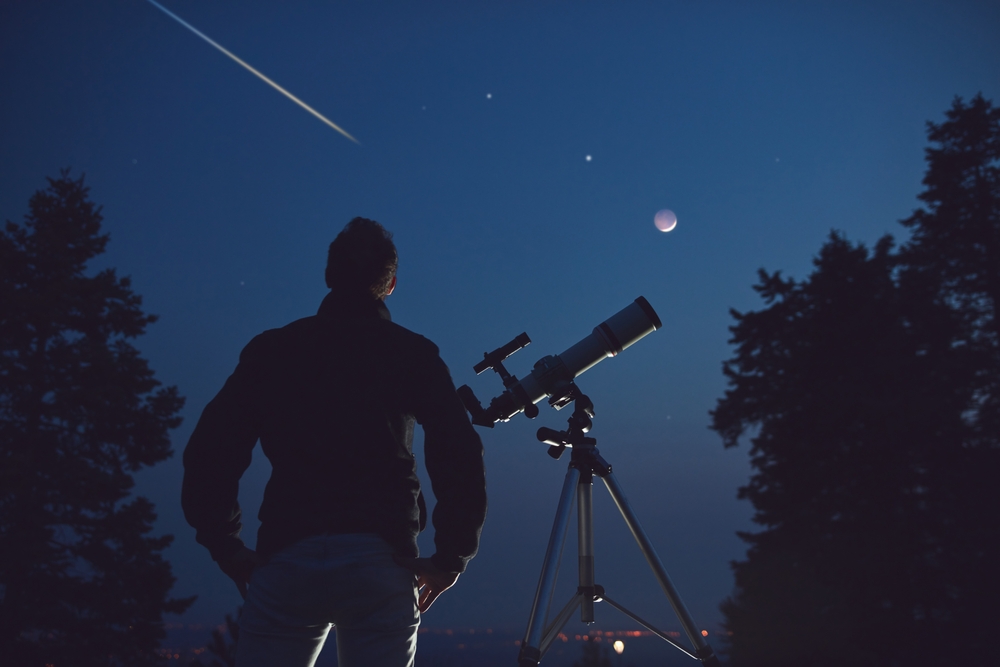
And as the moon begins its earliest phases, viewers will likely be able to witness “Earthshine” on our orbiting neighbor on Nov. 16 and 17, Forbes reports. The term refers to light reflected off the Earth onto the moon that creates a ghostly glow along the darkened section of the moon, making it partially visible to the naked eye and even more so with binoculars or a telescope.
Those with a decent set of binoculars might also be able to catch a glimpse of another passing traveler. Comet Lemmon should be visible through Nov. 17 , having recently reached its closest point to Earth, according to Astronomy.com. Using instruments should make the object’s coma—or glowing area around its nucleus—visible. You may also possibly be able to see a faint image of its tail in photographs.
8 Best Destinations for the Next (and Rare) Total Solar Eclipse
LeoPatrizi/iStock
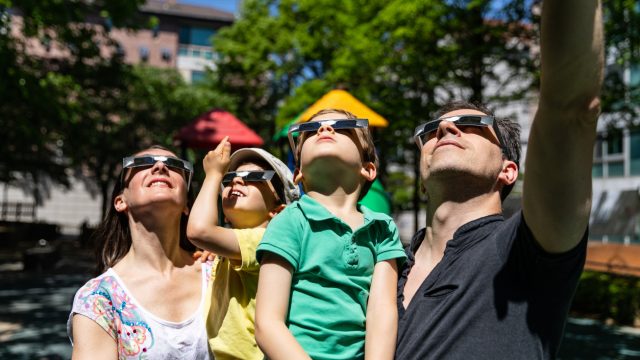
The chance to witness a total solar eclipse is rare enough that it remains a bucket list item for many people. After all, these events require a combination of being in the right place at the right time and having the correct conditions to actually see them. Since the next eclipse will be the last visible from North America until 2044 , many are making plans well ahead of the event on Apr. 8, 2024, to secure front-row seats.
The hype has created a mad dash for accommodations in locations along the path of totality , which will start in Texas and run across 13 states through Maine, according to NASA. In some places, basic hotel rooms are going for five to seven times their typical rates—including some listed well above $1,000 for a night, The New York Times reports.
The pinch is even being felt in the short-term home rental market, with some avid eclipse chasers saying supply has been dwindling even months in advance. Others reported finding decent rates, only to have hosts cancel their reservations and demand a higher price point for the occasion, The Times reports.
Some experts have recommended finding lodging within an hour’s drive of the path of totality to avoid a price crunch. But others still warn that the expected crowds will likely bring traffic jams along with them on the big day.
“It’s a little bit like going to a big sporting event where people take their time getting in but everybody wants to leave at the same time,” Scott Katsinas , a travel adviser at Katsinas Travel Consultants in Arizona, told The Times .
But even as accommodations run thin in some places, there’s still hope for those who want to experience the event for themselves. Local tourism boards have collected resources for eclipse chasers with options along the path of totality for the big day. Read on for the best destinations for watching the next total solar eclipse in 2024.
RELATED: Southwest Says You Can View the Total Solar Eclipse on These 8 Flights .
Shutterstock / Mihai_Andritoiu
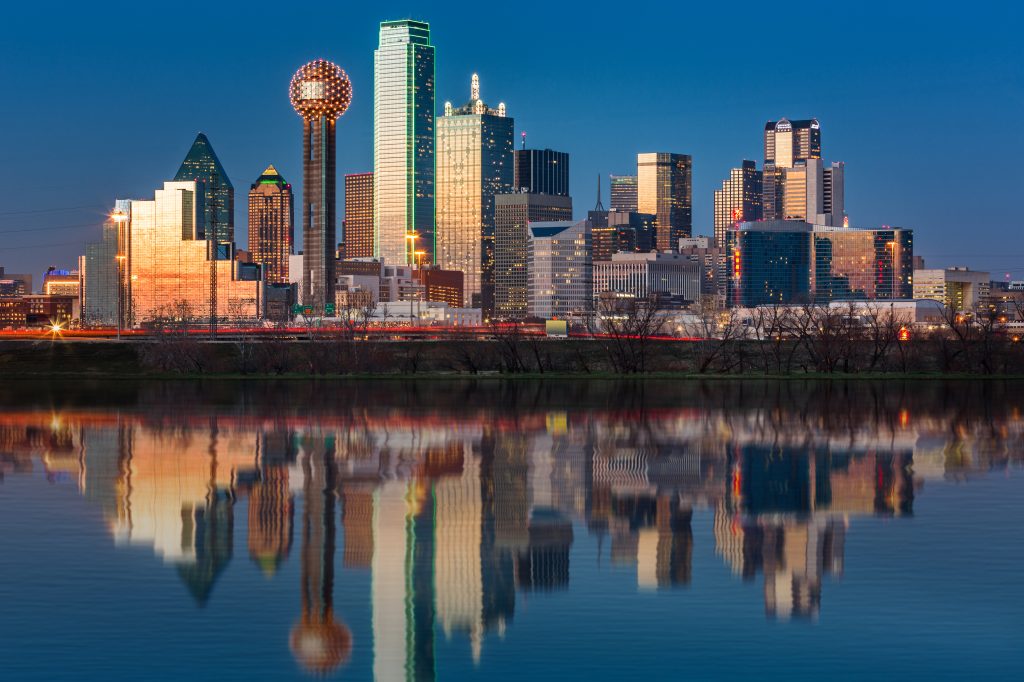
If you’re looking to get a head start on eclipse viewing, Dallas is likely your best bet. The Texas metropolis is not only the largest city in the path of totality but also the first major U.S. destination to experience the event as partial coverage begins at 12:23 p.m. CDT, according to the Perot Museum.
Besides the city’s ample hotel rooms, there are other perks to picking the Lone Star State for catching the eclipse: Experts point out that it’s the place that’s statistically most likely to have clear weather in April when the event occurs, according to travel news outlet The Points Guy.
RELATED: The 10 Best Destinations for Stargazing in the U.S.

Shutterstock / Sean Pavone
If you want to get the most out of your eclipse experience, Indianapolis may be one of your better options. The Indiana capital is near the center of the path of totality, creating a full coverage time of three minutes and 46 seconds, according to the local tourism board. The city will also host NASA at the famous Indianapolis Motor Speedway, providing experts to answer questions and host a live broadcast of the event.

iStock
Lake Placid may have the rare distinction of having hosted the Winter Olympics twice, but 2024 will mark the first time in recorded history the Adirondack locale will experience a total eclipse. The town is planning to welcome visitors with activities and events throughout the Olympic Legacy Sites, providing the opportunity to take in the rare event while surrounded by the region’s famous natural beauty.
RELATED: 12 Best Cities in the U.S. for Outdoor Adventures .

Shutterstock
Those still searching for a spot to catch the eclipse might want to consider Cleveland . The Ohio city is near the center of the path of totality and will experience full coverage for nearly four minutes on Apr. 8, according to the city’s tourism board. Visitors can also look forward to locally hosted events and festivities marking the occasion.

iStock
Arkansas provides another chance to combine natural beauty with the total solar eclipse. Little Rock is just one of the cities in the state with hotel rooms and accommodations to handle the crowds, with the partial eclipse beginning on the earlier side for the U.S. at 12:33 p.m. CDT and finishing at 3:11 p.m., according to NASA.
RELATED: The 10 Most Naturally Beautiful States in the U.S., New Data Shows .

iStock
The U.S. isn’t the only country that will be able to glimpse the eclipse next April: Mexico and Canada will also be on the path of totality. Montreal stands out among these international options for its easy access by flights, ample number of hotel rooms and lodging options, and plenty to see and experience outside of the eclipse itself.
According to the Canadian Space Agency, visitors in the Quebec locale can expect to see full coverage for one minute and 28 seconds, which marks the last time the province will see one until 2106.
RELATED: The 8 Best Off-The-Radar Destinations in the U.S. That Need to Be on Your Bucket List .
iStock
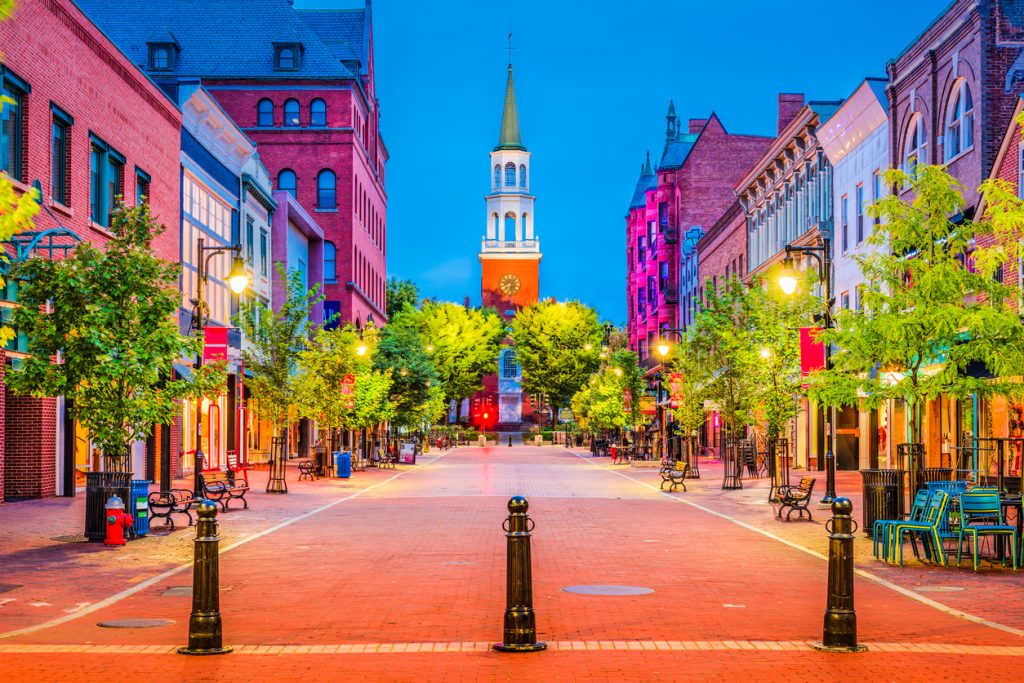
The Green Mountain state provides plenty of reasons to visit year-round, but the 2024 eclipse is a compelling addition to the list. The event marks the first time Vermont has experienced totality since 1932 , according to the state’s tourism board. Those staying in Burlington can expect full sun coverage for about three minutes and will have access to hotels and other lodging in the area.
RELATED: The 7 Newest National Parks You Need to Add to Your Bucket List .
iStock / DenisTangneyJr
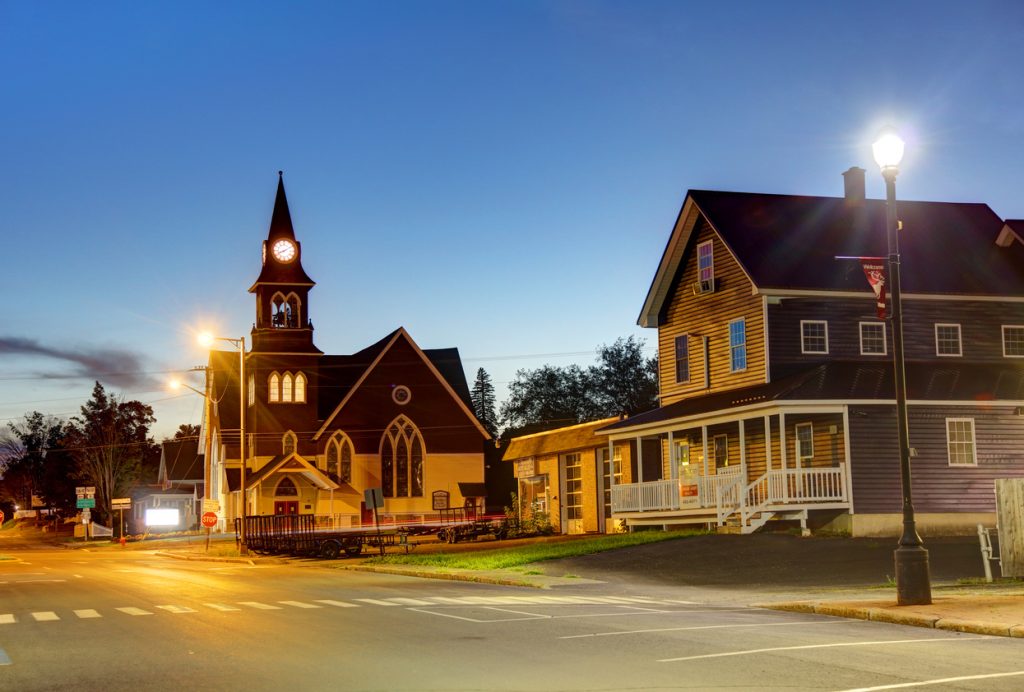
If you’re looking to be among the last in the U.S. to catch sight of the last eclipse until 2044, picking Maine as your viewing locale is the only option. The path of totality crosses the northern half of the state, with full coverage beginning in the small town of Caribou at 3:32 p.m. EDT, according to NASA. After that, the eclipse will pass through the Canadian maritime provinces before ending its traverse of North America and finishing over the Atlantic Ocean.
