Candy Lovers, Take Caution: New Law Bans Ingredient in Skittles, Nerds, and More
iStock
With Halloween just around the corner, most of us are getting ready to stock up on some seasonal favorites—whether for trick-or-treaters or just for us. But your candy of choice could be at risk of being pulled from shelves, depending on what’s in it. A new bill that was just signed into law in California bans a popular ingredient found in Skittles, Nerds, and many more beloved treats. Read on to discover what this ban could mean for candy lovers.
RELATED: Walmart Customers, Take Caution: Worms Found in Reese’s and a Major Candy Recall .

Shutterstock
On Oct. 7, California Governor Gavin Newsom signed the California Food Safety Act, according to a press release from the Environmental Working Group (EWG). This is the first law in the U.S. that will ban the use of four different ingredients: brominated vegetable oil, potassium bromate, propyl paraben, and red dye No. 3.
“California is creating a healthier market for consumers,” EWG President Ken Cook said in a statement. “This is a milestone in food safety, and California is once again leading the nation.”
RELATED: New Law Wants to Introduce Tipping at Walmart and Other Major Retailers .
iStock
These four ingredients are found throughout many different food groups, including candy, cereal, and soda. Potassium bromate is often added to baked goods to help strengthen dough, while brominated vegetable oil is used to prevent separation in some beverages. Propyl paraben provides antimicrobial food preservation, according to CNN.
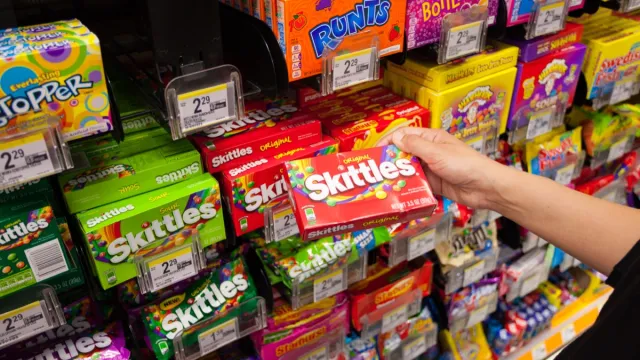
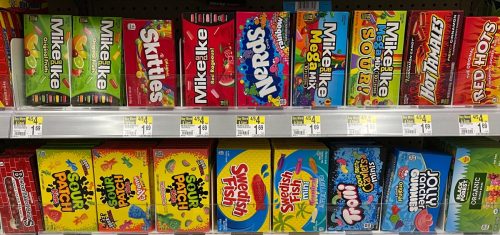
But the biggest impact may be felt with the banning of red dye No. 3. The EWG’s Food Scores website indicates that over 3,000 food products in the U.S. contain this ingredient. That includes many popular candies: Skittles, Nerds, Ring Pops, Brach’s Candy Corn, Laffy Taffy, Pez, and Trolli gummies.
RELATED: Doritos Chips Recalled After Major Ingredient Mix-Up, FDA Warns .

iStock
According to the EWG, “the four food chemicals covered by the California Food Safety Act have been linked to a number of serious health concerns,” including hyperactivity, nervous system damage, and a higher risk of cancer.
“These toxic chemicals have no place in our food,” Susan Little , EWG’s senior advocate for California government affairs, said in a statement.
The organization said that brominated vegetable oil, potassium bromate, propyl paraben, and red dye No. 3 haven’t been reviewed by the U.S. Food and Drug Administration (FDA) for 30 to 50 years, if ever. Instead, these ingredients were approved by the food and chemical industry, they said.
Shutterstock
Don’t say goodbye to your favorite candy just yet. The California Food Safety Act is not set to take effect until 2027—which Newson said will give companies enough time to “revise their recipes to avoid these harmful chemicals” in their products, per NPR.
In fact, this has already been done in the European Union. Back in 2008, European regulators banned these four ingredients after launching a full review of the safety of all food additives, according to the EWG.
As a result, manufactures are already using “safer alternative ingredients” to produce candies like Skittles and Nerds in Europe, Assembly member Jesse Gabriel , who authored the law, explained.
“It’s unacceptable that the U.S. is so far behind the rest of the world when it comes to food safety. This bill will not ban any foods or products—it simply will require food companies to make minor modifications to their recipes,” he said.
Many believe California’s new law will impact the rest of the country as well.
“Given the size of the state’s economy, it is unlikely manufacturers will produce two versions of their product—one to be sold solely in California and one for the rest of the country,” the EWG explained in their release. That means that any changes these candymakers make to their recipes will almost certainly be nationwide.
