Doctors Warn These 5 “Healthy” Habits May Be Silently Harming Your Brain

Shutterstock
When it comes to staying healthy , most of us know to eat a healthy diet and stay active, sociable, and productive. But health experts are warning that some of today’s most common “good” habits may not be so beneficial for your brain —especially as you age.
In fact, several behaviors that are touted on TikTok by “experts” as healthy can actually be silently increasing your risk of brain fog , memory loss, and even long-term cognitive decline. Here are five well-meaning habits that doctors say may be silently harming your brain—and what to do instead.
RELATED: Doctors Warn This Common Medication May Be Linked to Dementia Risk

Artie Medvedev / Shutterstock
We all do it to save time, but juggling multiple things at once, such as texting while walking or listening to a podcast while answering emails, is doing a number on your noggin.
Research shows that frequent multitasking can impair memory, concentration, and mental clarity. Brown University explains this is because asking your brain to do multiple tasks at one time means it’s working less efficiently—which strains our attention spans and stress levels.

Shutterstock
You’ve likely heard of intermittent fasting, which has been praised for everything from weight loss to metabolic health. But skipping meals without eating enough healthy nutrients when you do eat could starve your brain of the fuel it needs—especially glucose and essential fatty acids.
A recent study published in April 2025 in the Journal of Neurorestoratology found that “Individuals with habitual breakfast skipping had a steeper rate of cognitive decline” than those who had the meal. The researchers concluded that skipping the meal was associated with an increased risk of long-term cognitive decline due to “a deficiency in neurorestoration resulting from inadequate energy consumption.”
RELATED: I Tried Intermittent Fasting for 30 Days—Here’s What Shocked Me the Most

DC Studio / Shutterstock
Reading the news and watching documentaries are great to keep your brain sharp, but it’s perhaps even more important to make some human connections.
Social interactions play a critical role in maintaining your cognitive health. A 2025 analysis by the National Institute on Aging found that loneliness can increase the risk for dementia by 31%.
“This study analyzed data from more than 600,000 participants across 21 longitudinal cohorts, making it an especially comprehensive investigation into the impact of loneliness on cognitive function,” the NIA wrote. “It found that loneliness increased the risk for dementia at a magnitude similar to the impact of being physically inactive or smoking. Specifically, loneliness increased the risk for Alzheimer’s by 14%, vascular dementia by 17%, and cognitive impairment by 12%.”

Shutterstock
Listening to podcasts or music can feel like you’re giving your brain a boost, but if you’re doing this too often and at high volumes, guess what? You’re doing the opposite.
Hearing loss is one of the most overlooked contributors to dementia risk, according to a major 2020 Lancet Commission report . When the brain has to work overtime to decode muffled or distorted sound, it diverts resources away from memory, processing, and decision-making.
RELATED: Hearing Loss Could Be a Sign of These 2 Brain Conditions, Research Finds
Tada Images / Shutterstock
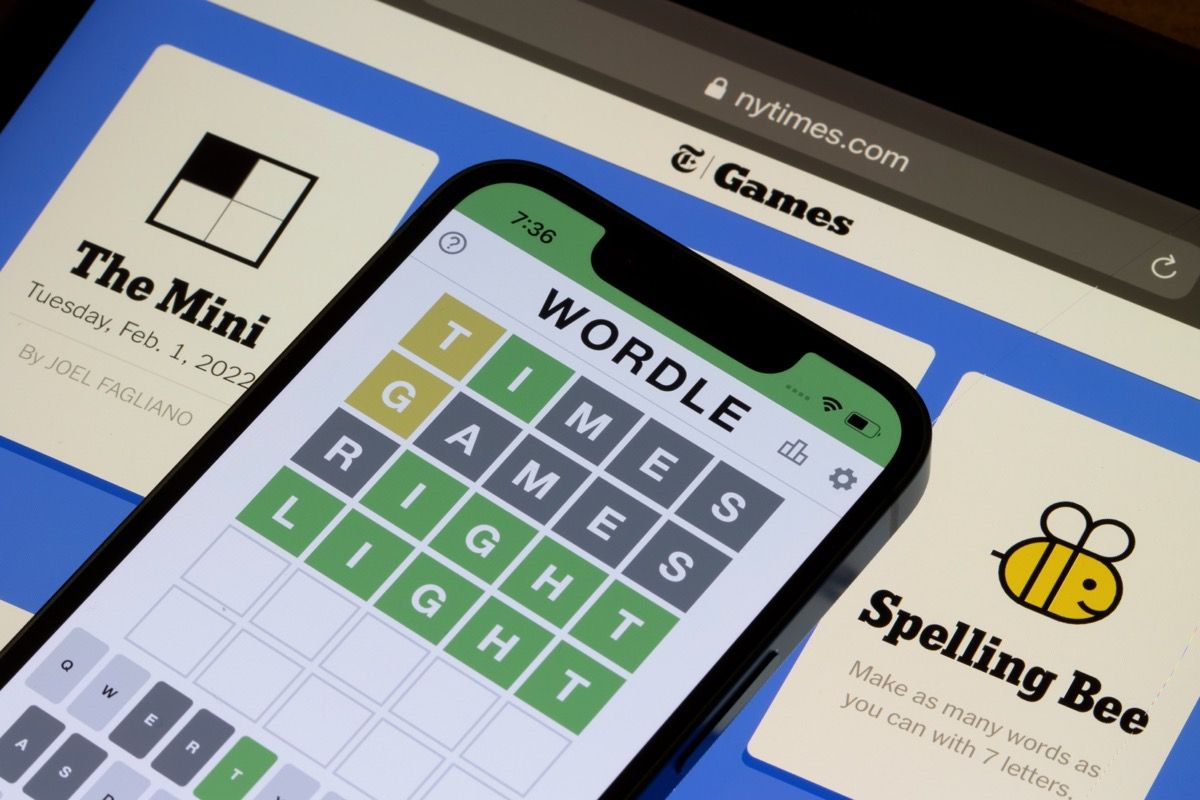
Apps and brain games can be a fun way to challenge your mind—but not all are created equal.
Dr. Oana Dumitrascu, a vascular neurologist and assistant professor of Neurology at Cedars-Sinai, told the hospital’s blog that, in order for a brain game to effectively enhance your cognition, it needs to challenge you.
“Repetitive activities and staying in your comfort zone will not improve your neuroplasticity,” he said. “You need to challenge yourself every day.” Plus, only brain games that have been tested in randomized clinical trials have been proven to improve your brain’s neuroplasticity, he noted.
We offer the most up-to-date information from top experts, new research, and health agencies, but our content is not meant to be a substitute for professional guidance. When it comes to the medication you’re taking or any other health questions you have, always consult your healthcare provider directly.
