If You Get This in the Mail, Throw It Out Immediately, Police Warn

iStock
From a random magazine subscription you swore you never signed up for to endless credit card promotions, we’re used to sifting through piles of junk mail to get to the mail we actually want. But while most of the unsolicited mail we receive is easy enough to ignore, not all the unwanted mail that shows up is all that harmless. In fact, police have just had to issue an alert about something at least one customer recently received in their mailbox , warning you to throw it out right away if it shows up at your home. Read on to find out what you should be watching out for in the mail.
READ THIS NEXT: USPS Just Issued This “Uncomfortable” New Warning to All Customers .
iStock
If you think you’ve got a junk mail problem, you’re hardly alone. According to research from the New York University School of Law, the average American household receives 848 individual pieces of unwanted mail each year, per the Nebraska Recycling Council. This is equal to about 1.5 trees yearly per each household and more than 100 million trees for all the U.S. households combined.
iStock
A free roll of stamps showing up in your mailbox might seem more like a gift than junk—but it’s one you shouldn’t accept. In early May, the Sioux City Police Department (SCPD) in Sioux City, Iowa, took to its Facebook page to alert residents about such a scenario, warning that they had received a report of a person who had gotten postage stamps delivered in the mail that they did not order. According to the SCPD, these stamps had been mailed from China and were counterfeit.
“Be aware … the current price of a USPS stamp is 58 cents. If it seems too good to be true, it probably is,” the department warned in its post. “The best way to avoid being scammed is to purchase stamps directly from USPS.”
Shutterstock
At the beginning of the year, a spokesman for the U.S. Postal Inspection Service (USPIS), the agency’s law enforcement arm, told The Washington Times that the USPS and its inspectors are aware of counterfeit stamps being sold online and advertised as “discount postage” for customers. “The Postal Service does not sell stamps below the value listed on the stamp,” they said.
“The number of counterfeit stamps being sold from online platforms has escalated. Scammers peddle fake stamps on social media marketplaces, e-commerce sites via third party vendors, and other websites,” the USPIS warns. “Counterfeit stamps are often sold in bulk quantities at a significant discount—anywhere from 20 to 50 percent of their face value. That’s a tell-tale sign they’re bogus.”
iStock
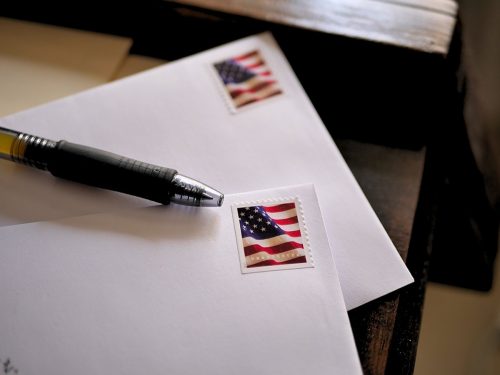
While you might be tempted to capitalize on stamps you received for free—or at a low cost—even though they might be fake, it’s not worth the risk. Andrea Avery , an assistant inspector in charge at the USPIS, told AARP that if a postal employee detects a counterfeit stamp being used, your mail will be confiscated and then reported to the USPIS.
“To ensure your trusted communication arrives at its destination without delay, the Postal Inspection Service wants you to be aware of—and avoid—phony postage,” the USPIS warns. According to the law enforcement arm, the most “frequently encountered counterfeit stamp” is the Flag Stamp.
READ THIS NEXT: 5 Reasons Your Mail Isn’t Showing Up, USPS Warns .
