If You Live in These States, Prepare for More of This Deadly Spider, Experts Say
Shutterstock
There are tons of things to love about summer, from spending time at the beach with family and friends to barbecuing in the backyard. Unfortunately, with the warm weather tends to come an uptick in outdoor pests, from garter snakes in your garden to cicadas in your back yard.
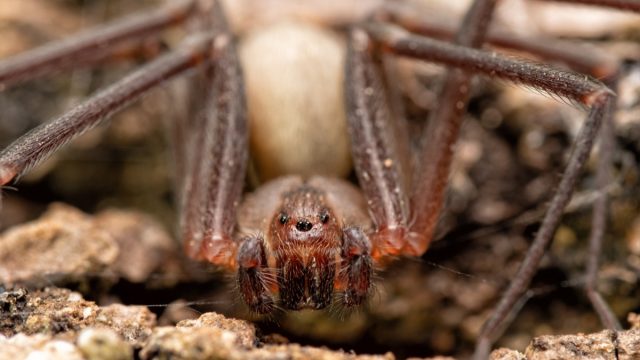
And while the vast majority of the insects, reptiles, and other small creatures you encounter during the summer are relatively innocuous, there’s one notable exception to this rule: the brown recluse spider. The venomous arachnids, whose bites can cause tissue necrosis —and, in extremely rare cases, can be fatal , particularly among children—have been particularly active in two states this summer due to high heat conditions.
The spiders are now a common sight in both Illinois and Missouri , Jay Everitt of Rottler Pest Solutions explained to KMOV.com.
“They like these quiet spots of our homes. The closets, the basements, the attic areas,” Everitt explained. However, when temperatures exceed a certain point and attic temperatures get too hot, “[The spiders] start seeking cooler environment and a lot of time that’s the living space.”
However, Illinois and Missouri are far from the only states where you can find this venomous arachnid. According to research published in the Journal of Medical Entomology (JME), the spider is readily found throughout the U.S. * Read on to discover if this venomous spider calls your state home.
*Delaware was not represented in the study data.
RELATED: If You See This Bug, Crush It Immediately, USDA Says .

Shutterstock
Number of spiders submitted to the JME study : 1
Percent brown recluses: 0

iStock
Number of spiders submitted to the JME study: 1
Percent brown recluses: 0

DenisTangneyJr / iStock
Number of spiders submitted to the JME study: 1
Percent brown recluses: 0

Shutterstock
Number of spiders submitted to the JME study: 1
Percent brown recluses: 0

Shutterstock
Number of spiders submitted to the JME study: 1
Percent brown recluses: 0

iStock
Number of spiders submitted to the JME study: 1
Percent brown recluses: 0

Shutterstock
Number of spiders submitted to the JME study: 2
Percent brown recluses: 0

Shutterstock/Danita Delmont
Number of spiders submitted to the JME study: 2
Percent brown recluses: 0

Shutterstock
Number of spiders submitted to the JME study: 2
Percent brown recluses: 0

Shutterstock
Number of spiders submitted to the JME study: 3
Percent brown recluses: 0

Shutterstock
Number of spiders submitted to the JME study: 3
Percent brown recluses: 0

iStock
Number of spiders submitted to the JME study: 4
Percent brown recluses: 0

Shutterstock
Number of spiders submitted to the JME study: 5
Percent brown recluses: 0

Shutterstock
Number of spiders submitted to the JME study: 6
Percent brown recluses: 0

iStock
Number of spiders submitted to the JME study: 8
Percent brown recluses: 0

Shutterstock
Number of spiders submitted to the JME study: 10
Percent brown recluses: 0

iStock
Number of spiders submitted to the JME study: 12
Percent brown recluses: 0

Shutterstock
Number of spiders submitted to the JME study: 12
Percent brown recluses: 0

iStock
Number of spiders submitted to the JME study: 14
Percent brown recluses: 0

iStock
Number of spiders submitted to the JME study: 16
Percent brown recluses: 0

Shutterstock
Number of spiders submitted to the JME study: 17
Percent brown recluses: 0

Sean Pavone / Shutterstock
Number of spiders submitted to the JME study: 18
Percent brown recluses: 0

Shutterstock
Number of spiders submitted to the JME study: 26
Percent brown recluses: 0

Shutterstock
Number of spiders submitted to the JME study: 30
Percent brown recluses: 0

Shutterstock
Number of spiders submitted to the JME study: 32
Percent brown recluses: 0

Shutterstock
Number of spiders submitted to the JME study: 40
Percent brown recluses: 0

iStock
Number of spiders submitted to the JME study: 41
Percent brown recluses: 0

Shutterstock
Number of spiders submitted to the JME study: 120
Percent brown recluses: 0

Shutterstock
Number of spiders submitted to the JME study: 32
Percent brown recluses: 3.1

iStock
Number of spiders submitted to the JME study: 581
Percent brown recluses: 3.3

iStock
Number of spiders submitted to the JME study: 19
Percent brown recluses: 5.3

George Oze / Alamy
Number of spiders submitted to the JME study: 19
Percent brown recluses: 10.5

Shutterstock
Number of spiders submitted to the JME study: 24
Percent brown recluses: 12.5

Shutterstock
Number of spiders submitted to the JME study: 15
Percent brown recluses: 13.3

Shutterstock
Number of spiders submitted to the JME study: 32
Percent brown recluses: 18.2

Shutterstock
Number of spiders submitted to the JME study: 13
Percent brown recluses: 23.1

iStock
Number of spiders submitted to the JME study: 33
Percent brown recluses: 24.2

Shutterstock
Number of spiders submitted to the JME study: 7
Percent brown recluses: 28.6

iStock
Number of spiders submitted to the JME study: 31
Percent brown recluses: 29

iStock
Number of spiders submitted to the JME study: 91
Percent brown recluses: 29.7

Von BJ Ray / Shutterstock
Number of spiders submitted to the JME study: 25
Percent brown recluses: 32

Shutterstock
Number of spiders submitted to the JME study: 27
Percent brown recluses: 37

Shutterstock
Number of spiders submitted to the JME study: 29
Percent brown recluses: 55.2

iStock
Number of spiders submitted to the JME study: 142
Percent brown recluses: 59.9

iStock
Number of spiders submitted to the JME study: 35
Percent brown recluses: 62.9

Shutterstock
Number of spiders submitted to the JME study: 15
Percent brown recluses: 66.7

Von Sean Pavone / Shutterstock
Number of spiders submitted to the JME study: 43
Percent brown recluses: 74.4

iStock
Number of spiders submitted to the JME study: 56
Percent brown recluses: 76.8

Shutterstock
Number of spiders submitted to the JME study: 142
Percent brown recluses: 89.2
RELATED: If You See This Bug, Never Touch It Without Gloves & a Mask, Experts Warn .
