JCPenney Will No Longer Let Shoppers Do This, Starting in October
iStock
With 120 years under its belt, JCPenney is a store that many Americans grew up shopping at. This popular department store has managed to maintain its position as a constant fixture in suburban shopping malls, despite numerous and well-publicized struggles—making it clear that there are still plenty of loyal JCPenney shoppers out there. But these long-time customers might be disappointed by a new change the retailer is gearing up to make in stores. Read on to find out what JCPenney will no longer let shoppers do, starting next month.
READ THIS NEXT: Walmart Is Banning Shoppers From Doing This in 4 States, as of Next Year .
Shutterstock
Most department stores have struggled in the retail space as consumers have moved further away from shopping malls. JCPenney is no different, and the threat of potential extinction has prompted constant change from the department store over the last decade or so, Retail Dive reported. According to the news outlet, JCPenney has had five different chief executives in the last decade, each with their own ideas about reinventing the company to keep it alive amid financial downturns.
Most recently, the company has found itself with new owners after filing for bankruptcy in 2020. And in April 2022, it launched a new “ Shopping is Back! ” motto and campaign to celebrate its 120th anniversary and kickstart yet another revamp for the brand. “We’ve always cared deeply about our customers and we have a lot of exciting initiatives underway to make the JCPenney shopping experience even more relevant, accessible and seamless for our customers,” the company told Retail Dive. “Our sheer breadth of categories and products provide families the ease of shopping at one destination.”
One new change, however, might disrupt some shoppers’ experience.
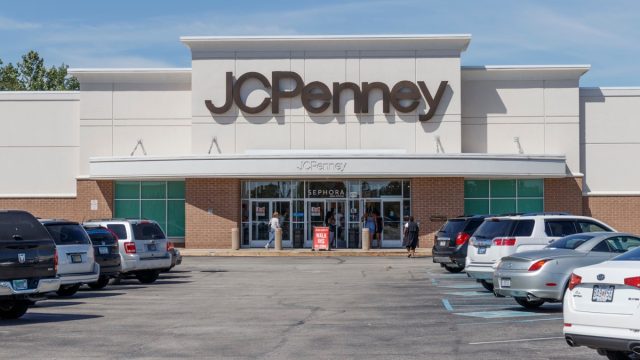
<img loading=“lazy” src=“https://bestlifeonline.com/wp-content/uploads/sites/3/2022/09/jcpenney-store-building.jpg?quality=82&strip=all&w=500" onerror=“this.onerror=null;this.src=‘https://blogger.googleusercontent.com/img/a/AVvXsEhe7F7TRXHtjiKvHb5vS7DmnxvpHiDyoYyYvm1nHB3Qp2_w3BnM6A2eq4v7FYxCC9bfZt3a9vIMtAYEKUiaDQbHMg-ViyGmRIj39MLp0bGFfgfYw1Dc9q_H-T0wiTm3l0Uq42dETrN9eC8aGJ9_IORZsxST1AcLR7np1koOfcc7tnHa4S8Mwz_xD9d0=s16000';" alt=“The J.C. Penney location in Fort Collins. Founded in 1902, J.C. Penney is a chain of department stores with over 1,100 locations.” - 3”>
iStock
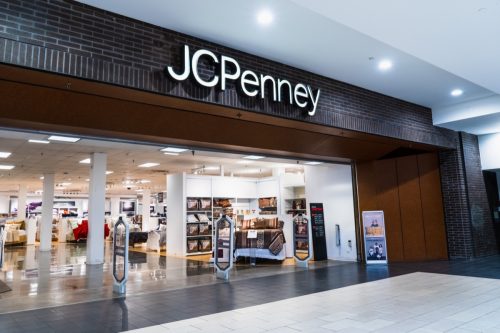
If you were a fan of shopping at the Sephora shops inside JCPenney, you might be upset with the department store’s upcoming change. The retailer is getting ready to replace these in-store Sephora shops, The Spokesman Review reported on Sept. 19. According to the newspaper, JCPenney will start switching out these shops with its own newly-created beauty department, JCPenney Beauty, in October.
The company said it will roll out JCPenney Beauty to a total of 300 stores by early 2023, and then by spring 2023, the beauty department will be in another 300 locations for a total of 600 in-store JCPenney Beauty shops. Shoppers were first introduced to the department store’s own beauty concept in Oct. 2021, when the retailer began testing JCPenney Beauty shops inside 10 of its U.S. stores, per Retail Wire.

Shutterstock
“Sephora wasn’t working for us ,” Marc Rosen , the CEO of JCPenney since Nov. 2021, told The Wall Street Journal in an April interview. According to Rosen, shoppers who came to buy Sephora’s beauty products weren’t buying from other areas in JCPenney’s stores.
On the other hand, a spokeswoman for Sephora told The Wall Street Journal that the brand has valued its relationship with JCPenney over the years. According to Sephora’s website, Sephora inside JCPenney stores started closing on Sept. 1. They are set to continue to close in stores throughout the U.S. through Jan. 2023.
JCPenney
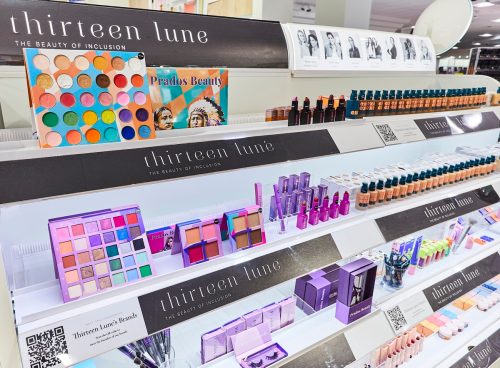
According to a Sept. 19 press release, JCPenney’s national rollout of its retailer-owned beauty experience will build on its partnership with Thirteen Lune—which started with the launch of its pilot testing of JCPenney Beauty shops. Thirteen Lune is an e-commerce beauty website that was launched in 2020, and it is “designed to inspire the discovery of BIPOC-founded beauty brands that resonate with people of all colors,” per JCPenney’s press release. The e-commerce company will be “spotlighted” in stores across the U.S., and it will comprise roughly 20 percent of JCPenney Beauty’s total assortment.
“Inclusivity is core to JCPenney. We exist to celebrate and serve America’s diverse, working families which is why we are leading the charge to foster beauty inclusivity on a national scale,” Michelle Wlazlo , executive vice president and chief merchandising officer at JCPenney, said in a statement. “By creating a fully ownable beauty experience, JCPenney can quickly adapt and respond to our customers’ wants and needs. Last year’s preview launch allowed us to learn from our customers and evolve the JCPenney Beauty experience as it expands nationwide and online, making it unlike any other beauty retail experience.”
Walmart Is Banning Shoppers From Doing This in 4 States, as of Next Year
Shutterstock
The shopping experience at Walmart is nothing if not consistent. The megaretailer has changed with the times to keep giving customers what they want, from a convenient shopping experience to maintaining their low prices despite soaring inflation. Typically, this involves adding features or perks that endear fans to the store even more. But even as the world’s second-largest retailer, some changes are inevitable for the company—including ones that could affect the shopping experience. Read on to see what Walmart is banning shoppers from doing in four states as of next year.
READ THIS NEXT: Walmart Shoppers Can Now Buy This “Award-Winning” Product in Stores .
Dominique James / Shutterstock
There’s no question that the pace of change in the retail industry has quickened in recent years. But unlike some other once-iconic stores that have all but disappeared , Walmart has managed to keep customers coming back by embracing new technology and fine-tuning its customer experience.
In July, the store unveiled a new augmented reality (AR) feature built into its app that allows customers to see how a piece of furniture or décor will look in their home before they decide to buy it. The company also announced it had updated its website to optimize the experience for Spanish speakers shopping on its website. And the retailer also kicked off a partnership with streaming platform Roku that allows customers to shop for items using their TVs.
Devoted Walmart customers have also likely found more reasons to return to the store lately. Earlier this summer, the retailer announced that it was updating its Walmart+ subscription service, allowing members to bundle their package with InHome Delivery for an extra $40 annually. The service provides customers with the convenience of having the items they ordered brought straight to their doorstep, garage, or fridge. But despite these recent additions, there’s one thing Walmart shoppers in some areas won’t see in stores for much longer.

Shutterstock
Originally, signage had announced that the changes would take effect beginning Sept. 15. However, those notices have since been removed from the store, with representatives telling KRDO that the new policy will go into effect at a later date in the coming months.
Shutterstock
News of the major change comes after the state government passed Colorado House Bill 1162 last year, KRDO reports. Even though the new legislation will ban stores and restaurants from giving out single-use plastics such as shopping bags beginning in 2024, the company said it would be getting a head start on the changes—and has even instituted similar policies in other states.
“Walmart has been exploring alternatives to single-use carryout bags from our stores since 2021 while prioritizing our customers’ convenience and product safety, including through the Beyond the Bag Consortium. In the U.S., we have transitioned from plastic bags in Vermont, Maine, and New Jersey, and, starting early 2023, we expect to eliminate single-use carryout bags in Colorado as well—with reusable bags available for purchase at multiple prices,” a corporate spokesperson for Walmart told KRDO in a statement.
“For in-store and curbside delivery, we will continue to encourage our customers to bring their own bags and/or purchase reusable bags and will be switching to reusable paper bags for delivery. Walmart remains committed to identifying solutions that are scalable, convenient, and sustainable,” the representative explained.
Shutterstock / daizuoxin
Despite how convenient they may seem, plastic bags have become a major ecological issue , with less than 10 percent of those put into use ending up recycled, according to the Environmental Protection Agency (EPA). As a result, state and municipal governments around the U.S. have begun to institute their own local ordinances similar to Colorado’s that limit or outright ban retailers and other businesses from furnishing plastic bags. As of February 2021, eight states had enacted bans on single-use plastic bags , including California, Connecticut, Delaware, Hawaii, Maine, New York, Oregon, and Vermont, per the National Conference of State Legislatures (NCSL). Other areas, such as Montgomery County, Maryland, and Washington, D.C., have also required businesses to charge a five or 10-cent fee per bag used by a customer.
But it’s not just plastic bags: Walmart’s latest decision aligns with the company’s commitment to becoming a zero waste operation in the U.S. in Canada by 2025. After announcing the initiative last year, the retailer says it aims to switch to “100 percent recyclable, reusable, or industrially compostable packaging” for its own brands by 2025 while also “aiming to label 100 percent of that packaging with recycling instructions to educate our customers and eliminate non-recyclable packaging by the same time frame.”