Meteorologists Warn That “Super El Niño” Could Lead to Intense Hurricane Season
Darwin Brandis/iStock
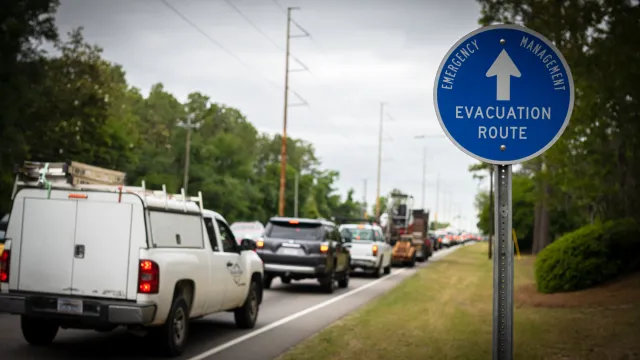
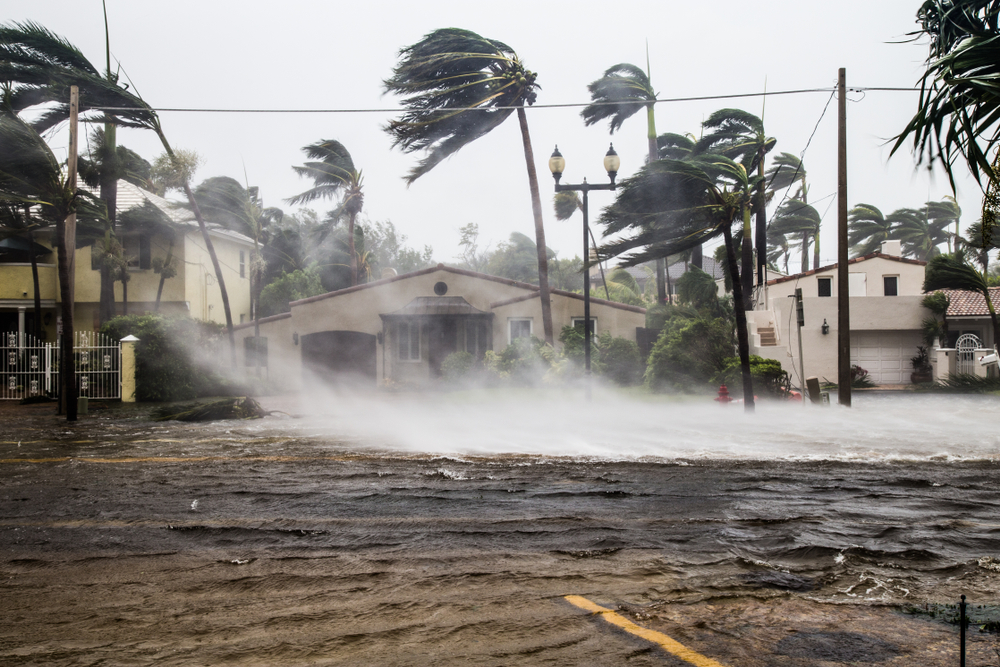
While the historic atmospheric river rainstorms in California remind us that extreme weather can happen any time of year, hurricane season still usually sticks out as one of the most significant concerns. Scientists can sometimes use certain clues to help determine if a particularly slow or harsh bout of weather conditions is shaping up. And now, meteorologists are warning that a “super El Niño” could lead to an intense upcoming hurricane season. Read on to see what could be in store for this summer and why experts believe it could be a particularly rough year.
RELATED: “Polar Vortex Disruption” Will Send U.S. Temps Plummeting—Here’s When .
FotoKina/Shutterstock
Even those who don’t know much about weather understand that “El Niño” years can bring changes to typical patterns. The term refers to warmer-than-average surface temperatures in the Pacific Ocean that develop roughly every two to seven years, according to the National Oceanic and Atmospheric Administration (NOAA).
During typical periods, El Niño significantly impacts weather in the U.S., including leading to drier and warmer conditions in the northern U.S. and wetter weather to the Southeast and Gulf Coast. It can also have a bit of a protective effect and decrease the number of major hurricanes that develop. But now, changes that could spell more trouble for the upcoming season are underway.
RELATED: “Extended Winter” May Keep Things Cold in These Regions, Meteorologists Predict .
Shutterstock
Even though it’s a relatively regular occurrence, there are still a few key differences that set this year’s conditions apart from past years. Meteorologists at NOAA are now saying that this year’s “super El Niño” has led to even warmer temperatures , describing it as “historically strong,” USA Today reports. But they now predict that the warmth in the Pacific may have passed its peak and will begin to diminish while still affecting weather through April.
But while the changes might seem to herald a return to normal , the forecast also points out that there is a “historical tendency for La Niña to follow strong El Niño events.” The term describes the opposite conditions, which involve colder-than-normal ocean surface temperatures in the Pacific. In its initial forecast, the agency cites a 55 percent chance of the cooler version developing sometime between June and August this year.
“It’s not often we have an El Niño advisory and a La Niña watch up at the same time,” Tom Di Liberto , a climate scientist at NOAA, told The Washington Post . However, he added that it’s also “not uncommon” for La Niña to follow up a particularly warm El Niño, citing at least two other back-to-back appearances in the last four decades.
RELATED: “False Spring” Is Heating Up the U.S., But Get Ready for Winter’s Brutal Comeback .
iStock
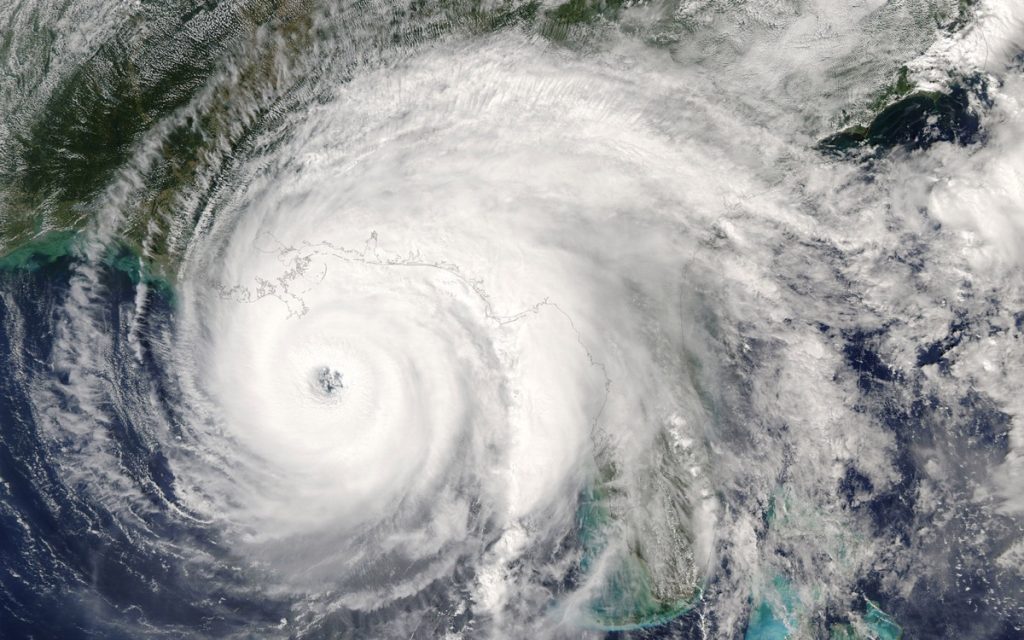
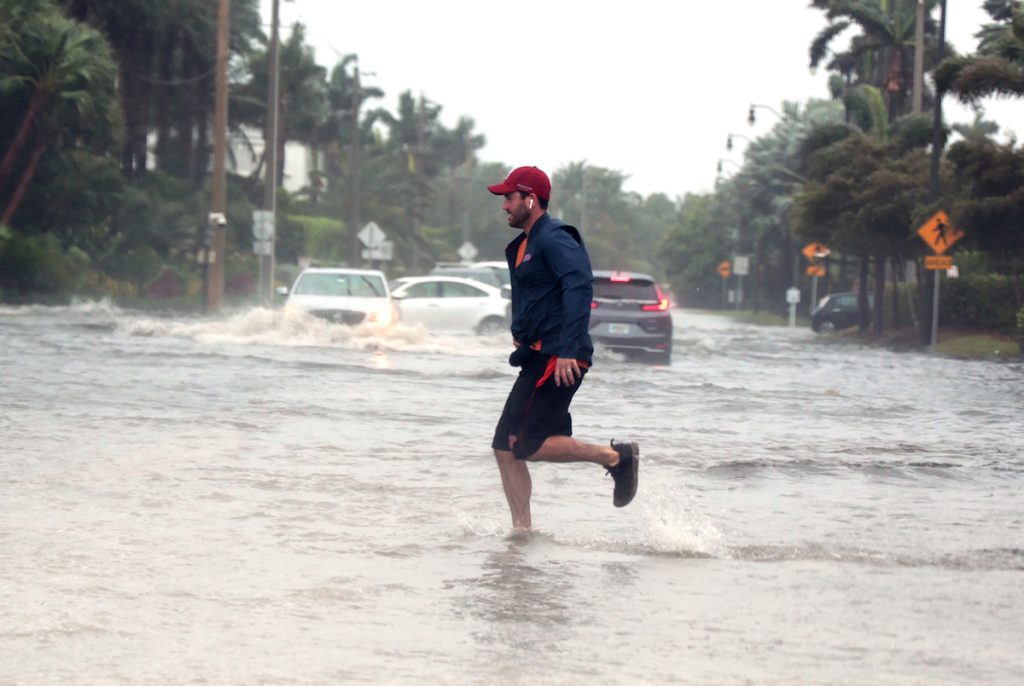
Unfortunately, La Niña brings its own set of weather effects with it. Namely, it tends to dry out conditions in the Southwestern U.S. and Southern California while also setting the stage for more frequent and powerful hurricanes to form over the Atlantic Ocean, The Washington Post reports.
According to the National Weather Service (NWS), this is because westerly winds tend to weaken during La Niña, decreasing wind shear that can interrupt brewing storms . This not only increases the number of storms overall but “allows stronger hurricanes to form” as well.
Other experts have pointed to this potentially problematic transition in their forecasts. “A return to La Niña conditions quickly over the summer could result in an active tropical season ,” Paul Pastelok , a long-range weather expert for AccuWeather, wrote in a recent prediction.
And it’s not just more intense storms: La Niña still affects standard weather patterns, often bringing an opposite set of conditions than its warm-water counterpart. This means heavier precipitation in the northwest and Northern Plains states, colder weather to the Northeast, and drier, warmer weather to the south, per The Post .
iStock
In a message posted to X (formerly Twitter) on Feb. 8, Philip Klotzbach , a meteorologist at Colorado State University, pointed out that NOAA’s probabilities for La Niña developing during the peak months of this year’s hurricane season in August through October had risen from 64 percent to 74 percent . However, despite the outlook, he cautioned that it’s still not a foregone conclusion .
“It should be noted that it’s only February, and a lot can change between now and when the Atlantic hurricane season really ramps up (typically in early to mid-August),” Klotzbach posted.
In addition to hurricanes, upcoming weather data this year could also shed light on another long-term problem. Scientists say that because this year’s historically strong El Niño might’ve helped push global temperatures to record highs for eight months in a row, a sustained temperature spike during La Niña could help determine if the planet is experiencing an acceleration in global warming, The Post reports. Scientists also hope to better understand if climate change is also affecting El Niño and La Niña themselves.
- Source: NOAA: What are El Niño and La Niña?
- Source: NWS: El Niño/Southern Oscillation (ENSO) Diagnostic Discussion
- Source: NWS: El Niño and La Niña
“Arctic Blast” and Widespread Snow Predicted for Next Month—Here’s Where
ProfessionalStudioImages/iStock
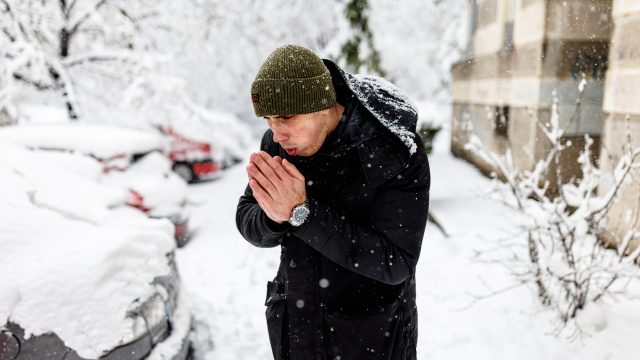
The kickoff to 2024 has served as a reminder of just how severe winter weather can get. From freezing temperatures to devastating flooding , few regions have been spared since January began. But with several weeks to go before spring kicks in, meteorologists have already predicted there could be another “arctic blast” and more widespread snow next month. Read on to see why conditions could get so extreme in February and what regions the weather could affect the most.
RELATED: Polar Vortex Could Bring “Severe Winter Weather” to the U.S.—Here’s When .

iStock
The frigid temperatures that swept across the nation earlier this month were a jolting reminder that winter had arrived. However, the colder-than-usual conditions were actually the result of a weather pattern known as the “polar vortex.”
The term refers to a counterclockwise flow of air that keeps a block of low pressure and cold air at the planet’s poles in place, according to the National Oceanic and Atmospheric Administration’s (NOAA) National Weather Service (NWS). Occasionally, it descends into the continental U.S.—and meteorologists say this explains why so many regions woke up to freezing conditions earlier this month.
“It appears as though the minor [vortex] warming during the first week of January and the subsequent destruction of the polar vortex in the lower stratosphere were enough to at least help set the stage for the cold air outbreak over North America this past weekend,” Climate.gov wrote.
RELATED: Weather Predictions Keep Changing—What the Unpredictable Shifts Mean for You .
iStock
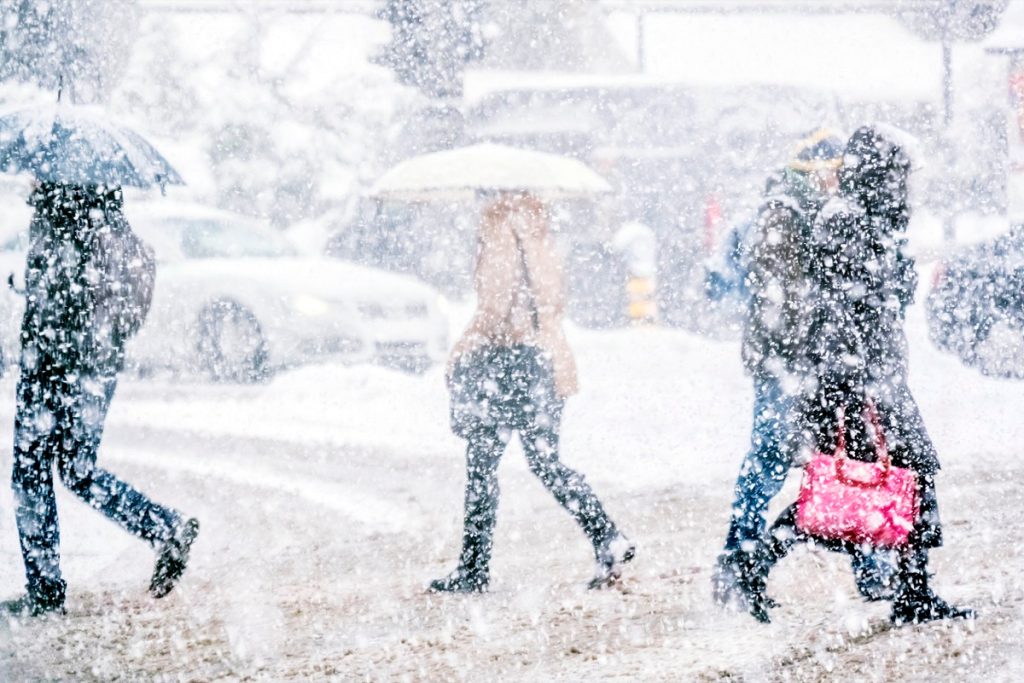
Even as last week’s cold snaps have reversed course into some unseasonably warm weather , it’s unlikely we’ve seen the last arctic blast of the winter . According to a blog post by Judah Cohen , an atmospheric scientist and director of seasonal forecasting at Atmospheric and Environmental Research (AER), the polar vortex is a “rapidly transitioning situation” that will “come down to rinse, lather, repeat.”
Cohen explained his reasoning during an interview with Fox Weather on Jan. 23, where he also outlined how he believes the forecast will play out in the coming weeks. However, the next cold wave might start off with the opposite weather you expect.
“For the first half of January, that polar vortex kind of stumbled and fell foul there, moved south. We had the arctic outbreak,” Cohen told the network. “But now it’s, it’s back together, let’s say, and, it’s a very tight spin, rotation of the polar vortex. All the cold air is receding back towards the North Pole, and we’re going to have a milder end of the month of January.”
RELATED: 7 Ways to Winter-Proof Your Car, According to Experts .
iStock
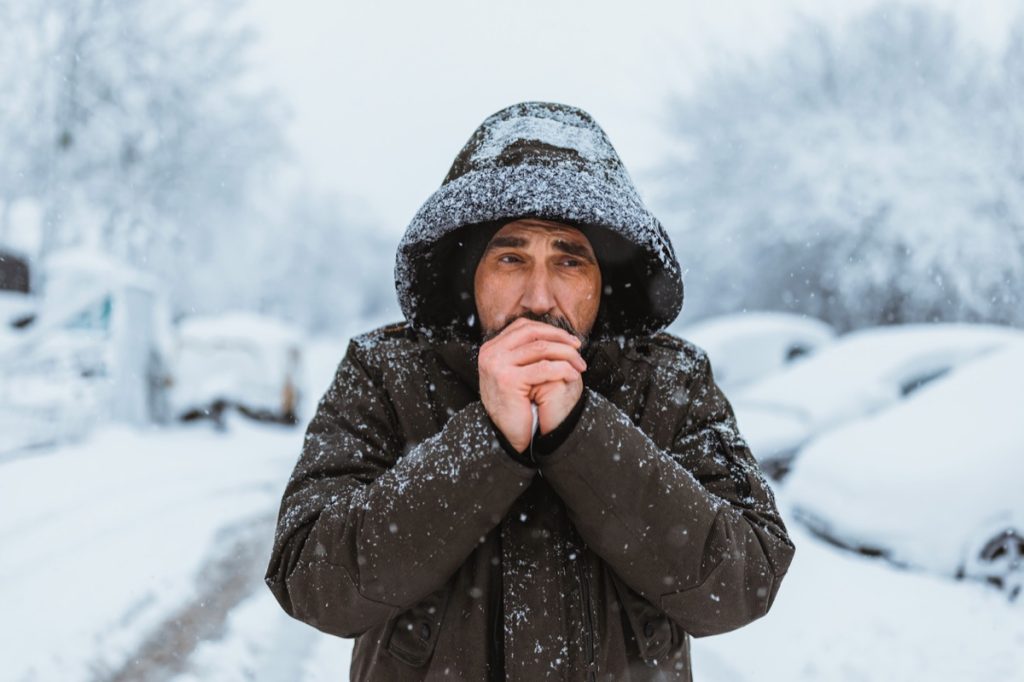
However, the rising mercury may end up being a red herring for what’s to come.
“We’re probably going to see a record warm, like we had that happen in December,” Cohen told Fox Weather in his near-term prediction. “But I do think then, often when you have these Canadian warmings, the polar vortex then tends to transition into a very large disruption called a sudden stratospheric warming or a stretching event, like a rubber band (pulling cold air south).”
Cohen told the network that these very conditions are what created this month’s frigid conditions, and he believes there’s a “good chance” it will repeat itself next month.
“I think in the time frame of the second week of February and even possibly mid-February a stretched polar vortex is becoming more likely,” he told Fox Weather. “This should help end the very mild pattern in place across North America. The intensity and duration of cold weather associated with the stretched polar vortex is yet to be determined.”
Damian Lugowski / Shutterstock
Dealing with another blast of freezing temperatures may be par for the course as far as winter is concerned. But Cohen also says some regions could see more snow and extreme weather head their way as another variable affects conditions.
Weather forecasts still consider the effects of El Niño in the winter, which describes a patch of warmer-than-average water off the coast of South America. Typically, it generates wetter weather in the West while bringing more mild, less snowy conditions to the East Coast, according to National Geographic . But as the season progresses, the weakening warmth could bring about a drastic change on top of the polar vortex.
“As far as El Niño, I do think that less than strong is better for snow and cold in the East,” Cohen told The Washington Post in an email.
Altogether, Cohen believes those who are hoping for an early start to spring will be disappointed by what’s likely coming. “I don’t think it’s the end of winter,” he told Fox Weather. “I think it’s not a breakdown of the pattern, but I think a relaxing pattern.”
- Source: NWS: What Is the Polar Vortex?
- Source: NOAA Climate.gov: The polar vortex is acting up
