“Overlooked” Last Meteor Shower of the Year Can Be Seen With the Naked Eye This Weekend
iStock / m-gucci
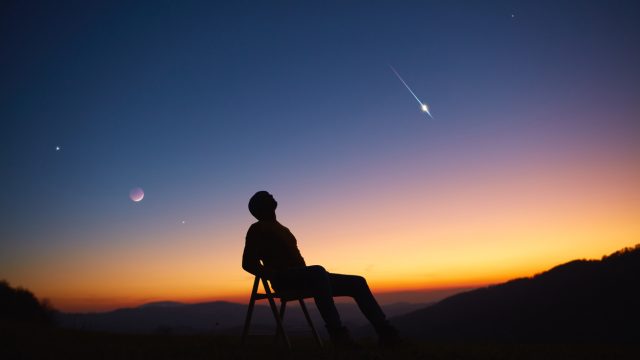
While the colder months might not feel like the best time for stargazing , there’s plenty worth braving the cold to see. The night sky is still a busy place, from special planetary alignments to bright full moons and even super rare events . And now, you can catch the last meteor shower of the year when the Ursids peak this weekend. Read on to learn about this “overlooked” annual spectacle and how you can see it for yourself.
RELATED: The Next Total Solar Eclipse Will Be the Last Until 2044, NASA Says .

iStock / Skarie20
Even after a year of memorable celestial events, 2023 isn’t finished quite yet. This week brings about the Ursid meteor shower, marking the last such event of the year , according to astronomy website EarthSky.
Despite being an annual occurrence, the Ursids are often “overlooked” because they fall during the peak of the busy holiday season. They’re also often overshadowed by the Geminid meteor shower , which peaked on Dec. 13 and will be trailing off in the night sky through Dec. 24, per EarthSky.
The Ursids are caused by the dust trail left behind by the comet 8P/Tuttle. The celestial object travels as close to the sun as Earth’s orbit out to as far as Saturn’s orbit on a 13.7-year cycle. According to EarthSky, the shower itself gets its name for its radiant point in the Ursa Minor constellation, more commonly known as the Little Dipper.
RELATED: “Devil Comet” With Horns Is Racing Toward Us—Here’s When and Where It Arrives .
bjdlzx/iStock
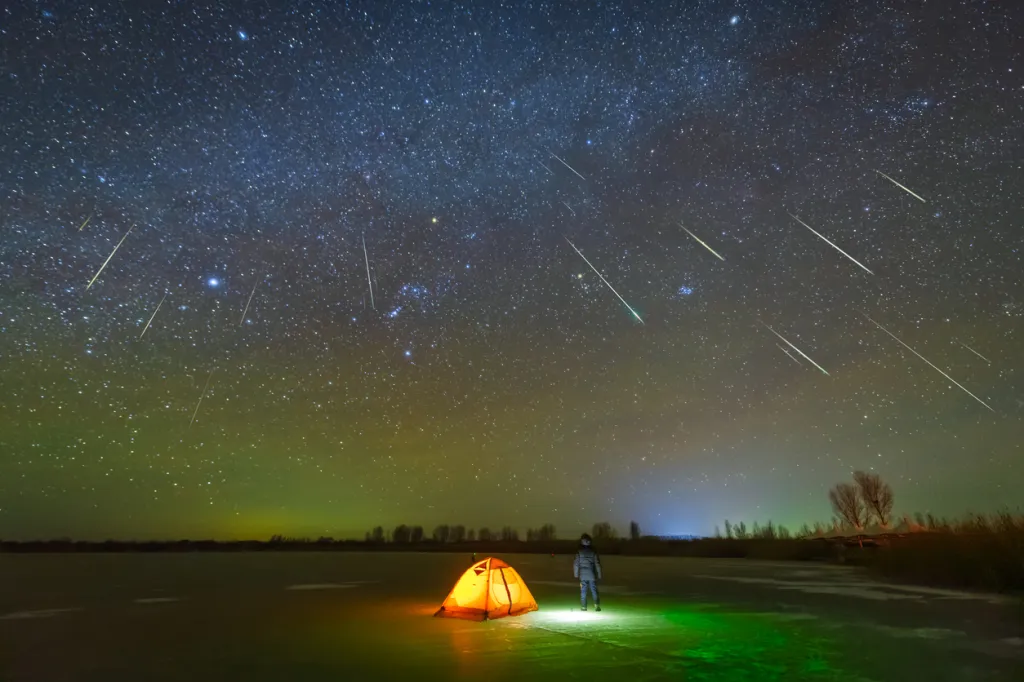
Besides often having their thunder stolen by the Geminids each year, the Ursids are often less hyped due to their lower activity levels. According to EarthSky, stargazers can expect to see five to 10 meteors per hour—which is far fewer than the 120 or more that are average for the other December spectacle.
But despite their average track record, they’re not always forced into the background. There are several notable examples throughout the 20th century of sudden outbursts making the Ursids a much more notable affair, including one in 1945 that brought about roughly 100 meteors per hour and another in 1973 that saw an average of 30 per hour.
RELATED: 8 Amazing Things You Can See in the Night Sky Without a Telescope .
bjdlzx/iStock
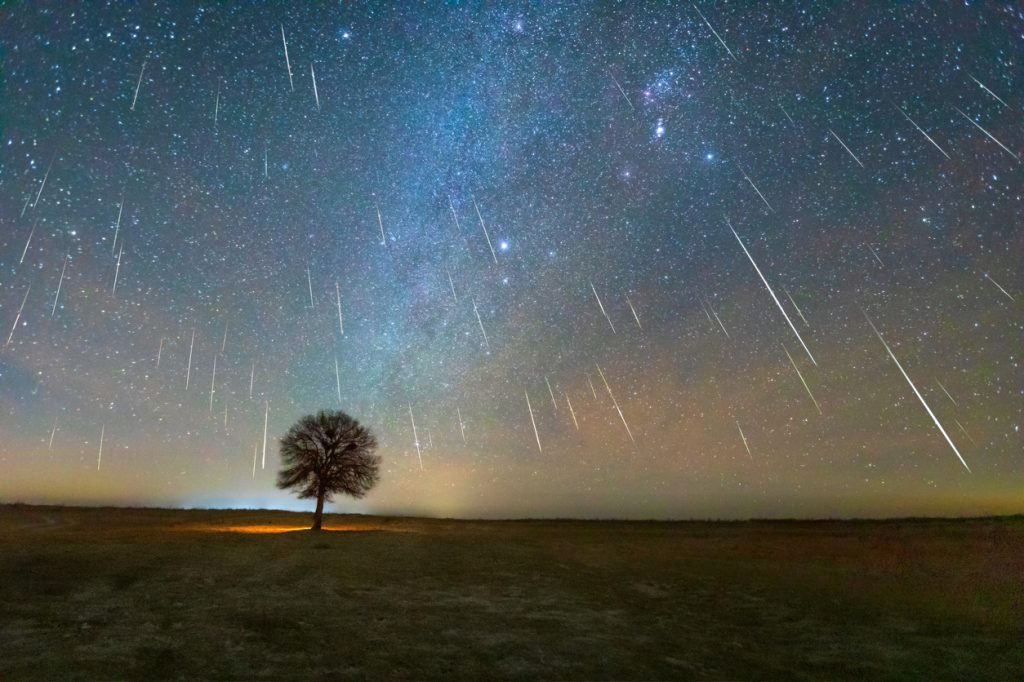
The Ursids technically kicked off around Dec. 13 and are already visible in the sky. However, they’ll be picking up steam throughout the week before reaching their peak in the early morning hours of Dec. 23, according to EarthSky. The “shooting stars” should remain visible in the sky as they trail out through Dec. 27.
Unfortunately, conditions might make them somewhat more difficult to see this year. That’s because a first-quarter moon is expected to rise on Dec. 19, bringing an 86 percent illuminated disc into the sky that could drown out all but the brightest meteors. But those who plan on staying up late might be able to avoid the issue altogether, as the moon will set three hours before sunrise.
Being able to catch the meteor shower could also come down to where you live. Because of their position in the night sky, the Ursids are almost entirely limited to viewers in the Northern Hemisphere.
RELATED: Scientists Finally Explain Mysterious Signals From Distant “Hell” Planet .
bjdlzx/iStock
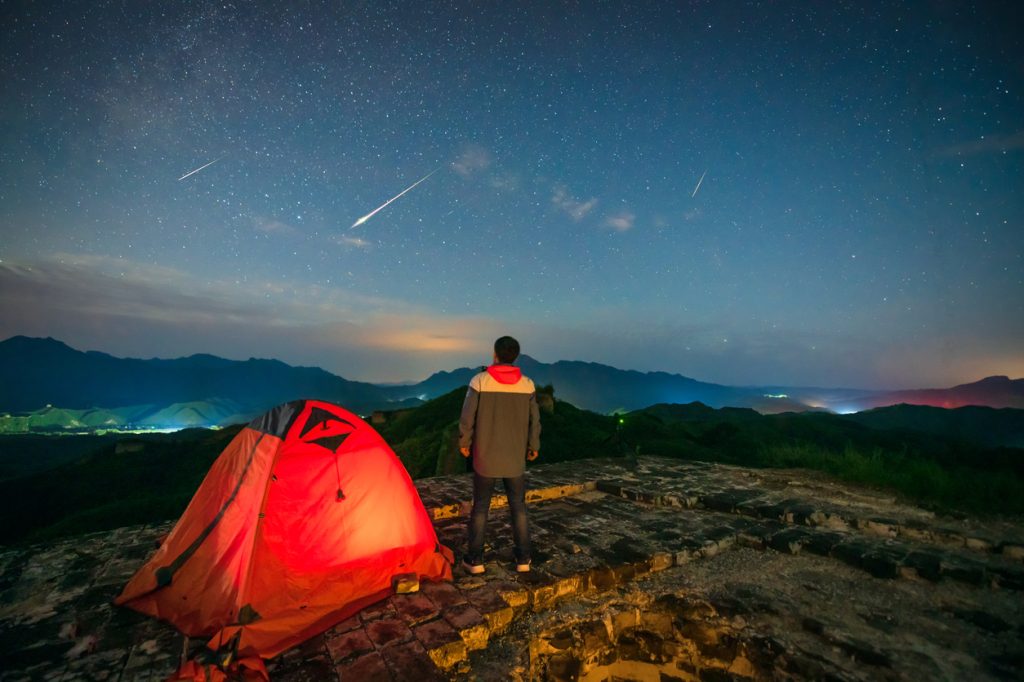
If you’re planning on getting one last meteor shower in for the year, there are a few essential tips to keep in mind to improve your chances of catching a good show. According to EarthSky, try to find a viewing location that’s far from the light pollution of cities and towns.
Due to the chilly December nighttime temperatures, it’s also best to dress comfortably and bring a warm blanket or sleeping bag to stay cozy. Since the Geminids are still phasing out, you might be able to catch a crossover effect and see even more meteors if you spend enough time outdoors. And while the Ursids will be visible all night due to the high radiant point in the sky, setting your alarm to view them in the pre-dawn hours after the moon has set could offer the best conditions, per EarthSky.
The Next Total Solar Eclipse Will Be the Last Until 2044, NASA Says
Stocker plus/Shutterstock
Whether you’re a casual stargazer or a devoted amateur astronomer, there’s no denying that there’s something special about witnessing a rare celestial event like a solar eclipse. Besides the fact that they only occur a few times each decade, getting a good view can come down to where you live having the right weather conditions. If you’d love to witness a solar eclipse anytime soon, you may want to mark off your calendars. NASA says the next one will be the last you can see from the U.S. until 2044. Read on for more info on how to catch this unique event.
READ THIS NEXT: NASA Promises Humans Living on the Moon in 10 Years .
GagliardiPhotography/Shutterstock
If catching a major cosmic event has been an item on your bucket list, you might want to grab your calendar . On Apr. 8, 2024, North America will have front-row seats to a total solar eclipse for the first time since 2017. But besides being a relatively rare event in and of itself, this will also be the last opportunity to view a full eclipse from within the contiguous United States until Aug. 23, 2044, according to NASA.
Lost_in_the_Midwest/Shutterstock
Even though many areas across the U.S. will be treated to at least a partial eclipse, only places that are in the total eclipse’s direct path will get to experience the moon entirely blocking out the sun . The first sight of totality on the continent will start on Mexico’s Pacific Coast before it becomes visible stateside around noon in Texas, according to NASA. From there, the path will continue north through Oklahoma, Arkansas, Missouri, Illinois, Kentucky, Indiana, Ohio, Pennsylvania, New York, Vermont, New Hampshire, and Maine before leaving the U.S. in the late afternoon.
Viewers in Canada will be able to experience the eclipse as it begins its path through Southern Ontario and eventually makes its way through Quebec, New Brunswick, Prince Edward Island, and Cape Breton. The eclipse will disappear from North America as it passes off the East Coast of Canada in the early evening.
Shutterstock
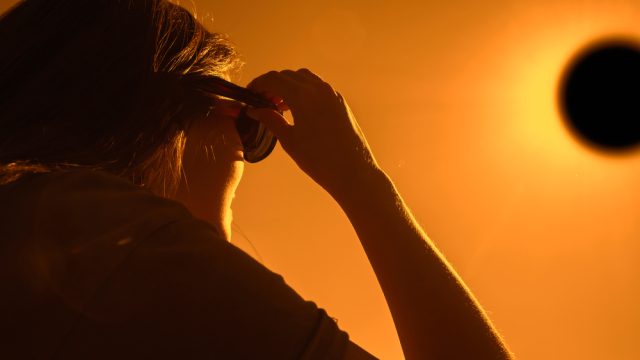
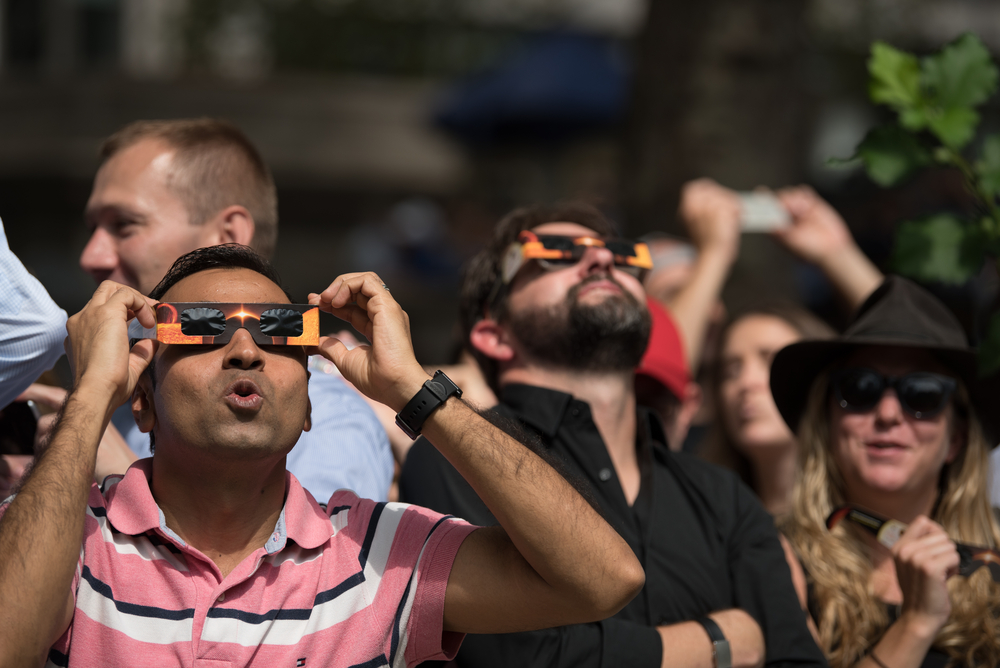
So long as weather conditions remain favorable, part of what makes the experience of a total solar eclipse so special is the truly unique conditions it can create for those in its path. During the initial partial eclipse phase—or for those watching in areas outside of the total eclipse’s path—viewers will first notice a crescent blocking out part of the sun as the moon slightly covers the star while wearing the appropriate safety glasses, according to NASA.
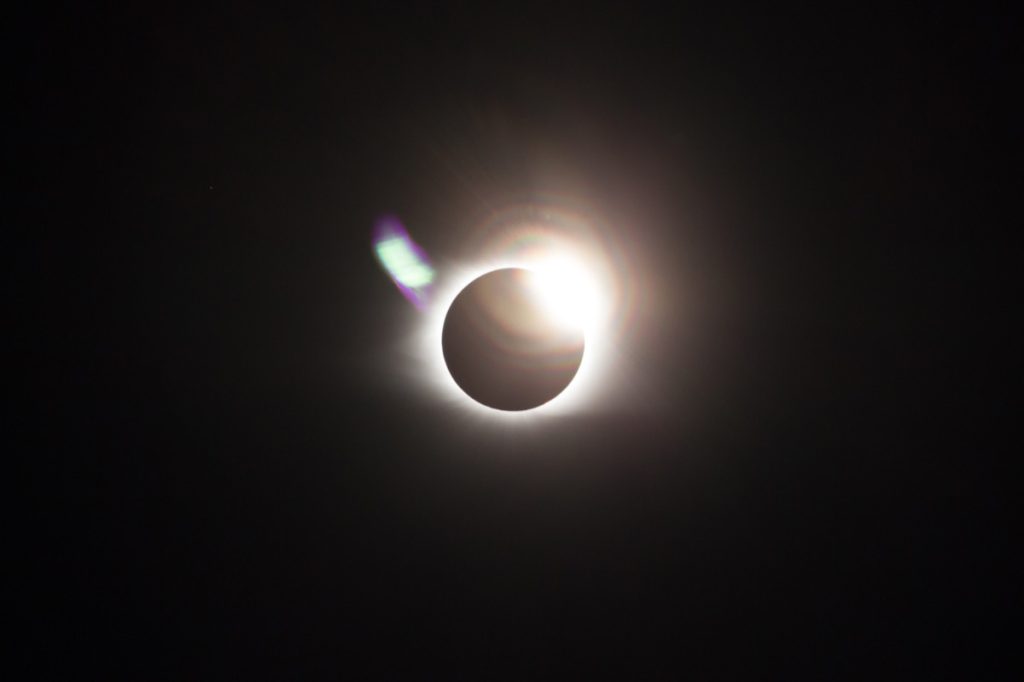
For a few fleeting moments before the sun is covered, spectators might also be able to catch sight of Baily’s Beads, which are glimmers of light that form bright spots as sunlight passes through crags, craters, and valleys on the moon. A sharp, bright spot on the edge of the moon’s shadow known as the “diamond ring” will then appear, named for its resemblance to a sparkling piece of jewelry.
The moment the sun is completely blocked out is known as “totality,” marking the only point of the experience you can watch directly without protective glasses. Spectators might be able to make out different parts of the sun’s atmosphere, including a pink ring created by the star’s chromosphere or rays of white light from the corona. But while the view above is spectacular, sights on the ground can be just as surreal as conditions can create “a 360-degree sunset,” planets and bright stars can become briefly visible, the air temperature can drop, and “often an eerie silence will settle around you,” NASA describes.
Shutterstock / Mihai O Coman
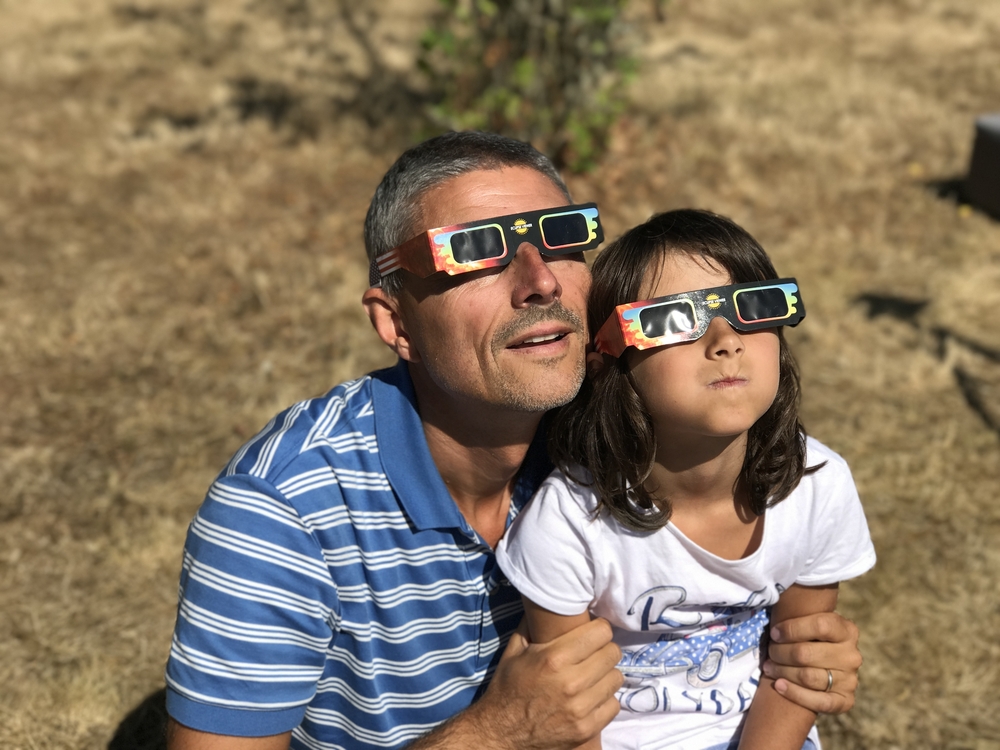
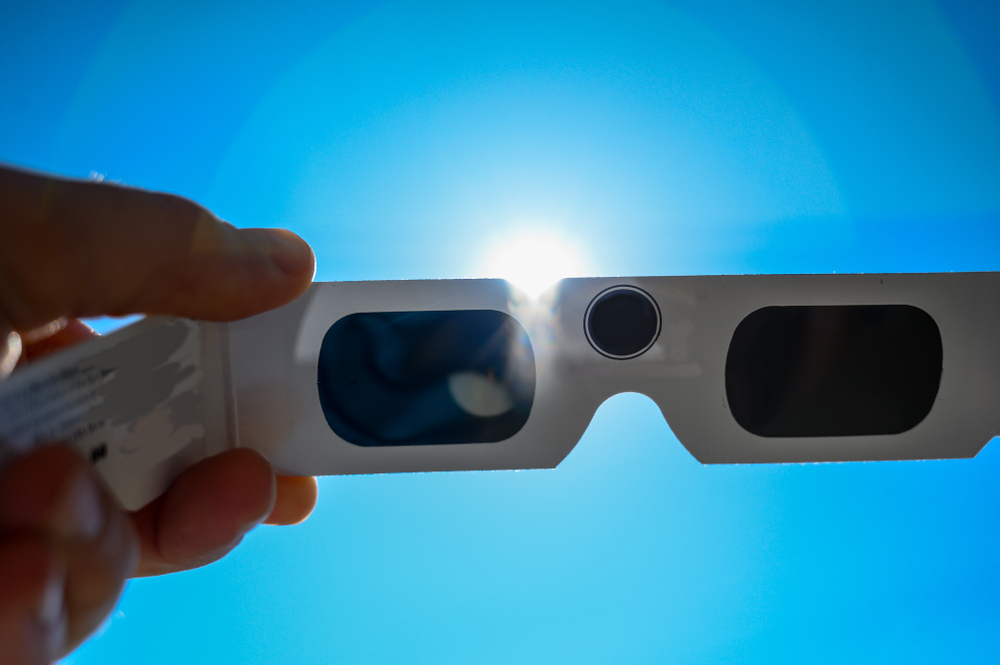
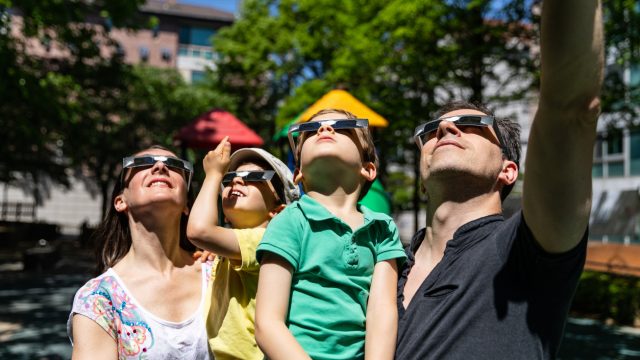
If you’re already excited to catch a glimpse of the rare celestial event for the last time until 2044, it might not be a bad idea to start preparing for the experience. Arguably most importantly, NASA warns you’ll need the correct specially designed safe solar viewing glasses or handheld viewer to actually be able to see it . Otherwise, you’ll need to use an indirect viewing technique, such as a pinhole projector.
“Except during the brief total phase of a total solar eclipse, when the moon completely blocks the sun’s bright face, it is not safe to look directly at the sun without specialized eye protection for solar viewing,” the space agency warns, clarifying that normal sunglasses won’t offer sufficient protection. “Viewing any part of the bright sun through a camera lens, binoculars, or a telescope without a special-purpose solar filter secured over the front of the optics will instantly cause severe eye injury.”
And besides ensuring you have the proper equipment, you might also want to consider arranging a place to stay if you have to travel to witness the event. Cities along the path of totality will likely see a large influx of tourists scooping up available lodging, with Ross saying organizers expect anywhere between 375,000 to 500,000 people to descend upon Rochester alone.
“We’ve been starting to spread the word really since 2019 by meeting and also kind of designating everyone as an eclipse ambassador, so everyone watching right now, get ready because all of your out-of-town relatives are coming here [and] they’re gonna want to stay in your house,” Ross told WROC.
8 Best Destinations for the Next (and Rare) Total Solar Eclipse
LeoPatrizi/iStock
The chance to witness a total solar eclipse is rare enough that it remains a bucket list item for many people. After all, these events require a combination of being in the right place at the right time and having the correct conditions to actually see them. Since the next eclipse will be the last visible from North America until 2044 , many are making plans well ahead of the event on Apr. 8, 2024, to secure front-row seats.
The hype has created a mad dash for accommodations in locations along the path of totality , which will start in Texas and run across 13 states through Maine, according to NASA. In some places, basic hotel rooms are going for five to seven times their typical rates—including some listed well above $1,000 for a night, The New York Times reports.
The pinch is even being felt in the short-term home rental market, with some avid eclipse chasers saying supply has been dwindling even months in advance. Others reported finding decent rates, only to have hosts cancel their reservations and demand a higher price point for the occasion, The Times reports.
Some experts have recommended finding lodging within an hour’s drive of the path of totality to avoid a price crunch. But others still warn that the expected crowds will likely bring traffic jams along with them on the big day.
“It’s a little bit like going to a big sporting event where people take their time getting in but everybody wants to leave at the same time,” Scott Katsinas , a travel adviser at Katsinas Travel Consultants in Arizona, told The Times .
But even as accommodations run thin in some places, there’s still hope for those who want to experience the event for themselves. Local tourism boards have collected resources for eclipse chasers with options along the path of totality for the big day. Read on for the best destinations for watching the next total solar eclipse in 2024.
RELATED: Southwest Says You Can View the Total Solar Eclipse on These 8 Flights .
Shutterstock / Mihai_Andritoiu
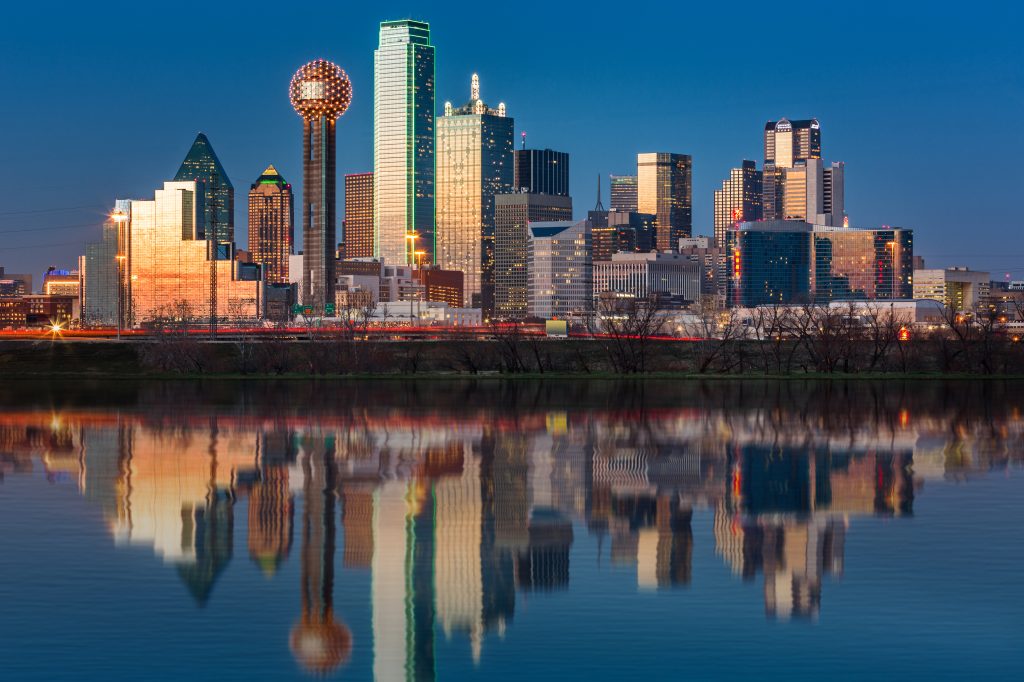
If you’re looking to get a head start on eclipse viewing, Dallas is likely your best bet. The Texas metropolis is not only the largest city in the path of totality but also the first major U.S. destination to experience the event as partial coverage begins at 12:23 p.m. CDT, according to the Perot Museum.
Besides the city’s ample hotel rooms, there are other perks to picking the Lone Star State for catching the eclipse: Experts point out that it’s the place that’s statistically most likely to have clear weather in April when the event occurs, according to travel news outlet The Points Guy.
RELATED: The 10 Best Destinations for Stargazing in the U.S.
Shutterstock / Sean Pavone
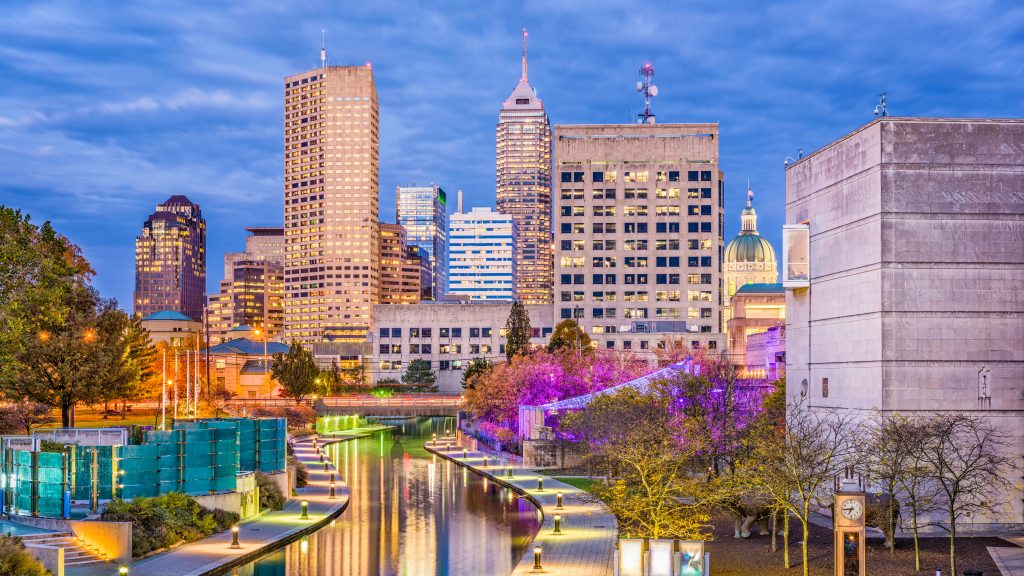
If you want to get the most out of your eclipse experience, Indianapolis may be one of your better options. The Indiana capital is near the center of the path of totality, creating a full coverage time of three minutes and 46 seconds, according to the local tourism board. The city will also host NASA at the famous Indianapolis Motor Speedway, providing experts to answer questions and host a live broadcast of the event.

iStock
Lake Placid may have the rare distinction of having hosted the Winter Olympics twice, but 2024 will mark the first time in recorded history the Adirondack locale will experience a total eclipse. The town is planning to welcome visitors with activities and events throughout the Olympic Legacy Sites, providing the opportunity to take in the rare event while surrounded by the region’s famous natural beauty.
RELATED: 12 Best Cities in the U.S. for Outdoor Adventures .

Shutterstock
Those still searching for a spot to catch the eclipse might want to consider Cleveland . The Ohio city is near the center of the path of totality and will experience full coverage for nearly four minutes on Apr. 8, according to the city’s tourism board. Visitors can also look forward to locally hosted events and festivities marking the occasion.

iStock
Arkansas provides another chance to combine natural beauty with the total solar eclipse. Little Rock is just one of the cities in the state with hotel rooms and accommodations to handle the crowds, with the partial eclipse beginning on the earlier side for the U.S. at 12:33 p.m. CDT and finishing at 3:11 p.m., according to NASA.
RELATED: The 10 Most Naturally Beautiful States in the U.S., New Data Shows .

iStock
The U.S. isn’t the only country that will be able to glimpse the eclipse next April: Mexico and Canada will also be on the path of totality. Montreal stands out among these international options for its easy access by flights, ample number of hotel rooms and lodging options, and plenty to see and experience outside of the eclipse itself.
According to the Canadian Space Agency, visitors in the Quebec locale can expect to see full coverage for one minute and 28 seconds, which marks the last time the province will see one until 2106.
RELATED: The 8 Best Off-The-Radar Destinations in the U.S. That Need to Be on Your Bucket List .
iStock
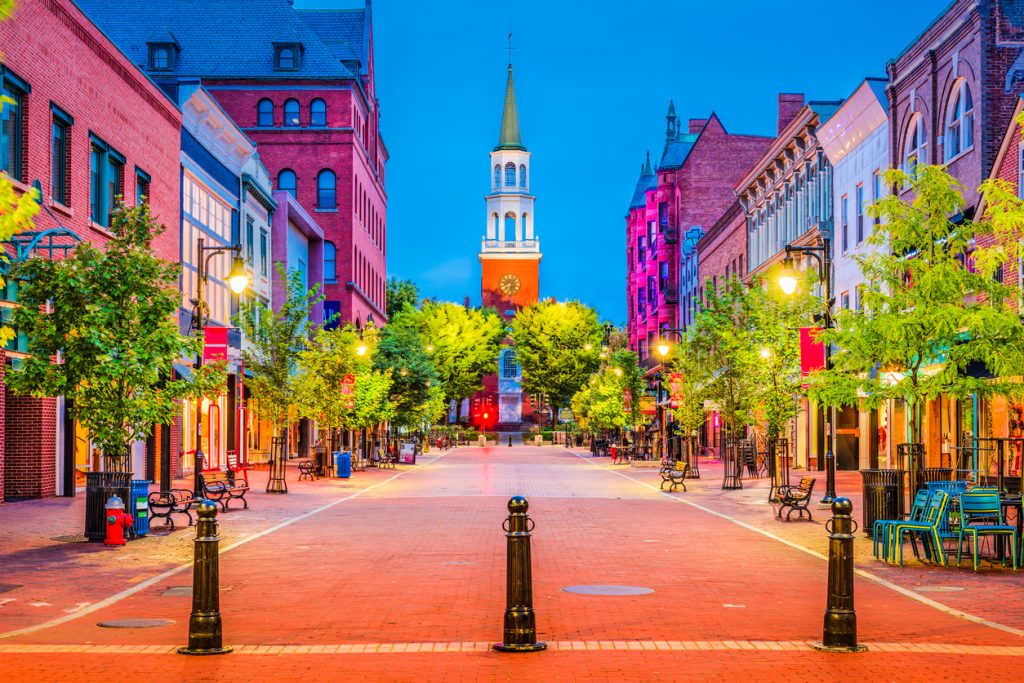
The Green Mountain state provides plenty of reasons to visit year-round, but the 2024 eclipse is a compelling addition to the list. The event marks the first time Vermont has experienced totality since 1932 , according to the state’s tourism board. Those staying in Burlington can expect full sun coverage for about three minutes and will have access to hotels and other lodging in the area.
RELATED: The 7 Newest National Parks You Need to Add to Your Bucket List .
iStock / DenisTangneyJr
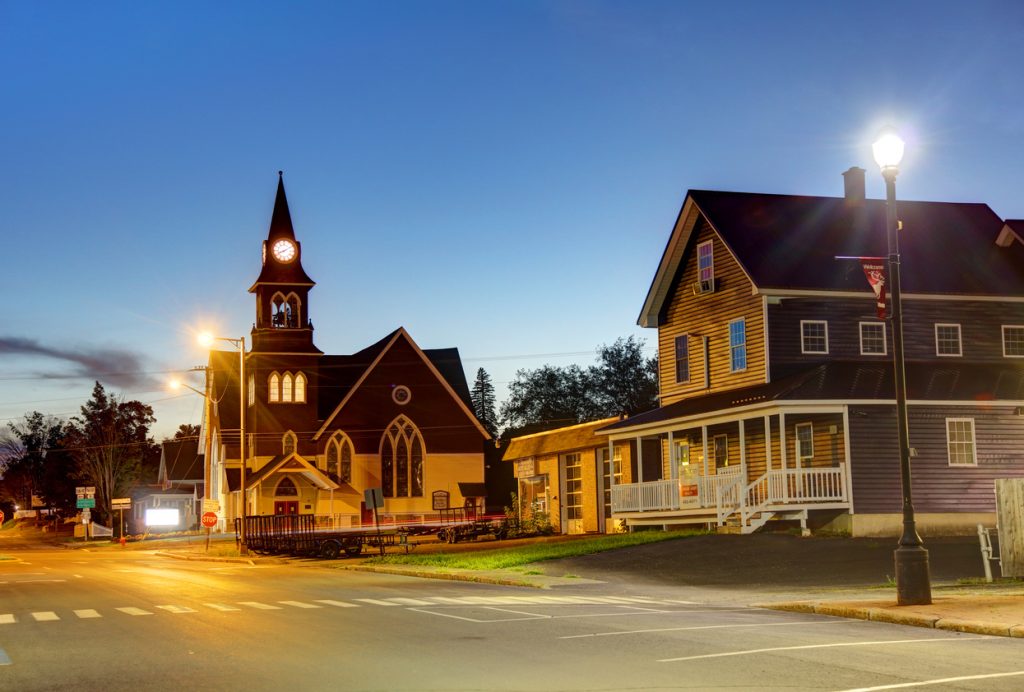
If you’re looking to be among the last in the U.S. to catch sight of the last eclipse until 2044, picking Maine as your viewing locale is the only option. The path of totality crosses the northern half of the state, with full coverage beginning in the small town of Caribou at 3:32 p.m. EDT, according to NASA. After that, the eclipse will pass through the Canadian maritime provinces before ending its traverse of North America and finishing over the Atlantic Ocean.
