“Severe” Solar Storm Will Bring the Northern Lights to 14 States Tonight—How to See Them
Elizabeth M. Ruggiero/iStock
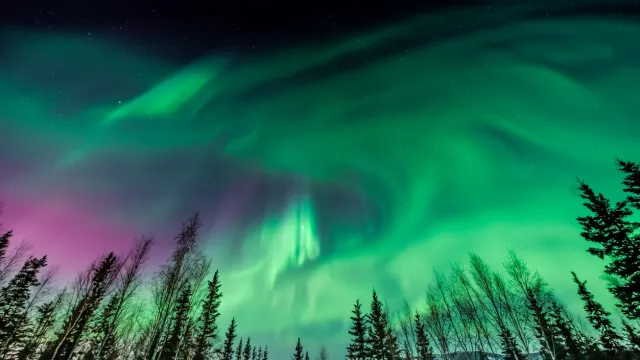
Astronomy fans and stargazers have had a lot to look forward to so far this year. In addition to the recent lunar eclipse , there has also been a unique comet sighting, and the upcoming total solar eclipse is expected to draw millions of viewers. But we could also be in for another last-minute treat as a “severe” solar storm is expected to bring the Northern Lights into view in up to 14 states tonight. Read on to learn how you can see them.
RELATED: Explosive “Devil Comet” Could Photobomb the Solar Eclipse—How to See It .
Wit.Siri / Shutterstock
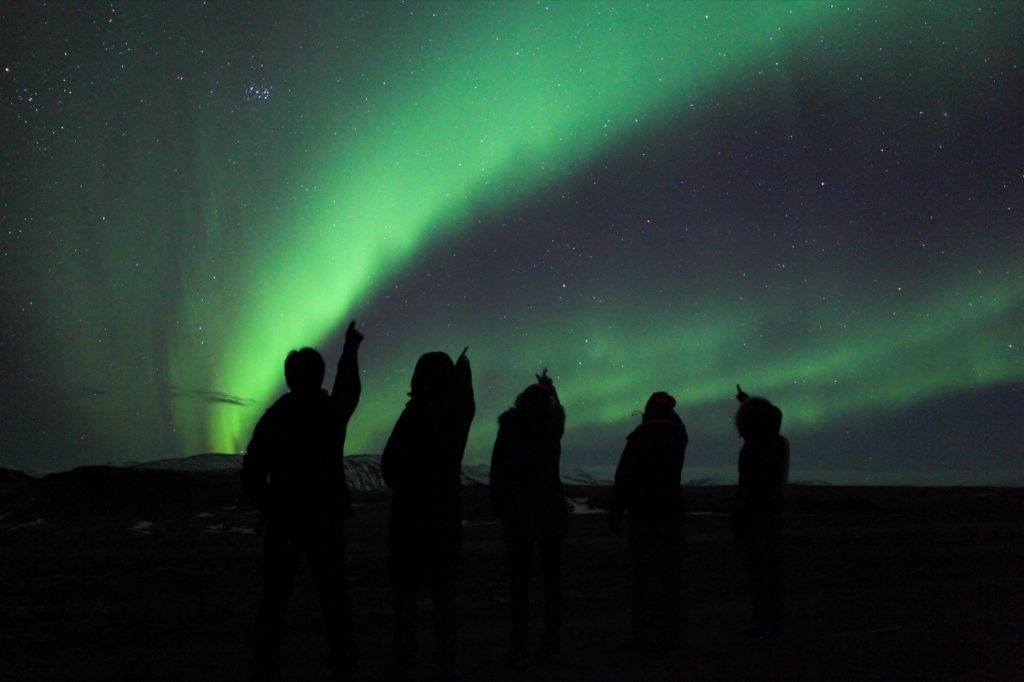
Some people travel a long way in the hopes of seeing the aurora borealis. But tonight, parts of the U.S. could get a light show of their own when the Northern Lights appear in the sky.
On March 24, the National Oceanic and Atmospheric Administration’s (NOAA) Space Weather Prediction Center (SWPC) issued an alert for a “severe” geomagnetic storm after observing a large coronal mass ejection (CME) the previous day, USA Today reports. The event reached a “G4” designation on the agency’s scale, which is the second highest possible.
The first waves of the stream of charged solar particles began hitting our planet on Sunday, bringing potential sightings into the lower 48 states. Forecasts from the SWPC predict these conditions will continue through Monday evening.
RELATED: New Star Will “Explode” in the Night Sky—How to See the “Once-in-a-Lifetime” Event .
remotevfx.com/Shutterstock
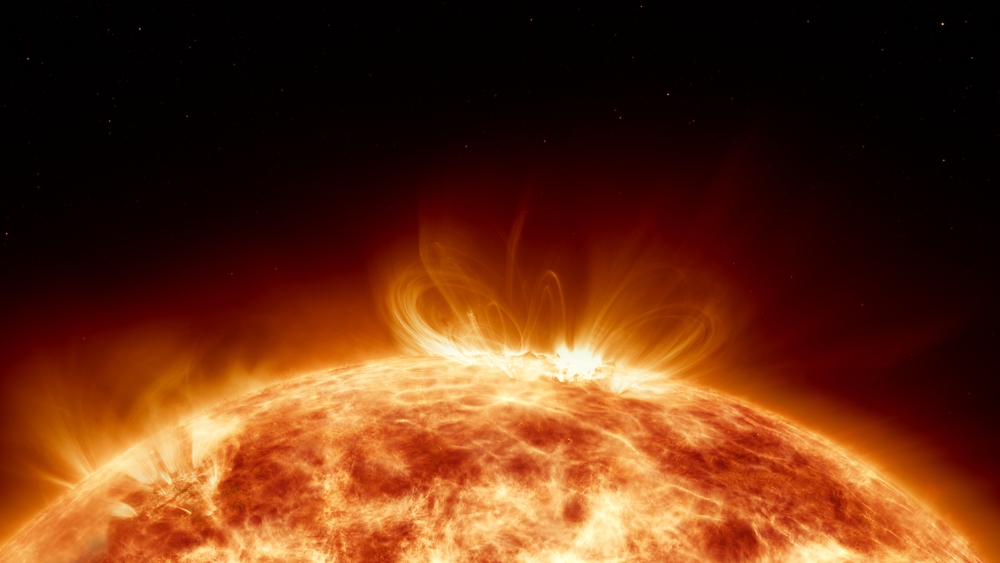
Large CMEs like the one that occurred over the weekend aren’t totally uncommon. According to NASA, they happen when large spurts of plasma escape from the sun’s surface, sometimes around the time of a solar flare. But while the eruptions—which scientists describe as looking like giant pieces of twisted rope—can lead to disruptions with radio equipment, communications systems, and electrical grids, it was unlikely even this significant event would impact daily life.
“The public should not anticipate adverse impacts, and no action is necessary, but they should stay properly informed of storm progression by visiting our webpage,” the SWPC wrote in its alert on March 24, per Fox Weather.
Currently, the sun has become more active due to its position in the solar cycle . Scientists believe the sun is reaching the peak of expected activity, which could increase the number of such events for the next few years, per NOAA.
The latest CME also happens to be in line with the recent spring equinox . Due to its slight tilt and the placement of its magnetic poles, the Earth’s positioning is primed to receive charged particles and enhance auroras, Space.com reports.
RELATED: Here’s How Much of the Total Solar Eclipse You Can See in Your Region .
Mats Lindberg / Shutterstock
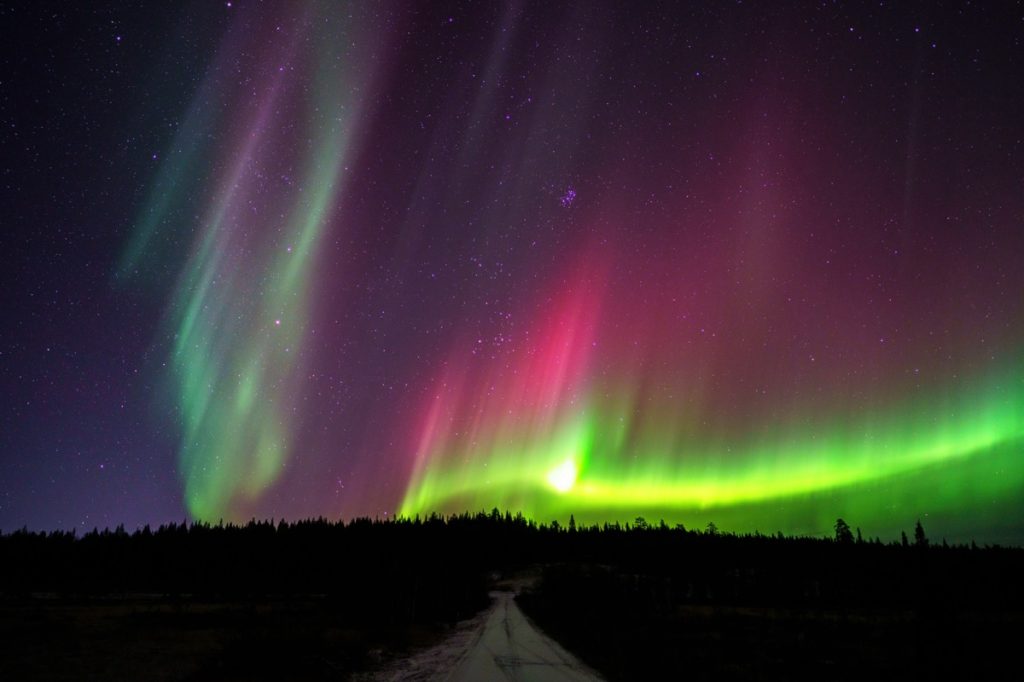
Shifting conditions can make geomagnetic storms notoriously tricky to track and predict. But according to the current SWPC forecast , people in 14 states could see the Northern Lights tonight.
The aurora view line is dipping slightly lower than usual, covering Alaska and some of the northernmost areas of the lower 48. The list includes Washington, Idaho, Montana, Wyoming, North Dakota, South Dakota, Iowa, Minnesota, Wisconsin, and Michigan. In the Northeast, Upstate New York, northern Vermont, northern New Hampshire, and Maine are also within viewing range.

Mumemories/Shutterstock
Even when orbital conditions align, getting a good view of the Northern Lights can also come down to your local weather. But if you’re hoping to see them for yourself, there are a few things to remember that could make it easier.
As with any stargazing experience, the best place to watch the night sky for the Northern Lights is far from any bright cities or towns with light pollution that can drown out the view, SWPC says. It can also help to get a good vantage point with some elevation and an unobstructed view of the northern horizon.
According to the agency, the best times to see the aurora are typically within two hours of midnight local time, making 10 p.m. through 2 a.m. the prime viewing window. However, it’s important to remember that they can appear at any time once it’s dark enough to see them.
And if you’re concerned you might not be able to see them this evening, don’t worry. Experts say you might not have to wait too long for another opportunity .
“We’re in that favorable time right now—it’s solar maximum, we are seeing these eruptions, and we’ll see plenty more of them in the next several years before we start winding down by 2029 or 2030,” Bill Murtagh , program coordinator with the SWPC, told The Los Angeles Times .
- Source: NOAA Space Weather Scales
- Source: NASA: Coronal Mass Ejections on the Sun
- Source: NOAA: What to expect from the peak of Solar Cycle 25
- Source: NOAA: Aurora Viewline for Tonight and Tomorrow Night
- Source: NOAA: Tips on Viewing the Aurora
8 Best Destinations for the Next (and Rare) Total Solar Eclipse

LeoPatrizi/iStock
The chance to witness a total solar eclipse is rare enough that it remains a bucket list item for many people. After all, these events require a combination of being in the right place at the right time and having the correct conditions to actually see them. Since the next eclipse will be the last visible from North America until 2044 , many are making plans well ahead of the event on Apr. 8, 2024, to secure front-row seats.
The hype has created a mad dash for accommodations in locations along the path of totality , which will start in Texas and run across 13 states through Maine, according to NASA. In some places, basic hotel rooms are going for five to seven times their typical rates—including some listed well above $1,000 for a night, The New York Times reports.
The pinch is even being felt in the short-term home rental market, with some avid eclipse chasers saying supply has been dwindling even months in advance. Others reported finding decent rates, only to have hosts cancel their reservations and demand a higher price point for the occasion, The Times reports.
Some experts have recommended finding lodging within an hour’s drive of the path of totality to avoid a price crunch. But others still warn that the expected crowds will likely bring traffic jams along with them on the big day.
“It’s a little bit like going to a big sporting event where people take their time getting in but everybody wants to leave at the same time,” Scott Katsinas , a travel adviser at Katsinas Travel Consultants in Arizona, told The Times .
But even as accommodations run thin in some places, there’s still hope for those who want to experience the event for themselves. Local tourism boards have collected resources for eclipse chasers with options along the path of totality for the big day. Read on for the best destinations for watching the next total solar eclipse in 2024.
RELATED: Southwest Says You Can View the Total Solar Eclipse on These 8 Flights .
Shutterstock / Mihai_Andritoiu
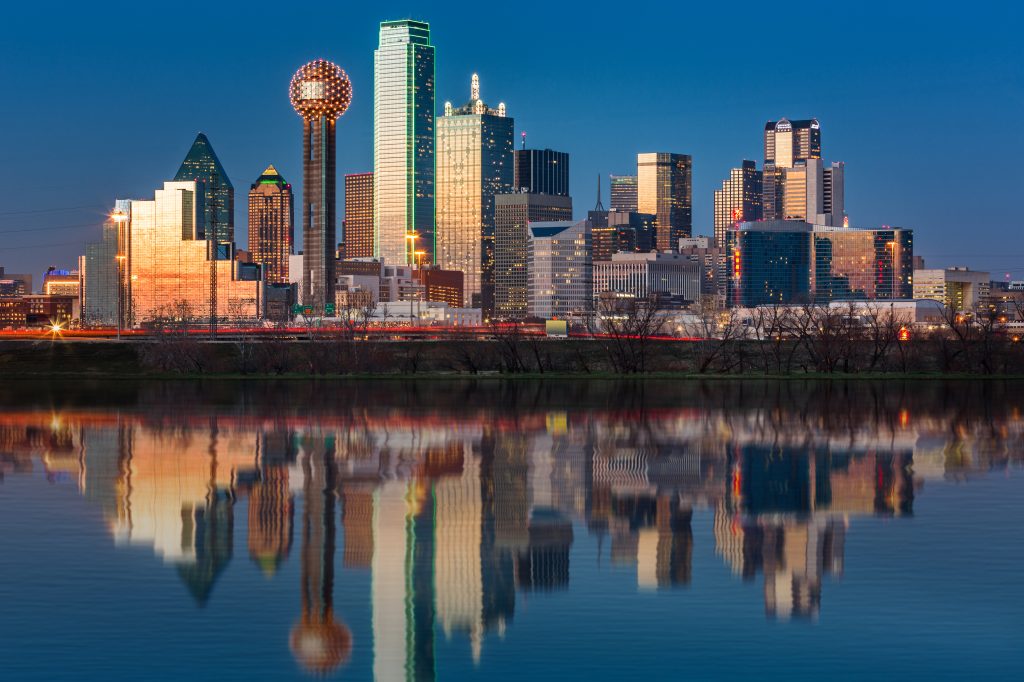
If you’re looking to get a head start on eclipse viewing, Dallas is likely your best bet. The Texas metropolis is not only the largest city in the path of totality but also the first major U.S. destination to experience the event as partial coverage begins at 12:23 p.m. CDT, according to the Perot Museum.
Besides the city’s ample hotel rooms, there are other perks to picking the Lone Star State for catching the eclipse: Experts point out that it’s the place that’s statistically most likely to have clear weather in April when the event occurs, according to travel news outlet The Points Guy.
RELATED: The 10 Best Destinations for Stargazing in the U.S.

Shutterstock / Sean Pavone
If you want to get the most out of your eclipse experience, Indianapolis may be one of your better options. The Indiana capital is near the center of the path of totality, creating a full coverage time of three minutes and 46 seconds, according to the local tourism board. The city will also host NASA at the famous Indianapolis Motor Speedway, providing experts to answer questions and host a live broadcast of the event.

iStock
Lake Placid may have the rare distinction of having hosted the Winter Olympics twice, but 2024 will mark the first time in recorded history the Adirondack locale will experience a total eclipse. The town is planning to welcome visitors with activities and events throughout the Olympic Legacy Sites, providing the opportunity to take in the rare event while surrounded by the region’s famous natural beauty.
RELATED: 12 Best Cities in the U.S. for Outdoor Adventures .

Shutterstock
Those still searching for a spot to catch the eclipse might want to consider Cleveland . The Ohio city is near the center of the path of totality and will experience full coverage for nearly four minutes on Apr. 8, according to the city’s tourism board. Visitors can also look forward to locally hosted events and festivities marking the occasion.

iStock
Arkansas provides another chance to combine natural beauty with the total solar eclipse. Little Rock is just one of the cities in the state with hotel rooms and accommodations to handle the crowds, with the partial eclipse beginning on the earlier side for the U.S. at 12:33 p.m. CDT and finishing at 3:11 p.m., according to NASA.
RELATED: The 10 Most Naturally Beautiful States in the U.S., New Data Shows .

iStock
The U.S. isn’t the only country that will be able to glimpse the eclipse next April: Mexico and Canada will also be on the path of totality. Montreal stands out among these international options for its easy access by flights, ample number of hotel rooms and lodging options, and plenty to see and experience outside of the eclipse itself.
According to the Canadian Space Agency, visitors in the Quebec locale can expect to see full coverage for one minute and 28 seconds, which marks the last time the province will see one until 2106.
RELATED: The 8 Best Off-The-Radar Destinations in the U.S. That Need to Be on Your Bucket List .
iStock
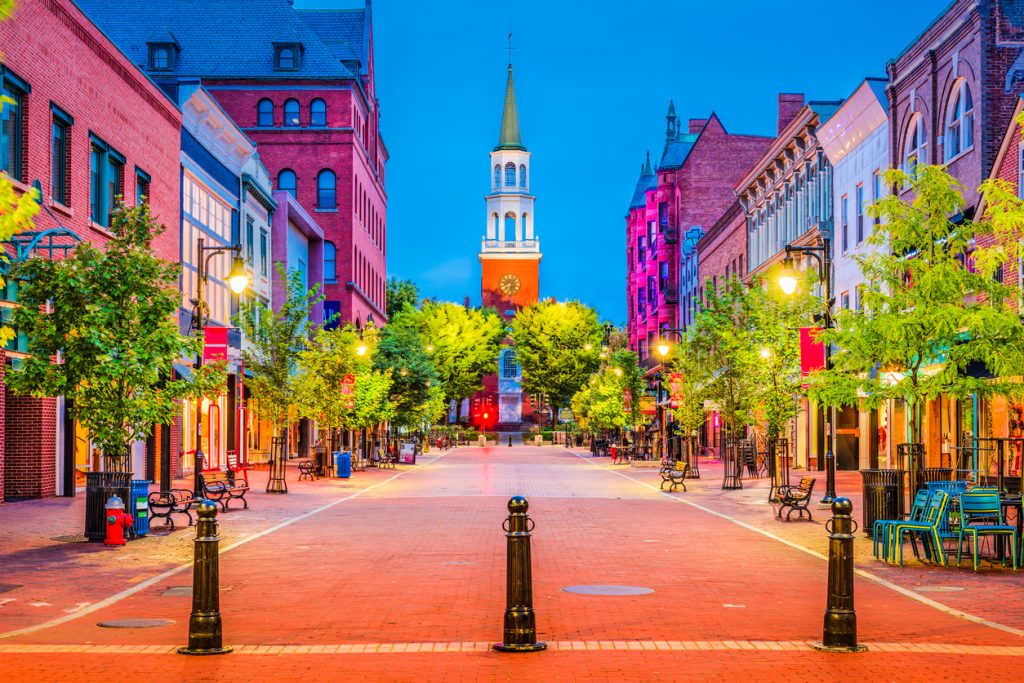
The Green Mountain state provides plenty of reasons to visit year-round, but the 2024 eclipse is a compelling addition to the list. The event marks the first time Vermont has experienced totality since 1932 , according to the state’s tourism board. Those staying in Burlington can expect full sun coverage for about three minutes and will have access to hotels and other lodging in the area.
RELATED: The 7 Newest National Parks You Need to Add to Your Bucket List .
iStock / DenisTangneyJr
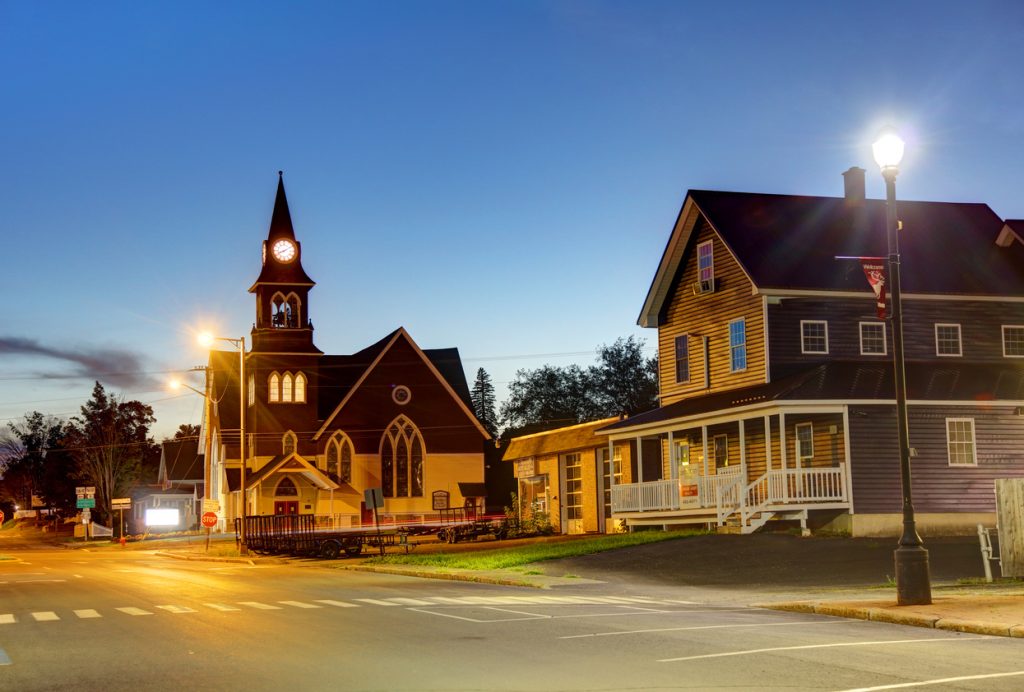
If you’re looking to be among the last in the U.S. to catch sight of the last eclipse until 2044, picking Maine as your viewing locale is the only option. The path of totality crosses the northern half of the state, with full coverage beginning in the small town of Caribou at 3:32 p.m. EDT, according to NASA. After that, the eclipse will pass through the Canadian maritime provinces before ending its traverse of North America and finishing over the Atlantic Ocean.
