“Supercharged” Northern Lights May Appear Over the U.S. Tonight—How to See Them
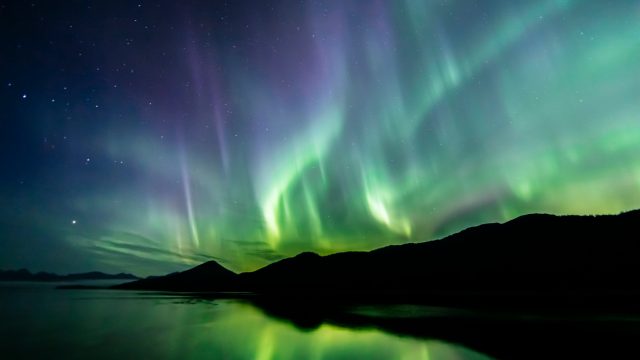
iStock / Andrew Peacock
The night sky is full of countless beautiful objects, and there are plenty you don’t even need a telescope to enjoy. Whether it’s a passing comet, a dazzling meteor shower, or even a special lunar eclipse, there are some special events that just require looking up at the right time. This list also includes the aurora borealis, but the overhead spectacle is usually limited to very specific areas of the globe during particular times of the year. But tonight, “supercharged” Northern Lights may appear over parts of the U.S. in a rare and dazzling display. Read on for more information on how to see them.
READ THIS NEXT: The Next Total Solar Eclipse Will Be the Last Until 2044, NASA Says .
Simon’s passion 4 Travel/Shutterstock
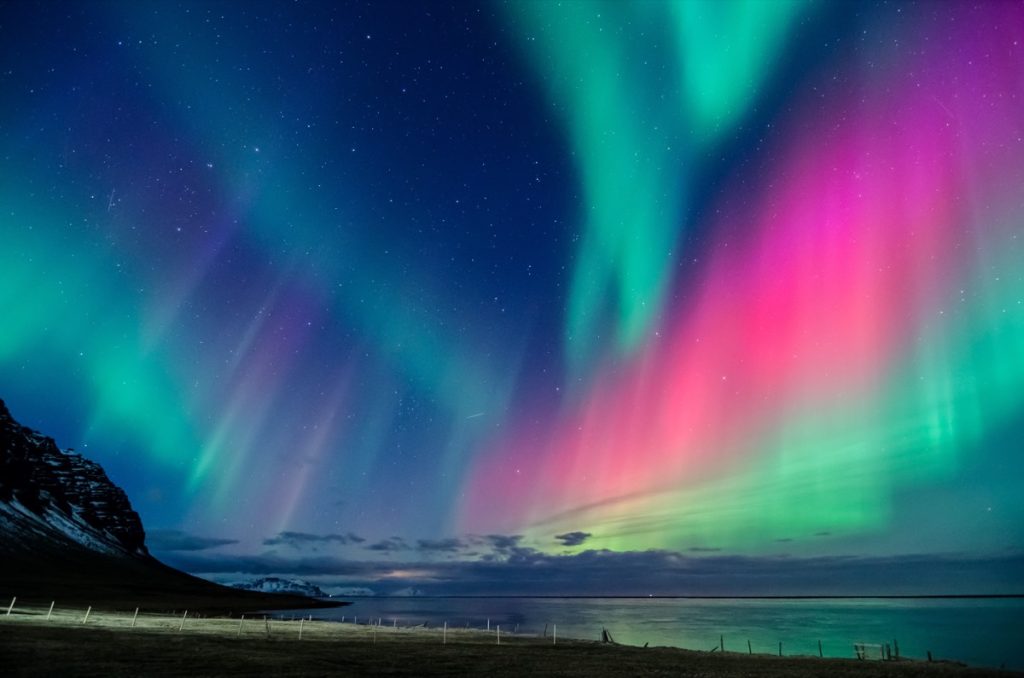
The aurora borealis is often a bucket list item for outdoors enthusiasts and travelers thanks to the limited number of places where they’re visible. But over the new few nights, residents in the U.S. and Canada might be able to catch a glimpse of the Northern Lights, Space.com reports.
While the phenomenon is a regular sight in spots near and above the Arctic Circle, scientists say that a solar flare and coronal mass ejection (CME) emitted from the sun on May 7 has sent a stream of radiation toward Earth. The conditions could create a dazzling “supercharged” display of auroras when it hits our planet on May 10 and May 11, according to Space.com.
Shutterstock
The unusually strong event comes as the sun has seen a recent spike in activity . The center of our solar system entered a new cycle in Dec. 2019 when it reached a solar minimum , according to NASA. As a result, increasingly “stormy” activity on the sun—including sunspots, solar flares, and CMEs—will eventually peak when it reaches its solar maximum sometime in 2025. And even though the 11-year cycle is a regular and expected occurrence, the space agency says our star is “already exceeding predictions” with its activity.
Fortunately, our planet’s atmosphere shields us from the otherwise dangerous blasts of radiation. But while most people on Earth will likely only ever notice its effects as aurora in the night sky, it can sometimes cause other problems, such as issues with power grids and telecommunications. In fact, the May 7 solar flare has already been blamed for a radio blackout over the western U.S. and parts of the Pacific Ocean due to the interference it created in the Earth’s upper atmosphere, Space.com reports.
While experts aren’t overly concerned about the sun’s increased activity creating serious problems for our planet, it does increase the likelihood of the Northern Lights appearing more vividly and in more places over the coming years until the solar maximum is reached.
Shutterstock
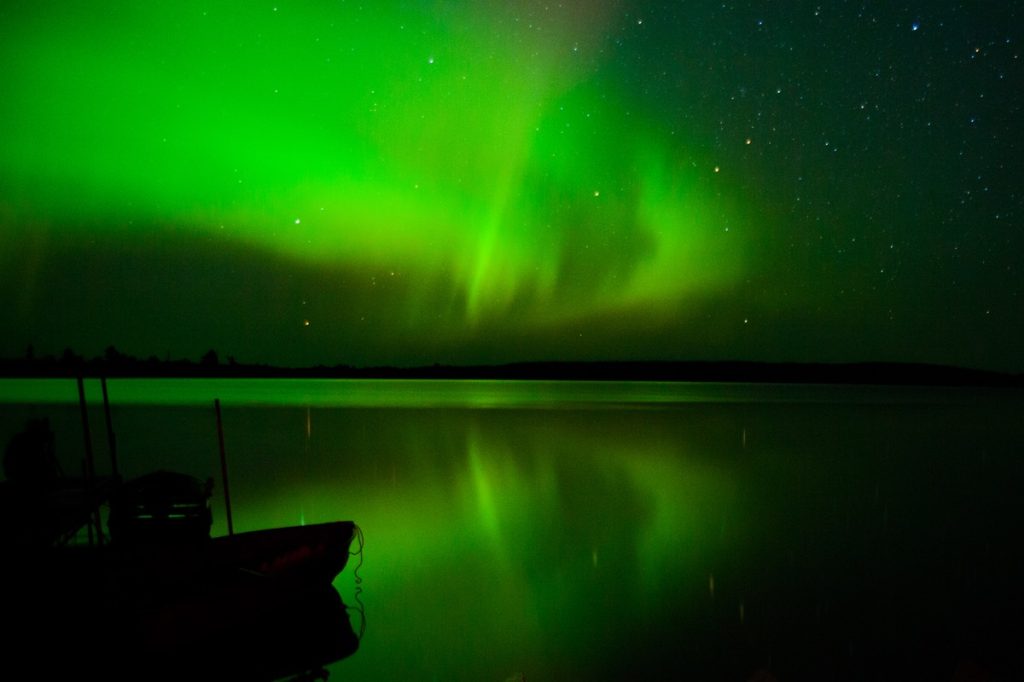
As the latest wave of energized particles hits the planet over the next few days, lower latitudes could have a chance to see the Northern Lights overhead. According to the U.S. National Oceanic and Atmospheric Administration (NOAA) Space Weather Prediction Center, the view line for the phenomenon dips low enough to include 13 states on May 10.
Forecast charts show that Alaska and large swaths of Canada are expected to have a very high likelihood of aurora. But many northern states are also in an excellent position to potentially catch a show, including parts of Washington, Idaho, North Dakota, South Dakota, Minnesota, Iowa, Wisconsin, Michigan, New York, Vermont, New Hampshire, and Maine.
Bilanol/Shutterstock
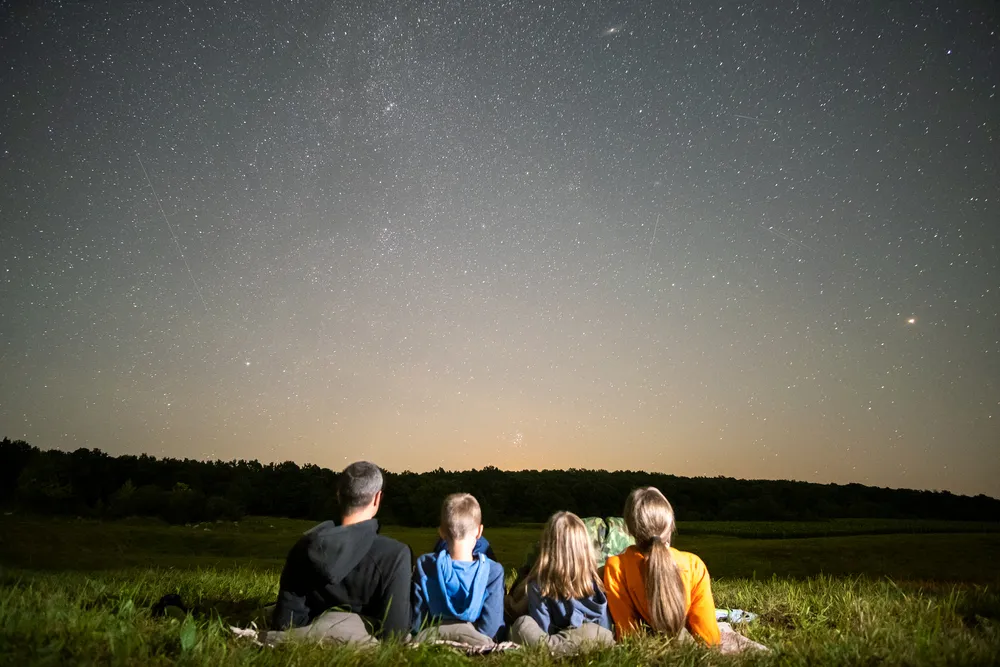
Tonight’s show presents an exciting opportunity for residents in some areas to catch a rare display of one of nature’s most awe-inspiring spectacles. But if you want to get the most out of your Northern Lights viewing experience , there are a few things to keep in mind.
Similar to a typical stargazing experience, it’s best to get as far away from city lights or other sources of light pollution as possible, according to NOAA. And, of course, try to find a vantage point that provides the most expansive view of the night sky.
The agency says prime viewing hours tend to fall within an hour or two before and after midnight, so try to get outdoors between 10 p.m. and 2 a.m. in your area. And keep in mind that while displays can carry on through the night, they might become less visible as light increases closer to sunrise.
It’s also important to remember that similar to terrestrial storms, solar weather forecasts can be very fickle and change with little notice—whether for the better or worse. And even if local weather conditions make viewing this week less than ideal, remember that such unique displays could become more common for the next few years thanks to increased solar activity, according to Space.com.
The Next Total Solar Eclipse Will Be the Last Until 2044, NASA Says
Stocker plus/Shutterstock
Whether you’re a casual stargazer or a devoted amateur astronomer, there’s no denying that there’s something special about witnessing a rare celestial event like a solar eclipse. Besides the fact that they only occur a few times each decade, getting a good view can come down to where you live having the right weather conditions. If you’d love to witness a solar eclipse anytime soon, you may want to mark off your calendars. NASA says the next one will be the last you can see from the U.S. until 2044. Read on for more info on how to catch this unique event.
READ THIS NEXT: NASA Promises Humans Living on the Moon in 10 Years .
GagliardiPhotography/Shutterstock
If catching a major cosmic event has been an item on your bucket list, you might want to grab your calendar . On Apr. 8, 2024, North America will have front-row seats to a total solar eclipse for the first time since 2017. But besides being a relatively rare event in and of itself, this will also be the last opportunity to view a full eclipse from within the contiguous United States until Aug. 23, 2044, according to NASA.
Lost_in_the_Midwest/Shutterstock
Even though many areas across the U.S. will be treated to at least a partial eclipse, only places that are in the total eclipse’s direct path will get to experience the moon entirely blocking out the sun . The first sight of totality on the continent will start on Mexico’s Pacific Coast before it becomes visible stateside around noon in Texas, according to NASA. From there, the path will continue north through Oklahoma, Arkansas, Missouri, Illinois, Kentucky, Indiana, Ohio, Pennsylvania, New York, Vermont, New Hampshire, and Maine before leaving the U.S. in the late afternoon.
Viewers in Canada will be able to experience the eclipse as it begins its path through Southern Ontario and eventually makes its way through Quebec, New Brunswick, Prince Edward Island, and Cape Breton. The eclipse will disappear from North America as it passes off the East Coast of Canada in the early evening.
Shutterstock
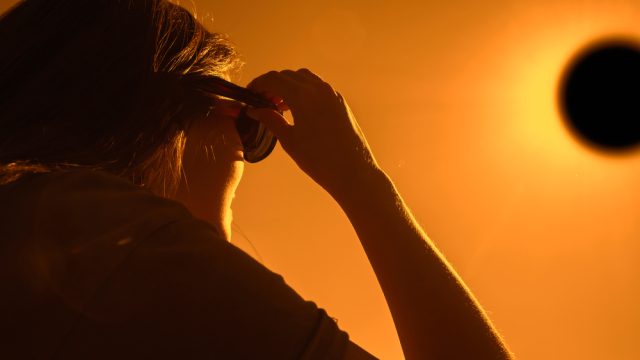
So long as weather conditions remain favorable, part of what makes the experience of a total solar eclipse so special is the truly unique conditions it can create for those in its path. During the initial partial eclipse phase—or for those watching in areas outside of the total eclipse’s path—viewers will first notice a crescent blocking out part of the sun as the moon slightly covers the star while wearing the appropriate safety glasses, according to NASA.
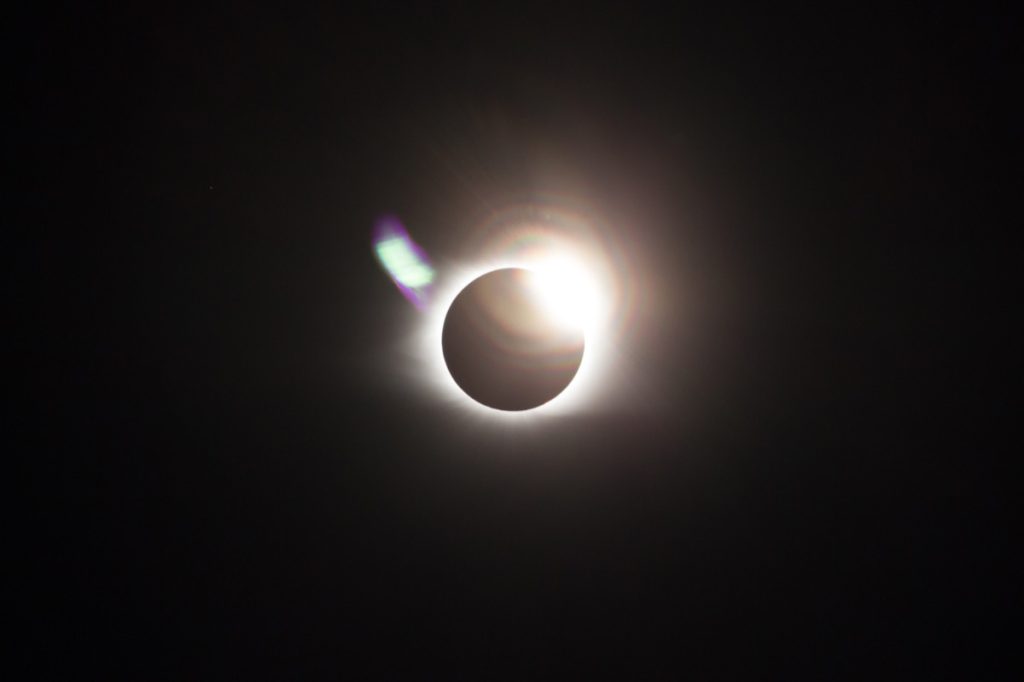
For a few fleeting moments before the sun is covered, spectators might also be able to catch sight of Baily’s Beads, which are glimmers of light that form bright spots as sunlight passes through crags, craters, and valleys on the moon. A sharp, bright spot on the edge of the moon’s shadow known as the “diamond ring” will then appear, named for its resemblance to a sparkling piece of jewelry.
The moment the sun is completely blocked out is known as “totality,” marking the only point of the experience you can watch directly without protective glasses. Spectators might be able to make out different parts of the sun’s atmosphere, including a pink ring created by the star’s chromosphere or rays of white light from the corona. But while the view above is spectacular, sights on the ground can be just as surreal as conditions can create “a 360-degree sunset,” planets and bright stars can become briefly visible, the air temperature can drop, and “often an eerie silence will settle around you,” NASA describes.

Shutterstock / Mihai O Coman
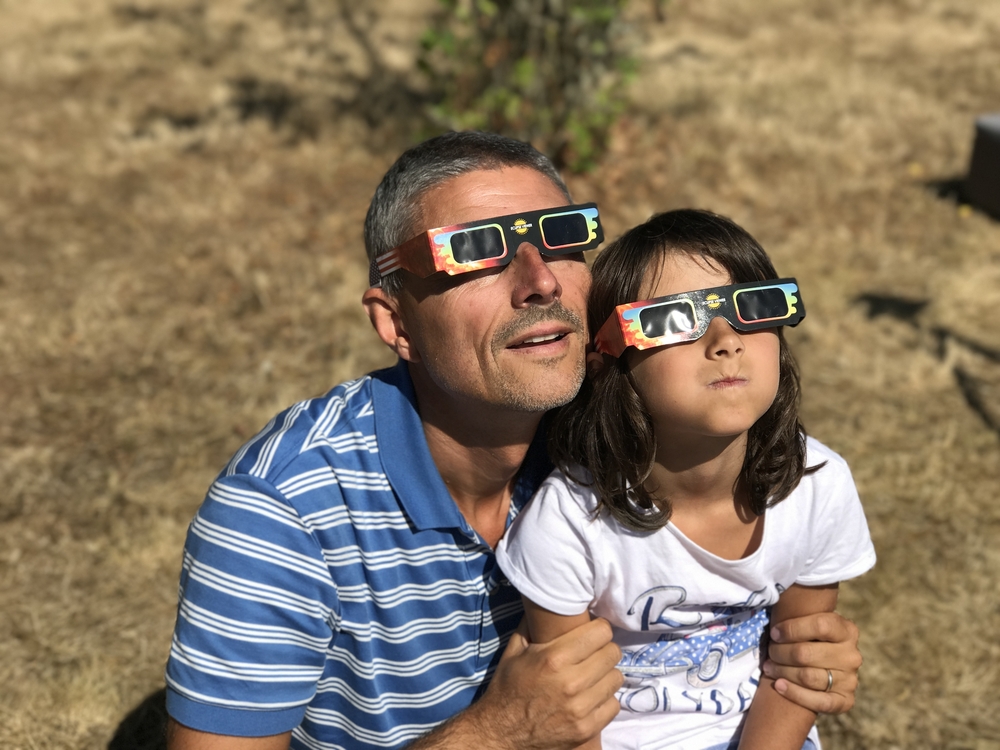
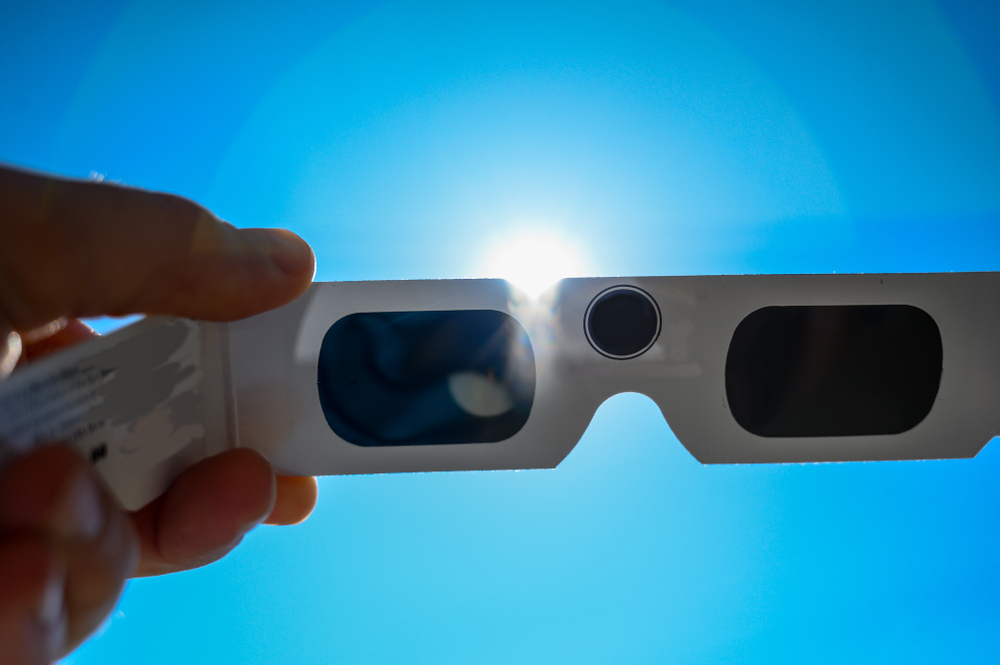
If you’re already excited to catch a glimpse of the rare celestial event for the last time until 2044, it might not be a bad idea to start preparing for the experience. Arguably most importantly, NASA warns you’ll need the correct specially designed safe solar viewing glasses or handheld viewer to actually be able to see it . Otherwise, you’ll need to use an indirect viewing technique, such as a pinhole projector.
“Except during the brief total phase of a total solar eclipse, when the moon completely blocks the sun’s bright face, it is not safe to look directly at the sun without specialized eye protection for solar viewing,” the space agency warns, clarifying that normal sunglasses won’t offer sufficient protection. “Viewing any part of the bright sun through a camera lens, binoculars, or a telescope without a special-purpose solar filter secured over the front of the optics will instantly cause severe eye injury.”
And besides ensuring you have the proper equipment, you might also want to consider arranging a place to stay if you have to travel to witness the event. Cities along the path of totality will likely see a large influx of tourists scooping up available lodging, with Ross saying organizers expect anywhere between 375,000 to 500,000 people to descend upon Rochester alone.
“We’ve been starting to spread the word really since 2019 by meeting and also kind of designating everyone as an eclipse ambassador, so everyone watching right now, get ready because all of your out-of-town relatives are coming here [and] they’re gonna want to stay in your house,” Ross told WROC.
