Target Is Slashing Self-Checkout Even Further
Shutterstock
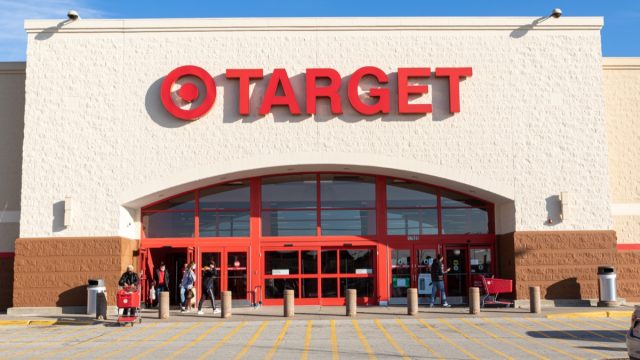
Target is taking renewed aim at self-checkout. Last fall, reports emerged that the retailer had started to put item limits on shelf-checkout lanes at several stores in the Northeast, restricting shoppers to just 10 products or less if they wanted to use these kiosks. As it turns out, Target wasn’t done yet, and the chain is now making further moves to make self-checkout machines less accessible to customers.
RELATED: Walmart and Target Anti-Theft Measures Could Be “Final Nail in the Coffin,” Shoppers Say .
According to a Feb. 13 report from Business Insider, Target has slashed the hours of operation for self-checkout lanes at some of its stores. Employees told the news outlet that not all locations have had self-checkout hours cut, but the company is considering store staffing levels and sales volumes in its decision.
On the whole, the workers said Target is trying to keep the percentage of overall store sales via self-checkout below a certain threshold with this new move.
While hours vary by location, most Target stores throughout the U.S. open at either 7 a.m. or 8 a.m. and close around 10 p.m. or 11 p.m. every day. But recently, several Reddit users in the r/Target subreddit have noted that their self-checkout (SCO) hours are getting reduced on both ends.
“I need to know if any other stores are doing/have done this. We’re open 8-10 normally but I just got told that our SCO will now only be operating 10-6:30,” Reddit user @Latmaso wrote in a Feb. 13 post .
RELATED: Kroger Is the Latest Store Pulling Away From Self-Checkout .
Throughout the comment section, several other employees chimed in with their Target’s newly reduced self-checkout hours. Many say the lanes are now being opened anywhere from 10 a.m. to 12 p.m., and closed anywhere from 7 to 9 p.m.
One person even claimed that they’re only allowed to keep their store’s self-checkout lanes open between 4 to 7 p.m. for “peak” hours. A Target employee in Illinois also confirmed to Business Insider that her store’s self-checkout hours had been cut, and that the machines are no longer available to shoppers after 8 p.m.
Best Life reached out to Target about the reduced self-checkout hours, and we will update this story with its response.
Target workers who haven’t had to make the change at their stores yet shared concerns to Business Insider about not having enough staff to cover full-service lanes, and the potential backlash from customers having to wait in long lines for a cashier.
“If and when we do have to close the self-checkouts in the morning and in the evening, we’re going to have a lot of people extremely upset with us,” one Michigan worker said. “I’m going to have to explain to them that they are closed down due to theft.”
But Target is hardly the only company that has started to rethink their reliance on self-checkout amid rising retail theft. To discover four more retailers who have recently made changes to their self-checkout options, read on.
RELATED: Target Slammed by Shoppers Over Unbearable Wait Times .
Shutterstock
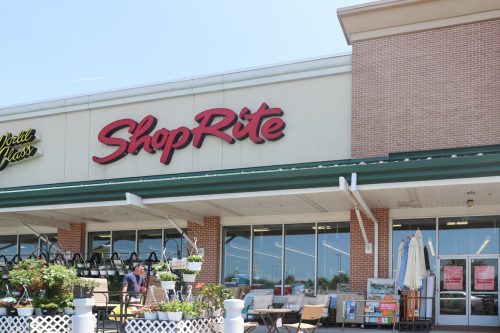
Back when Target started imposing item limits at self-checkouts last fall, shoppers were also seeing similar restrictions at certain Shoprite stores. In an Oct. 2023 report , radio station WPST revealed that a ShopRite in Hamilton, New Jersey, had started enforcing a 20-item limit at self-checkout.
The station explained that it was made aware of the change from a post on Nextdoor.
“I was at ShopRite on Route 130 Friday afternoon with my wife, had about 30 to 40 items, and we were going to use the self-checkout,” the post read. “They used to have lanes for 20 items or less and lanes for multiple items. Now they are strictly enforcing no more than 20 items at ALL self-checkout lanes.”
Around that same time, a Best Life reporter had noticed limits at a Shoprite store in Belmar, New Jersey, as well.
RELATED: Industry Expert Predicts “Demise of Self-Checkouts” and What’s Coming Next .
JHVEPhoto / Shutterstock
Walmart is another retailer that started pulling back from self-checkout last year. Back in September, the Albuquerque Journal reported that Walmart had stripped self-checkout machines from two stores in Albuquerque, and that the company was also in the process of renovating another location in the area to replace self-checkout lanes.
“We continually look at ways to provide our customers with the best shopping experience and that includes adjusting the checkout area in stores,” Walmart spokesperson Josh Havens told Insider in regards to the removal of self-checkouts from three stores.
RELATED: Fact Check: Is Walmart Getting Rid of All Self-Checkouts?
iStock
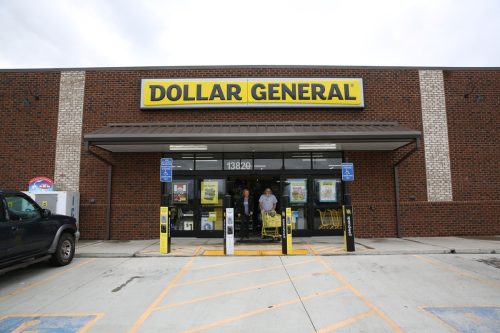
At the end of the year, Dollar General CEO Todd Vasos also expressed his desire to rethink the retailer’s use of self-checkout technology. Vasos admitted during a Dec. 7 earnings call that the company had started to “rely too much” on self-checkout kiosks in its stores in 2023.
“We should be using self-checkout as a secondary checkout vehicle, not a primary,” he said, explaining that Dollar General is going to be increasing “employee presence at the front end of [its] stores and in particular, the checkout area” instead.
iStock
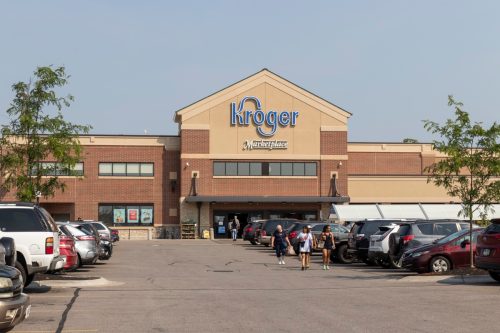
Aside from Target’s change, Kroger is the latest retailer to move away from self-checkouts. On Jan. 31, The Dallas Morning News reported that Kroger had decided to bring cashiers back to its only all self-checkout store in the Oak Lawn neighborhood of Dallas after three years.
“We listened closely to customer feedback and made the decision to convert back to hosting staffed checkout lanes at this store,” Kroger spokesman John Votava told the newspaper.
According to Votava, the grocer started converting the store back to a mix of staffed and self-checkout lanes on Jan. 30.
Industry Expert Predicts “Demise of Self-Checkouts” and What’s Coming Next
WHYFRAME/Shutterstock
Of all the changes the retail experience has undergone in recent years, the spread of self-checkout kiosks stands out as arguably one of the most notable. But while the technology was brought on to make getting out of the store more efficient, customers have largely pushed back on the machines as being confusing to use, impersonal, and potentially even risky for anyone who forgets to scan an item. Now, as some companies are beginning to show signs of cooling on the newly implemented cash registers, industry experts predict the “demise of self-checkouts” may be on the horizon. Read on to see what could be coming next in this chapter of retail history.
RELATED: Walmart Worker Issues Warning to Shoppers About Self-Checkout .
iStock
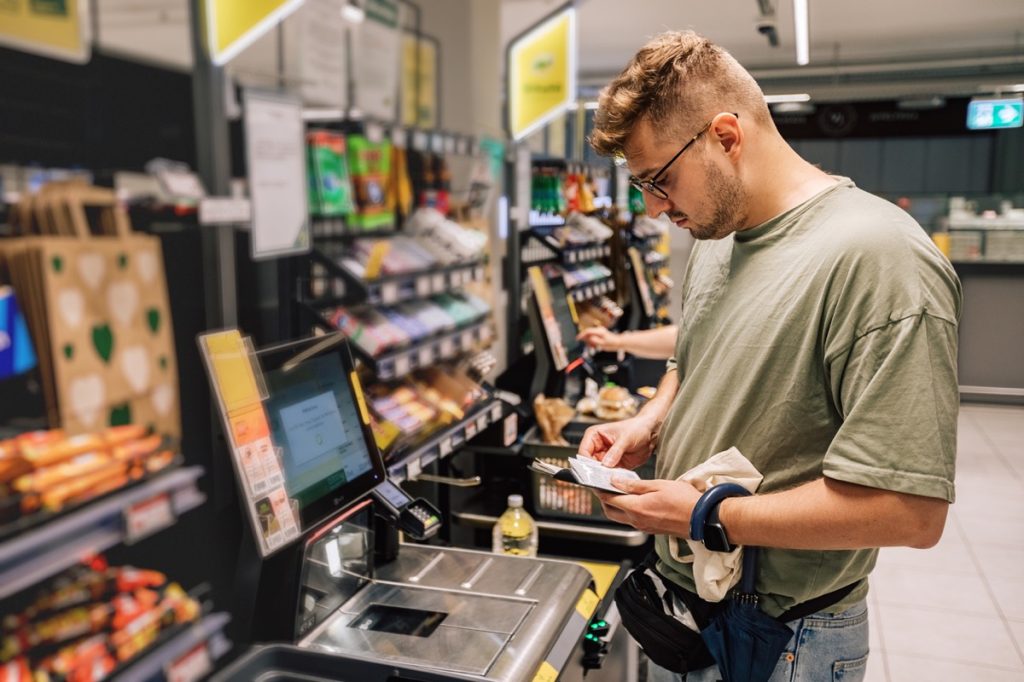
Self-checkout kiosks were ushered into service on a wave of hope. Customers looked forward to cutting down on waiting in line, while retailers could refocus labor toward other endeavors in a win-win for both parties. But in the years since they’ve become commonplace, the relationship between shoppers and the machines has become strained, to say the least.
From dreaded “wrong item weight” errors springing up to confusion while trying to select the right produce, many customers have become fed up with the now complicated process—especially when they’re asked to leave a tip . Retailers have also faced increased “shrink,” with one study finding stores that have self-checkout typically have a theft or loss rate that’s more than double the industry average, CNN reports.
Some companies are already taking action. U.K.-based supermarket Booths made headlines when it announced it would be doing away with its self-checkout machines due to customer complaints, CNN reports. And in the U.S., Wegmans discontinued an app that allowed customers to scan and pay for items with their phone when it noticed a spike in theft.
With angst on both sides of the equation, experts including food industry analyst Phil Lempert think this means a significant change is likely coming.
RELATED: Shoppers Are Abandoning Costco, New Data Reveals—Here’s Why .

iStock
But while a confusing interface can sometimes lead to longer checkout times for some shoppers, it’s also proven to have much more serious consequences for others. Lempert points out that the lack of human interaction while paying has led to incidents requiring more security guards and staff watching the process. In the worst-case scenarios, some innocent customers were even accused of shoplifting.
“They were brought back to the security room and threatened they were going to be arrested for not scanning a tube of toothpaste,” he told WDJT.
Other lawsuits and proposed legislation have also taken aim at self-checkout, bringing more pressure on retailers. One lawmaker in Illinois proposed a high tax on each machine used by stores for removing a job while not reducing prices. And a Rhode Island lawmaker proposed legislation that would require stores to give customers using self-checkout a 10 percent discount for doing the work themselves.
Coupled with customer complaints of how inefficient the process is, Lempert says it’s not surprising that retailers would reconsider their stances on the technology. “It’s a horrible experience; you’re bound to make mistakes, it’s bound to go down,” he told WDJT.
RELATED: How Self-Checkout Is Making You Spend More, New Study Reveals .
Veeve Smart Carts (Photo: Business Wire)
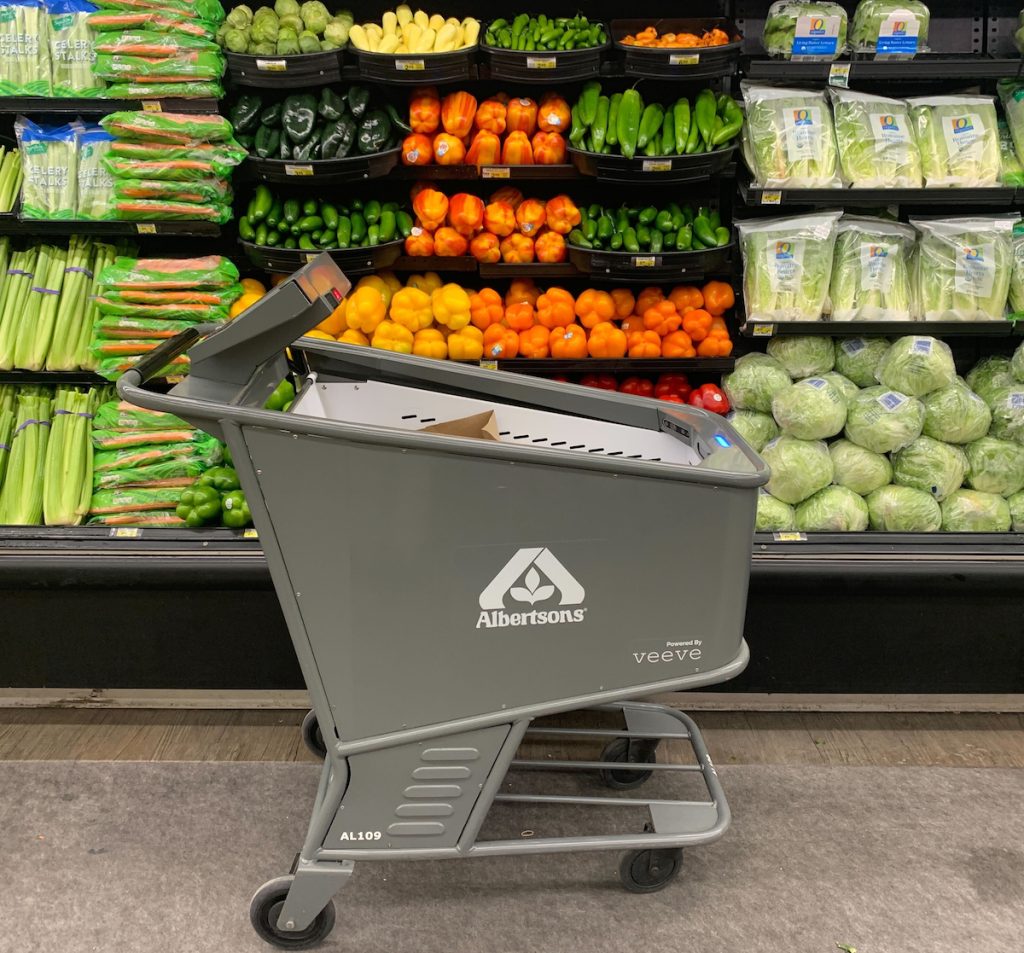
While paying up a kiosk may be headed to the wayside, technology will still likely play a role in the shopping experience. Lempert suggests that other advances like “smart carts” may start to emerge as the industry norm.
“Essentially, what we’re trying to do here at Shopic is to bridge the gap between e-commerce and in-person shopping experiences,” Shopic CEO and co-founder Raz Golan previously told Best Life . “Given the extent to which people have gotten used to the conveniences of e-commerce, there are certain aspects of that experience that are only possible in a digital-first environment.”
The new technology could make shopping trips faster by helping customers locate items immediately—not to mention saving the time spent waiting in line to scan and pay, Julie Ramhold , a consumer analyst with DealNews.com previously told Best Life . Smart carts could also help you stay on budget by tallying up what you’ve spent as you go.
RELATED: Walmart Rolling Out Controversial New Shopping Carts: “These Are Terrible.”
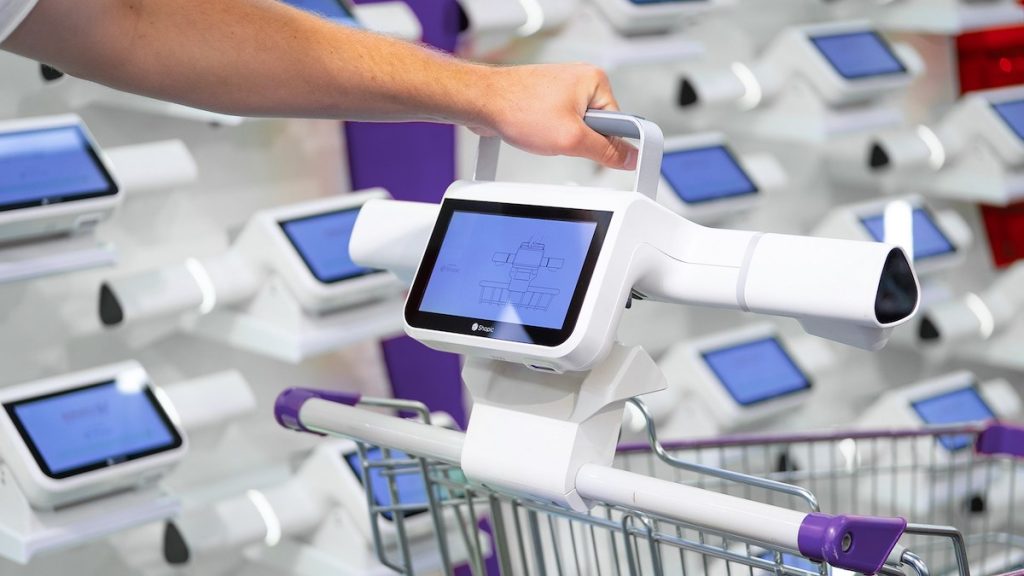
Shopic’s smart cart clip-on / Courtesy Shopic
But as with any technology, the shopping carts of the future might not be totally foolproof when they roll out. The ease of paying could make it more likely you’ll overspend as you continue to fill your cart, Ramhold previously told Best Life . And some shoppers may simply not want to take the time to go and put something back, even if it’s sent them over their budget.
Perhaps most importantly, the tech also doesn’t totally eliminate the issue of theft or “shrink.” Similar to the issue Wegmans previously faced with its app, some customers may choose not to scan some items. Still, the carts could find themselves in a better position than kiosks currently do.
“The good thing about smart shopping carts is that they use the tech to actually see when something has been added or removed from a cart, which is a great solution in theory,” Ramhold previously told Best Life . “But if the tech malfunctions or isn’t as precise for some reason, then it may make it easier for consumers to shoplift, which can hurt a store’s bottom line.”
