Telemarketer Calls: The Secret Dos and The Dont’s From Those Ringing You Non-Stop

Shutterstock
Over the past 20 years, a whole lot has changed in regards to technology and communication . But one thing has remained a constant: the annoyance of telemarketers. Not too long ago, landlines rang off the hook with sales calls. Today, your smartphone suffers a deluge of unknown numbers . While the proliferation of mobile technology once had many people predicting the demise of telemarketing, the industry remains robust. In fact, there are more than 26,000 telemarketing companies in the United States alone—and the industry grew 3 percent in 2019, according to IBISWorld .
But even though telemarketers have been a part of our daily lives for years, there’s a lot we still don’t know about them—and about how to evade them. However, that’s all about to change. Read on for all the secrets of the telemarketing trade that have long been kept under wraps.

Shutterstock
If you don’t want to be called back by a telemarketer, your best move is to let them talk—at least for a few seconds. Not answering “results in the telemarketer marking your lead as ‘no answer’ and calling you back until they actually have a conversation with you,” former telemarketer Erica Elson explained in an article on Lifehacker . Instead, let them make their case and then tell them you’re not interested and would prefer not to receive future calls. That will get your name crossed off their list for good. Just a few seconds up front saves you countless frustrations in the future.
Another experienced telemarketer explained on Reddit that telemarketers have three main ways that they mark a number on their list: “Delete,” “Do Not Call,” and “Redial.” If you say you don’t want anything, you fall under “Delete.” If you ask to be put on the “Do Not Call” list, you won’t be called again by that company. But “all other interactions fall under ‘Redial,’” the Redditor wrote. “The numbers auto-dial from a machine and that thing will call twice a day until the end of time. Answer the phone and say something.”

Shutterstock
For most of us, having someone hang up in the middle of a call is a pretty clear indication that they don’t want to speak anymore. But for telemarketers, the move can provide an easy reason to call back again. Elson explained that hanging up mid-conversation, with no explanation, “will most likely result in the telemarketer calling back, claiming you got ‘disconnected.’ If you don’t answer then, they will keep calling.”
Shutterstock
Pushing off a telemarketer with the old “this isn’t a good time” would seem like the kind of heavy hint that clearly conveys your disinterest. But a schedule-based comment actually serves as an invitation for a telemarketer. “When you say, ‘This isn’t a good time,’ the telemarketer hears, ‘Call me back later!’” Elson noted. “When you say, ‘Sorry, I don’t have time to talk about this right now,’ the telemarketer hears, ‘I will buy this another day!’”

Shutterstock
Telemarketers can often be maddening. But if you find yourself on the receiving end of a cold call, you’ll want to keep any feelings of anger in check, for a number of reasons. The first is obvious: It’s unnecessarily unkind to yell at someone who’s just doing their job. “Remember, the people making the calls are people too,” the telemarketer explained on Reddit. “I’ve had people threaten to hunt me down and murder me… I have watched grown men cry softly at their desk because the person on the other line broke down everything they ever thought was good about their lives. I know telemarketers are annoying, but we are human. Most people do this kind of work because they have no other options.”
And if that’s not enough to convince you, consider that using violent language is likely to lead to a call back. “Even though they should delete a call if the person is rude, [a telemarketer] might just hit redial as retaliation,” the Reddit telemarketer noted. “The person calling you ultimately has the power to hit whatever [button] they want.”

Shutterstock
The fact is, telemarketers are about as interested in speaking with an uninterested consumer as you are in hearing an irrelevant sales pitch. So it’s no coincidence that, after you fill out a survey or request a quote, you’re suddenly getting calls that pertain to the information you looked up.
“When you request an auto quote online, expect to be bombarded with calls from many different companies,” an anonymous insurance telemarketer told Consumerist . “What happens is that the lead aggregator collects the quote, and then sells it to various agents and carriers, who then contact the requester. We pay approximately $8 for every ‘hot’ lead.”
Karen Roach / Shutterstock
If your number is one of the more than 240 million on the Do Not Call (DNC) registry , there’s a good chance you still get called by telemarketers. That’s because there are some big loopholes in what calls are and aren’t prohibited: The DNC list only puts the kibosh on sales calls. But there are a number of types of calls that are still allowed —including surveys, informational calls, political calls, and calls from charities or debt collectors.

Shutterstock
Another reason why you might still get calls even when you’ve put your number on the DNC list is that there’s a leniency window. “Even if your phone number is on the Do Not Call list, we can contact you up to 90 days after [you ask to be put on the DNC],” the anonymous telemarketer told Consumerist.
Unsurprisingly, telemarketing companies can—and do—take advantage of that lag time. But there is a solution. “To get the call to stop, just say ‘put me on your “Do Not Call” list’ or ‘do not call this number again,’” the telemarketer said. “You must say it when you pick up the phone.”

Shutterstock
Sure, you might be receiving calls from countless different sales companies. But there are just a few companies that provide “master” lists that all telemarketers use, like InfoUSA , for example. Next time, simply ask the caller where they got your number from—there’s a good chance they’ll tell you. According to the telemarketer on Reddit, “with this information, you can get into contact with the companies that supply your number and take it [off] their list.”

Shutterstock
Expert telemarketers know that sticking firmly to a script can come across as robotic and will fail to create a connection with prospective buyers. “I focus on the conversation that my agents have, not the ‘script,’” sales manager Jonathan Marc Hairgrove wrote on Quora . “I know we find our success from having calls made by those who are conversational and not robotic.”
But while a more personal and conversational tone can enhance the impact of a sales attempt, telemarketers are still following a trajectory to guide them in the conversation.
Shutterstock
The most effective way to keep a buyer on the phone is often to connect with them emotionally. “When we have someone who wants to discuss the services that we provide, we don’t jump right into the sales script,” says Shawn Breyer , owner of Breyer Georgia , which purchases homes from those looking to sell. So, instead of talking about the home’s value or financial opportunities, Breyer says, “We like to ask them what their favorite memories were in the house, what their kids are like, what they want to do with the next chapter of their life. What we ask isn’t really important. What is important is that we genuinely get to know them, ask them questions about themselves, and just shut up and listen.”
This approach has had proven results for Breyer: Before implementing the practice, his company was buying about one house for every 27 leads. Now, they buy one house out of every 15 leads.
Shutterstock
A quick-turnover approach in which the salesperson runs through their script and moves on to the next number on their list is likely to get similarly disengaged results. When Breyer’s sales team shifted to appealing to prospective clients’ emotions, they found that while their sales increased, the amount of time spent on a call also more than tripled.
“We spend an average of 17 minutes on the phone with each quality lead that we have prior to setting an appointment to really solidify that rapport with the customer,” says Breyer. “Before, we were spending roughly five minutes on the phone with them just to qualify them.”

Photographee.eu / Shutterstock
In 2016, data scientists at Gong analyzed more than 25,500 sales calls in an effort to identify patterns in the most effective calls. One of the most consistent predictors of success was the use of “risk-reversal language.” That’s when a salesperson stresses all the ways they’re protecting you from dissatisfaction or disappointment. Using that kind of language increases a salesperson’s odds of success by an average of 32 percent.
As Gong’s senior director of product marketing, Chris Orlob , explained in an article for HubSpot, good telemarketers will “proactively, frequently, and aggressively talk about terms of the deal that are designed to protect the customer from risk.” Mentioning easy cancellations, no long-term contracts, money-back guarantees, and the like helps to seal the deal.

Shutterstock
If you’re speaking more than the seller is, they’re doing their job well. In their research, Gong found that, on average, calls that resulted in sales were ones in which the buyer spoke more than the seller. Specifically, they found that the ideal talk-to-listen ration for a telemarketer was 43:57, which is roughly one minute of talking for every 1.3 minutes of listening.

Shutterstock
For those of us with a healthy amount of skepticism of anyone trying to sell us on something, the idea that telemarketers are telling the truth might seem pretty unlikely. But good telemarketers try to avoid lies . “Falsehood, scamming, and confusing a customer to purchase will eventually result in a downfall,” says C. Shakhawat Sultan , business development manager at website design firm CodeRex , who has a long history in telesales and marketing.
This isn’t just ethical—it also results in more sales in the long run, according to Sultan. He says that providing deceptive or partial information might mean customers hear what they want to hear and agree to placing an order. But following the call, if they get the sense that the seller misled them, they may cancel the order or return the product ultimately.

Shutterstock
Negativity is a turnoff to buyers and can sink a sale. So there’s a good chance that the telemarketer you speak with will try to keep things positive—even when discussing the other guy’s products. “You need to compare and prove that you are the better provider,” says Sultan. However, that doesn’t mean insulting your competitors. “The competitor is good (not bad), but your product or service is better,” he says.
Take Sultan’s example of selling cable TV. Instead of pointing out that the competitor provides only 80 channels compared to the 100 you provide, good telemarketers will give the statement a positive spin, emphasizing that they will provide the 80 channels the competitor offers, plus 20 extra channels for a comparable price. “I didn’t say, ‘They provide fewer channels,’” says Sultan. “Rather, I focused on how we provide more channels. The focus should be on the benefits you can provide, not how much better you are than the competitors. The customer buys the benefits, not the product.”
Shutterstock
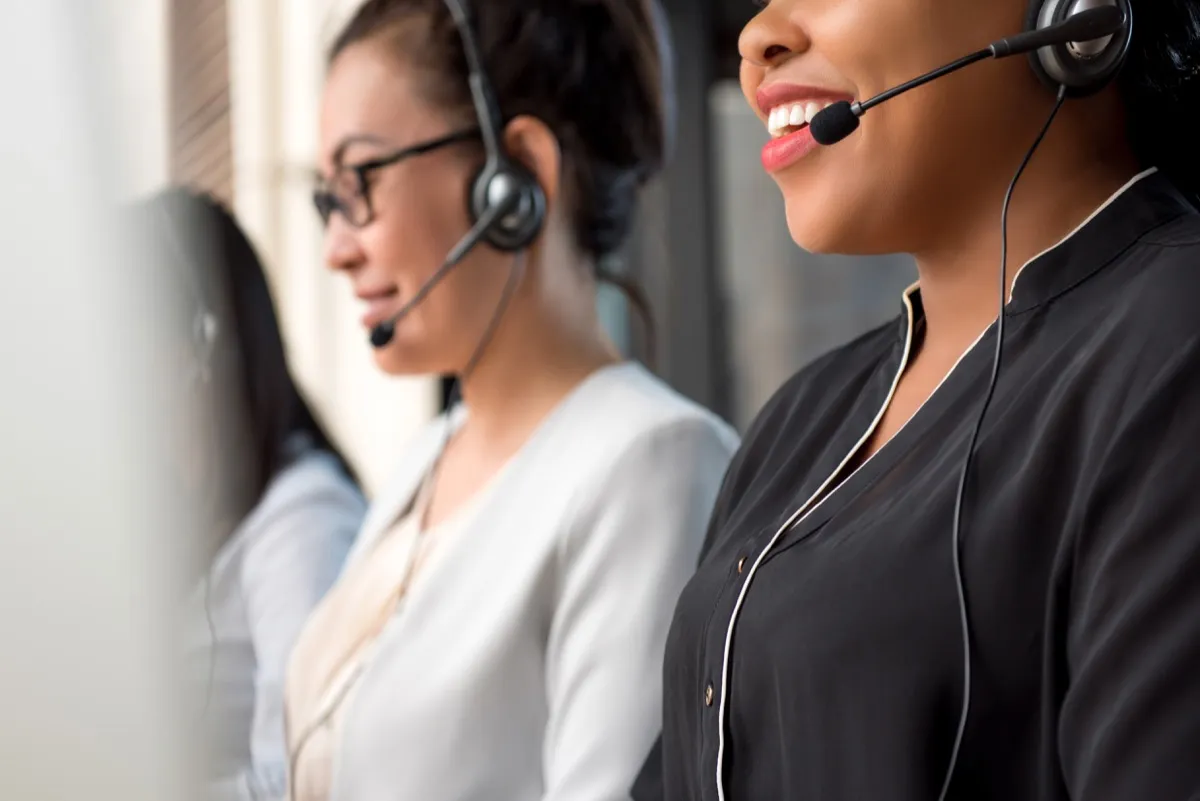
Any salesperson knows that body language is crucial to connecting with a customer, and that closing a deal is often more about what’s unsaid than what’s spoken aloud. And even in a phone conversation, nonverbal communication is powerful. A 2008 study published in the journal Speech Communications found that listeners on the phone can tell not just if the person on the other end is smiling, but the kind of smile they’re making, and how enthusiastically they’re making it. Telemarketers know that, even when no one can see it, body language still has an impact.
“People can hear the energy in how you sit and act,” says Angela Bradford , senior marketing director for World Financial Group . “I walk and call a lot and it works well.” Bradford says that if a telemarketer doesn’t sound excited, “the people on the other side won’t be either.”

Shutterstock
One of the greatest challenges every telemarketer must overcome is the “gatekeeper”—the person who separates them from the person who they want to buy their product. A gatekeeper can be a receptionist, an assistant, a spouse, a child, or anyone else who happens to pick up the phone.
There are numerous telemarketing strategies for dealing with gatekeepers, but one of the most of effective ones is treating them kindly, considering the power they have. EksAyn Anderson , author of The Key to t he Gate , told Forbes that one customer said to him: “I have people call me all day and you are the first one I’ve allowed to come in to show me your product—because you were so nice to my secretary.” And for more secrets from an entirely different industry, here are 20 Secrets Police Officers Don’t Want You to Know .
25 Things That Could Become Obsolete Within the Next 5 Years

Shutterstock
The world never stops moving forward. Nowadays, on a seemingly weekly basis, new tech, new services, practically new everything seems to replace an older version. Just think: It wasn’t that long ago that we were still renting movies from a brick-and-mortar store and balked at the idea of watching TV on a phone like it was something straight out of a Ray Bradbury novel.
But, as everything advances at a breakneck pace, plenty of things don’t evolve. They just get left behind. Here are 25 such things—from old methods of accomplishing tasks to items that are certain to outlive their usefulness—that are doomed to such a fate. Hey, it’s as they say: You can’t kill progress.
Shutterstock
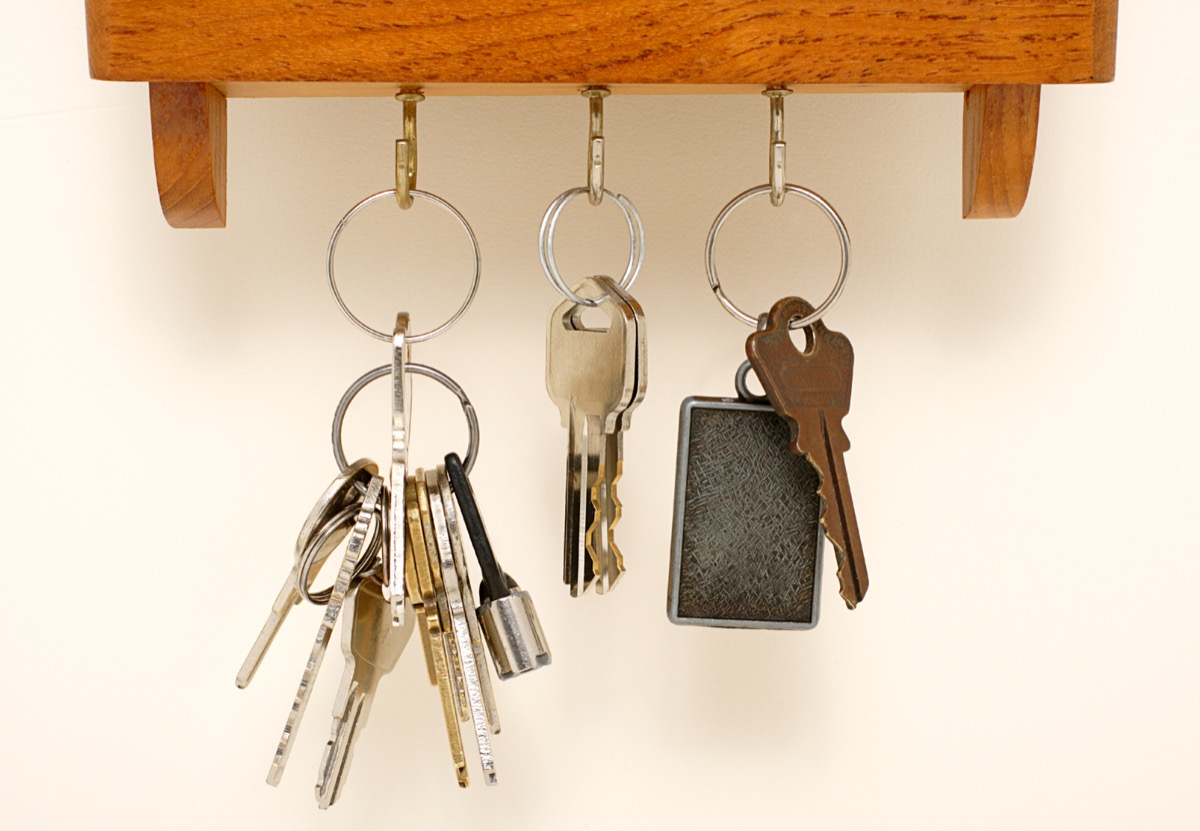
We talk a lot about the evolution of data security, but physical security is changing too. Keys, which can be easily stolen and copied, are being slowly replaced by high-tech security systems. Now, it’s common to find a keypad where a keyhole once was. Codes can be customized and changed easily so that you don’t have to carry around a pesky, noisy keychain anymore.
Shutterstock
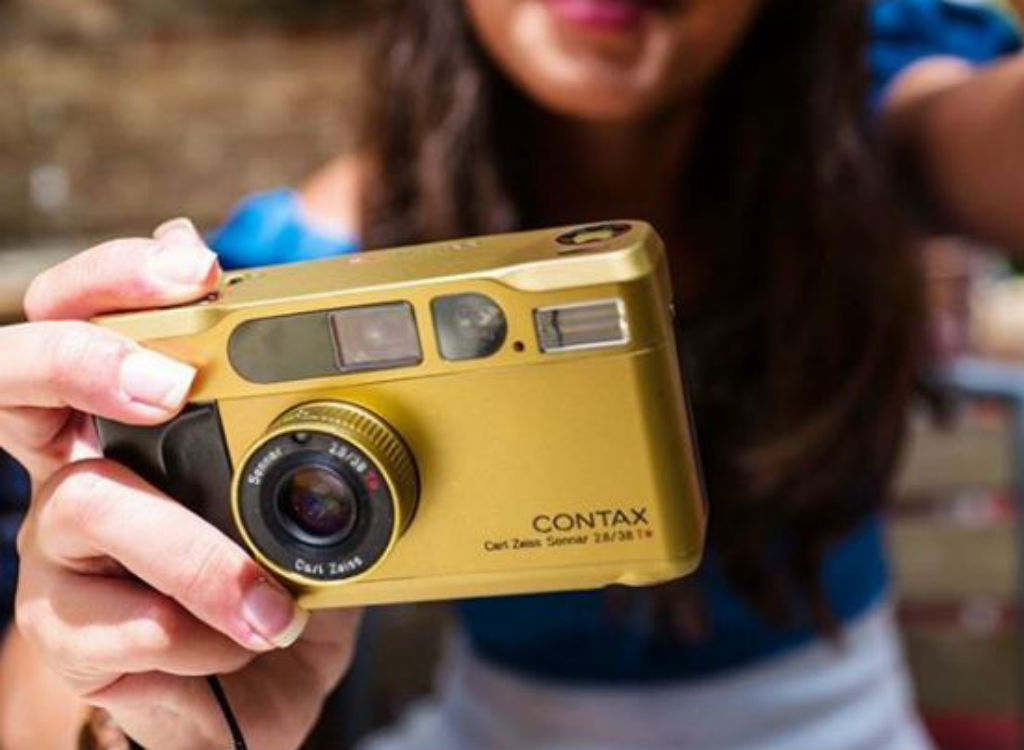
Pull out a digital camera these days (though, really, when was the last time you saw that?), and heads will turn in confusion. Yes, smartphones have all but replaced the point-and-shoot digital camera. In fact, to take it from the experts at the Digital Photography Review , certain mobile devices—like the Google Pixel 2—are just as capable as traditional digital point-and-shoots. Oh, and you can’t even share the photos from most digital cameras right away; you need to upload them to a computer first. Who in the world has the patience for that ?
Shutterstock
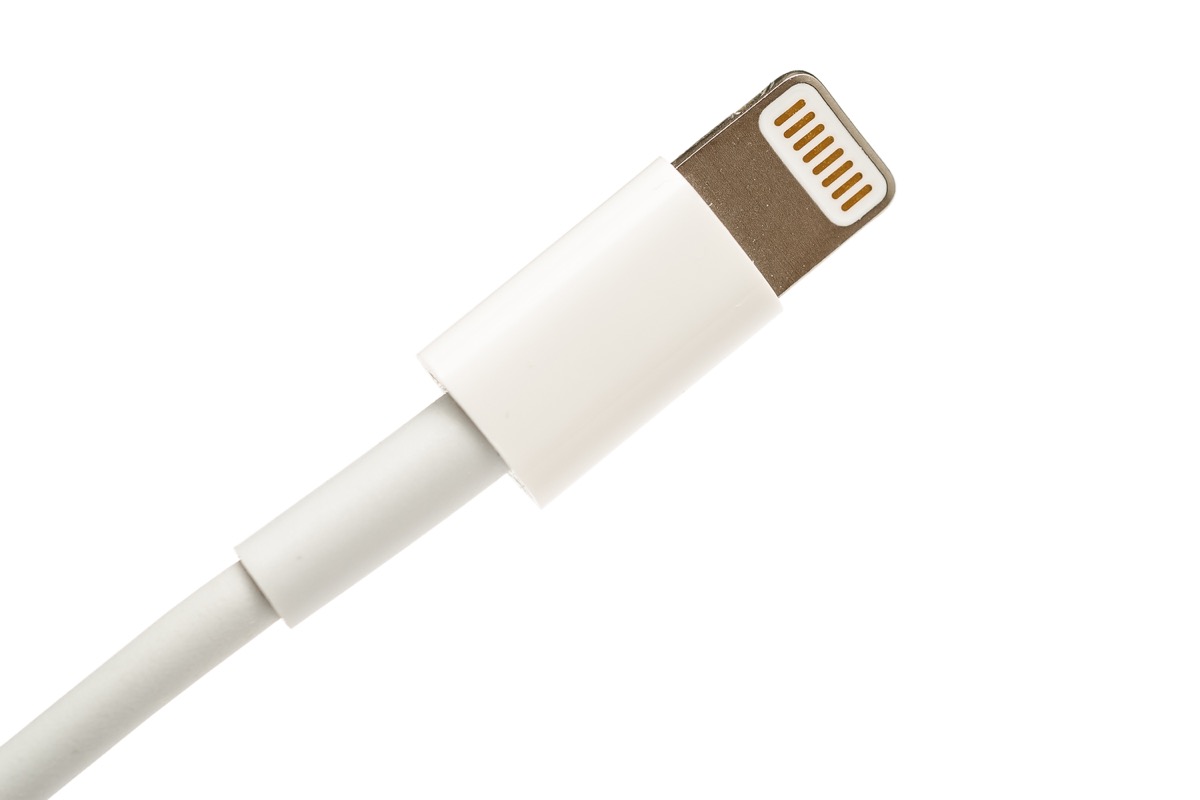
“Just as Apple removed its 30-pin dock connector from its iPhone and iPods back in 2012, I believe Apple will get rid of its Lightning Cable connector within the next few years,” suggests Brandon Carte, technology editor for BestProducts.com . “Hopefully the tech-giant will embrace USB-C, so we can charge all of our gadgets with one single cable. But there’s a chance iPhone’s will only charge wirelessly, given that Apple removed its 3.5 mm headphone jack a couple years ago.”
Shutterstock
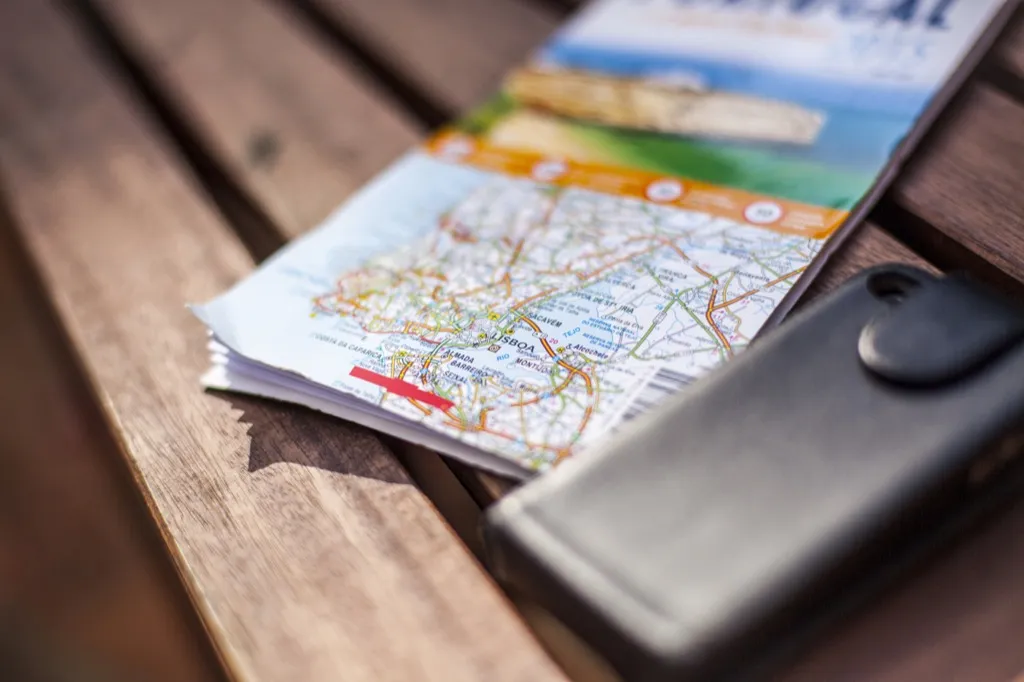
If you were to Google the current state of the paper maps industry, you’d find cartographers buzzing . In standing up for the dignity of paper maps, cartographers have been busier than they have been actually making maps for the last half-century. In reality, paper maps are little more than tokens of nostalgia these days. Due largely to the rise of smartphones and GPS navigation apps, but also to the decline of the print industry in general, we have very little use for inconvenient paper maps anymore.
Shutterstock
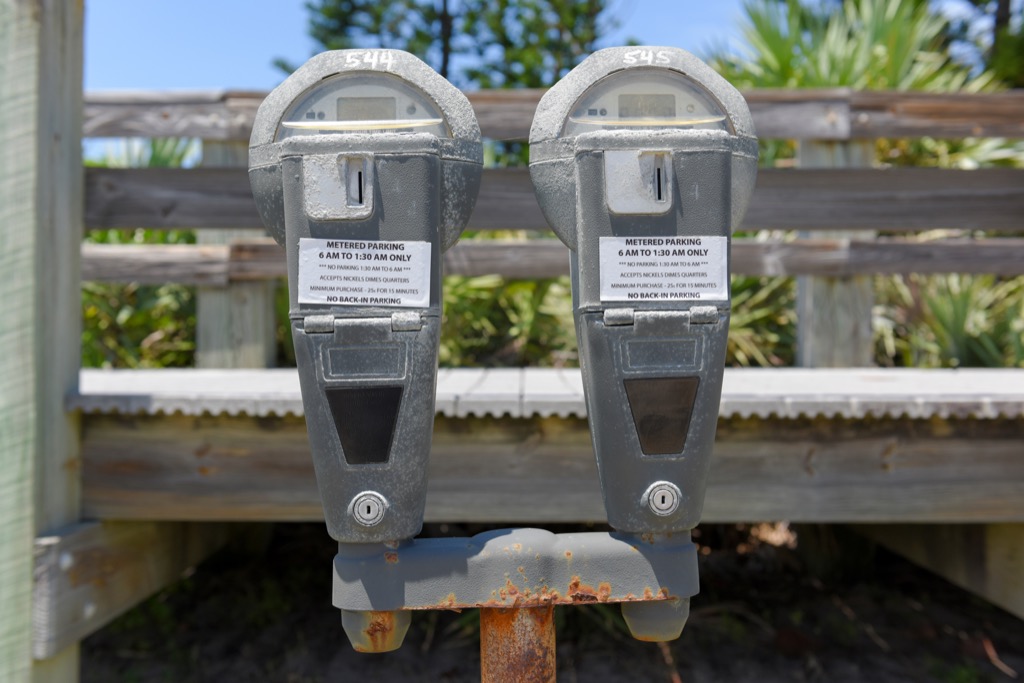
Say goodbye to parking tickets! Many people already have. More U.S. cities are making the transition to parking apps, on which people can pay for their time as they need it, without having to run back and forth to their car just to pay the meter. This transition is good for drivers, who no longer have to deal with the inconvenience and wasted money that comes with metered parking. Who even has coins these days?

Shutterstock
Shopping malls were once a glorified meeting place for teenagers; landmarks of consumerism back in the heyday of department stores. In the last 15 years, consumer trends have changed, moving buyers away from commercial centers and onto the internet. Buying directly from the producer, rather than retailers, offers consumer more choice and the convenience of never leaving home.
This shift has been tough on shopping mall bastions like Sears, JCPenney, and Macy’s, which are closing their doors en masse. Analysts predict 25 percent of all current shopping malls will be shut down by 2022.

Shutterstock
Shutterstock
“Already, we can go into McDonald’s and order a meal customized to our exact tastes without having to speak to someone at the counter, or use the self-checkout at Walmart or Lowe’s,” says Andrew Selepak , media professor at the University of Florida. “But soon we will simply scan and buy from our phone what we want in retail and grocery stores. There will be less need for people working in retail when we buy online, shop and pay in-store from our phones, or even virtually try on clothing using smart screens.”

Shutterstock
Maybe you think people wearing Apple’s Airpods look ridiculous now, but in a few years, you won’t be laughing. This isn’t about headphones themselves. This is about cords—and people wanting nothing more to do with them.
Cords and wires are inconvenient not only because of the tangled mess they turn into in your pocket, but also because the trend in smartphones is to become slimmer and sleeker, leaving little room for audio jacks. What’s more, now that Apple had made the transition away from corded headphones, others are following suit . Google’s Pixel phone no longer has a headphone jack either. Soon enough, no cell phone will.
Shutterstock
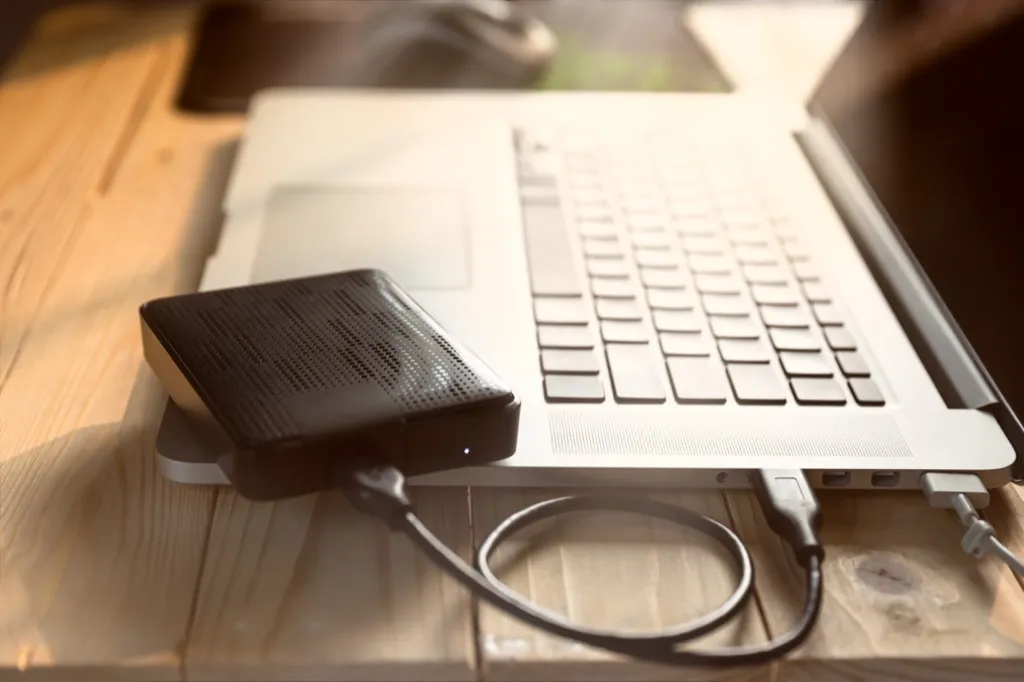
People have more data to store than previously thought possible. Whereas ten years ago a single terabyte of storage seemed like it could last a lifetime, it’s now easy to imagine that much lasting only a handful of years. External hard drives used to be the go-to storage solution, but they’re no longer flexible enough to meet consumer needs. Beyond storage limitations, they can also be cumbersome—and can be physically lost (gasp!). Cloud-based storage solutions are the present and the future. With the cloud, your data is immediately accessible and unlimited (though often for a fee).
Shutterstock
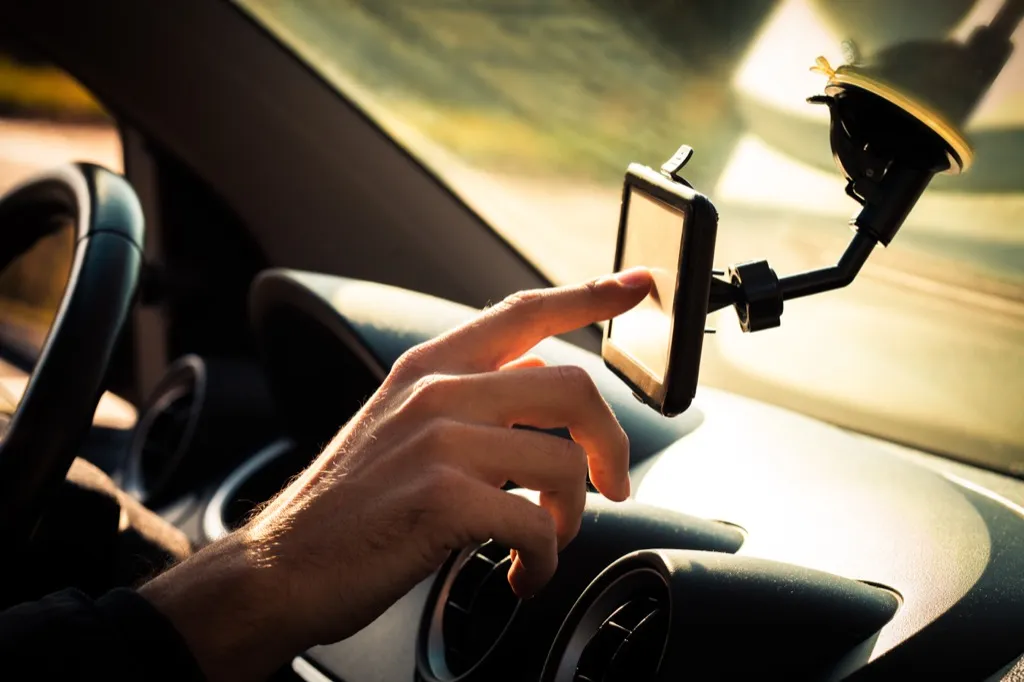
GPS devices went from novelty to essential items for anyone venturing into unknown territory. But just as quickly we can expect to see these vanishing from cars in the very near future.
“With phones getting longer-lasting batteries and with phone carriers offering bigger data plans as we hit 5G, GPS devices mounted to our car windshields will soon all but disappear as we use our phones to give us real-time traffic updates and directions,” says Selepak. “And it won’t be long after that until self-driving cars make Google Maps and Waze all but obsolete except when we are walking around a new town.”
Shutterstock/Gabczi
There was a time when grocery store checkout lanes were lined with endless rows of glossy magazines. Though there are a few big ones that persist— Better Homes and Gardens , People , and The New Yorker, to name a few—the selection has steadily thinned out over the last few years. You can be sure that, soon enough, they will be gone altogether.
Shutterstock
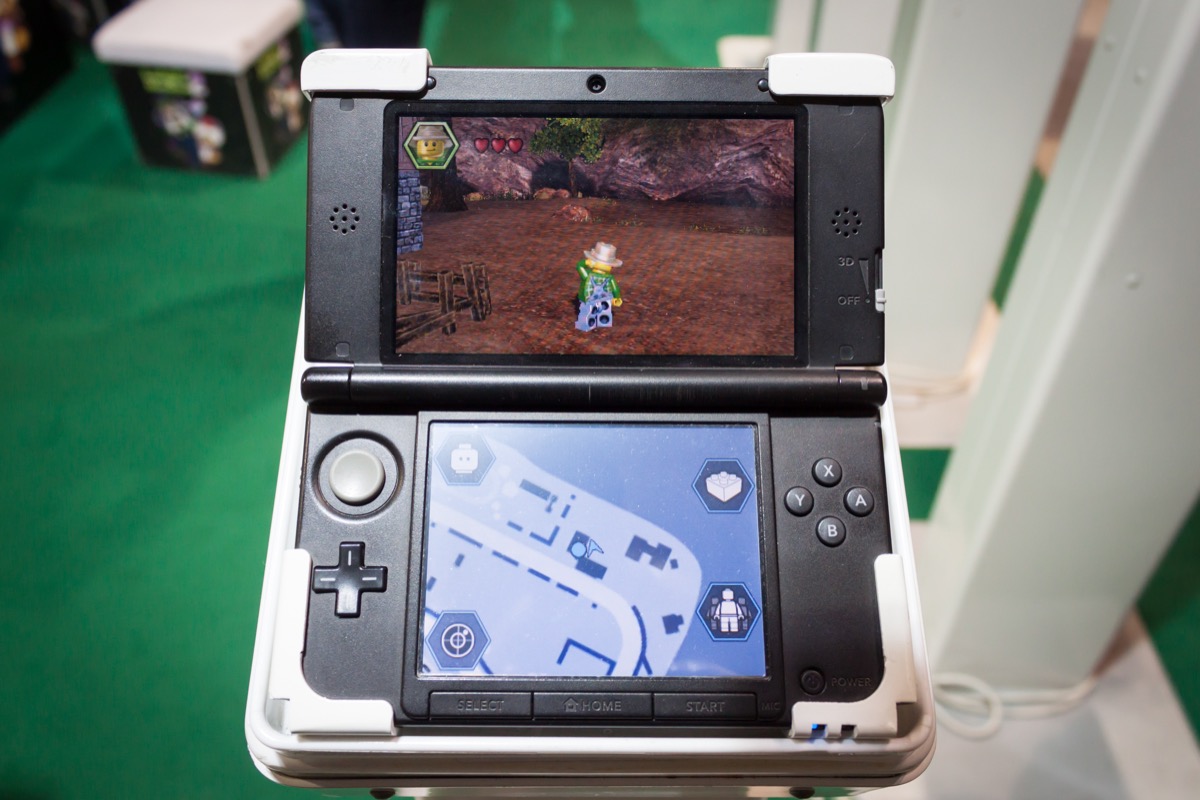
When it comes to handheld gaming devices, you can expect the Nintendo DS and all its variations— the 2DS ($80) , the New 2DS XL ($150) , the New 3DS XL ($200) , to name a few—to soon make its way to the pile of forgotten toys.
“Despite the success of the Nintendo Switch , Nintendo is still holding on to the more affordable Nintendo DS video game handheld, which is surprising, considering Sony gave up on its PlayStation Vita handheld console,” says Carte. “Even though it’s much more affordable and kid-friendly, I think Nintendo will kill off the DS just like it did the Game Boy in 2008. It’s time for Nintendo to embrace mobile games on smartphones, and focus its efforts fully on the Nintendo Switch.”
Shutterstock
One by one, major record stores disappeared as digital music rose in popularity. Stores like Tower Records and Virgin Music were outlived only by independent mom-and-pop record stores, which only seem to keep going now out of sheer doggedness.
Nowadays, digital music and online music marketplaces are becoming obsolete too, thanks to streaming services like Spotify and Pandora. Contrary to expectations, though, vinyl record sales are higher than they have been in years, all because of collectors, aficionados, and vinyl enthusiasts (“ It just sounds better on vinyl, man .”). It’s hard to imagine anyone feeling that way about CDs, but maybe in the future, they’ll see their comeback too. Only time will tell.
Shutterstock
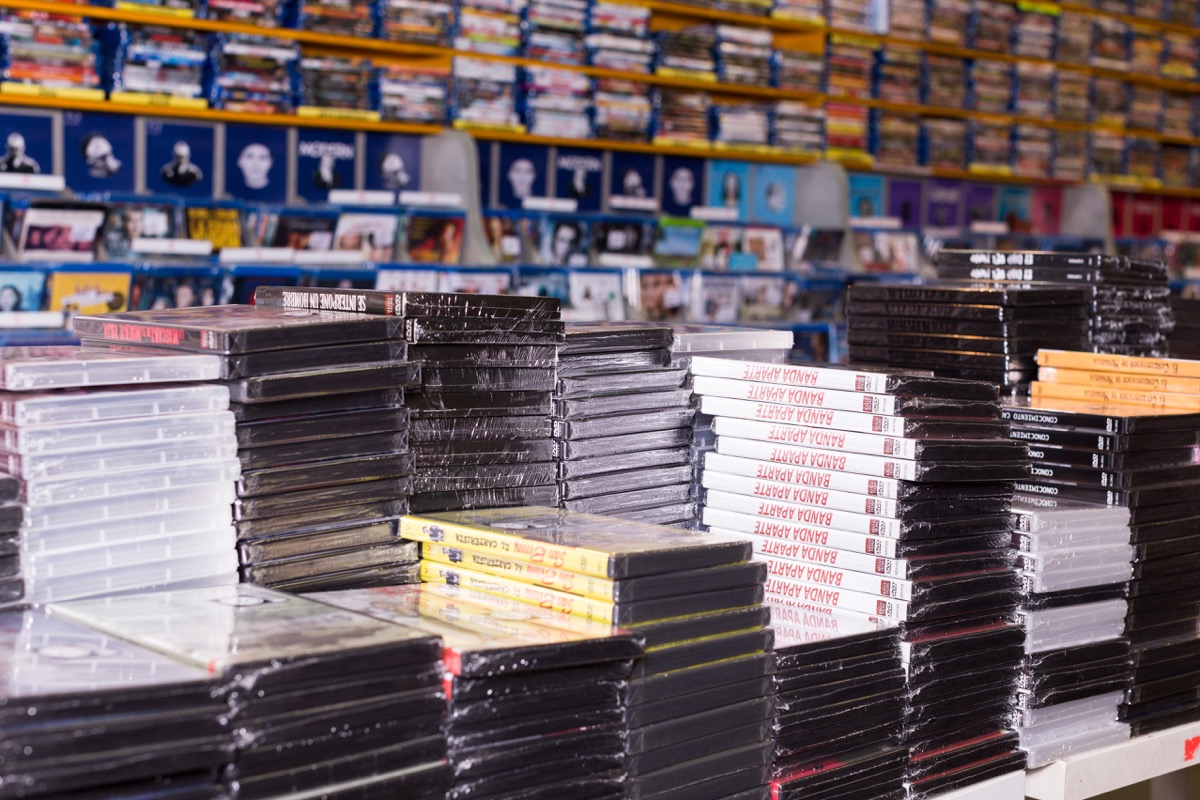
“Sure, we all have them. But when was the last time you actually used one?” Selepak asks about DVDs and Blu-Rays. “We all still have stacks of DVDs and some Blu-Rays on shelves and boxes in our homes, but we never use them with streaming services and on-demand TV , especially among cord cutters who have found other ways to get their entertainment.”
Shutterstock
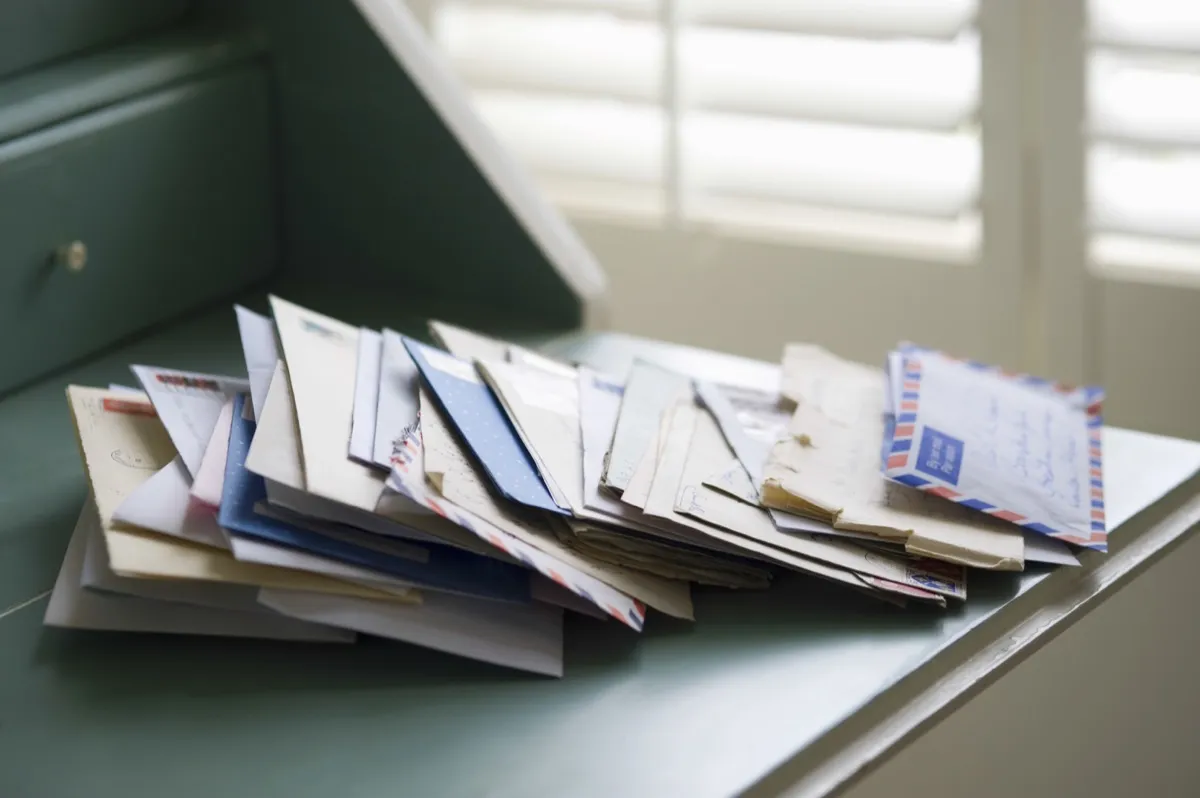
Here’s one we can be happy to say goodbye to. Sure, just because we won’t receive bills in the mail anymore doesn’t mean we don’t have to pay them, but it is a relief to check the mail without feeling a load of stress wash over you. These days, most of the bills we owe are either automatically debited from our bank accounts or otherwise paid online .
Such automatic transactions take the pain out of paying bills—and also make sure they’re paid on time. With so many services available at the click of a button, it’s easy to go overboard on paid subscriptions. If, at the end of the month, you find yourself wondering where all your money went, it disappeared right along with your paper bills.

Shutterstock
A major casualty of the smartphone is the calculator. Once upon a time, calculators were a regular office accessory . We all had them at our desks and some of us even had them on their wristwatches. Because its functionality is so simple, the calculator appeared as a built-in feature on even the most rudimentary pieces of technology.
Since then, it’s all been downhill. Most simple functions and equations can be completed on the calculator that comes with our smartphone. You don’t even have to enter the equation yourself: you can ask just ask Siri, Alexa, or Google. Sorry, Texas Instruments, even your graphing, scientific calculators can be replaced by an app .

Shutterstock
As a piece of technology, alarm clocks are defunct, but that doesn’t mean they don’t still work as the perfect accent piece in your bedroom. These days, alarm clocks are useless, having been nearly totally replaced by (drum roll, please) smartphones. In 2011, 60 percent of young people were already using their phone as their primary timepiece. Now, most people wouldn’t even consider having a physical alarm clock in their bedroom. Some some that this is damaging our quality of sleep , but most people don’t care. In this day and age, convenience is key. The extent to which the smartphone had changed our behavior proves just that.
Shutterstock
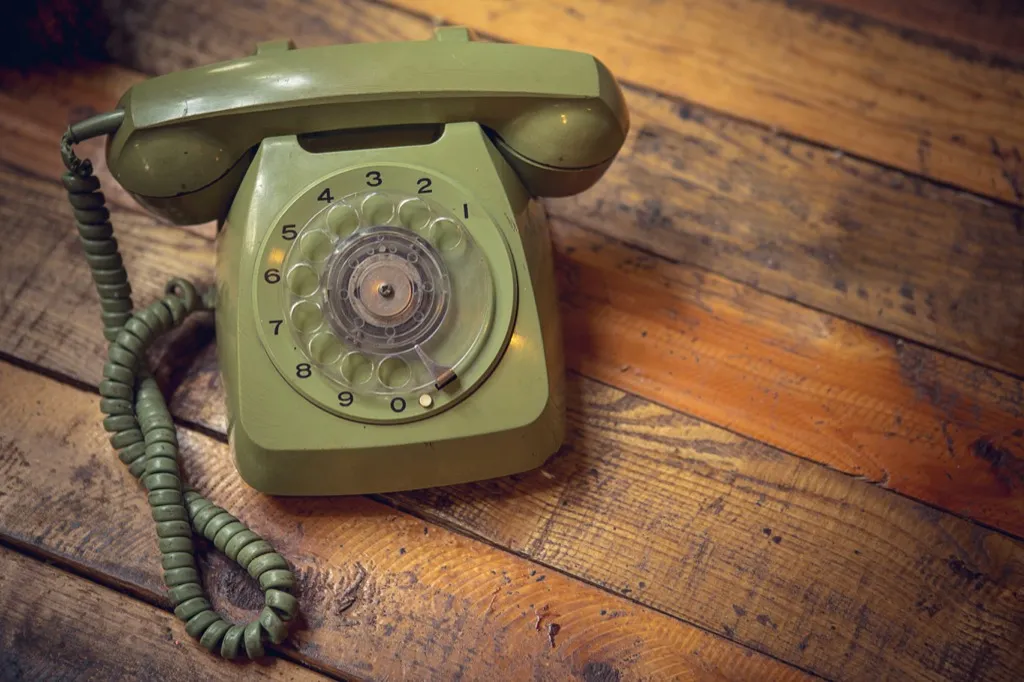
“What’s that?” many Gen Zers would ask. In 2004, according to the CDC , more than 90 percent of Americans had landlines in their homes. In 2017, just under 43 percent could say the same. In fact, it’s hard to imagine that people use their landlines as more than dead-ends for telemarketers now. As it grows more common for people to own cell phones, children and the elderly included, the landline is losing its purpose. Even AT&T, America’s largest landline provider, is planning to phase out the service by 2020.

Shutterstock
Buttons on cell phones have been on their way out for a long time. Touch screens have been a requisite for smartphones since IBM released the first-ever smartphone in 1992. Even then, certain buttons persisted, most notably, the home button, as we’ve seen on every iPhone up until the iPhone X. Apple wasn’t the first to ditch the home button, though. Android phones had switched to a touch home long before, but now that Apple’s done it, you can be sure that the trend will stick. With the iPhone X, no pressing of any sort is necessary to unlock the phone. Just a simple face recognition test and you’re in.
Shutterstock
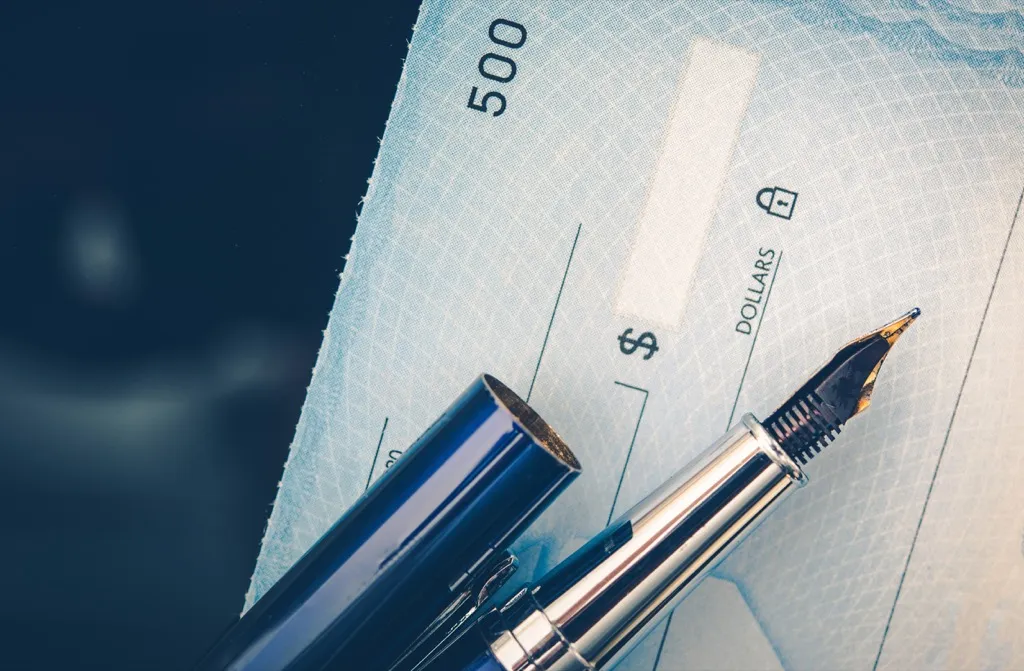
The online transactions that are rendering ATMs, cash, and paper bills useless are likewise rendering checks obsolete. After all, think about the only times you’ve used your checkbook in recent years: rent payments, a few other bills, monetary gifts for birthdays, graduations, marriages, and what have you. Which of those payments or gifts could not also be accomplished with the popular app Venmo? Digital wallets like Venmo, Apple Wallet, PayPal, and Google Wallet have changed the way we spend. As a result, we’re wasting less paper. (On the other hand, however, these apps reportedly encourage us to spend more money than necessary.)
Shutterstock
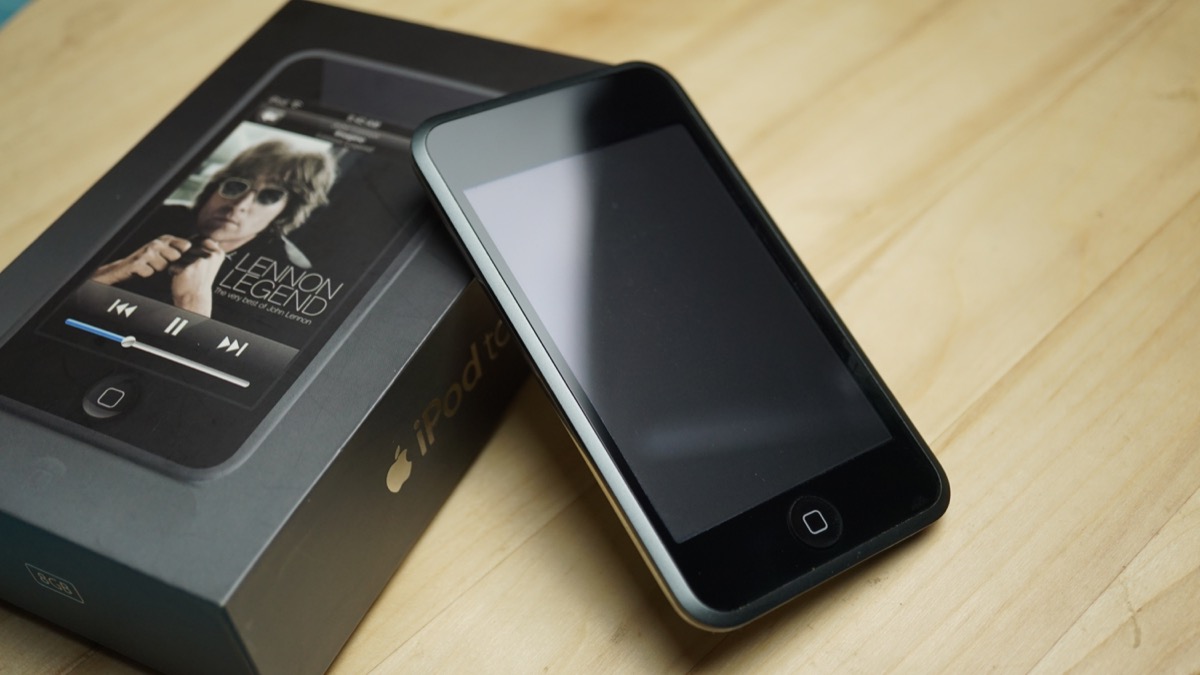
“Apple discontinued its iPod Nano and Shuffle MP3 players in 2017,” says Carte. “The iPod Touch is still sold in stores today, though. It’s probably only being purchased by parents that don’t want their pre-teen to have an iPhone just yet. I bet it won’t stick around much longer because it’s in Apple’s best interest to get you to buy an iPhone, instead.”
Shutterstock
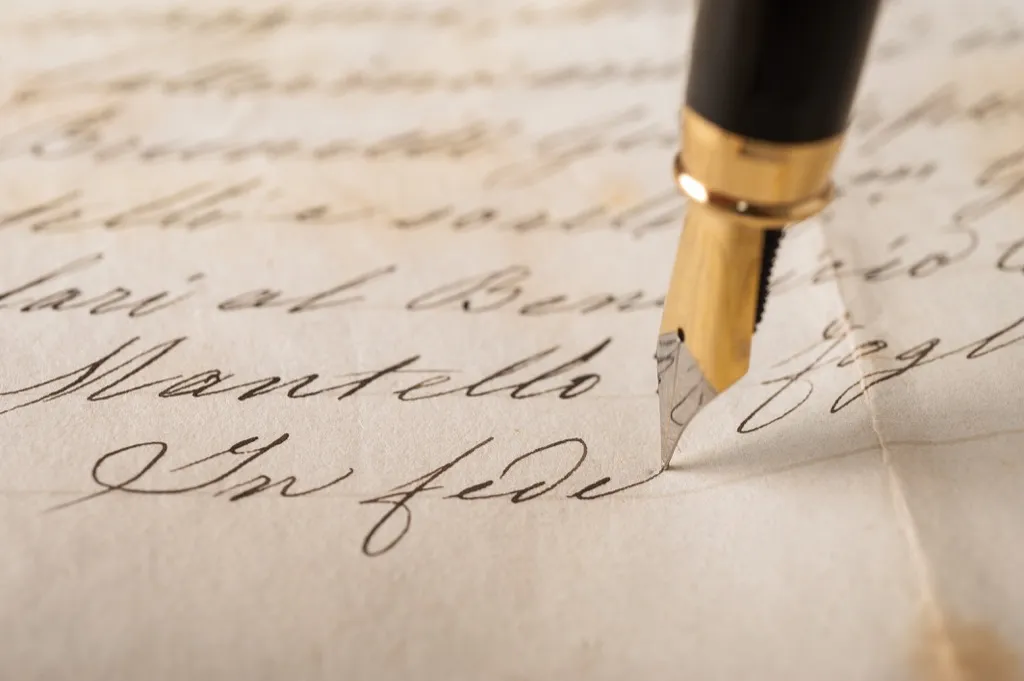
Cursive has few practical applications in our modern world. Because most of the text we read and write is a font on a screen, we rarely interact with cursive at all. This lack of practicality is the main reason cursive is no longer, or rarely, taught in schools. Some people argue that the benefits of cursive , such as the fact that it helps with dyslexia and that it enhances reading and spelling abilities, outweigh the negatives, but the vast majority of adults agree that it should be phased out and replaced by something more relevant, like coding.
Shutterstock
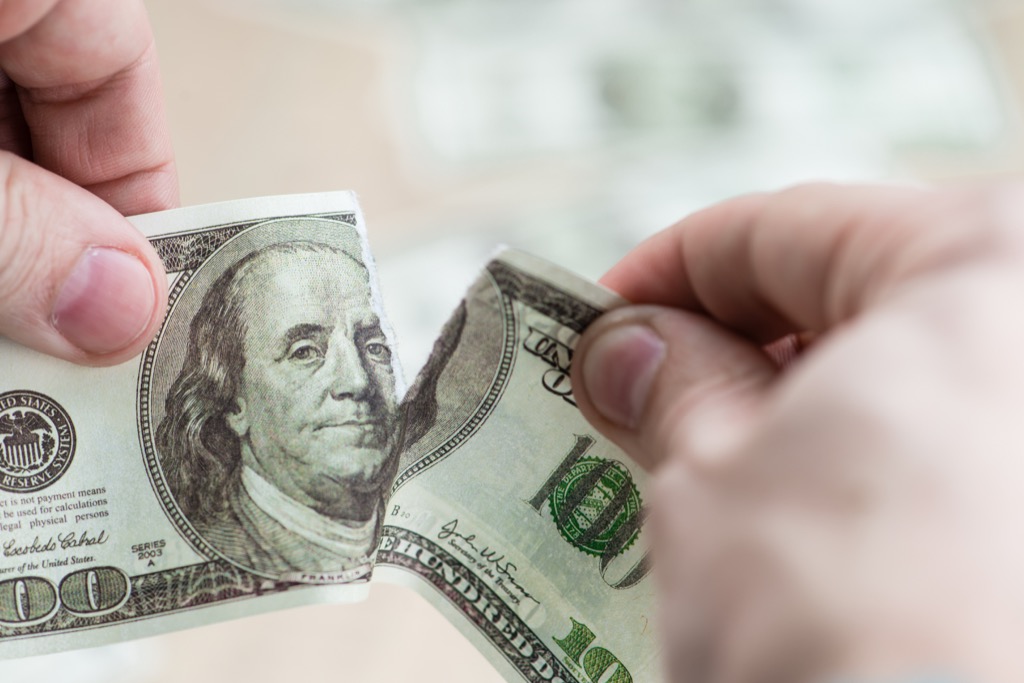
Just imagine how much easier life would be if you didn’t need to remember to get some cash out of the ATM or to make change to give a luggage handler a tip.
“A form of money will surely be used in the future, but its physical form could become a thing of the past,” says Jeremy Rose, director of web hosting and technology site CertaHosting . “Coins and paper banknotes within the next decade will be replaced by new forms. In Sweden, credit cards and online banking have almost completely replaced paper money, and mobile payment tools make it easier to buy products with just a few swipes on a smartphone. Digital currency such as Bitcoin in the near future could become a commonly accepted payment instrument.”
Shutterstock
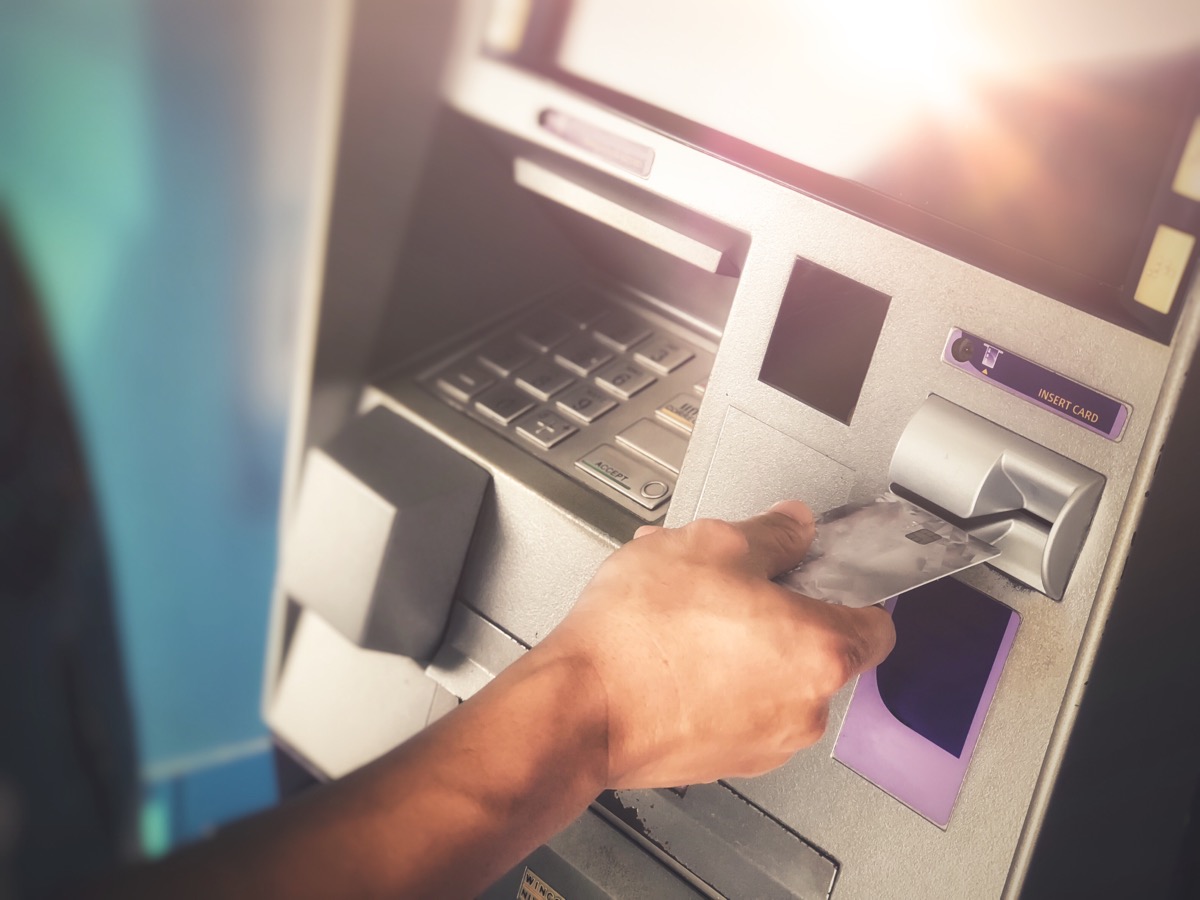
With the decreasing ubiquity of cash, it’s no surprise that these machines are seeing their way out of relevance as well. The rise of contactless payments in the United States and the United Kingdom, via cards and apps, has largely contributed to this disappearance. “In the cashless world of the future, ubiquitous ATMs will become obsolete like telephone booths were for our generation,” adds Lavender. As for what not to expect, don’t hold your breath for these 20 Long-Predicted Technologies That Are Never Going to Happen .
