These Popular Chains Are Closing Locations Due to Rodent Infestations
Shutterstock
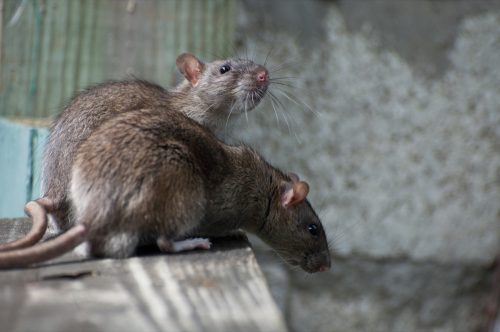
No one wants rodents roaming around their space. But while we can take measures like sealing up holes and setting up traps to prevent infestations in our own homes, we can only hope that the businesses we frequent are doing the same. Not keeping rodents out can have serious health consequences: Rats and mice have the potential to spread over 35 different diseases, according to the Centers for Disease Control and Prevention (CDC). And you don’t have to come in direct contact with a rat itself—even breathing in dust or eating food that has been contaminated with rodent feces, urine, or saliva can put you at risk. Unfortunately, several popular retailers have recently come under fire for rodent infestations. Read on to find out which chains are now being forced to close locations.
READ THIS NEXT: This Popular Retail Chain Is Closing Stores, Starting Aug. 16 .
Shutterstock
Businesses have a responsibility in assuring the health and safety of their customers, which includes limiting exposure to rodents. According to the U.S. Environmental Protection Agency (EPA), state and local health departments throughout the country have “ unique systems for pest management , including the prevention and treatment of rodents.” But most agencies, like the Allegheny County Health Department in Pennsylvania, will conduct inspections of retail spaces when they receive reports or complaints about potential rodent conditions or activity.
Rodent infestations are a frequent issue in retail spaces because these “environments face unique challenges when it comes to rodent control,” according to Abell Pest Control. Per Abell’s branch manager Derek Cowan , rodents are particularly attracted to retail spaces that sell food products, and with access to food, these critters can reproduce faster than normal.
Another issue is that a majority of retail stores are located in multi-unit buildings, like malls and shopping centers. Rodents “could be harboraging in one and feeding in another one. We find they’ll run through drop ceilings, along wiring or through holes. They could be feeding in your local variety store and then harboring in the boxes in a clothing store,” Cowan explained.
Shutterstock
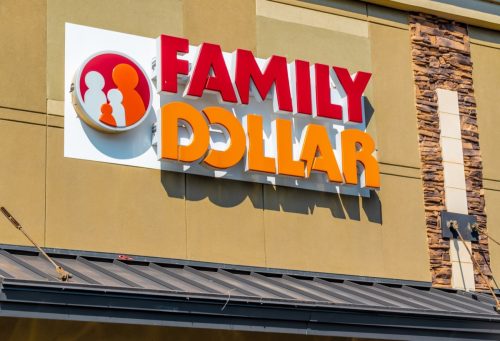
Back in January, the U.S. Food and Drug Administration (FDA) initiated an investigation of a Family Dollar distribution center in West Memphis, Arkansas, following a customer complaint. The agency discovered a number of unsafe and unsanitary conditions at the facility, including a major rodent infestation.
“Specifically, during this inspection we observed rodent evidence, including live rodents, dead rodents of various states of decay, rodent excreta pellets (REPs), gnawings, nesting, and odors indicative of rodents throughout the entirety of your facility including areas where human food is routinely stored,” the FDA wrote in a report issued to the facility.
The discovery of this major rodent infestation prompted the temporary closure of more than 400 stores throughout six states, and a recall of certain products shipped from the facility to these locations. Then in May, it was revealed that the West Memphis distribution center would be closed permanently. At the time, Randy Guiler , the vice president of investor relations for Dollar Tree, Family Dollar’s parent company, told the New York Post that the center would continue shipping to stores until the end of June, and then transfer its inventory to other distribution centers.
Shutterstock
Disney was also forced to temporarily close a retail shop in Disneyland on July 29 because of a rodent infestation, SFGate reported. A report from the Orange County Health Care Agency said an inspector had observed rodent droppings in “ critical areas ” of the shop, including on the floor of the storage room, inside merchandise trays, and at the front sales area.

iStock
In February, the FDA said that consumers who have purchased products from stores impacted by rodent infestation “should contact a health care professional immediately if they have health concerns” after using or handling the products. The agency said this is because rodent contamination can cause Salmonella infection and other infectious disease, “which may pose the greatest risk to infants, children, pregnant women, the elderly and immunocompromised people.”
“[Consumers] deserve products that are safe,” Judith McMeekin , PharmD, the FDA’s Associate Commissioner for Regulatory Affairs, said in a statement following the Family Dollar inspection. “No one should be subjected to products stored in the kind of unacceptable conditions that we found in this Family Dollar distribution facility. These conditions appear to be violations of federal law that could put families’ health at risk. We will continue to work to protect consumers.”
