This Antioxidant-Rich Superfood Could Be the Healthiest Sugar Alternative
Shutterstock
There’s a good chance you’ve heard the term “superfood” before. Usually, this refers to something with particularly outstanding nutritious value , whether it’s loaded with antioxidants, has plenty of vitamins and minerals, or promotes major health benefits. While foods like berries, avocados, and yogurt are well known to punch above their weight, the category is always growing as new items catch on in popularity. And now, some experts are saying that lucuma fruit might be the next superfood you’ll be hearing more about due to its health benefits and potential as a sugar alternative.
RELATED: Low-Calorie Sweeteners Can Hurt Your Heart, New Research Shows—Here’s What to Use Instead .
What is lucuma?

Shutterstock
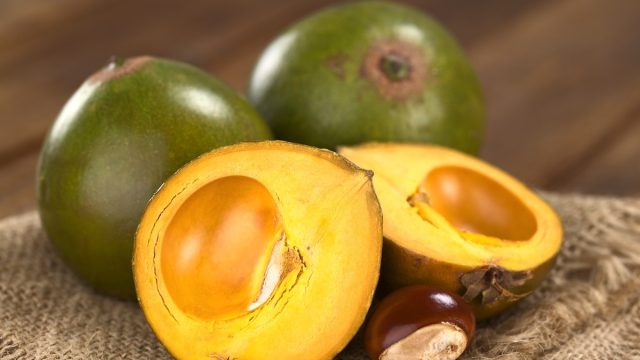
While it might be news to some people, the next superfood isn’t exactly a dark horse in many parts of the world. Lucuma is a yellowish-brown fruit that grows on the Pouteria lucuma tree, which is native to the valleys of the Andes mountains across Peru, Bolivia, Ecuador, and Chile, per Food & Wine . In South America, it’s not uncommon to see the whole fruit sold, where people mostly eat the flesh while discarding the skin and seeds.
The “gold of the Incas” (as it’s also known) has a rich set of flavors that’s similar to yams, sweet potatoes, caramel, maple, and butterscotch. Because of its starchy and somewhat mealy texture, the flesh is often ground into a pulp or dried and turned into a powder before eating. Traditionally, this has helped make it a popular sweetener (and even an ice cream flavoring). In the U.S., it’s not uncommon to see it stocked in specialty stores as a sugar alternative.
It’s more nutritious than your average sweetener.
Most alternative sweeteners are just less bad than traditional sugar. But in the case of lucuma, you’ll actually be getting added benefits when you use it.
According to Healthline, one tablespoon of lucuma powder has one gram of protein and two grams of fiber. Meanwhile, it contains just three grams of sugar, six grams of carbs, and is fat-free.
And it’s not just good at helping you achieve your daily dietary intake: The fruit is also positively packed with antioxidants. Studies have found that lucuma is a source of polyphenols and carotenoids, as well as xanthophylls and high levels of vitamin C, per Healthline.
RELATED: Meet the Next “It” Superfood for Your Brain, Immunity, and More .
The South American fruit has significant health benefits.
So, what can all these nutrients actually do for your body? Unsurprisingly, for a sugar alternative, one of the most notable health benefits has to do with blood sugar.
At the most basic level, the fruit contains complex carbs in the form of starches and fiber instead of the simple carbs found in table sugar, which can help improve insulin sensitivity, according to Healthline. However, some limited research has shown that lucuma can also work against the alpha-glucosidase enzyme that can lead to blood sugar spikes, making it similar to some diabetes medications (although experts do caution that more studies are needed to better understand these implications).
Worried about inflammation? Not only are polyphenols and carotenoids known to help curb chronic symptoms, but the soluble and insoluble fibers also help support gut health that drives it down, too. Ultimately, this can help curb cancer and heart disease, per Healthline.
Your heart health could also benefit. While research has shown that polyphenols can help keep blood pressure in check, one in vitro study from 2009 found that lucuma could essentially act as an angiotensin I-converting enzyme (ACE) inhibitor. While this might ultimately mean the fruit could help regulate blood pressure, researchers still caution that more information is needed.
Besides these major benefits , the list goes on: High levels of vitamin C and antioxidants help support immune system health and younger-looking skin, while anthophylls found in the fruit can help protect against age-related vision deterioration, First for Women reports.
Here’s how you can incorporate lucuma fruit into your diet.
According to experts, it just requires a few small changes to incorporate lucuma fruit in your diet.
“While it can be used to sweeten foods, lucuma powder is not as sweet as sugar and should be doubled in recipes if replacing sugar,” nutritionist Vanessa King , RDN, told First For Women . “Or you can use lucuma in combination with sugar to give more flavor to food with less sugar.”
However, as with any dietary changes, there are still limits you should keep in mind.
“Remember that it still contains calories and carbohydrates, which is especially important to consider if you’re watching your carb count, say, if you have diabetes or prediabetes,” Samantha Cassetty , RD, a nutrition and wellness expert, told Food & Wine .
RELATED: Eating These 7 Foods Can Lower Your Blood Sugar, Doctors Say .
The Takeaway:
There’s a new superfood in town: Lucuma fruit, a popular fruit native to South America, is being touted as a healthier sugar alternative. Besides being a swap-in for sweetness, the fruit (which is often dried, crushed, and sold in powdered form) is loaded with more nutrients than other sweeteners, including protein and fiber.
The antioxidant-rich fruit can also promote serious health benefits, including fighting against inflammation, heart disease, and diabetes, while also helping to protect vision and boost the immune system. But while it’s relatively easy to work into your diet, it’s important to remember that it’s still best to use sweeteners in moderation.
We offer the most up-to-date information from top experts, new research, and health agencies, but our content is not meant to be a substitute for professional guidance. When it comes to the medication you’re taking or any other health questions you have, always consult your healthcare provider directly.
Meet the Next “It” Superfood for Your Brain, Immunity, and More
<img loading=“lazy” src=“https://bestlifeonline.com/wp-content/uploads/sites/3/2025/06/2671136523_8812_featured.jpg?quality=82&strip=1&resize=640%2C360" onerror=“this.onerror=null;this.src=‘https://blogger.googleusercontent.com/img/a/AVvXsEhe7F7TRXHtjiKvHb5vS7DmnxvpHiDyoYyYvm1nHB3Qp2_w3BnM6A2eq4v7FYxCC9bfZt3a9vIMtAYEKUiaDQbHMg-ViyGmRIj39MLp0bGFfgfYw1Dc9q_H-T0wiTm3l0Uq42dETrN9eC8aGJ9_IORZsxST1AcLR7np1koOfcc7tnHa4S8Mwz_xD9d0=s16000';" alt=“Meet the Next “It” Superfood for Your Brain, Immunity, and More - 4”>
Shutterstock
Technically speaking, a superfood is defined as “a nutrient-rich food considered to be especially beneficial for health and well-being.” Of course, this may vary depending on your specific nutritional needs, but some go-to examples include Swiss chard , blueberries, and salmon. Now, scientists have identified what they believe could be the next big superfood—green alga, or chlorella. They say it can not only benefit brain health and boost immunity but also help address global food insecurity.
RELATED: This Superfood Can Help Prevent Heart Disease, Weight Gain, and More—But You’re Probably Not Eating It .
What is chlorella?

Shutterstock
Chlorella is a freshwater microalga native to Japan and Taiwan.
According to a press release detailing a new study published in the Journal of Food Science , “The microalga can be incorporated into food products to enhance their nutritional value. With its antioxidant properties, immune support, and detoxifying effects, Chlorella is a promising nutraceutical ingredient.”
Alga might not sound too appetizing at first, but it’s typically not consumed in its raw form. Rather, it’s made into powdered or pill supplements. Chlorella powder can also be used as an ingredient in salad dressings, smoothies and juices, baked goods, or even mixed in with smashed avocado on toast.
What are chlorella’s health benefits?
Chlorella is an excellent source of plant-based protein. As MedicalNewsToday reports, “One mouse study has shown that the body absorbs protein from three types of chlorella effectively. This is rare for plant protein sources. It makes chlorella a suitable protein option for vegans.”
In addition, it’s a rare plant-based source of vitamin B-12 , which helps with energy levels, mood, and brain health.
Chlorella is also high in calcium (necessary for bone health, blood circulation, and nerve function), magnesium (which benefits sleep regulation, muscle and nerve function, bone health, heart health, and more), and iron (important for cognitive function, immunity, blood health, and energy).
Iron is especially important when pregnant, as the body requires more of the mineral to deliver oxygen to the baby. A 2009 study found that pregnant women who took a daily 6 g chlorella supplement had a “significantly” reduced risk of developing pregnancy-associated anemia (iron deficiency).
Put together, chlorella’s health benefits include “anti-tumor properties, potential for preventing Alzheimer’s disease, and positive effects on major depressive disorder,” according to the researchers involved in the latest study.
RELATED: This “Powerhouse” Vegetable Is the Healthiest, CDC Says—But You’re Probably Not Eating It .
How can green alga address food insecurity?
As the press release states, “Unlike conventional agriculture, which requires extensive land and water resources, [chlorella] can be cultivated sustainably with minimal environmental footprint.”
However, the scientists point out that more research is needed to optimize how chlorella is produced “to increase yield and reduce costs.”
Once that is better understood, chlorella’s geographic footprint can be expanded, and it can then be added to more food products to increase their nutritional value.
“As consumer interest in health-conscious and eco-friendly products grows, Chlorella Vulgaris could be one of the superfoods that redefine the future of food innovation,” said industrial microbiologist and study co-author Helen Onyeaka , PhD. “Our study underscores the critical role of applied research in addressing global food security challenges while promoting environmental sustainability.”
RELATED: This Food Can Trigger a 15% BMI Weight Loss—But You’re Probably Not Eating It .
The Takeaway:
The green alga known as chlorella offers a multitude of health benefits, including heart health, immunity, cognitive function, and more. It’s most typically consumed in supplement form as a powder or tablet.
A new study underscores the nutritional makeup of chlorella and adds that it “offers significant environmental advantages, helping to capture carbon dioxide and cleanse wastewater, aligning with global sustainability goals.”
“We found that Chlorella not only meets growing demand for sustainable food sources but also offers substantial health and nutrition benefits. By overcoming production challenges through technological advancements, we can pave the way for Chlorella’s widespread adoption,” concluded Onyeaka.
We offer the most up-to-date information from top experts, new research, and health agencies, but our content is not meant to be a substitute for professional guidance. When it comes to the medication you’re taking or any other health questions you have, always consult your healthcare provider directly.

