United Is Making It Harder to Get Help for Canceled Flights, Passengers Say
iStock
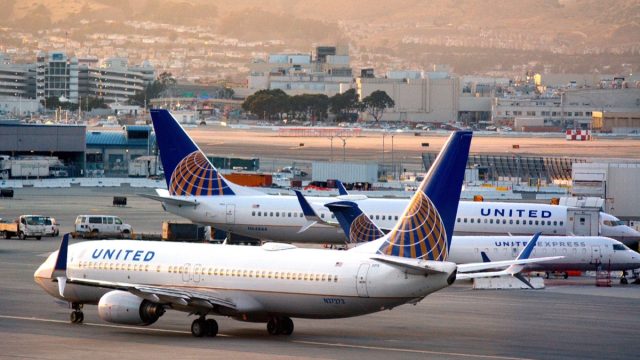
Thousands of flights are being canceled across the U.S. right now thanks to a winter storm that’s blanketing parts of the country with an impressive amount of snow. But while weather-related cancellations are not unique to any one airline, you may find yourself having trouble figuring out next steps depending on which you’ve booked with. United Airlines is currently facing backlash from passengers who claim that the carrier has made it harder than ever to get help for canceled flights.
RELATED: United Passengers Threaten Boycott Over New Boarding Rules .
At the end of 2020, United launched a virtual on-demand customer service option called “ Agent on Demand .” This feature allows customers to scan QR codes in airports in order to get connected to an agent digitally instead of waiting to speak to someone in person.
“We know how important it is for our customers to have more options for a contactless travel experience and this tool makes it easy to quickly receive personalized support directly from a live agent at the airport while maintaining social distancing,” Linda Jojo , United’s Executive Vice President for Technology and Chief Digital Officer, said in a statement at the time.
She added, “Agent on Demand allows customers to bypass waiting in line at the gate and seamlessly connect with customer service agents from their mobile device, ensuring they continue to receive the highest levels of service while also prioritizing their health and safety.”
But what once seemed like a helpful tool—especially during the height of COVID—has now become a point of contention for many travelers. On Feb. 12, View From the Wing reported that passengers are being directed to solely use the QR codes for customer service instead of being able to speak to agents at United’s customer service counters. And some people are less than thrilled about it.
RELATED: Delta Flight Attendant Reveals Sneaky Way Airlines Trick You Into Missing Your Flight .
One United passenger who was supposed to be flying out of Denver shared their recent frustration in a Feb. 10 blog post on the FlyerTalk traveler forum. According to their report, United would not let them talk to in-person customer service agents at all after their flight was canceled.
“There are three customer service agents behind computers in the customer service area, but you are not allowed to talk to them. The entrance to the lane is blocked off with a sign that says ‘Need Assistance? Scan the QR code!’” the traveler wrote. “I stepped past the sign in an effort to talk to the customer service reps and they started screaming at me.”
They said they were then stopped by an employee who told them passengers had to use the digital options, despite being directed by virtual customer service to “see an agent.”
“I asked her if I could talk to the customer service desk and she said NO you must use the new app feature,” they explained in the post. “Totally insane to me that United canceled my flight and will not allow me to talk to the customer service people behind the computer.”
RELATED: Delta and United Are Cutting Flights to 10 Major Cities, Starting Next Month .
Another traveler commented on the post, saying they saw a similar situation unfold at Chicago O’Hare International Airport. According to their comment, United employees were allegedly walking around and screening people to determine “who could get in line to see a live customer service agent versus who should just go to the kiosk.”
Some passengers claim that they’re even being blocked from speaking to premium agents in the United Clubs they pay extra to access as members.
“We pay a heavy nickel for club membership, and a big part of the value proposition is the customer service available to members,” one person replied in the thread. “It has been invaluable to me over the years, and I would be upset if it suddenly simply wasn’t there when I needed it.”
Best Life reached out to United about these complaints from customers, and we will update this story with the airline’s response.
Delta and United Are Cutting Flights to 10 Major Cities, Starting in March
Ceri Breeze/Shutterstock
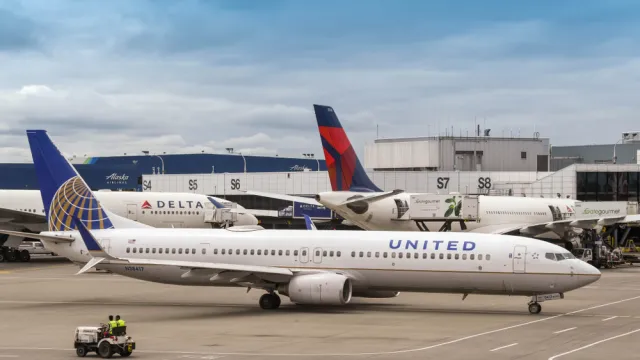
Even though the airline you choose when booking a flight can come down to who is offering the best deal on airfare , picking the itinerary that gets you there as directly as possible can often be a significant determining factor. Unfortunately, this means that travel plans can become more complicated whenever a carrier shuffles its route map. And now, Delta and United are cutting flights to 10 major cities. Read on to see which destinations will be impacted when the changes go into effect starting in March.
RELATED: Ex-TSA Agent Warns Not to Wear Headphones in the Security Line—Here’s Why .
Shutterstock
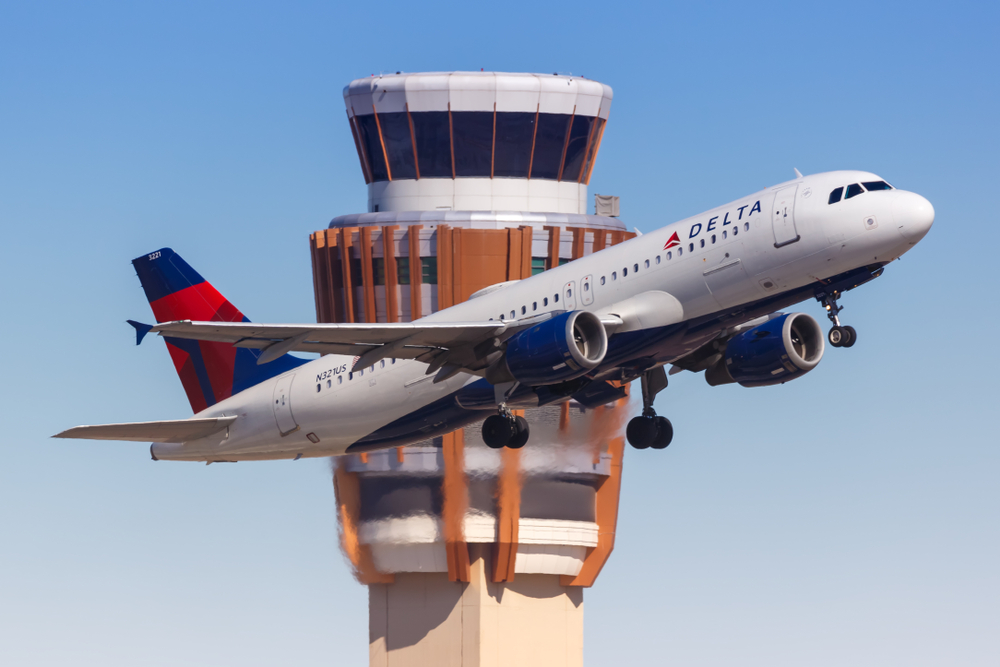
Despite a recent bulking up of its international routes, Delta Air Lines is still paring back departures between some of its most important airports. According to information posted to flight data website Cirium, the carrier will be scaling back the number of flights from two of its North American hubs to London Heathrow Airport (LHR), Simple Flying reports.
Starting in March, Delta will drop its planned 12 weekly flights from Detroit Metro Airport (DTW) to the U.K. capital to just once daily. The change confirms the airline won’t be resuming the same frequency it had between the cities last summer, marking a 42 percent cut in availability, per Simple Flying.
The carrier’s hub at Salt Lake City International Airport (SLC) will also see a decrease in flights to LHR. While the airline had initially planned to scale up departures from four times a week to daily for the busy summer travel season, data posted to Cirium shows the airline will only fly five times a week between the two destinations. Coupled with a change in aircraft, this means the two cities will see a 43 percent decrease in passenger load on what is Delta’s second-longest route servicing the U.K. compared to last summer, Simple Flying reports.
RELATED: Alaska Airlines Raising Baggage Fees Means Other Carriers Will Follow, Experts Warn .
iStock
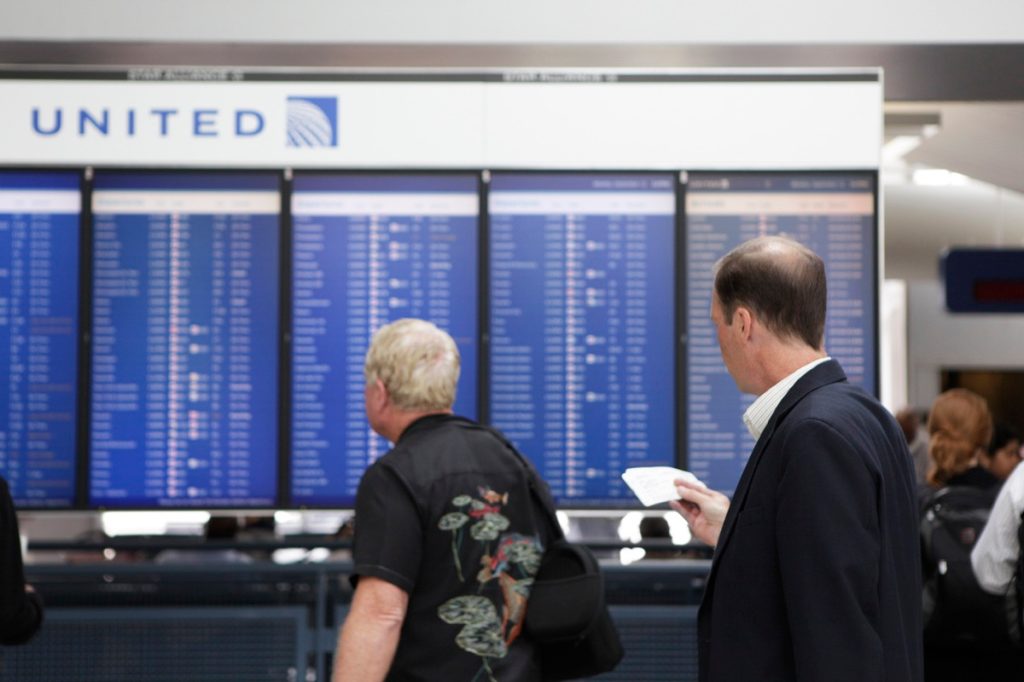
Many major carriers are still reconfiguring their global route maps after the COVID-19 pandemic all but halted international travel. And while it’s been beefing up service elsewhere, United Airlines is cutting back flights between the U.S. and China it had initially scheduled, Simple Flying reports.
Data posted to Cirium shows the airline is axing 23 flights on each affected route, including from its New York-area hub at Newark Liberty International Airport (EWR) to Beijing Capital International Airport (PEK) and Shanghai Pudong International Airport (PVG). The airline’s midwest hub at Chicago O’Hare International Airport (ORD) will also cut back flights to the two Chinese cities.
San Francisco International Airport (SFO) and Los Angeles International Airport (LAX) are also both slated to lose 23 flights originally scheduled to PVG in March. Meanwhile, Dulles International Airport (IAD) will see an identical decrease in flights to PEK, per Simple Flying.
RELATED: Delta Flight Attendant Reveals Sneaky Way Airlines Trick You Into Missing Your Flight .
DaveAlan/iStock
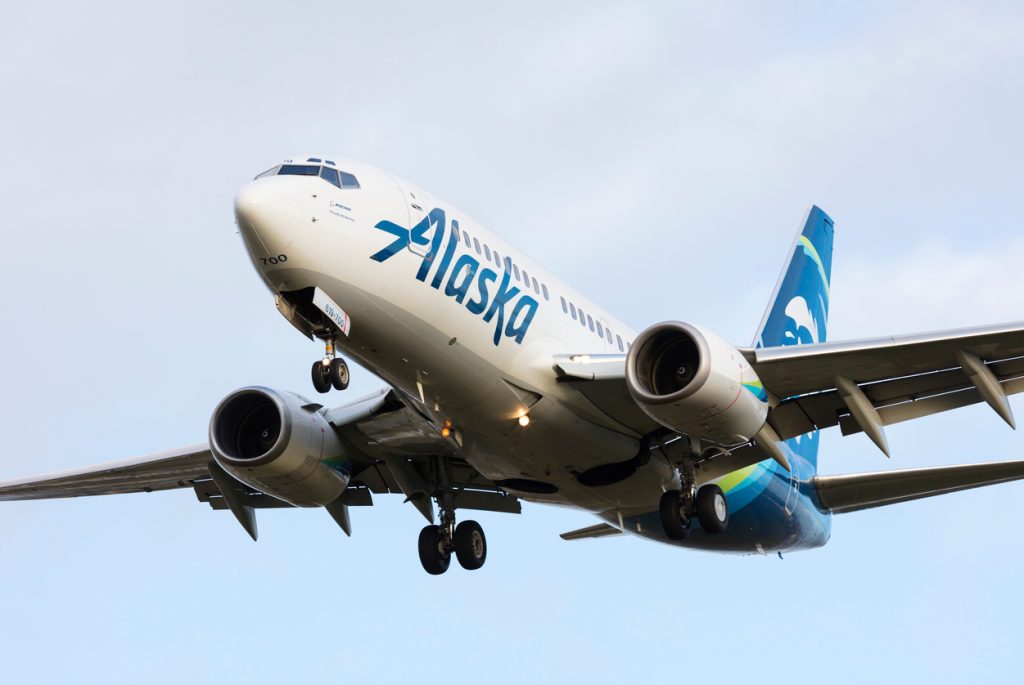
On top of dealing with scheduling woes due to aircraft safety concerns, Alaska Airlines is also shuffling its departures—and even dropping specific legs. Data posted to Cirium shows the airline is axing at least six domestic routes in the coming months, Simple Flying reports.
The changes include dropping the twice-daily service between San Jose Mineta International Airport (SJC) in California and Austin Bergstrom International Airport (AUS) as of May and cutting planned flights between Miami International Airport (MIA) and Portland International Airport (PDX) in Oregon beginning May 13. The airline will also reduce service between Paine Field (PAE) in Washington and Daniel K. Inouye International Airport (HNL) in Honolulu, Hawaii, from twice daily to one a day in May before dropping the route entirely the following month through September, Simple Flying reports.
The airline is also dropping flights in smaller markets. Planned twice-daily flights between Boise Airport (BOI) and Pullman-Moscow Regional Airport (PUW) in Idaho will no longer take off in June and July. Once-weekly service from Los Angeles International Airport (LAX) to Bozeman Yellowstone International Airport (BZN) and twice-daily flights to Glacier Park International Airport (FCA) are also getting axed from June through July.
RELATED: Reclining Seats Are Disappearing on Airplanes .
Eliyahu Parypa/iStock
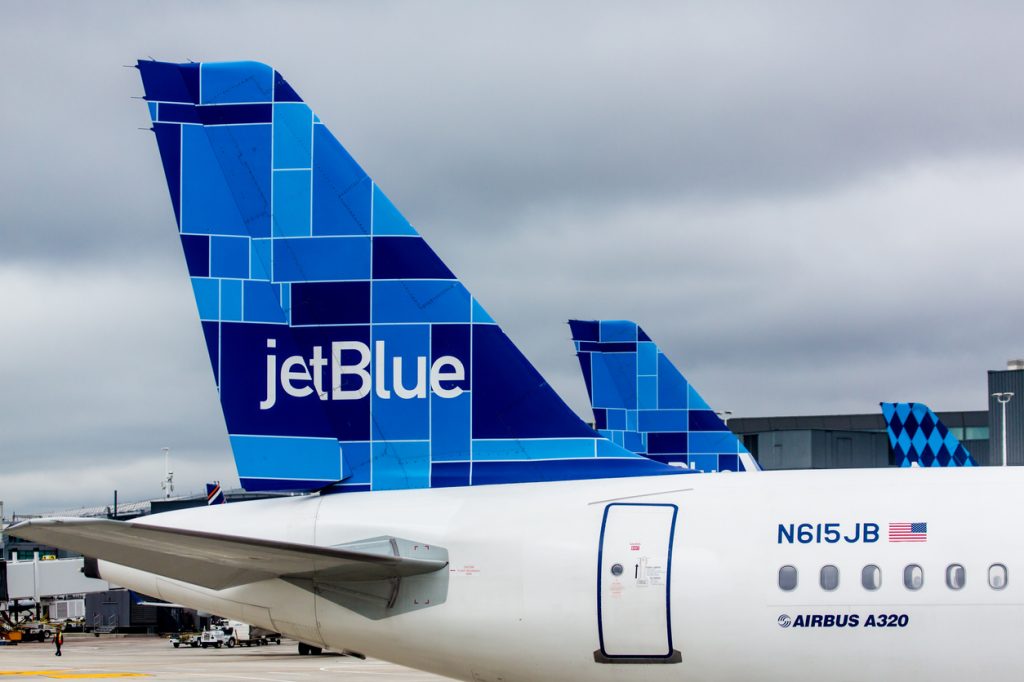
In what appears to be a big week for schedule changes, JetBlue Airways has also made some significant route cuts along with the other major airlines. The carrier said it would be dropping service between John F. Kennedy Airport (JFK) in New York City to PDX and SJC, CNBC first reported.
It will also suspend service from its New York hub to Mercedita International Airport (PSE) in Ponce, Puerto Rico, and Milwaukee Mitchell International Airport (MKE) beginning in October. And the airline is dropping its route between Westchester County Airport (HPN) in New York and Martha’s Vineyard Airport (MVY) in Massachusetts.
But in its arguably most significant change, JetBlue announced that it would pull all service out of Baltimore/Washington International Thurgood Marshall Airport (BWI) as of May 1. In a memo to staff outlining the changes, executives with the airline said the company would still service the area with flights to nearby Washington, D.C.
“We can’t fly everywhere we’d like, so we need to be highly selective about where we point our aircraft in order to turn a profit, support our overall network strategy, and offer a reliable operation,” Dave Jehn , vice president of network planning and airline partnerships, wrote in the note, per CNBC.
