USPS Just Issued a New Warning About Mailing Cash
iStock
It’s certainly not uncommon for people to send cash through the postal system —maybe you’re mailing a birthday card to a faraway friend, or perhaps you’re lending rent money to a long-distance relative. But no matter the reason, you may want to start thinking twice before postmarking 20-, 50-, or even 100-dollar bills. That’s because the U.S. Postal Service (USPS) is now alerting customers to an enhanced scam that could put them at risk when doing this. Read on to find out more about why the USPS just issued a new warning about mailing cash.
RELATED: USPS Is Making These Changes to Your Mail .
iStock
Despite some widely-shared social media posts trying to claim otherwise during the last general U.S. election, you can legally send cash through the USPS. “Regarding sending cash in the mail, no, we do not prohibit it and continue to advise customers about the options they have,” Postal Service spokesperson David Partenheimer told the Associated Press (AP) in 2020.
But that doesn’t mean it’s the Postal Service’s preferred money-mailing method. Instead, the agency advertises its money orders as a “safe alternative to cash,” according to its website. You can send up to $1,000 in a single money order to anywhere in the U.S. via cash, debit card, or traveler’s check. Money orders can be purchased at any post office location and only cost around $2 to $3 depending on how much you’re sending.
“It is advisable to send money via a personal or certified check or money order, as these are traceable and a stop payment can be put on a check if it doesn’t arrive at its destination,” Partenheimer explained to the AP.
RELATED: 5 Surprising Things You Should Never Put in the Mail, USPS Says .
Shutterstock
Now, the concept of mailing cash is causing concern once again. In the cover story for its July 27 postal bulletin , the USPS issued a new warning about a con that convinces victims to make risky payments through the postal system. Dubbed the “grandparent scam,” this scheme starts with a scammer gathering personal information about a person—often through their social media—and then contacting that person’s grandparent.
“The scammer fabricates a story that the grandchild has been in an accident or is in some kind of legal or financial trouble and needs money right away,” the agency explained. “Then, they instruct the victim to mail cash to an address so they can take care of the grandchild.”
Unlike a money order, cash is usually untraceable. So once it is sent off, it’s unlikely you’ll get it back from a scammer. “The truth is no one has been in an accident or is in any legal trouble. Everyone is safe, except for your money. It’s gone,” the USPS warned.
RELATED: See a Sticker on Your Mailbox? Don’t Touch It, USPS Says .
iStock
The grandparent scam is not new, however. In fact, the Federal Bureau of Investigations (FBI) has been warning the public about this type of con since at least 2012. But the problem now is that scammers are “adding a new twist that makes this scheme more convincing than ever” through the help of artificial intelligence, the USPS said in its recent postal bulletin.
According to the agency, the Federal Trade Commission (FTC) has warned that con-artists have started using AI voice closing software to mimic the voice of someone’s grandchild. “With only a short video clip pulled from social media, these pro- grams can instantly copy any person’s voice,” the Postal Service explained. “Worse, scammers often couple this tactic with a ‘spoofed’ phone number that shows up on caller ID with the grandchild’s real name.”
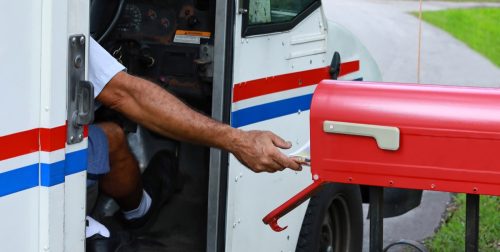
iStock
As scammers become more sophisticated, it may be harder and harder to realize when you’re being targeted. To help, the U.S. Postal Inspection Service (USPIS) has provided a “few simple, common-sense steps” to help people avoid being taken advantaged of by the now-enhanced grandparent scam.
“Be suspicious of any phone calls with urgent requests for money, even if it sounds like someone you know,” the USPIS advised in the USPS postal bulletin. “Scammers believe that if they can get you worried about a loved one, you won’t take the time to think things through.”
If you’re being asked to mail cash immediately, the USPIS said you should tell the caller to wait and that you’ll call them back soon. “Before sending any money, verify the details of the story with that person or a trusted family member or friend,” the inspection agency recommended.
Lastly, the USPIS also advised people to think about the time in which they’re being asked for money. “Be especially wary of late-night phone calls,” the agency said. “Scammers like to call victims when they are not fully awake and thinking at their best. Don’t let them catch you napping!”
- Source: https://www.usps.com/shop/money-orders.htm
- Source: https://about.usps.com/postal-bulletin/2023/pb22629/pb22629.pdf
- Source: https://www.fbi.gov/news/stories/the-grandparent-scam
See a Sticker on Your Mailbox? Don’t Touch It, USPS Says

Shutterstock
Your mailbox serves a very simple purpose: receiving mail and leaving outgoing mail for a carrier to pick up. Still, some of us enjoy sprucing up our mailboxes, adding personal flair, color, or even decals to help an otherwise standard mailbox stand out. But if you notice a paw print sticker on your mailbox that you didn’t add, don’t start peeling it off just yet—it’s likely part of a program run by the U.S. Postal Service (USPS) to help keep carriers safe. Read on to find out what these stickers mean and why you shouldn’t remove them.
RELATED: USPS Wants to Raise the Price of Your Mail Again—Here’s When It Could Happen .
Shutterstock
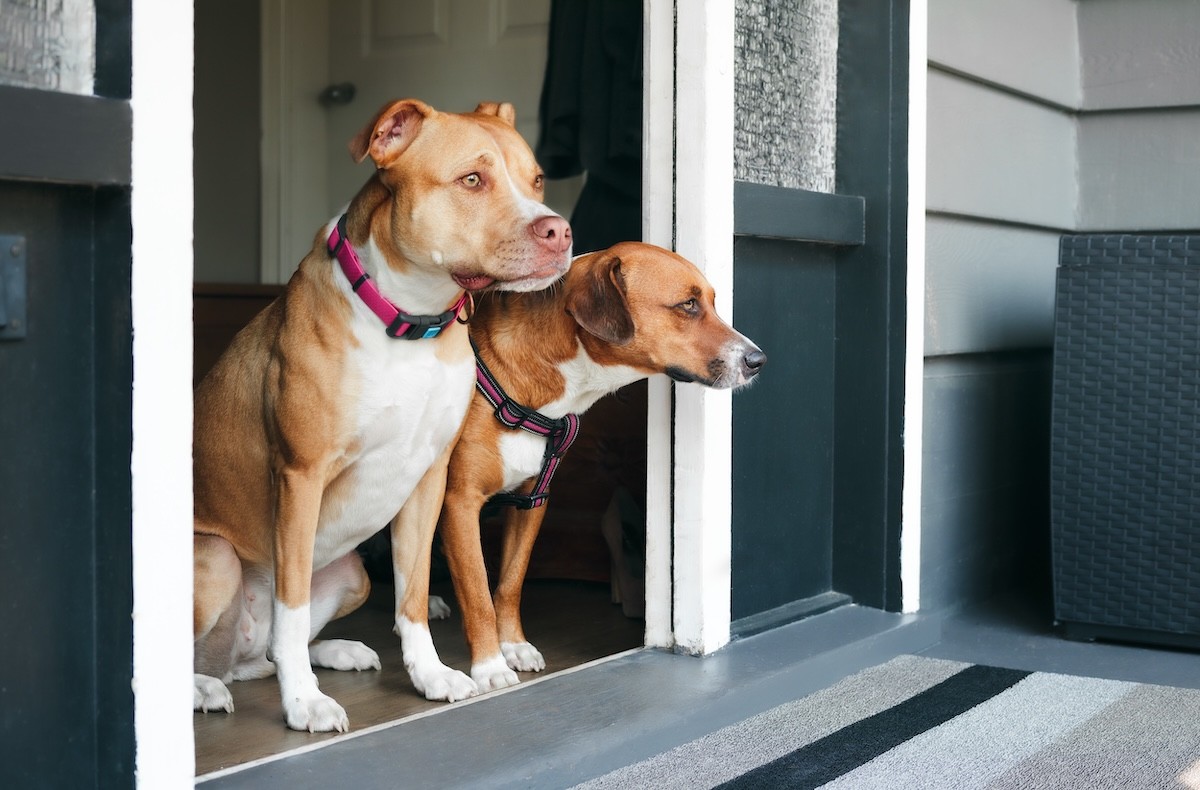
In 2023, more than 5,800 Postal Service workers were attacked by dogs while delivering mail, up from 5,300 in 2022, according to a USPS press release.
Larger cities had the highest numbers of attacks, with Los Angeles, Houston, Chicago, St. Louis, and Cleveland claiming the top five spots.
“Even though a customer’s dog is friendly to most people, it can always have a bad day,” said letter carrier Tara Snyder . “I know, from experience, even when a dog is in the house, customers need to make sure their door is secure so their dog can’t push it open and bite the letter carrier.”
To her point, the USPS writes that “all dogs can bite, even those perceived as nonaggressive.” In fact, many of the attacks that letter carriers report are by dogs whose owners told them, “My dog won’t bite.”
Such an attack can result in consequences for the homeowner, too. According to data from the Insurance Information Institute, the average cost per insurance claim for a dog bite is $64,555, the USPS states.
“When a postal employee suffers an injury, the owner could be responsible for medical bills, lost wages, uniform replacement costs, and pain and suffering for the employee,” they explain.
RELATED: USPS Is Making These Changes to Your Mail, Starting Now .
Shutterstock
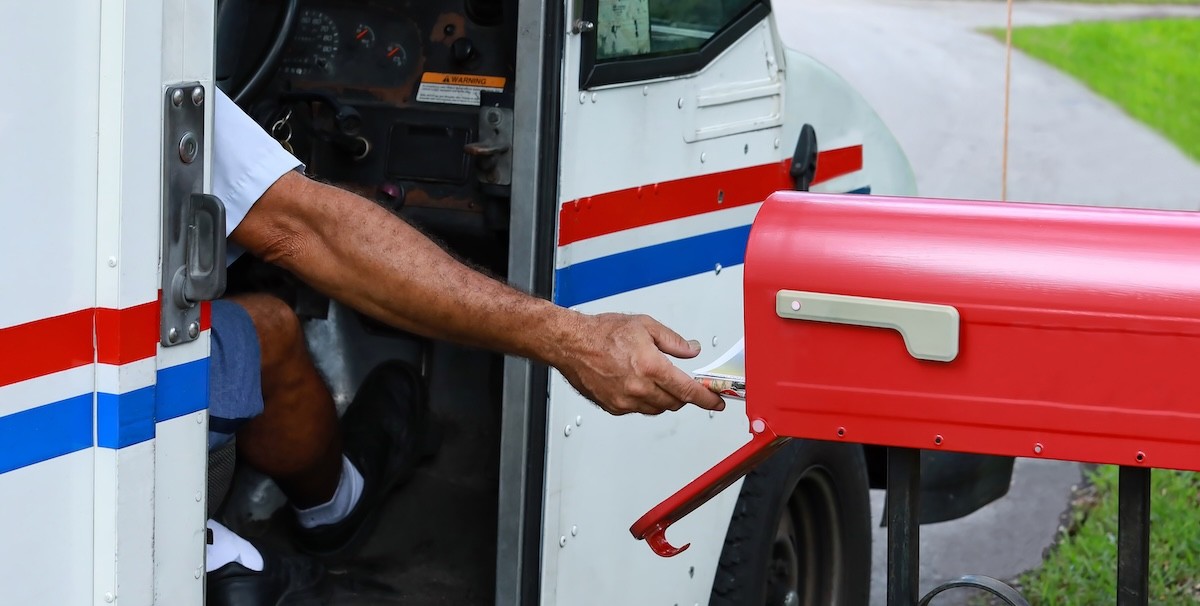
To combat dog bites, the Postal Service shared tips on how pet owners can “support safe mail delivery.” These include keeping dogs inside the house or behind a fence, away from the door or in another room, or on a leash.
“Pet owners also should remind children not to take mail directly from a letter carrier as the dog may view the carrier as a threat to the child,” they state.
Mail carriers also follow protocol to keep them aware of areas where dogs might be present, and they’re equipped with scanners to remind them of possible dog hazards, as well as dog warning cards that are added during mail sorting.
In 2020, the USPS added another preventive measure: the PAWS Program . First introduced in Pennsylvania, the program uses mailbox stickers to keep carriers safe.
Canva
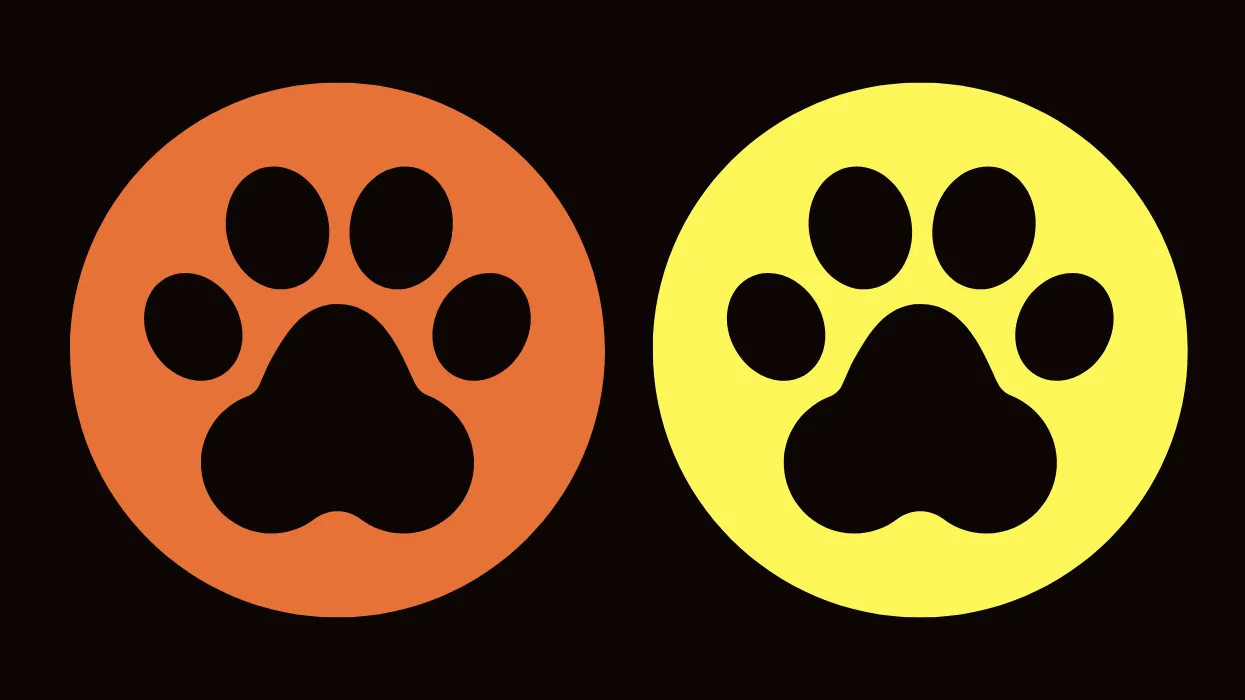
The PAWS Program uses color-coded stickers affixed to mailboxes to inform mail carriers about dogs in the area. An orange sticker with a black paw print tells carriers that there is a dog at this home, while a yellow sticker with a black paw print tells them there is a dog at the next house.
Citizens are informed ahead of time that the stickers may appear on their mailboxes. In a notice sent to Lakewood, Ohio, residents, the Postal Service wrote, “Carriers will soon be placing a paw sticker on mailboxes to indicate that a dog or dogs live in the area —yellow indicates dog nearby/orange indicates dog at residence. The sticker will act as a reminder to the carrier that they should proceed with caution, especially when delivering packages to the door.”
RELATED: Postmaster General Louis DeJoy Resigns—What It Means for the USPS and Your Mail .
iStock
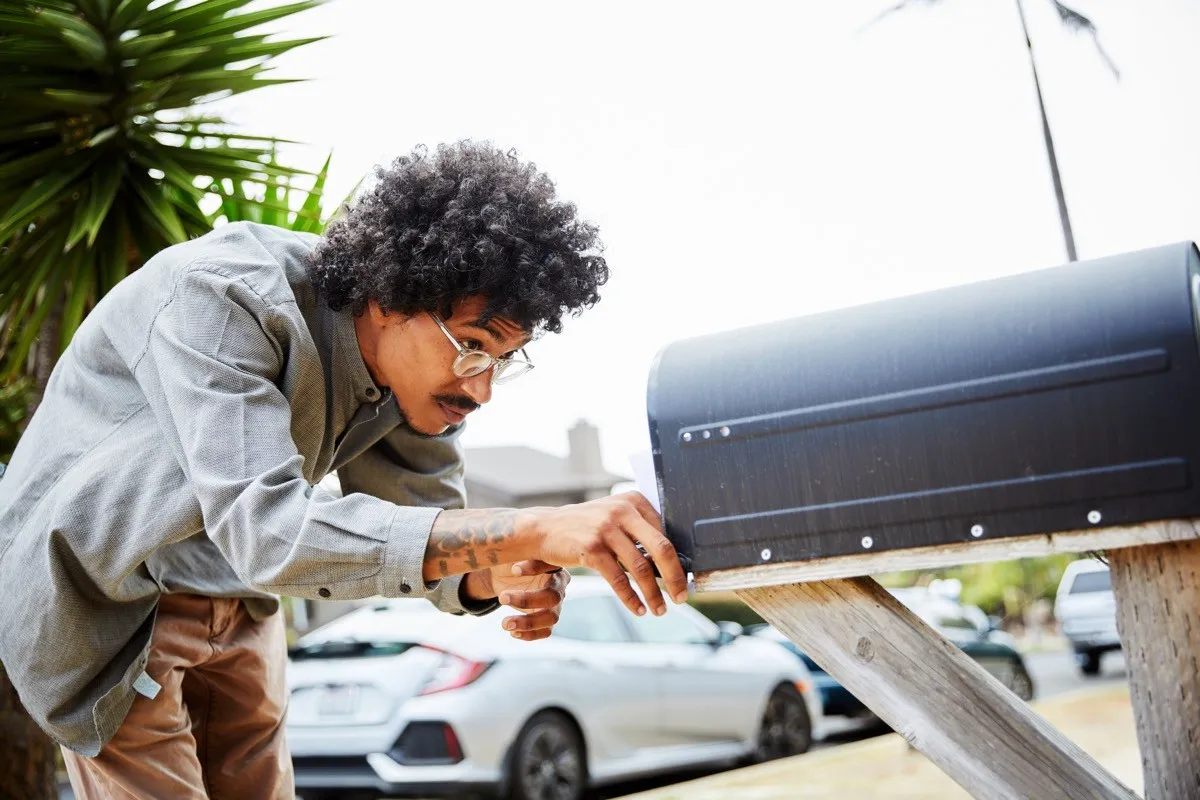
Removing these stickers may do more harm than good, as your mail service can be halted if your carrier feels unsafe. Not only does this affect the home of the dog owner, but it also applies to the entire neighborhood, the USPS said in a previous press release . Service isn’t restored in these instances “until the aggressive dog is properly restrained.”
At the end of the day, these stickers are put in place to “reduce the risk of dog bites and attacks that occur while delivering mail,” which is just another reason you should leave the sticker on your mailbox.
“We all love our dogs,” Kimberly Tilley , acting postmaster for Winston-Salem, told WGHP. “We love our animals, but we … have to take responsibility to protect the carrier and the people around us as well from our animals.”
Tilley added that dog bites are more common than you think, and they can be traumatic for carriers. “Once a carrier has been bit, it sets some fear in them long term for the rest of their life,” she told the outlet.
However, although these stickers are strongly recommended, if you object to having a sticker placed on your mailbox, you can opt out , Kyle Stevens , Southwest Carrier Annex station manager in South Dakota, told KELO in 2021. To do so, the first step would be to contact your local post office.
This story has been updated to include additional entries, fact-checking, and copy-editing.
