What It Was Like to Live Without Today’s Technologies We Totally Take for Granted

Shutterstock
Today’s modern conveniences are easy to take for granted, but it’s important to look back on just how far we’ve come. “There’s a great saying that if we don’t know where we come from, how can we know where we are going?” says Francine Cefola, co-author of the new book Tell It To the Future . “I am a firm believer that we learn from the past, and if we ignore things we can’t conceptualize because it seems too archaic or slow or unproductive, we miss understanding how we got to where we are today.”
In case you don’t remember life before technology took over and made everything “easier,” here’s a glimpse of how different the world was in the 20th century. And for more on how far we’ve come, This Is What Dating Looked Like More Than 50 Years Ago .
1 Before GPS, we used atlases to get us around.
Shutterstock
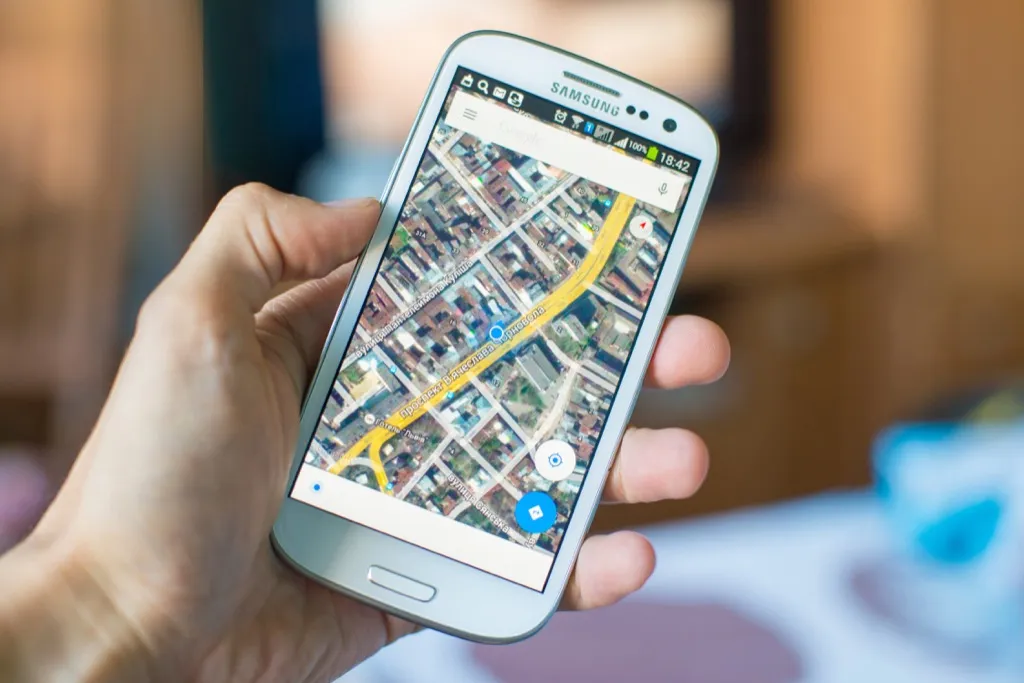
Anyone who took numerous road trips in the 20th century didn’t have Google Maps handy. Instead, we had to take our atlases along for the ride. Spiral-bound and just over 160 pages, these atlases contained highway and road information on all 50 states. But navigating from point A to point B was still tricky. And because the atlases were only updated once a year, the information wasn’t always accurate.
Peter Dalbis, 76, of Oak Park, Illinois, remembers being on the open road, guided only by his not-always-trusty Rand McNally road atlas. “Sometimes there were missing roads,” Dalbis said. “Or a road on the map that didn’t technically exist. But we’d figure it out. You can’t be complacent with an atlas, not like those people who put all their trust in a GPS . We never drove a car into a swamp because our Rand McNally told us to, I’ll tell you that much.”
If an atlas was ever lacking important travel information, Dalbis says he’d pull into a visitor’s center. “They’d know the exact change you needed for tolls, and if there was any construction ahead we needed to worry about,” he said. “After a long day on the road, it could just be nice to hear another human voice. Plus, they had maps, too. Free maps!”
2 Before e-mail or texting, we wrote letters.

Shutterstock
If you wanted to send a message to someone without actually talking to them before the 2000s, you had to write them a letter. Yes, a letter—by hand, with paper and a pen or pencil. And then you had to go to the nearest post office to buy stamps.
The messages involved a little more effort and many people feel like it was a healthier way of communicating. “Letters have always been a nice way to show someone when they are gone that you’re thinking about them,” Mike Stouffer, of Wausau, Wisconsin, told CNN , referring to the notes he’d send to his wife Bobbi in the early 1990s. “They helped our relationship develop in a big way.”
Floridian Uf Tukel told CNN: “E-mail can never replace the excitement and thrill of receiving and opening a personal letter.”
3 Before Wi-Fi, we used a phone line to connect to the internet.
Shutterstock
Long before Wi-Fi was a reality, the only way to go online was with dial-up internet access. Margaret Weiss , a life and finance coach in New Jersey, reminisced on Quora about the early days of the internet. “[You’d need] a regular landline, which you would then pluck out of the wall socket, and connect the cord to your machine,” she wrote. You’d also need a monthly internet subscription. And in 1998, it would cost you $21.95 a month for an unlimited connection to AOL.
Christopher Burke, a software developer from Seattle, wrote on Quora about the hassles of the dial-up internet days. “If you have only one phone line, you have to make sure nobody else in the house picks up the phone to dial while you’re connected to the internet, or your connection will ‘drop’ and you’ll have to dial in again,” he recalled.
“Some cities had only one or two dial-up numbers, each connected to a switching system and a bank of maybe 10 or 100 modems. So during busy times of day, you might not be able to connect to the internet at all because all of the modems were in use by other users.” And everyone remembers the noise you’d hear as you dialed in.
4 Before digital cameras, we’d wait a week for film to develop.
Shutterstock
Florida resident Barbara Lichtenwalter’s entry into photography was with a Beseler Topcon Automatic 100 film camera. (The original user’s manual is 60 pages long and contains detailed instructions on everything from shutter speed, to depth of field distance charts, to the 11-step process to load the camera.) “It took me weeks to learn how to take a decent photo ,” she said.
And with film, seeing what you photographed was anything but immediate. “You mailed away the film or took it to a film developer and you’d get it back in about a week. Then you’d see if you had anything in focus or the right colors,” she explained.
That said, even back in the day, you could still take a “selfie” of sorts, as long as you were fast and your camera came equipped with a timer. “You could prop [the camera] up and run to where it was aimed and a week later you’d find out if you were actually in the photo ,” Lichtenwalter said.
5 Before Venmo, we’d use cash or a check to pay friends.
Shutterstock
Getting money to a friend or family member in the days before Venmo invariably required face-to-face contact. “If you owed somebody 20 bucks, you had to get the physical currency—either from an ATM or by walking into your bank’s branch and requesting a withdrawal from one of the tellers,” explained Chad S. of Portland, Oregon. “And then you had to bring that cash to the person you owed it to and hand it directly to them.”
Or you could use a check. But that was, as Chad said, “a whole thing.” “I paid a lot of debts by handing people a personal check. But it doesn’t have the immediacy of cash,” he explained. “They have to bring that check to their bank, sign the back of it, and fill out a deposit form, and then wait up to three days, and sometimes much longer, for the money to clear in their account.”
Things were considerably more difficult if you lived in a different city than the person you were trying to send money to. “You could mail them a check,” he said. “You could also mail them cash, which my grandparents sometimes did, but that was always dangerous. I remember my parents telling me, ‘If you’re going to mail cash, make sure it isn’t visible through the envelope.’ So we’d wrap cash in paper or a greeting card or something to conceal it.” And then, again, there was a wait involved. “A letter could take several days to get to somebody,” Chad said. “And sometimes weeks.”
6 Before e-cigarettes, smoking was a very different experience.

Shutterstock
It wasn’t too long ago that e-cigarettes and vaping didn’t exist, but things have changed so quickly. On Quora , Kevin Bryant, a Brit who quit smoking after 25 years, reminisced about his favorite part of smoking cigarettes: “the satisfaction of unwrapping a new pack.” He went on: “The crinkling of the surrounding wrap, the smell of the fresh tobacco—the odour [ sic ] of adulthood, of choice, of freedom, of relaxation.”
Bryant also wrote about the context in which he smoked (i.e., indoors), which was largely allowed in major U.S. cities until the 2000s. He recalled heading to a pub and getting “a pint of warmish British beer, chatting about the serious and trivial in the smoky atmosphere with the jukebox blaring in the corner.”
7 Before iCloud storage, we printed out everything .
Shutterstock
Even when personal computers became the norm in the mid to late 1990s, we still didn’t entirely trust technology to keep our files safe and secure. So if there was an important document you absolutely needed access to, you’d print it out on paper.
On Quora , Arizona resident Tom Crosley recalled his father’s office being “taken up by filing cabinets.” He added that his dad “also had a walk-in safe, similar to the ones found in banks, and it was filled with more filing cabinets. The safe was not there because of a theft worry, but because it was fireproof.” Crosley’s father employed an entire staff of filing clerks whose sole job was to “retrieve, file, and update records kept in this cabinets.”
8 Before Netflix, we had to leave our houses to see movies.
Shutterstock
Seeing the hottest new movie during the 20th century wasn’t as easy as streaming it on your smartphone or adding it to your Netflix queue .
“You had to go to a theater,” explained Adam Cole from Atlanta. If you didn’t catch a film during its original run, you’d have to wait for it to air on TV “in an edited form with commercial interruptions,” Cole pointed out. That would take months… or even years!
9 Before DVRs, On Demand, or streaming services, we had to watch our favorites shows live.
Paosun Rt / Shutterstock
As recent as the mid-’00s, if you weren’t available to watch your favorite TV show live, you were out of luck. There was no Hulu or On Demand service to catch it on the next day.
Your only choice in the ’80s and ’90s was to try to record the episode you knew you’d be missing via your VCR. But even that wasn’t a surefire success. As one commenter explained on MetaFilter , “The VCR didn’t have its own tuner, and needed the cable box, and there was no communication between the devices,” he wrote. As a result, “you would have to set the channel on the cable box and then the timer on the VCR. Mess either up, and you miss your show.” Anyone born before 1990 probably remembers that gut-wrenching feeling of 90210 not recording, or learning your parents had taped over your favorite episode while trying to record NYPD Blue .
10 Before tablets, we played car games all together.

Shutterstock
Keeping a kid entertained during a road trip involved a bit more creativity decades ago than just handing them a tablet. “When I was younger, we would play number car games with our parents ,” said Illinois native Christopher Trifilio. “My father would think of a number between one to 100 and we would guess. He would say ‘higher’ or ‘lower’ until we got it right.”
“When we took plane trips, we always brought books and a whole backpack full of coloring books, crayons, and colored pencils. It was fun to be creative,” Trifilio remembered. “Each of us would try to demonstrate we were the best at coloring. Then we’d draw pictures of each other, which usually resulted in a lot of laughs since none of us were artists.”
The short of it is, kids had to entertain themselves. “I remember spending all of my time looking out the large windows of our car to see what I could see,” remembered Laura Warfel of Chicago. “If we happened to be driving at night, I would boost myself up so that I could look up at the moon and stars.”
11 Before Kindles, we had to go to the library.
Shutterstock
There was also no reading during a car or plane trip unless you remembered to pack a physical book. And if you didn’t own one, you had to head to the library. “Books came in all sizes and you could borrow them from a library,” remembered Cefola. But fi nding that perfect book required an understanding of how they were arranged in a library. “Library books were arranged by the Dewey Decimal System—a system of numbering to put books in their respective genre,” Cefora explained.
Chris Coleman, a librarian based in Thousand Oaks, California, provided the following explanation on Quora . “ For every single piece in the collection, a paper card is typed up with the item information. … For a patron to locate an item, they look at the files and sort through the cards,” he noted. “ When a patron finds a card matching the selection they want, they can use it to locate the item in the collection. They then bring both the card and the item to the circulation desk, where they take the card and place it in a dated file, insert a dated due-date card, and return the item to the patron.”
Clearly, the Kindle was just the stuff of science fiction in those days.
12 Before fitness trackers, we never thought about our heart rates.
Zivica Kerkez / Shutterstock
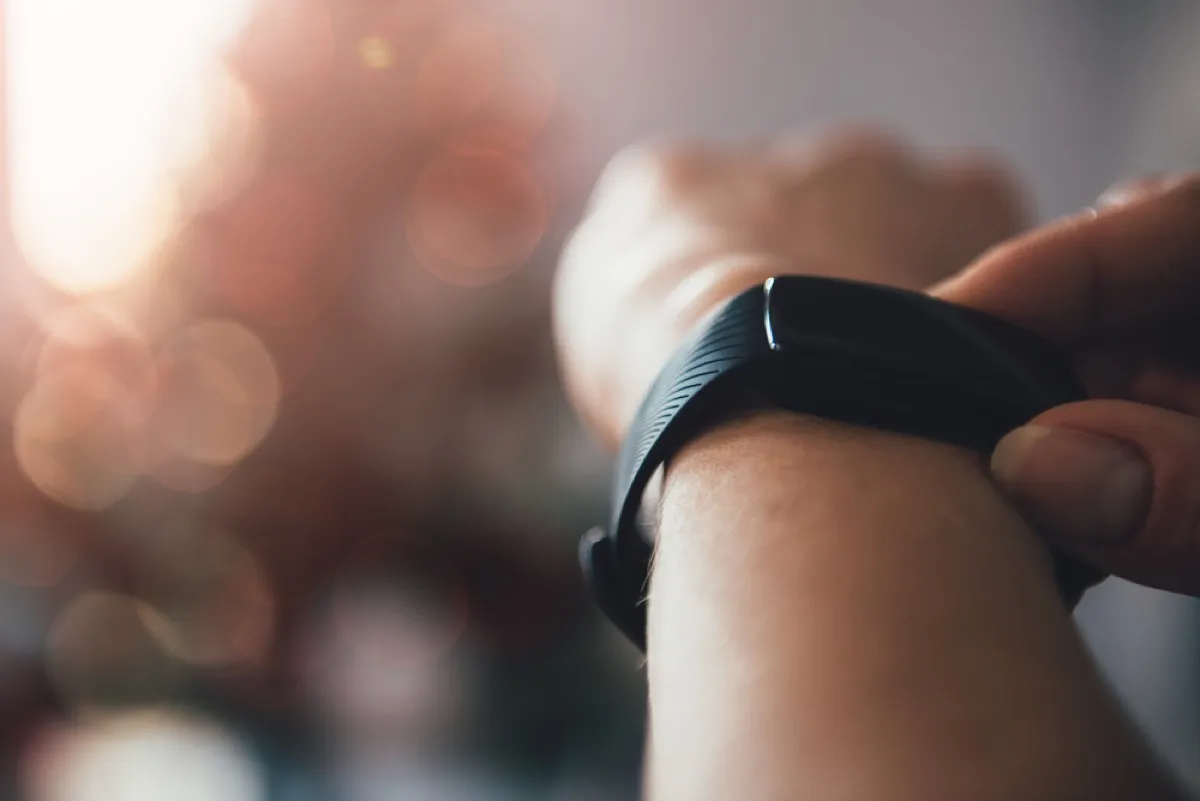
Tracking your fitness in the 20th century was far less precise than we’ve become accustomed to today. “The only time I ever tracked my fitness was at the gym,” recalled New Yorker Ron S. “That’s the only time I even wondered how many steps I was taking or anything like that. And my heart rate , gosh, I don’t think I ever thought about it. That’s something your doctor checked during an annual exam. It’s not something you monitored every day. That would have been crazy to us.”
Cefola said that most of the people she knew during those pre- fitness tracker days “weren’t as dedicated to exercise. It was a weight-loss tool rather than healthy living . There were private gyms that you could belong to and use their equipment, like Jack LaLanne or Vic Tanny’s, or you could buy a small set of dumbbells for home use. But walking and home exercise were for ‘health nuts’ and bodybuilders.”
13 Before “wick-away” fabrics, we didn’t understand clothing could have “a cooling system.”

Shutterstock
A New York Times story on “ space age clothing ” from 1983 included a headband made with a “lightweight insulating material and a special cooling gel” that could “lower the temperature on a forehead by 30 degrees and thereby help reduce perspiration loss and the discomfort of strenuous exercise .”
But according to the headband’s inventor, customers weren’t actively looking for sweat-repelling workout clothing . “People walk into Bloomingdale’s and see one of my headbands for $14.95 and they think it’s just a headband,” he told the Times . “They don’t know it’s a cooling system.”
14 Before Instagram, fashion inspo came from stores themselves.

Shutterstock / Prostock-studio
“We learned what was the cool new thing to wear by reading fashion magazines or watching music videos,” said Heather G. of Winston-Salem, North Carolina. “But probably the most immediate way we learned about what was fashionable was the department stores.”
Major chains like Hudson’s, Marshall Field’s, Macy’s, T.J.Maxx, JCPenney, and Montgomery Ward didn’t just provide the latest clothing brands, they also served as style gurus. “My daughter laughs at this, but I really did make a lot of my fashion choices based on what the mannequins at Montgomery Ward were wearing,” Heather said. “The store put a lot of effort into creating these dioramas. The mannequins would be interacting, so it was easy to fantasize that this was what your life could look like. It really was the Instagram of its time .”
Some people, like Warfel, had a more personal relationship with their local clothing stores . “My mom would take my sister and me into a store, and we would know the sales ladies by name,” she said. “The sales lady brought us different sizes and also other outfits that she suggested for us to try on. We relied on certain name brands for quality and style, and sometimes for social status.”
15 Before FaceTime, we sent each other voice and video recordings.

Shutterstock
If you wanted to stay in touch with loved ones who didn’t live close by in the 20th century, and a phone call didn’t have the intimacy you wanted, there was no FaceTime to solve your problem. But there were other ways to feel connected to those living far away.
“I remember when I was in high school, we would record messages of us singing in tape recorders and send those small cassette tapes by mail to my brother and aunt, who lived abroad,” remembered Marita, who lives in Winnipeg, Canada. “They said they felt happier and their longing for family was eased with our letters and recorded messages and songs.”
16 Before Skype and WhatAapp, we cared about the cost of long-distance calls.
Shutterstock
Phone call fees were often based on distance—the closer you lived to the person you were contacting, the cheaper the call. “The first minute was always the most expensive,” one blogger recalled on Flashbak . “Long distance rates were so steep that you could fill your tank up with gas for the price of talking on the phone for an hour.”
The other factor was the time of day. Calls were cheaper on weekends and late at night. “ In most homes, long distance was forbidden except on weekends,” the blogger wrote. “If you absolutely had to call on a weekday, it would have to be late in the evening and you’d have to make it super quick. … I recall having to wait until 10:00 p.m. on Sunday night to call relatives, and the bill typically added up to $17 for an hour, which was a lot of money back then!”
17 Before e-ticketing, we had to buy event tickets at a box office or via a lottery system.
Piotr Swat / Shutterstock
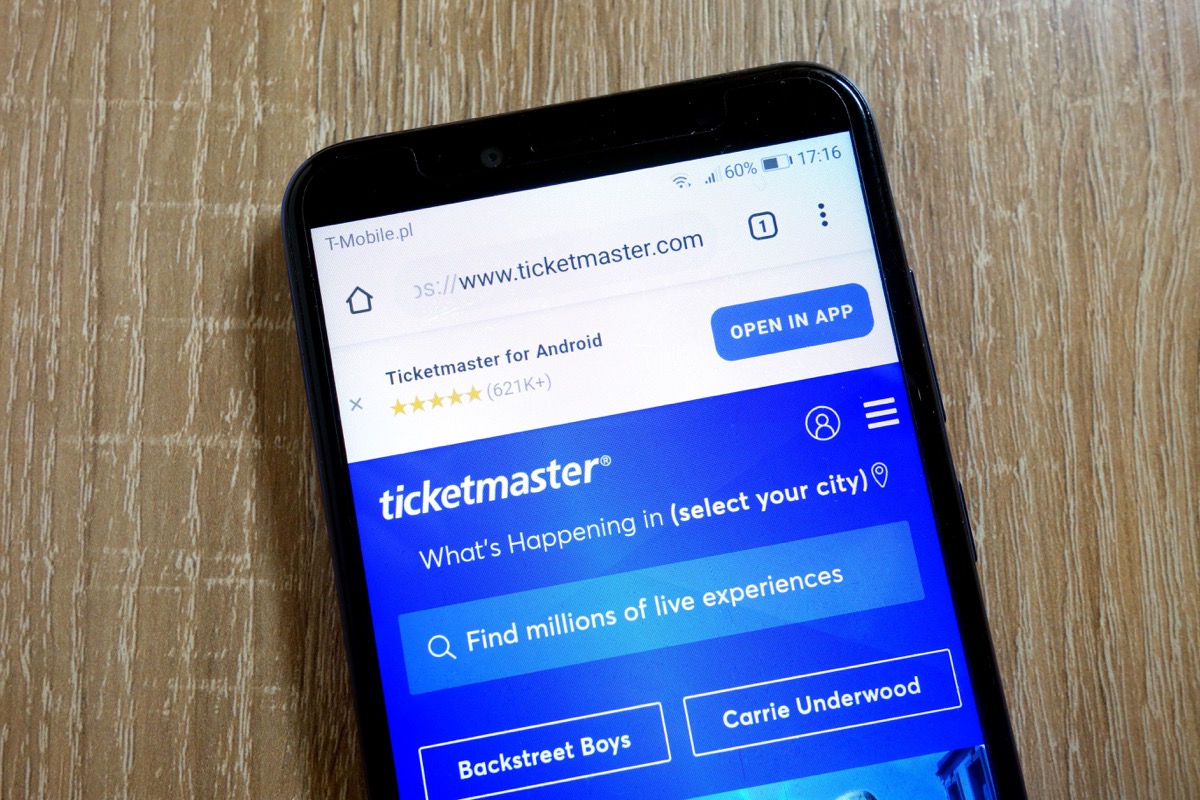
Today, we all know how frustrating it can be to wait for your digital spot in line when tickets go on sale for your favorite artist’s tour. But just a few decades ago, it was an entirely different experience. You had to go to an actual retailer, like a record store or a venue’s box office, to get tickets. Scott Hudson, a music critic in Sioux Falls, South Dakota, wrote about desperately wanting to see Bruce Springsteen in the 1980s in Lincoln, Nebraska. “The day before [tickets] went on sale, a buddy and I made the four-hour journey and discovered we were (approximately) number 1,800 in line,” he noted.
The box office opened at 10 a.m. and even with “10 or so clerks selling tickets,” they still didn’t make it to the front of the line until around 6 p.m. That’s because “ you’d point to a spot on the venue floor plan, and [the clerks] would go see if there were any tickets in that section. You’d repeat this process until you found open seats you were willing to live with. They weren’t even updating these sheets to show what areas were sold out.” The only other ticketing option was even riskier. “Giant tours generally utilized a mail order lottery system,” Hudson explained. “You’d send in a money order and return envelope, and every day you’d wait by the mailbox to see if you made the cut.”
18 Before drones, aerial photography was no easy feat.
Shutterstock
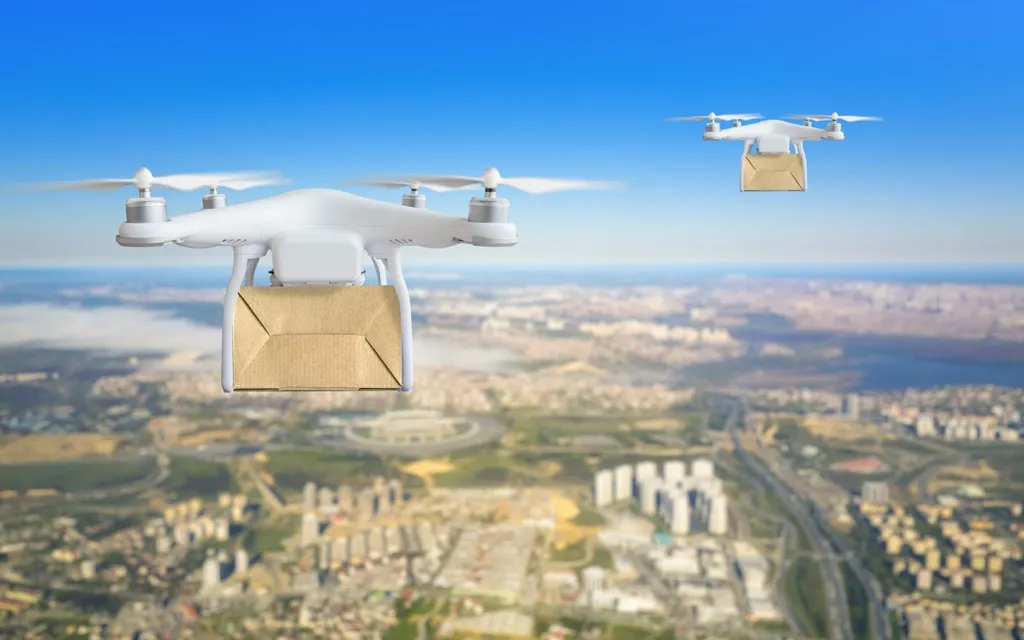
As cinematographer Royce Allen Dudley explained on Quora , aerial photography used to be achieved with helicopters and occasionally fixed-wing aircrafts . “In some instances, the camera was nose- or side-mounted inside a transparent aerodynamic sphere, gimballed, and controlled remotely by joysticks from the passenger seat,” Dudley wrote. “Most good camera pilots are/were veteran combat pilots. Their finesse at the helm to put the lens where [necessary] was awesome.”
The process wasn’t just difficult, but dangerous as well. There was a high mortality rate for aerial film crews, Dudley noted. In fact, it was “maybe the most dangerous job in cinema, other than those of the stunt brothers and sisters.”
19 Before Wikipedia, we’d invest in a set of encyclopedias.
Shutterstock
Any family in the 20th century that wanted ’round-the-clock access to tons of information couldn’t simply hop on the internet. As an Orlando Sentinel reporter e xplained in the late ’80s, families would invest in a huge set of encyclopedias that were “hardback volumes with gold-lettered bindings and pseudo-Greek titles, such as Encyclopedia Britannica and Encyclopedia Americana.” And they weren’t cheap. The price ranged between $300 to $1,500. There were even door-to-door salesmen who used “high-pressure sales tactics” to hawk costly encyclopedias.
During dinnertime arguments, Karen from Montana remembers using her family’s encyclopedias to solve problems “ like, ‘Do bananas grow up or down?’” “We’d discuss the problem, someone would then decide to solve the issue by dashing for the encyclopedias, and guessing if the answer would be under B for banana or F for fruits,” she recalled. Just flipping through an encyclopedia would “introduce us to other topics of conversation, and away we would go down the rabbit hole of learning… together.”
Shutterstock
Before you had every single item imaginable at your fingertips and needed a random knick-knack, you headed to the local dime store. “The dime store was once an innovative concept in retailing. Shoppers could find a variety of everyday goods at low prices. Stationery, sewing notions, toys, health and beauty aids, dishes and some apparel remain the staples of the variety store,” wrote an L.A. Times reporter in 1988.
21 Before social media, you had to work harder to maintain relationships.
Shutterstock
Maintaining your social circle required a bit more effort for past generations. In the 20th century, “you had to call someone on the phone and then make plans to meet them,” recalled Cole. And if you missed the call, that person could eventually fall out of your life, for better or for worse. John P. from St. Louis added, “You could go years, decades even, without ever hearing from your old high school friends or a distant cousin that lived six states away or all your ex-girlfriends. You had no obligation to interact with any of them. It was amazing.”
And if there was information you wanted someone to hear, you had to say it to them directly or pass it along via a third party. “If there was a meeting or a reunion, you’d just tell two or three people and let them pass the news verbally,” remembered Marita. “Or we’d go from house to house to let people know the meeting time and place. It was a personal thing. We communicated face to face.”
Even when the internet was introduced in the 1990s, social media didn’t work like it does today. “When I was a kid, we also had Bulletin Board Systems, which were the ancestor of the internet,” said Cole. “You’d call a computer with your computer, connect up, and leave a message on a computer board that everyone could read. This was a great way to have group chats .” And for more on social media communication at its worst, check out the 30 Lies Everyone Tells on Social Media .
25 Crazy Predictions About the Next 25 Years
Shutterstock
A lot can happen in 25 years. A quarter-century ago, “mobile phones” meant cordless landlines and Nirvana topped the charts. Anyone anticipating in 1993 what life might be like 2018 would likely miss the mark in some ways, but those watching trends closely could be surprisingly close to how things actually shook out.
To help predict what the future might bring, we reached out to futurists, tech experts, and others whose job it is to keep an eye on where things are heading and how things might look over the long term. Some of their predictions might surprise you. Take a few more steps into the future with the 30 Craziest Predictions About the Future Experts Say Are Going to Happen .
Shutterstock
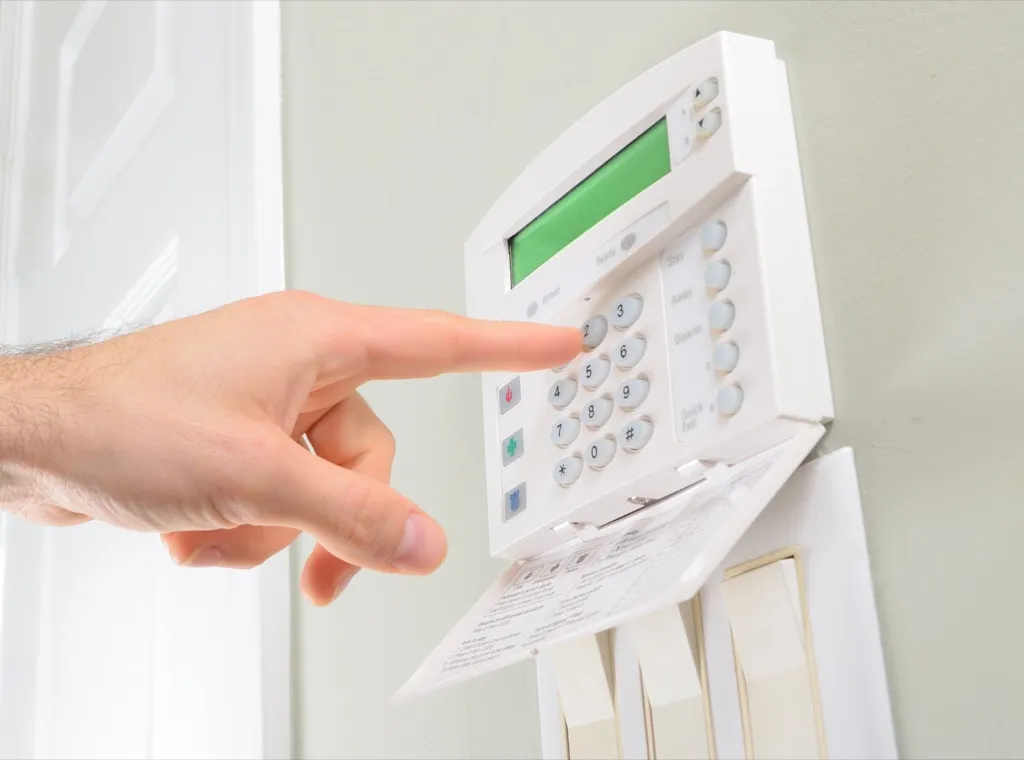
As the Internet of Things (IoT) lead to a wider range of our appliances, electronics, and other aspects of our lives being connected to the online world, it will also open us up to security breaches. Just as we have to watch out for viruses and hacks to our computers, soon we will have to do the same for our homes.
“While consumers may not be physically locked out of their house, since manual locks have yet to be replaced and can be a backup, they will experience a ‘home invasion’ of a digital sort,” says Jason Hart, vice president and CTO of data protection of security firm Gemalto . “Specific appliances will be held for ransom, internet-connected devices will provide a path to personal data for blackmail purposes. Even assets stored in the cloud won’t be safe: with homeowner data, coupled with lax security controls, hackers have an open door for stealing everything from music and videos to Bitcoins.” Think this is crazy? Check out This Is What Life Could Look Like 100 Years From Now .
Shutterstock
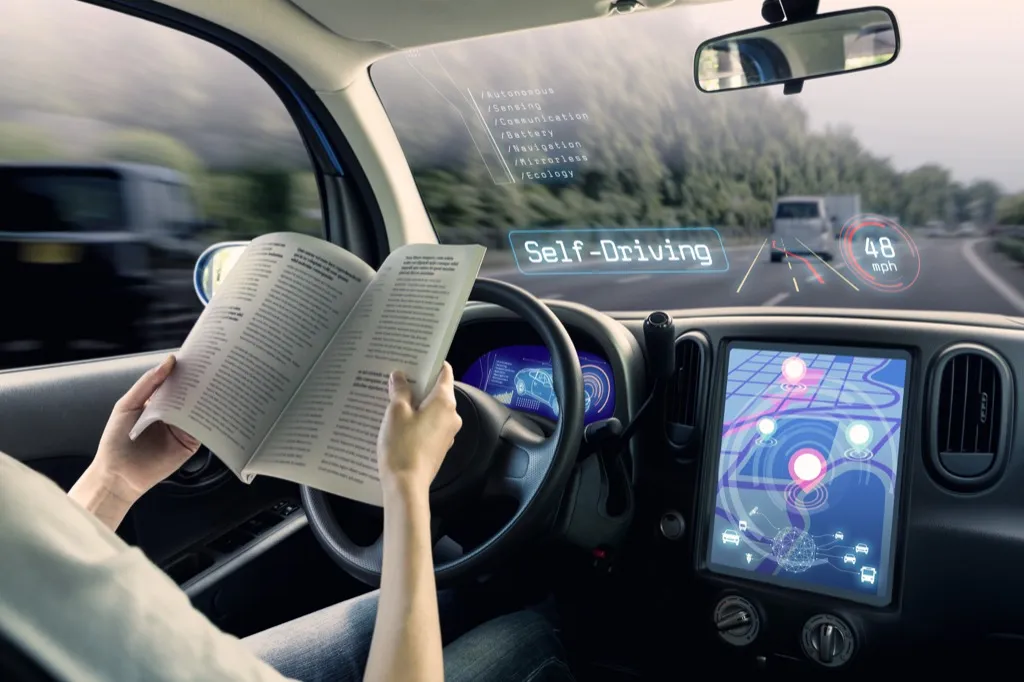
Despite the growing pains that self-driving cars have gone through in these early stages, the technology does not look likely to go anywhere and will likely become the norm in the next few years, according to Chris Nielsen, founder and EVP experience design for technology company Levatas , as well as a futurist.
“Most all major auto manufacturers such as Ford, Nissan Renault, Daimler and more have committed to shipping driverless car options within the next 2-4 years, most of them by 2020,” he points out. “This means that in 25 years, the driverless car experience will have matured into a safe, ubiquitous and ultimately convenient option.”
For those reasons, he expects that driverless cars will saturate the marketplace within a quarter century, and will have built a track record of safety and effective operation that laws may even be passed to remove (relatively unsafe) human-driven cars from public roads.
“We’re still quite a ways off from this here in 2018, but a lot tends to happen in 25 years,” he says. While you’re still stuck driving your own car (sigh), be sure to Rule the Road with These Smart Driving Strategies .

Shutterstock
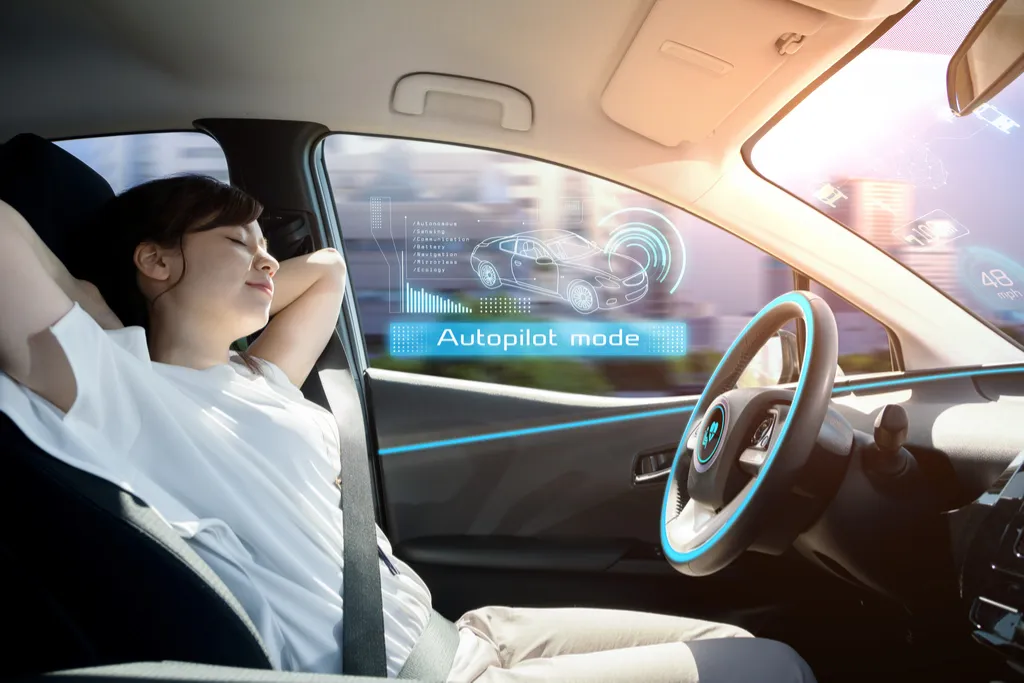
Nikolas Badminton , a futurist, author, and researcher who speaks on topics relating to the impact of exponential technology expects that not only will self-driving vehicles become commonplace, but “it will almost be a stigma to own and drive your own vehicle.”
He adds that it will also have some positive effects, such as reducing the stress of commutes, a growth in carpooling, and even “shared vehicles used as meeting rooms by companies.”
Shutterstock
Another side benefit that may grow from self-driving vehicles is that they will be less expensive, even free—but you will likely have to listen to a corporate message to enjoy them.

Shutterstock
“By combining the power of AI and blockchain, the concept of money could evolve into electronic tokens with far more types of assets tradeable within the one ‘currency,’” predicts Rohit Talwar, CEO of futurist research company Fast Future .
He gives the example that we might earn tokens from our employers that can be redeemed at retailers and airlines, and as micro-credits for completing workplace training or school learning tasks.
“Instead of simply liking a track from a musician, we could now make a micro-payment to them with a fraction of a token,” says Talwar. “This evolution from cash and cryptocurrencies towards a universal means of exchange could mean the end of cash and foreign exchange markets.” To survive with your cash flow now, follow these 52 Easy Ways to Be Smarter with Money in 2018 .

Shutterstock
While cryptocurrencies like bitcoin have taken off in the last couple years, Badminton expects to see additional, brand-oriented currencies on the rise, particularly from major tech companies.
“Some people will only use those currencies in their daily lives—think Facebook Dollars, Google Dollars, Wal-Mart Dollars, Disney Cash,” says Badminton. And for more on forward-thinking technology, don’t miss these 20 Facts You Never Knew About Your Smartphone.

Shutterstock
A quarter-century ago, the most paranoid ideas about surveillance and privacy invasion probably would not have predicted how eagerly we would be to hand over personal data to faceless corporations and data-miners. But Reg Harnish, a fellow at the National Cybersecurity Institute and CEO of GreyCastle Security , predicts we have much further to fall when it comes to handing over the keys to our data.
“We are already seeing the erosion of privacy today, with Facebook and other organizations selling all our most private data to the highest bidder,” he says. “But, in the next quarter-century, perhaps even sooner, I believe privacy as we know it will be gone. We will talk about privacy like we talk about rotary phones today—we don’t. Is that a good thing? I don’t know. But, short of opting out of the internet, we will all have to face the reality that nothing will be secret anymore.”

Shutterstock
But this loss of privacy won’t be taken lying down. With technology becoming a bigger part of our lives, security concerns will grow too.
“What changed in 2017, and will escalate in the coming year, is a heightened awareness of security and data privacy issues amongst general consumers and business leaders, too,” says Sandor Palfy, CTO of identity and access management at LogMeIn , makers of password manager LastPass . “There is no doubt for consumers and businesses that data breaches and security issues are no longer an anomaly, but will continue to be the new normal.”
For that reason, Palfy expects that businesses will be required to invest an even greater amount in tools and training that strengthen their organizations’ and employees’ security.
Shutterstock
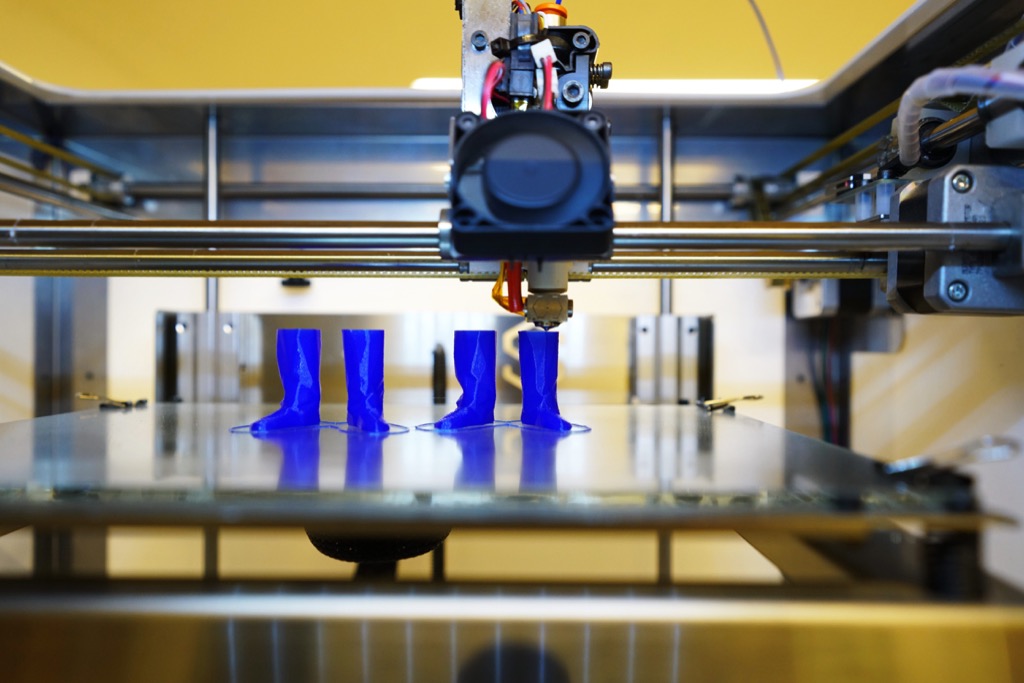
Expect to see further development in 3D printing, particularly as the technology gets more affordable and manageable.
“There are few modern technologies more exciting than 3D printing,” says Nichole Elizabeth DeMeré , a customer service and SaaS expert and author of Playbook to Grow Your SaaS . “You can turn filament into a functional beer stein, goo into a remote control car, or build a to-scale model of your living room to figure out where to put your couch. Or, you can build a 3D printable prosthetic hand that can grip for less than ten dollars, like the e-NABLE Project does for kids in need.” And for more amazing knowledge, here are 30 Facts You Always Believed That Aren’t True.

Shutterstock
Artificial intelligence will only become more prevalent, impacting virtually every area of our lives—healthcare, education, entertainment, financial services, and more—according to Talwar.
“Smart systems could manage our social lives, help us select the ideal partners for dating, marriage, and reproduction, monitor our health in liaison with our doctors, and personalize our education so content is delivered in the way we learn best,” he says. “The technology will be making legal decisions in court, determining our benefit payments, fact-checking politicians, and powering the transport sector.”

Shutterstock
DeMeré also expects to see a further growth in chatbots in the realm of customer service and marketing.
“Chatbots are poised to become the next big thing,” she says. “If you like being in the lead of cresting trends in marketing, you’re going to need one. The greatest adoption of bots is with consumers between the ages of 18 and 35. But that doesn’t mean older consumers aren’t willing to engage with bots—not by a long shot.”

Shutterstock
Andy Wood, chairman of computer vision and facial animation company Cubic Motion , expects that everyone will have their own online avatar.
“Within the next 25 years, everybody can have an online persona ‘digital double’—it doesn’t need to be creature, age or gender specific—just like the Ready Player One movie,” he says. “Every walk of life, profession, and social lifestyle will have access to an online digital double.”

Shutterstock
Just as we’ve gotten more used to chatbots and speaking to Alexa and Siri, soon we will get comfortable interacting with fully digital characters.
“By 2024, we may all be interacting with digital humans in some way or other, whether its via headsets, films, TV, games, live performances and broadcasts, or by directing digital assistants in our homes in real-time,” says Wood.
Shutterstock
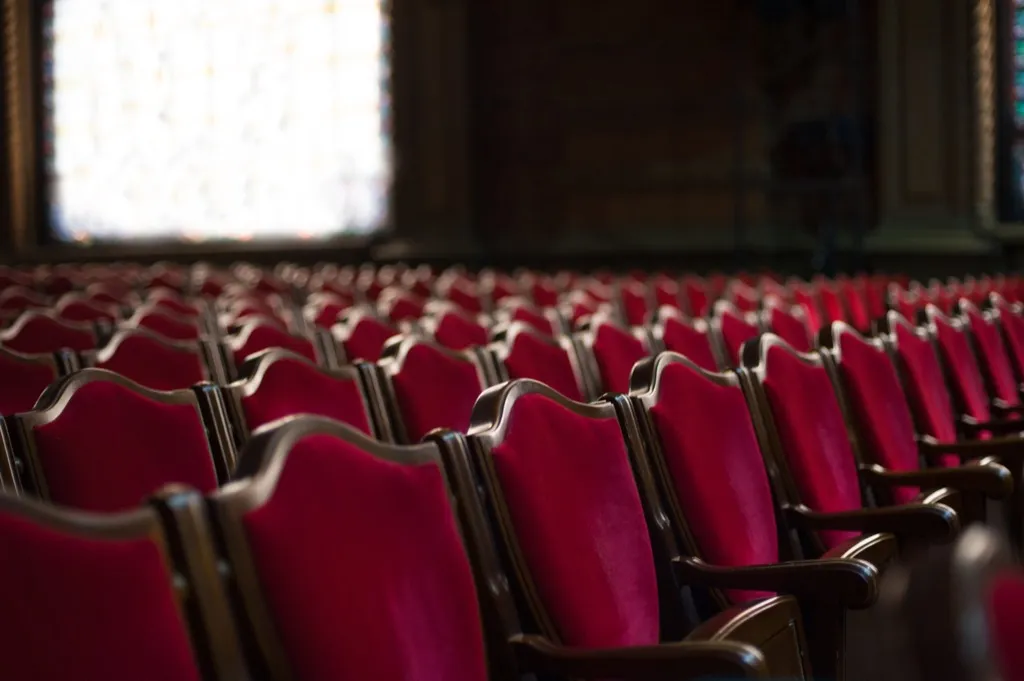
As VR evolves further as a form of entertainment, the pursuit of an immersive experience that draws so many to theaters may instead lead them to pick up VR headsets.
“Movie theaters will disappear quicker than Blockbuster,” expects Andrew Selepak, a professor of telecommunications at the University of Florida.
Though VR is still in its infancy in many ways, he expects that in 25 years, we will all be enjoying movies and television in a virtual environment.
“We will all have virtual reality devices to enjoy the latest release taking away any need to go to an actual theater and sit in a chair to watch the film in a flat 3D environment,” he adds. “Just like how streaming services did away with the video rental business, Virtual Reality and streaming video will do the same to theaters.”

Shutterstock
With more virtual experiences available online, particularly in the realm of education where online classrooms will evolve, young people will be more likely to stay close to home rather than go away to college.
“The need for students to physically attend a university will become unnecessary,” says Selepak. “Universities will instead resemble TV studios where professors will lecture on material in front of a green screen for students to watch at home. This will lead to more young people living with their parents after the age of 18, but for universities, just like with the advent of MTV, video will replace the professor star with those who are the most personable and telegenic.”
Shutterstock
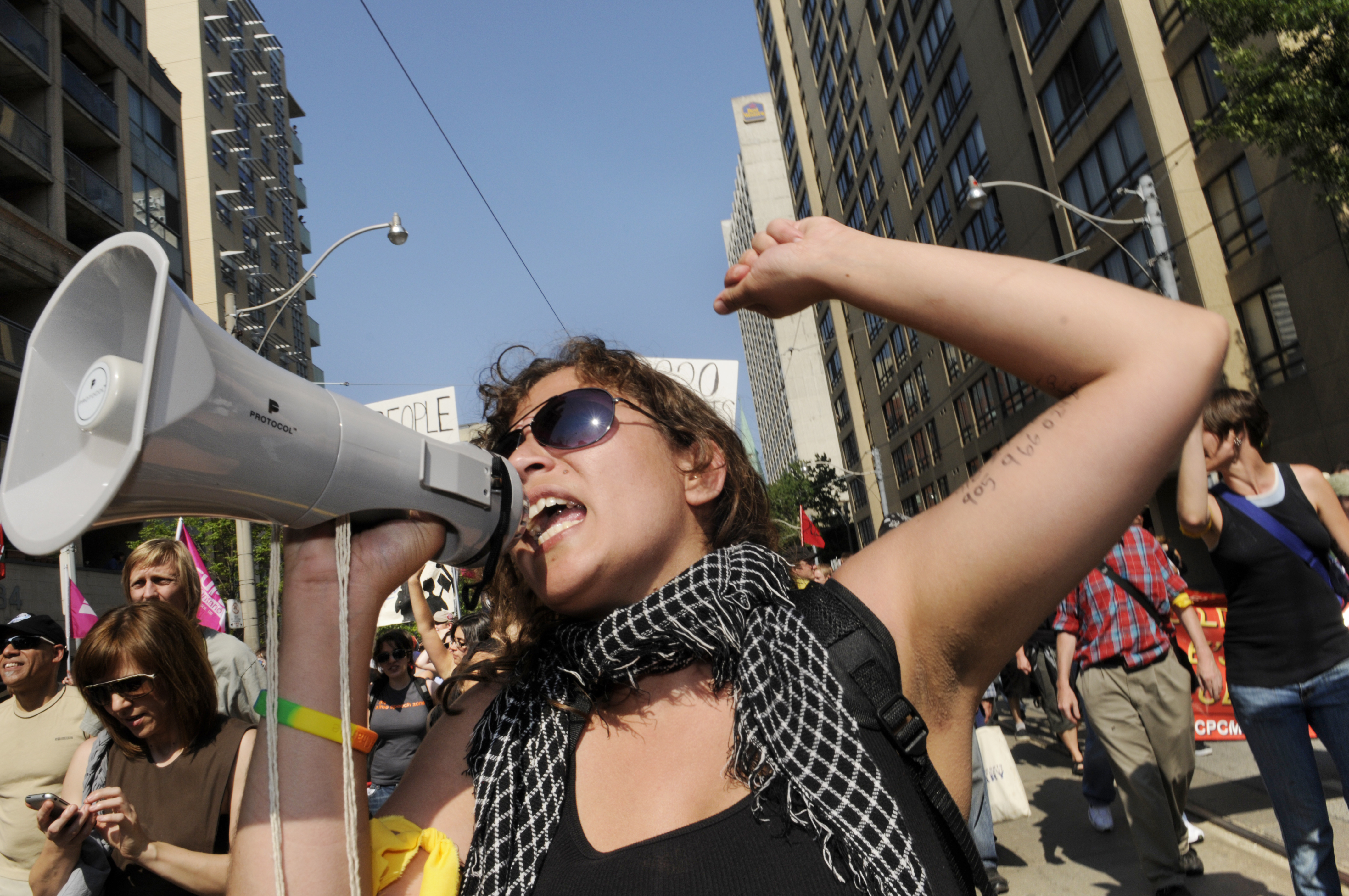
With AR and VR becoming commonplace and our world approaching a Ready Player One kind of world, expect to see plenty of people push back against these invented realities.
“There will be a young, ‘anti-immersion’ movement that totally shuns these technological developments, in favor of 1990/2000’s connectivity,” predicts Zach Suchinm digital technology and marketing expert and CEO of Brand Knew .
This won’t necessarily mean revolution, but a turn toward tech that’s grounded in lived experience, such as live streaming.
“They spark conversation and action as you watch along with others,” says Suchinm. “They are timely, so they require a viewers dedicated attention in the moment or they’ll miss it. Conferences, events, red carpets, sports, cultural events are all ripe for live streaming. Amplified with a call to action, they tend to drive click-throughs 10x than VOD.”
Shutterstock
Just as the rapid expansion of technology is going to lead many to push back, so too will the growth of media and tech companies inspire government intervention and scrutiny.

Shutterstock
Extreme weather is likely to become the norm, with hurricanes, tsunamis, wildfires, and all variety of other major events hitting with more frequency. Wes O’Donnell, a professor of predictive analytics at Baker College, warns that in the next 25 years we are going to see a “statistical increase in dramatic weather events due to human-induced climate change.” So pick up some sandbags and make sure you’ve paid your flood insurance.
Shutterstock
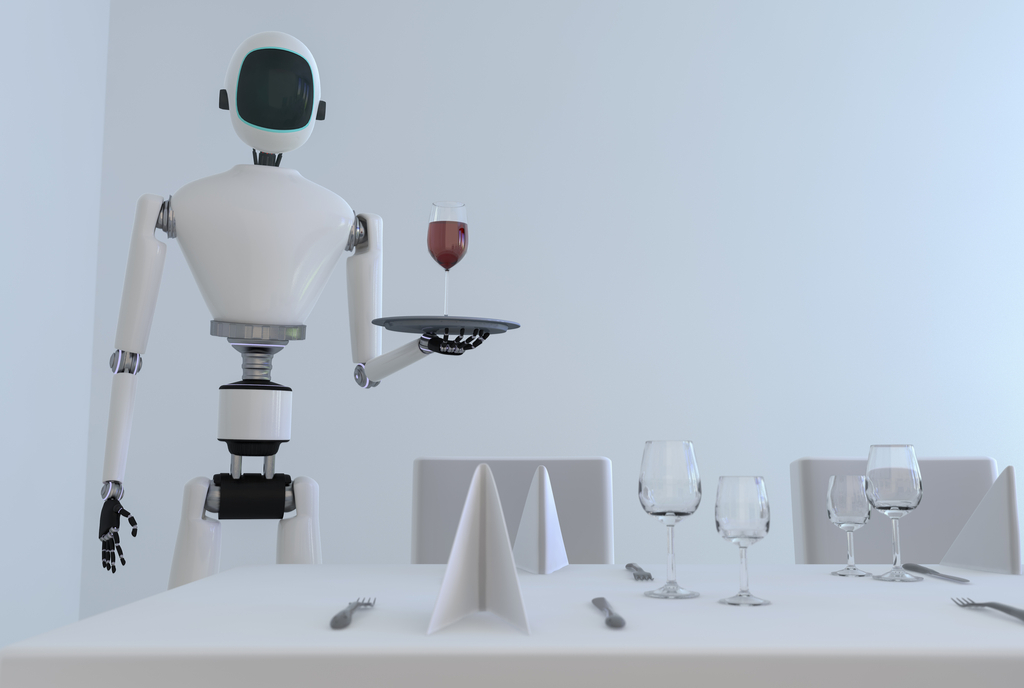
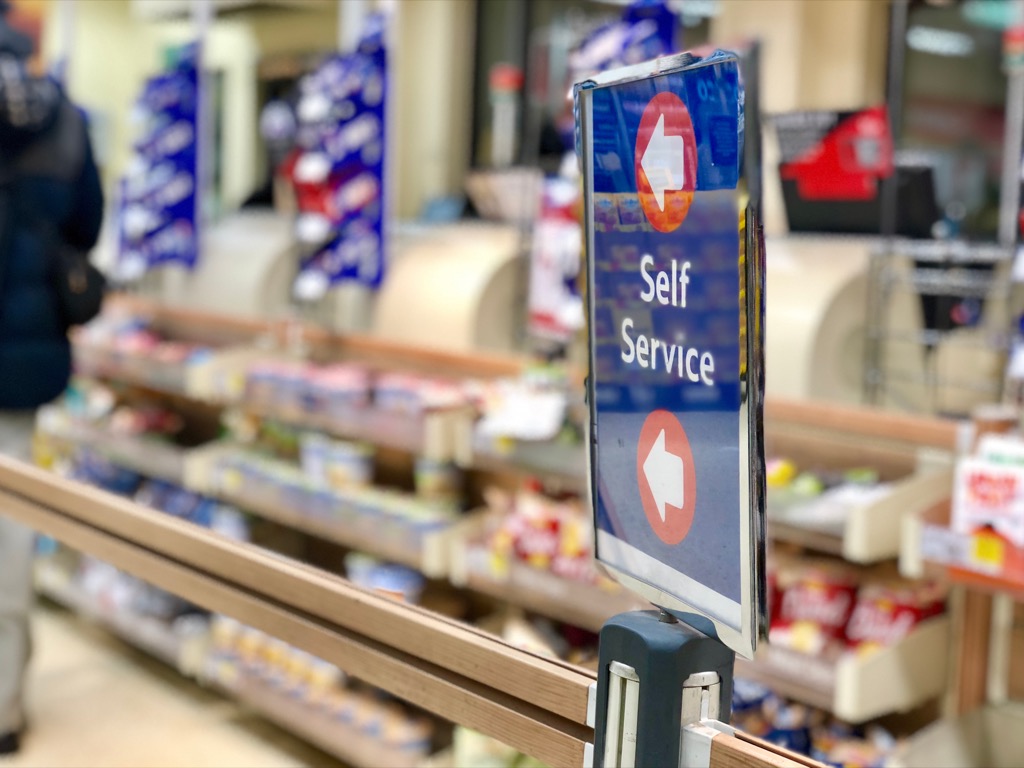
Beyond being addicted to checking our phones, more and more of our daily lives will be handled by automation and AI, with chores and activities we never previously thought of as burdens getting outsourced to tech tools.
Shutterstock
As AI and IoT become the norm and retail continues to collapse, the employment landscape will be reshaped in major ways—not all of them good.
“Unemployment will skyrocket,” says Selepak. “Machines are already replacing cashiers at grocery stores, Walmart, and Lowes, and smart cars will replace Uber drivers. Many blue collar jobs will be replaced with machines that cost less, never skip work, and never get sick. This will leave millions out of work and create a tremendous tax burden on the government.”

Shutterstock
Anyone who has lost a loved one in recent years can appreciate that memorializing someone has changed in the social media era, with Facebook pages becoming memorials and places to share memories of the person, and their posts and shares serving as a scrapbook of their lives. Journalist Danielle Radin, who provides social-media management services free of charge for those that are deceased as part of Kind Years Grief Association , expects to see the demand for this grow.
“As social media continues over the next 25 years, there will be more of a need for digital memorialism,” she says. “It will become a field just like any other. When we pass away, our digital footprint lives on forever. There will need to be people to manage this.”
Shutterstock
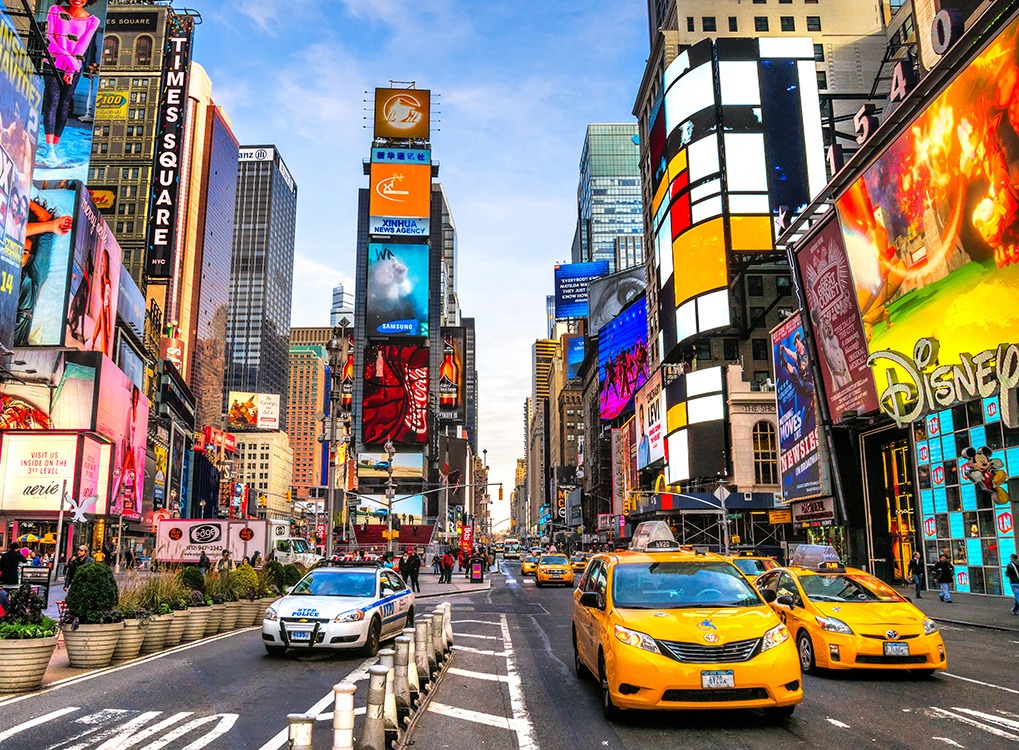
“An era marked by exponential change has seen changing ideas of asset ownership, radical leaps forward in AI, increasingly efficient electric propulsion units for vehicles, and the emergence of smart city infrastructures,” predicts Steve Wells, COO of Fast Future. “These relatively smooth transitions led to other changes in cities, including the removal of redundant traffic signals and the remodeling of some street intersections.”

Shutterstock
While the concept of artificial meat might seem unsettling today, it will likely become more widely accepted in the next 25 years as its benefits become more apparent.
“In-vitro cloned meat could be another future solution to our food supply problems,” says Fast Future researcher Helena Calle. “While lab-grown meat may still face many challenges, such as flavor control, it also has many advantages such as less waste, less risk of viruses, reduced space requirements, and lower emissions and environmental impacts among others. These benefits seem to outweigh the disadvantages and drawback of traditionally reared livestock.”

Shutterstock
Speaking of lab-grown meat, Calle predicts that such innovations, along with AI and vertical farming, will lead to a transformation of the food chain as we know it.
“Hydroponics plants, fruits, and vegetable might change agriculture as we know it, and help revolutionize the food industry,” she says. “Overpopulation is having major consequences, driving a lack of growing space and food in many parts of the world. The growing global population will force us to find creative solutions. Having AI-controlled hydroponic vertical farms on the sides of buildings might be one of the solutions.”

Shutterstock
As pathogens become ever-more immune to the current antibiotics available on the market, the pharmaceutical industry will have to get more creative and innovative in their solutions.
“In the next 25 years, is it possible that we will experience ‘the end of antibiotics’ (as the World Health Organization put it in 2016)?” asks Fast Future’s foresight director, Alexandra Whittington. “Fortunately, the microbial threat is being met with advanced drug development, allowing medical researchers to explore new approaches to fight superbugs. New strategies on the horizon range from genetic modification of germs and implantable semiconductors through to the discovery of new antibacterial agents in soil.”
To avoid sickness and live a long life, follow these 100 Ways to Live to 100 .
